You Can Do It: Topography Planning

Topography. If the idea of adding specific topographical features to your diorama scares you or you don’t know where to start, this mewsing is for you! Today we explore how to get topography from a map to your diorama.
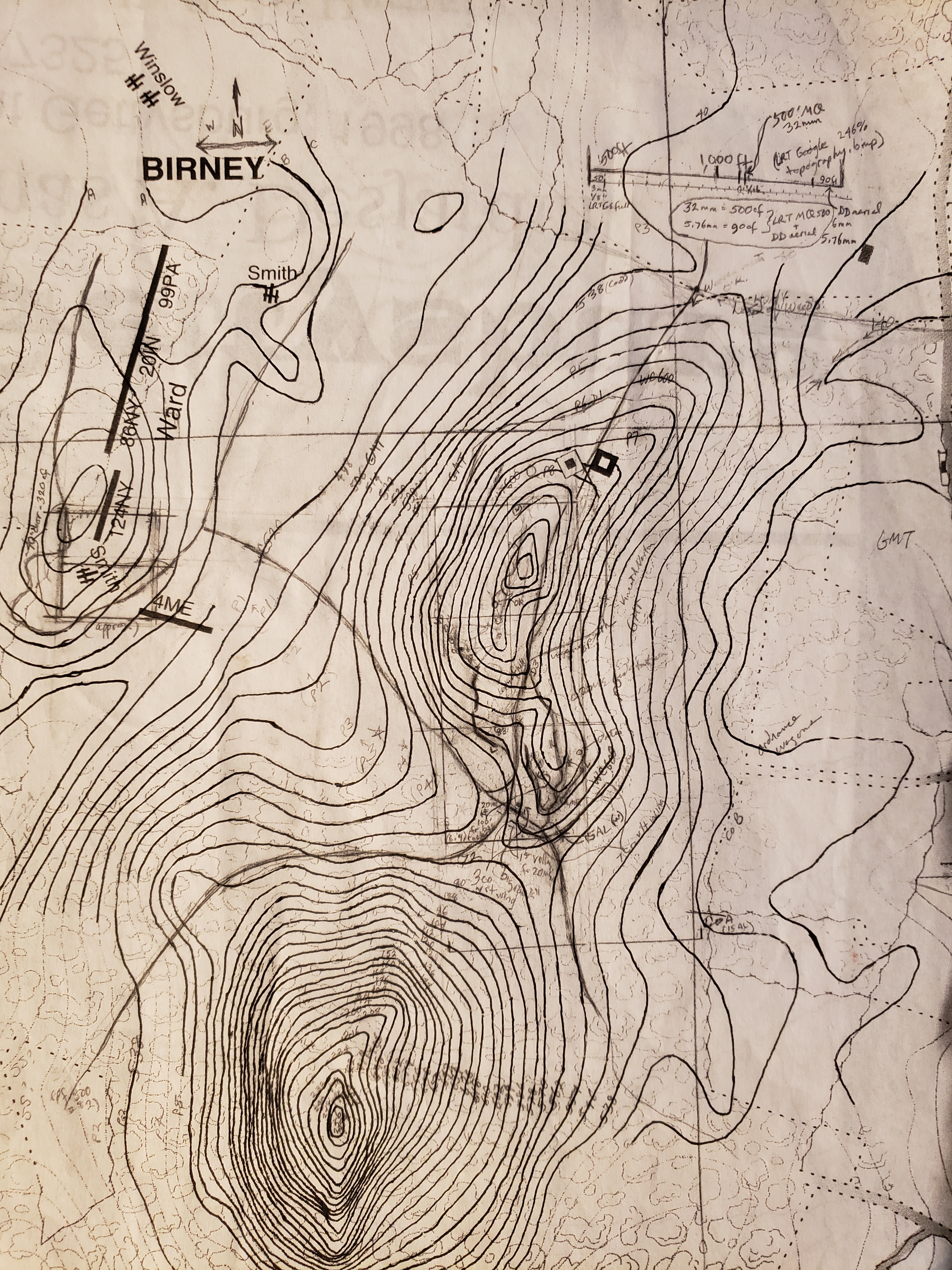
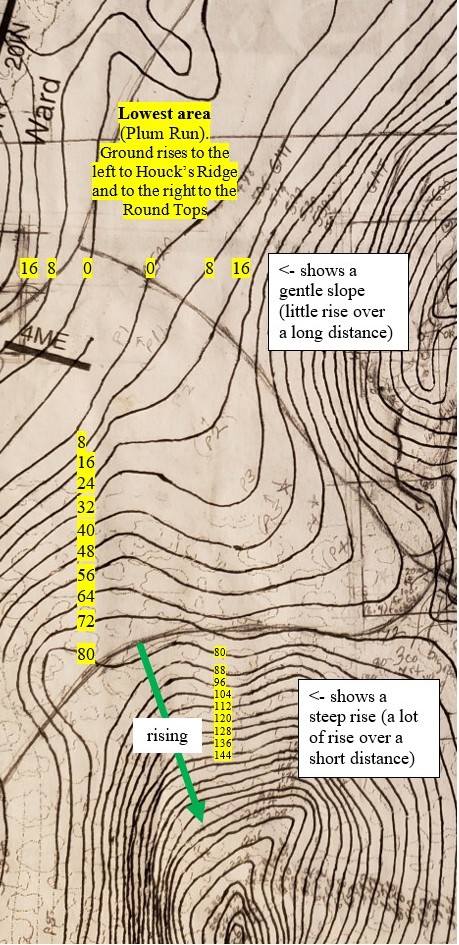
Sometimes, a diorama’s topography is not specific. You build the landscape however you wish, because it is a world you have made up. But if you want to make a specific area with correct topography, you need a topographical map. These maps show the rise of land by using lines set at a specific interval. For example, the maps that we use for our Gettysburg dioramas show an interval of 8 feet of rise. That means that between each line, the ground rises eight feet. For a steep hill, the lines will be closer together than for a field with a gentle swale. Some maps have 32-ft intervals or 24-ft intervals. We like the set of maps that we have because with 8-ft intervals, it is pretty precise. After all, ground can do a lot of rising and falling between two lines that are 24 feet apart in rise.

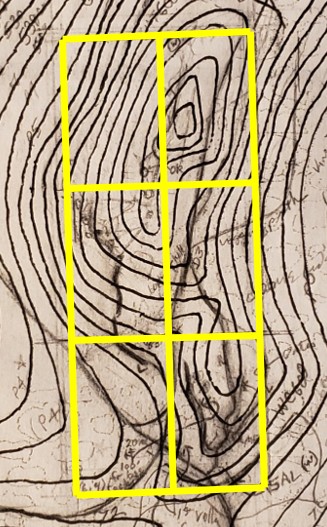
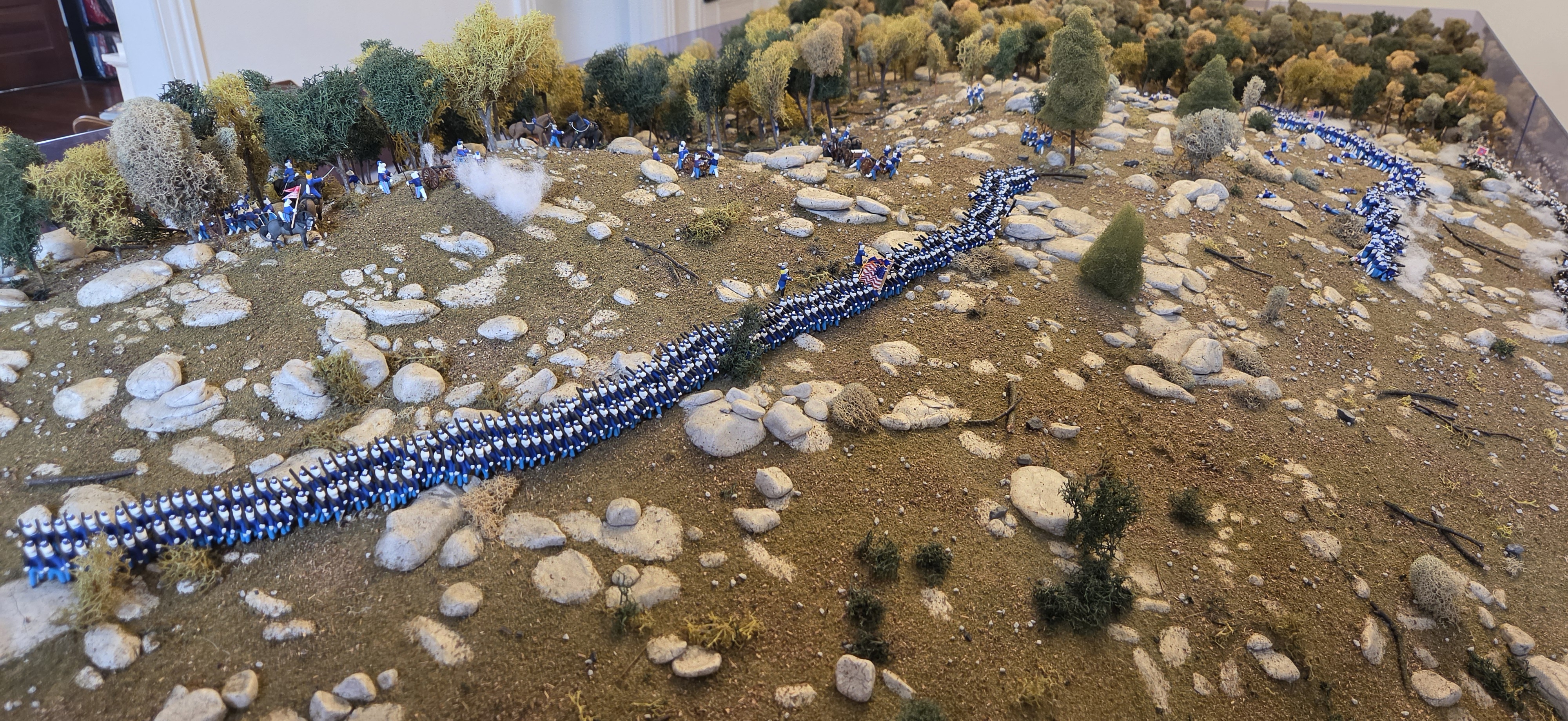
Once you have your map, you need to plan out what section your diorama will show. So, for our Little Round Top diorama, we drew a rectangle of how big the diorama would be. We knew it would be in six sections, so we divided the rectangle accordingly.

But how do you convert a tiny rectangle into an 11-ft long diorama?

We used a grid system that many people use in their hobbies, careers, and trades. It is an easy way to transfer anything small onto a larger medium, whether a canvas, diorama, or even a massive canvas for a cyclorama (yes, the Gettysburg Cyclorama was painted by projecting a grid onto the canvas so Philippoteaux and his assistants could enlarge his scaled-down version).

Instead of using our Little Round Top map as an example, we will use a simpler drawing to enlarge. However, complicated maps or drawings can be enlarged by dividing each rectangle into smaller ones until the content of each block of the grid is simple.

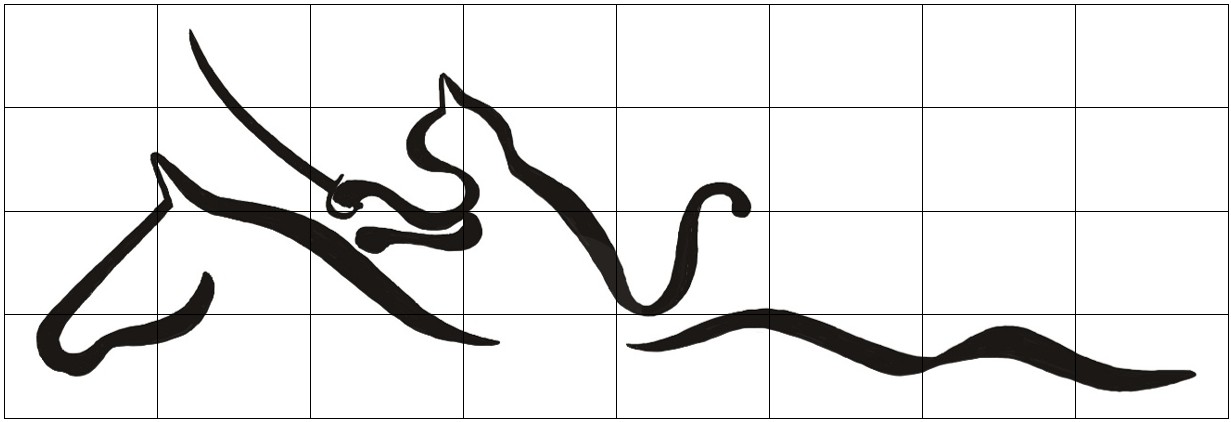
Here is the original we will enlarge:

Divide it evenly into blocks. The more blocks, the easier it will be to enlarge accurately:

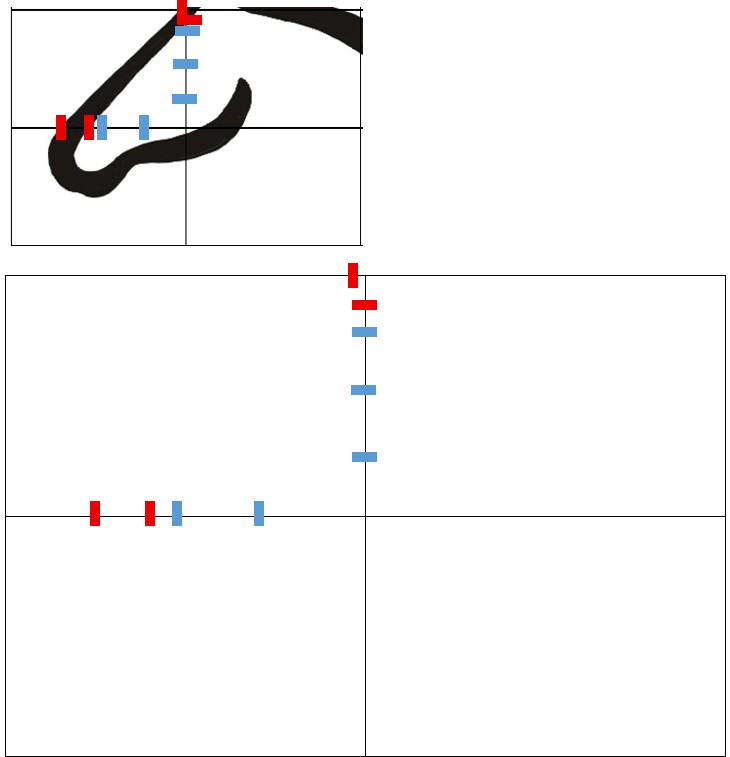
Let’s focus on a particular area:

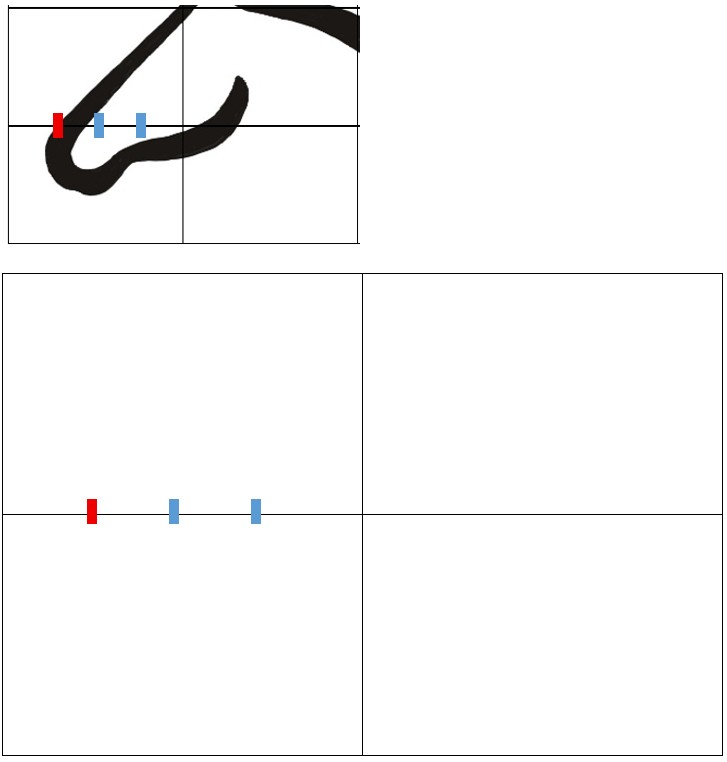
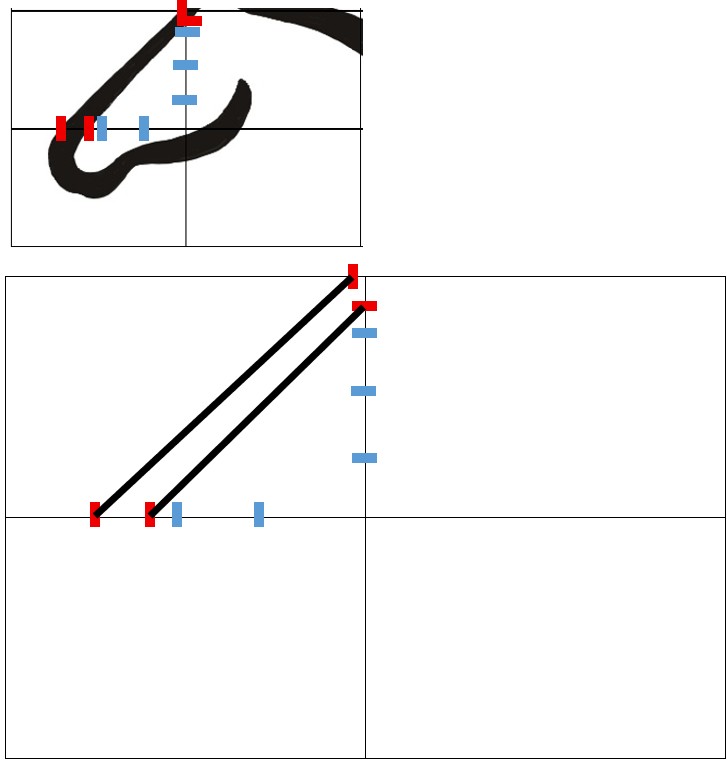
The way to enlarge a picture is to mark where each line crosses the grid. Then, on your full-size grid (such as the canvas or section of the diorama), you make a corresponding mark. So, on our section of the Civil War Tails logo, the horse’s nose crosses the middle gridline approximately one-quarter of the way across. The red mark indicates where it crosses, and the blue marks indicate quarters (obviously, measuring makes it precise. Here, we are eye-balling it). On our big grid, we mark the quarters, with the left-hand mark in red.

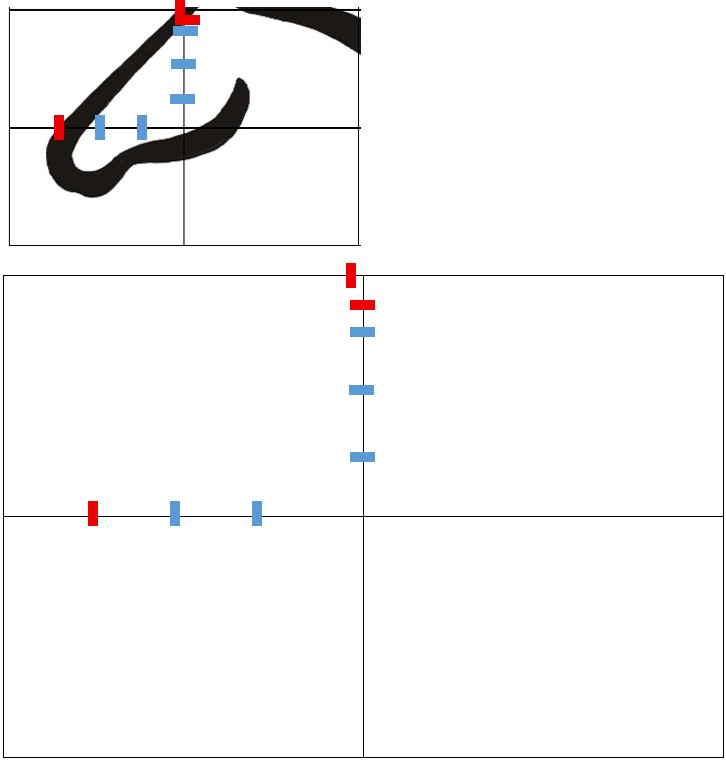
We continue by marking where the line meets the upper-right corner of the grid box we’re focusing on.

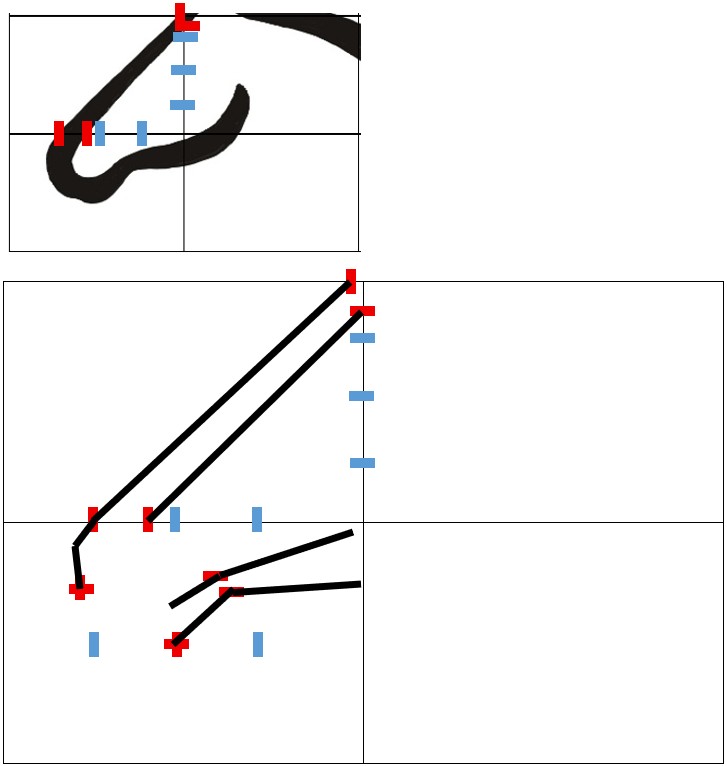
And marking the inside of the nose line.

Now we connect the dots.

Then we proceed to do the other lines. We won’t do the mid-block curves of the nose itself here, but you can see how we can place marks in the middle of the grid blocks, by measuring over and down to a particular point.

Where it’s a curve, you can eyeball the curve until it looks right. The nice thing about topography is that each of your hand-drawn lines don’t have to be particularly precise. If you were enlarging a photo of a face, you would want precision so the result looks good. With a diorama, you’ll be sloping the material that you use for topography anyway, so slight variations don’t matter.

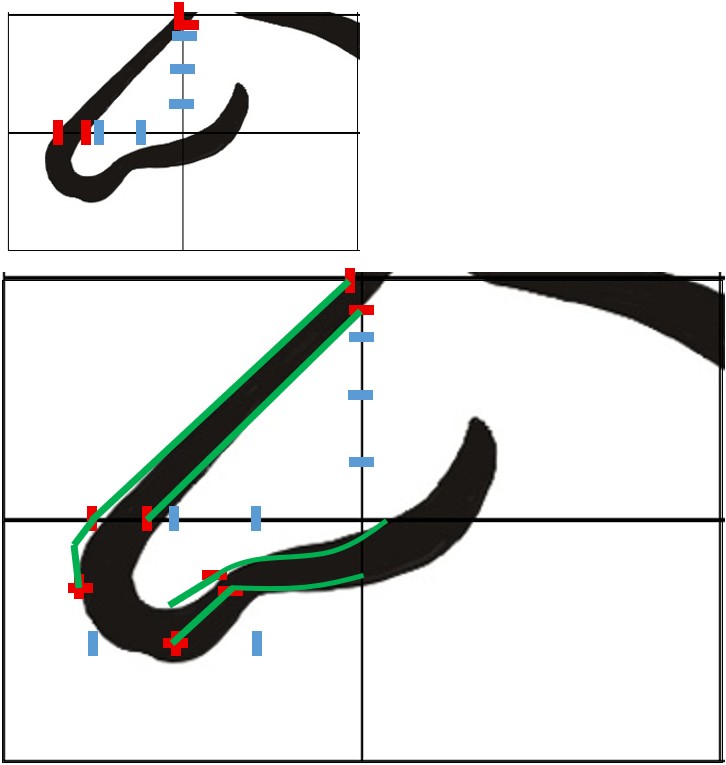
Since we’re working on a computer with layers for our example, let’s see how our sample came out, compared to the original.

Pretty close! Of course, we were just eye-balling it. If we had been measuring with a ruler, it would be much more precise.

And that’s all there is to it!

250 Years and Still Worth Fighting For

As we mark our nation’s 250th anniversary this year, we encourage you to read the founding documents and other key texts, and to think about the gift that is this nation.

Read through the Declaration of Independence and see the injustices and lack of rights that led to the creation of this country. Then read through the Constitution and Bill of Rights. See how they are designed to prevent such abuses. 

These documents create a system of three branches of government (Executive, Legislative, and Judicial) that check and balance each other, and these documents speak to the truth of rights we possess as human beings. The United States government is not perfect and never will be, because people are not perfect. But this creation from over 200 years ago still works, and the Bill of Rights enshrines rights that stand between us and the power of the government.

Finally, read the Gettysburg Address as a midpoint reflection on the importance of each generation’s work to defend and value the rights and protections we enjoy. Steep for a while in President Lincoln’s words and see how blessed we are. We can become so used to the idea of government of the people, by the people, for the people, that we forget that such a government is not a given. This is something to value, to cherish, to fight for every day. 

Our country has plenty of problems, but we have a great gift in her. After 250 years, she is still worth fighting for, because we the people are worth fighting for.

FAQ 5: What Are Our Favorites (or Not)?

Sometimes, people ask if we have a favorite cat-soldier. Or, what is our favorite thing to make? Or, what is the hardest thing to make? Today, we look at the answers! (For our previous FAQs, check out our Mewsings index.)

Favorite cat(s):

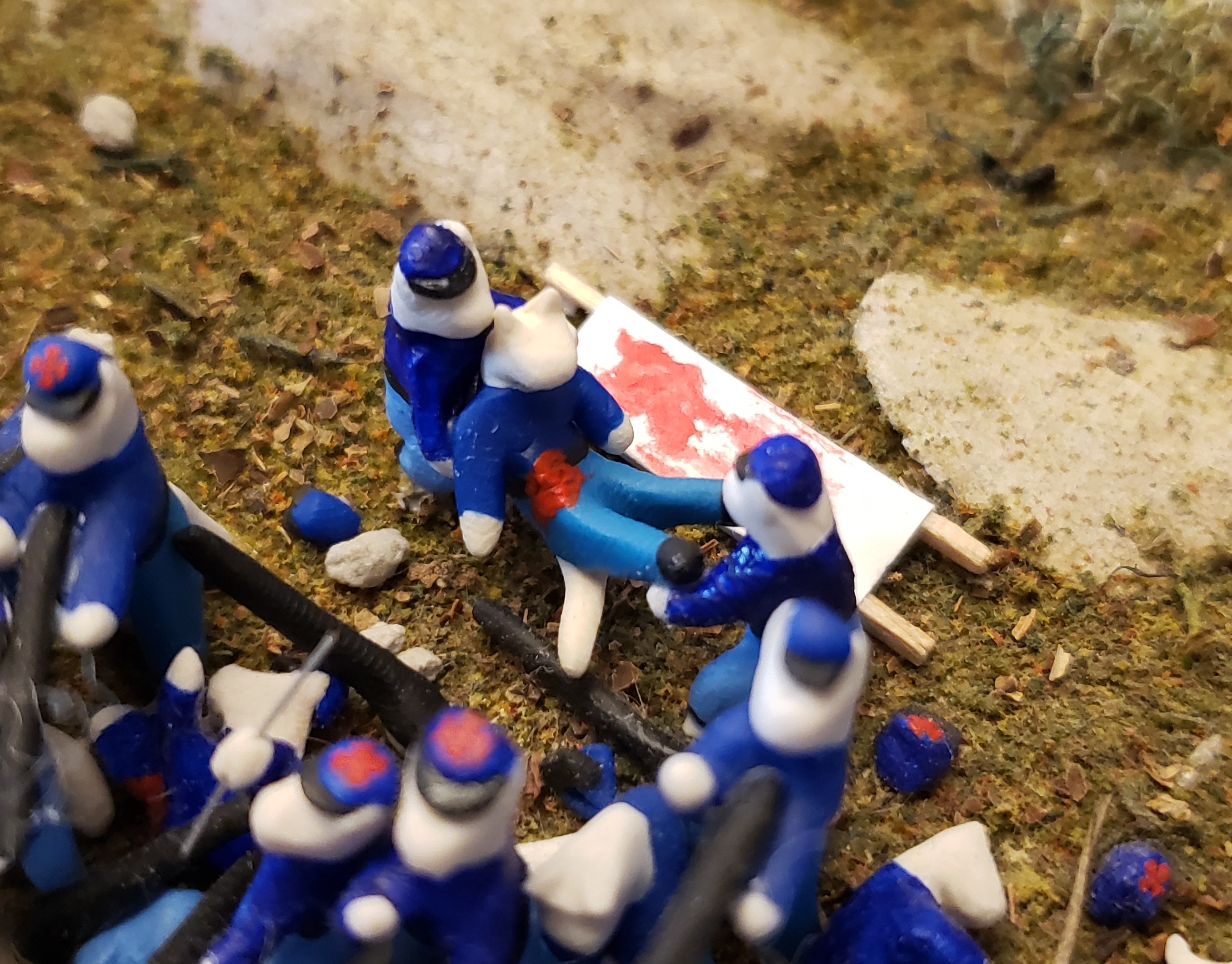
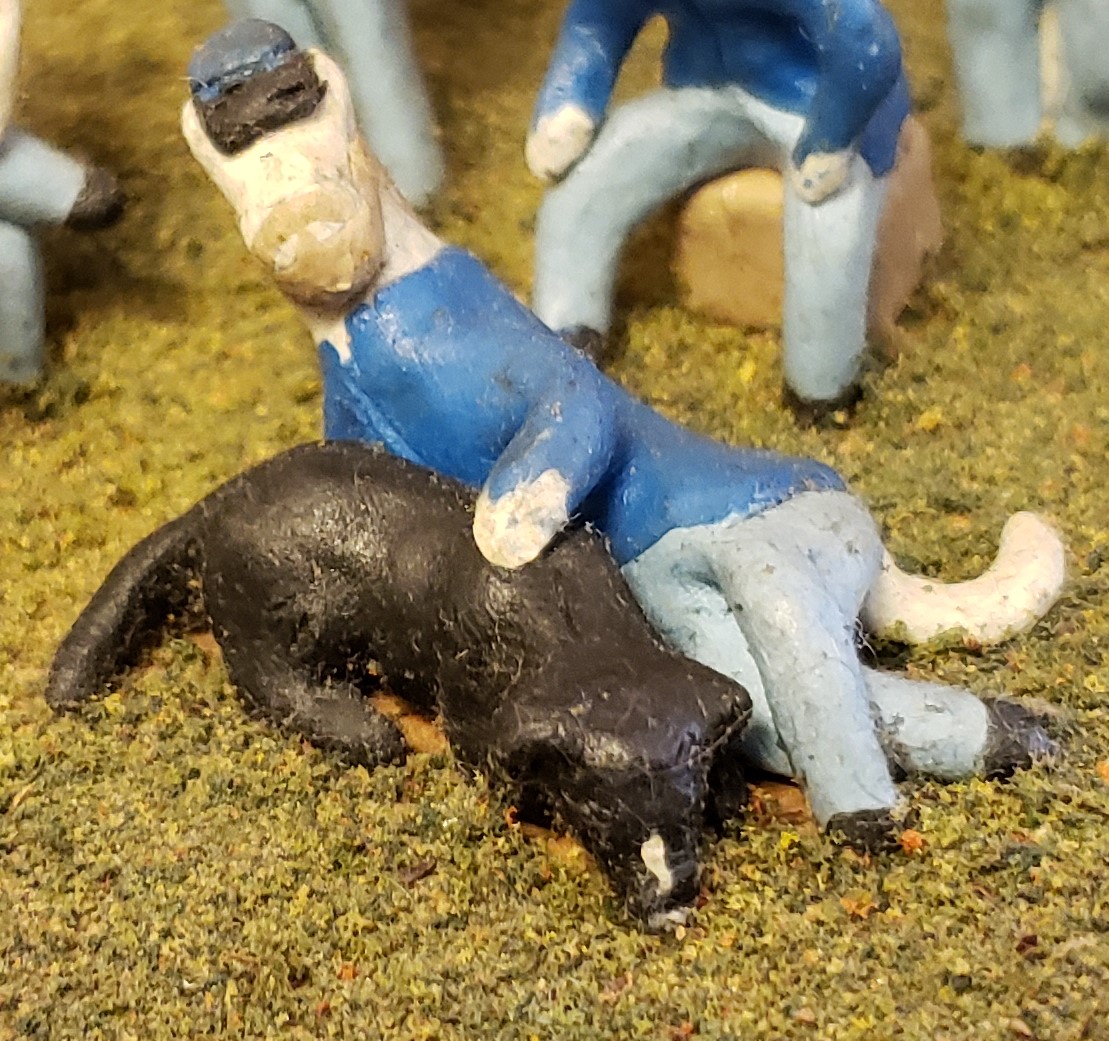
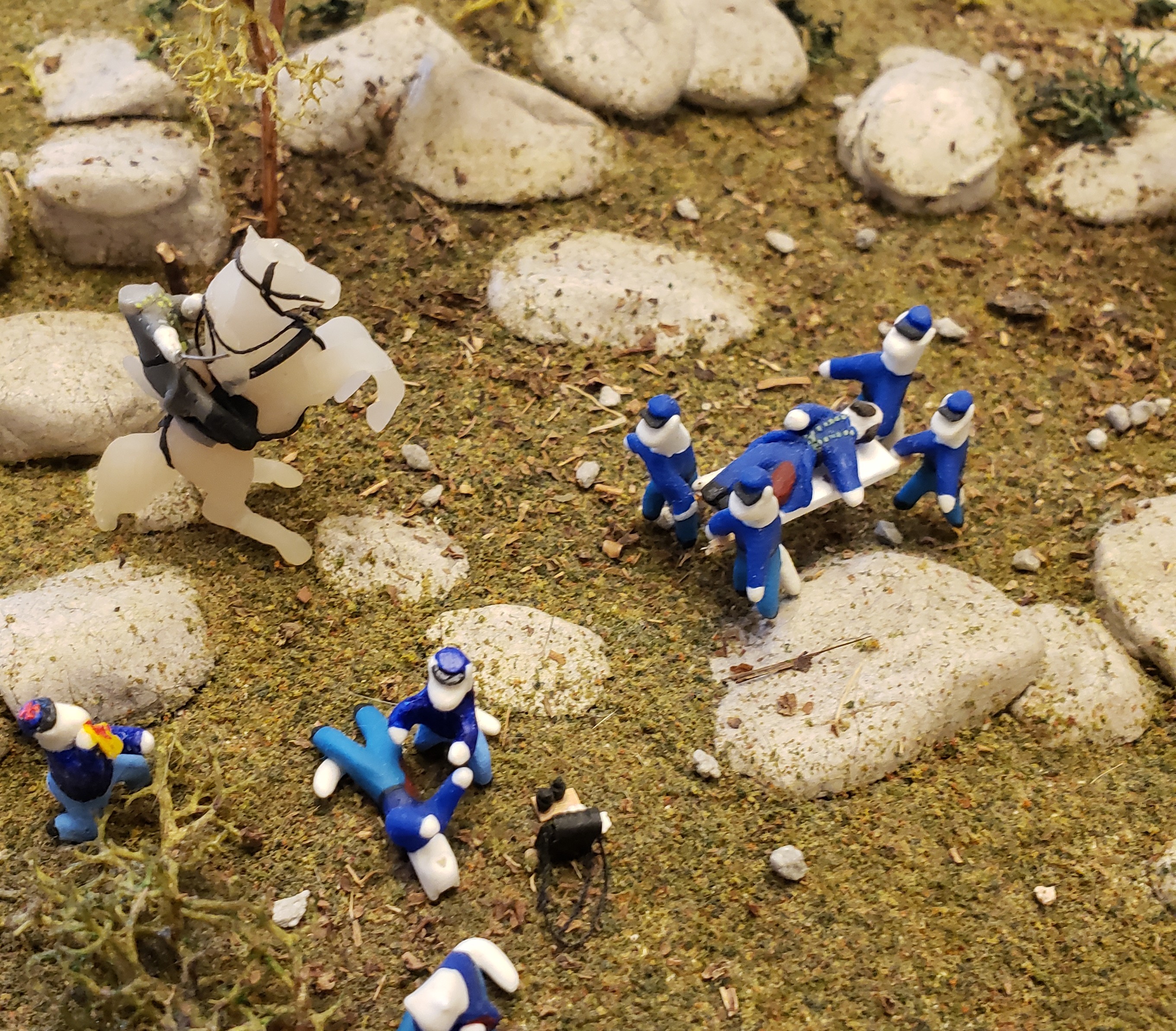
Rebecca – I could answer this question in two different ways. As far as a favorite because of who the cat portrays, I would say Gen. Garnett or Stonewall Jackson. But if we mean the cat, it is a tie between two favorite vignettes. On “Desperation at Skull Camp Bridge,” one cat’s horse got shot, and so his buddy is helping him up onto his horse behind him, so they can both escape. On “The Boys Are Still There,” two cats are lifting a wounded cat onto a stretcher. I had never thought of that pose before, so they are unique—and super-cute.

Ruth – I don’t have a favorite cat, because it varies. It’s hard to pick a favorite story. Right now, I would choose Lt. Morris from USS Cumberland, because his story is fresh in my mind—how he gets thrown into a situation that no ship’s commander has ever faced before (fighting an ironclad), his determination, and his response when called upon to surrender.

Favorite horse(s):

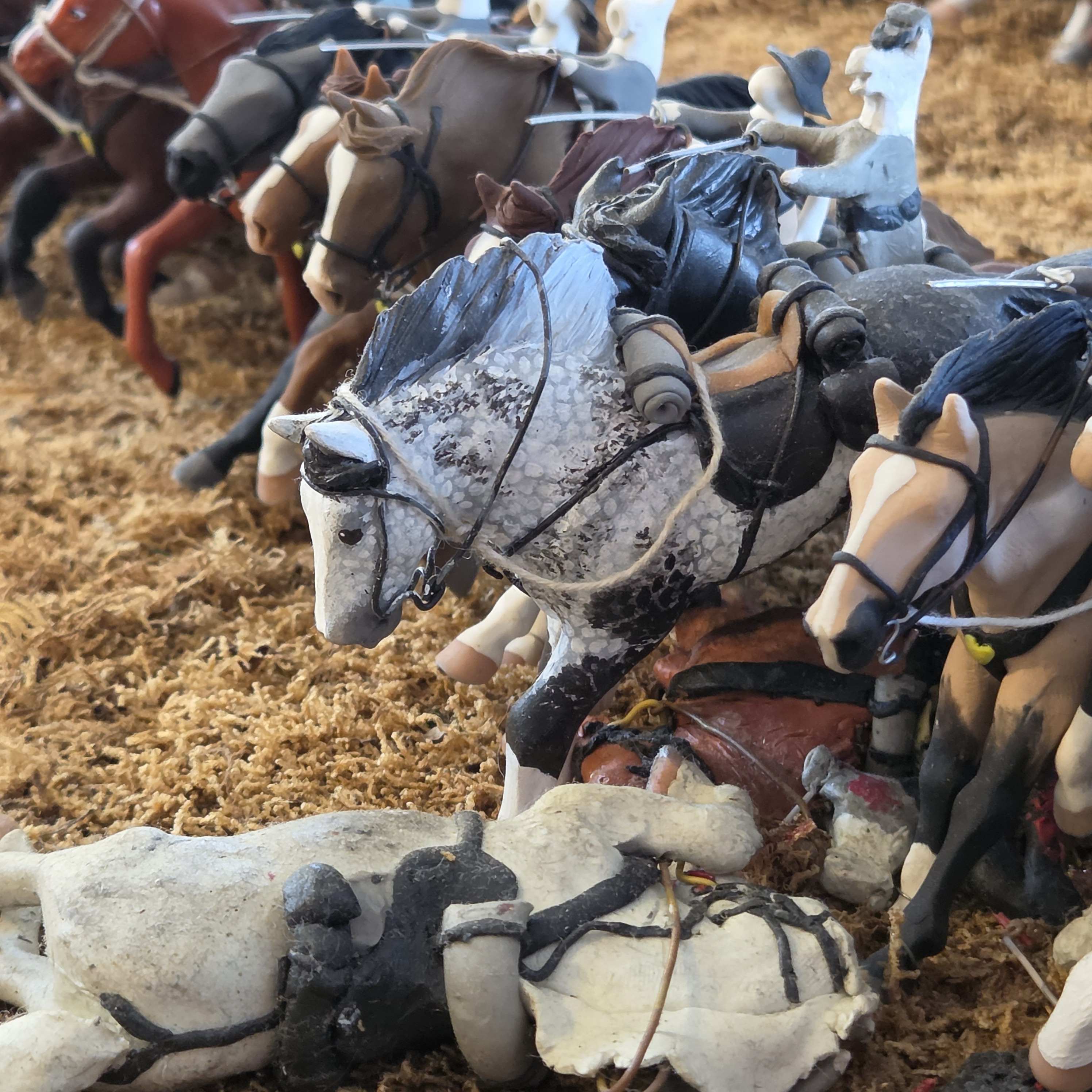
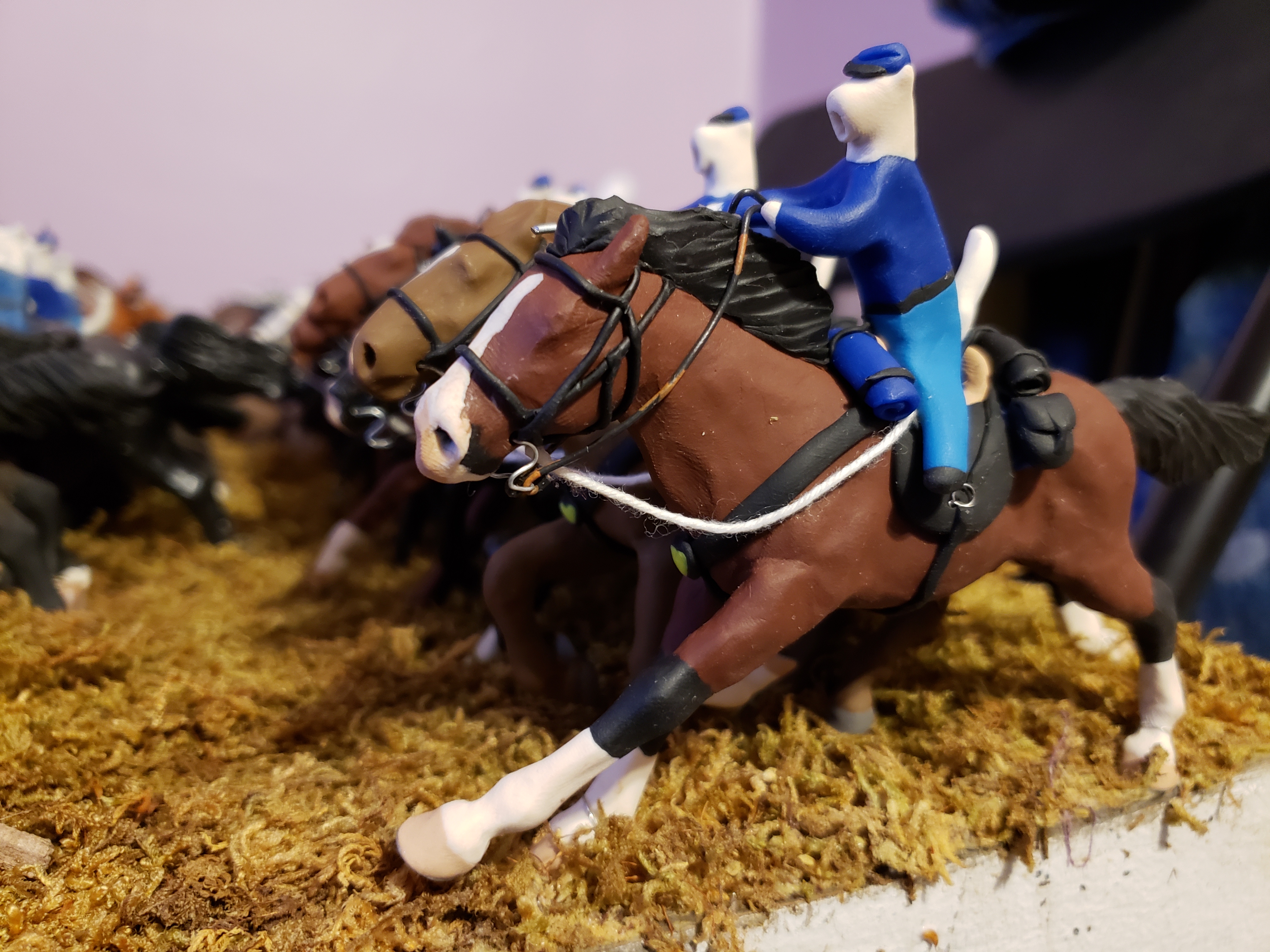
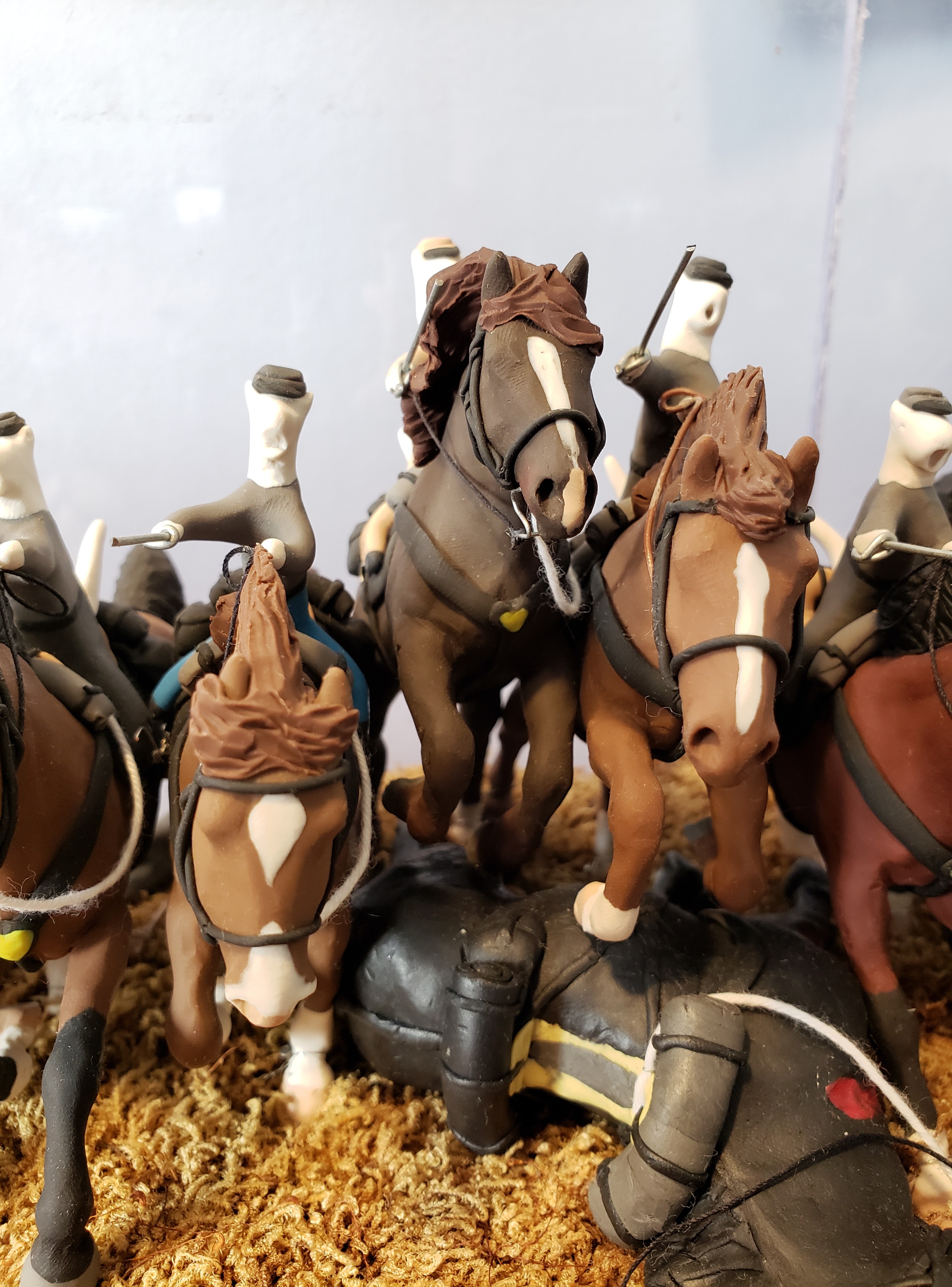
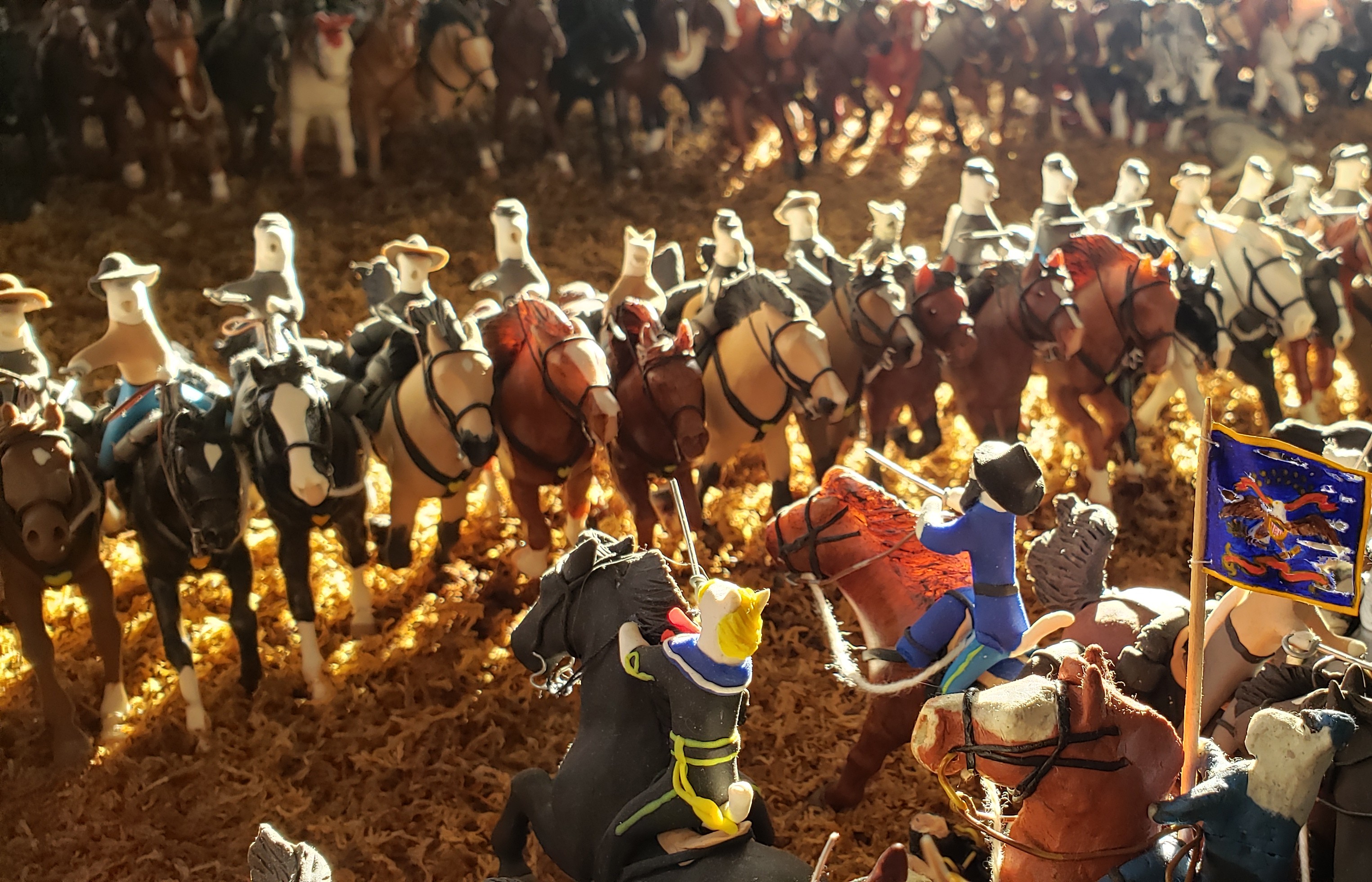
Rebecca – Our dioramas have too many cute horses to pick from! That said, on “Come On, You Wolverines,” I installed a dapple-gray jumping well ahead of the line, just so folks could see the dapples I painted on him (I really don’t like painting dapples!). I’m proud of his paint-job, and he’s cute.

Ruth – It’s probably Lt. Haskell’s horse, Dick, because of the story of his calm courage and loyalty—and our little guy is in a cool pose!

Favorite diorama:

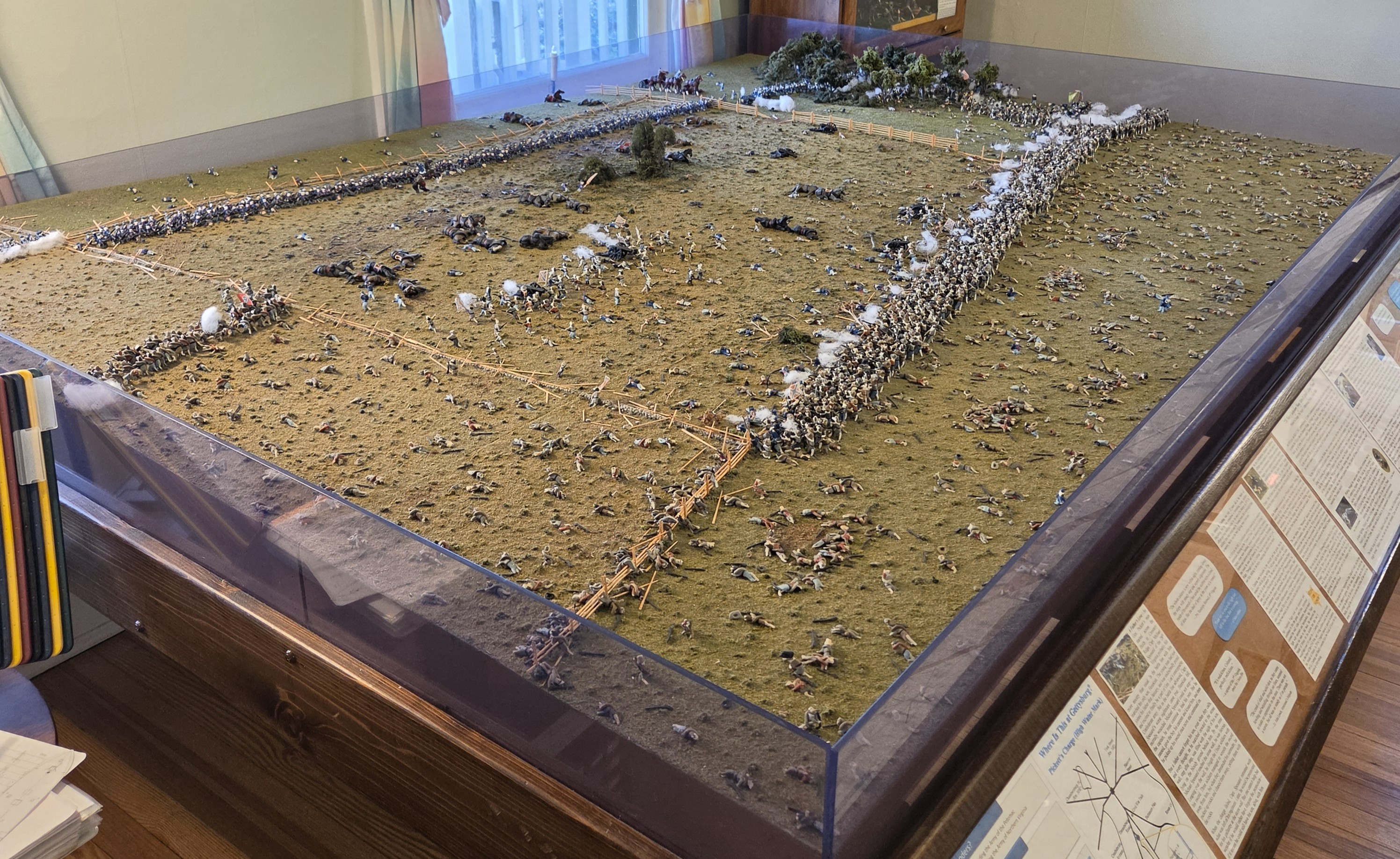
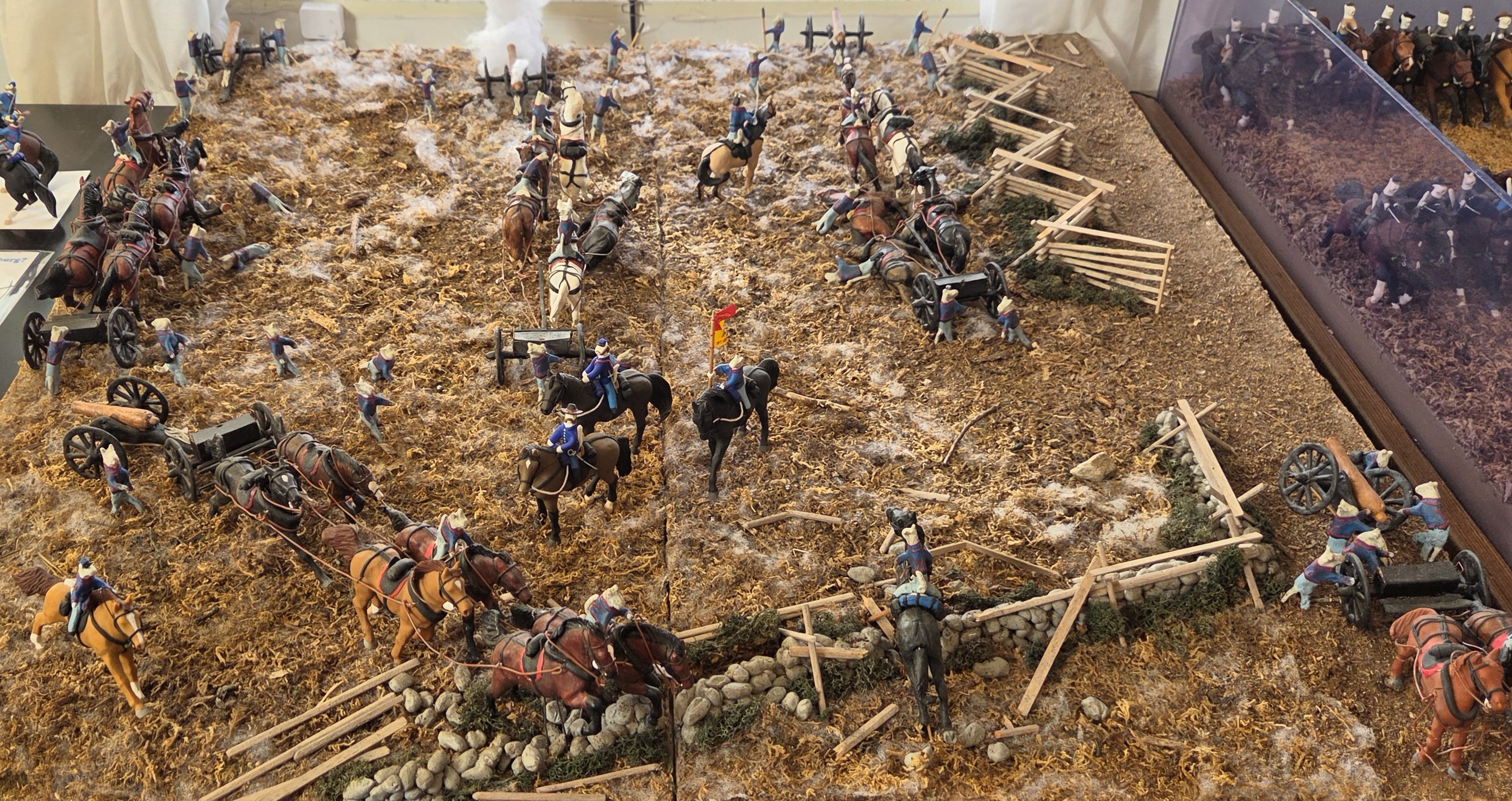
Rebecca – Closest to my heart is “The Fate of Gettysburg,” as I’ve always liked reading about Pickett’s Charge. But as a diorama for the diorama’s sake, Bigelow’s battery at the Trostle farm has been a favorite of mine because of all the action going on.

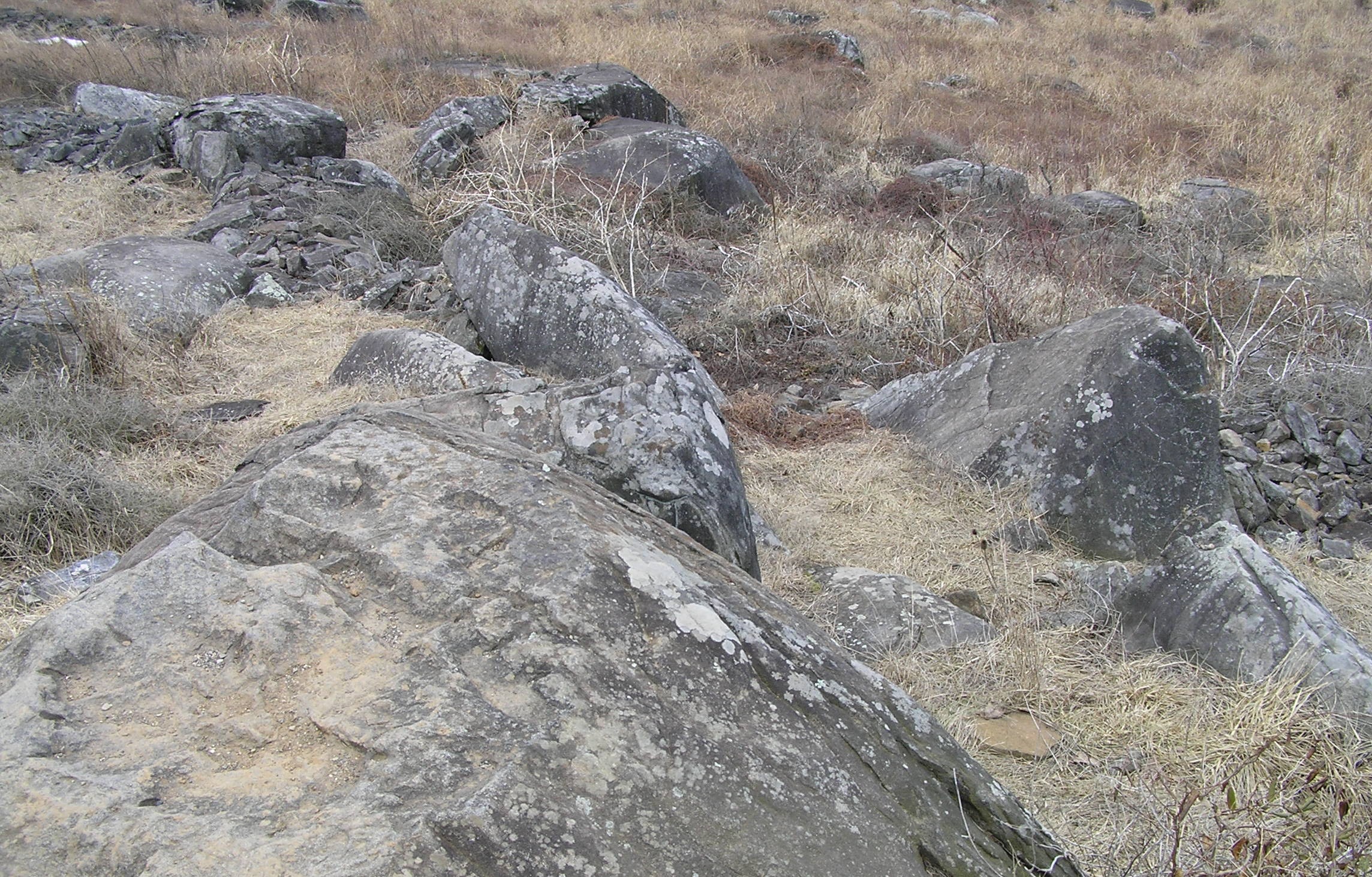
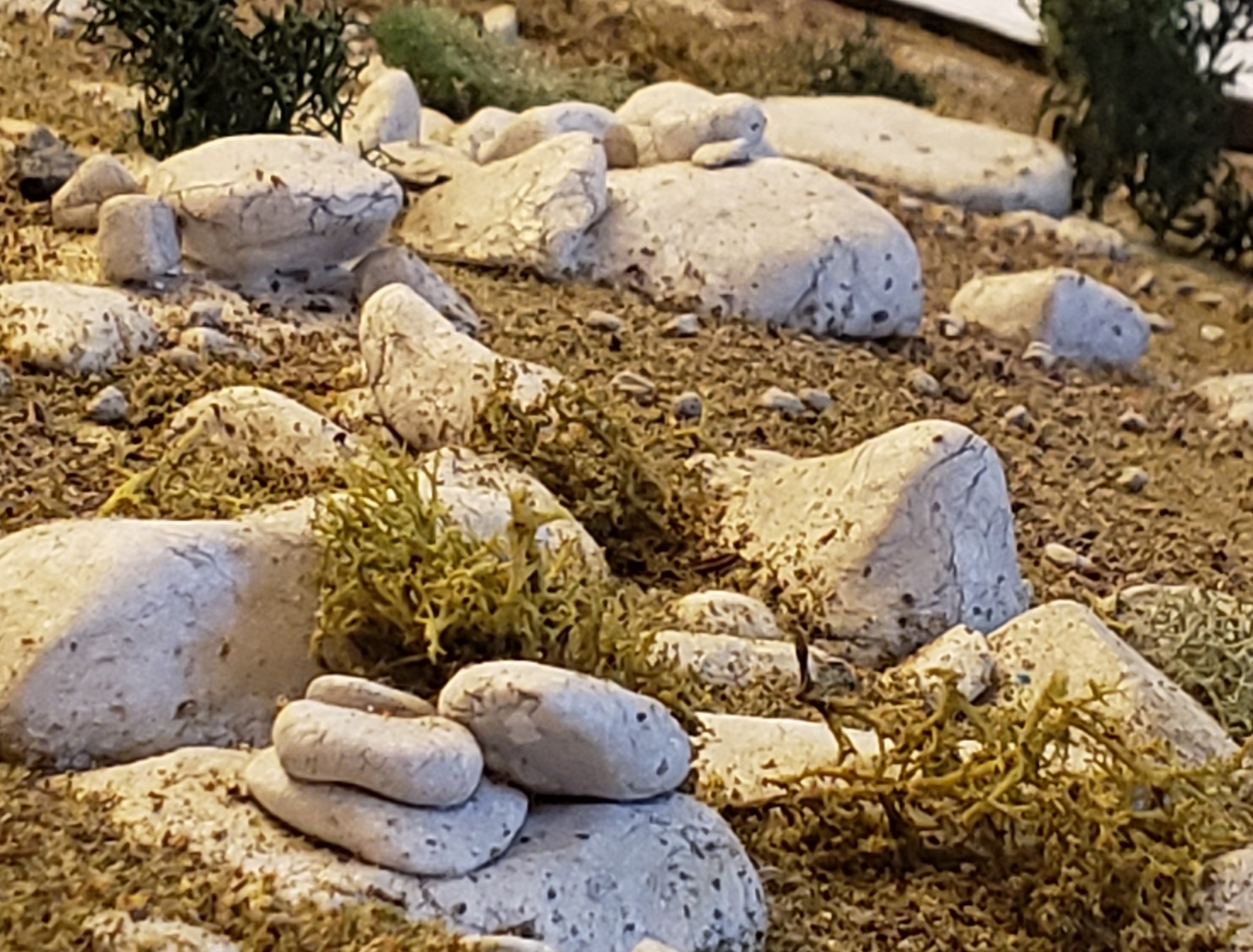
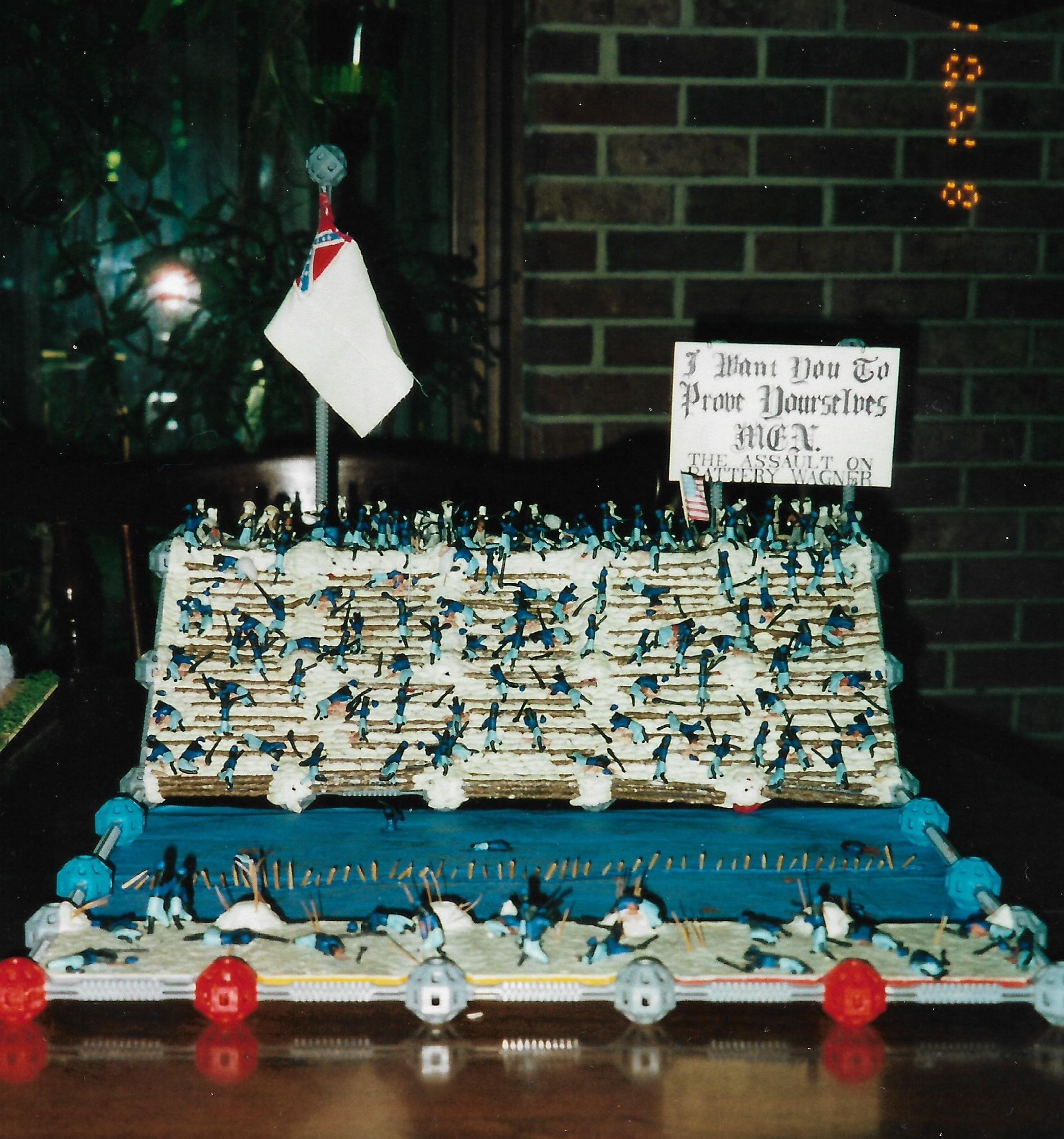
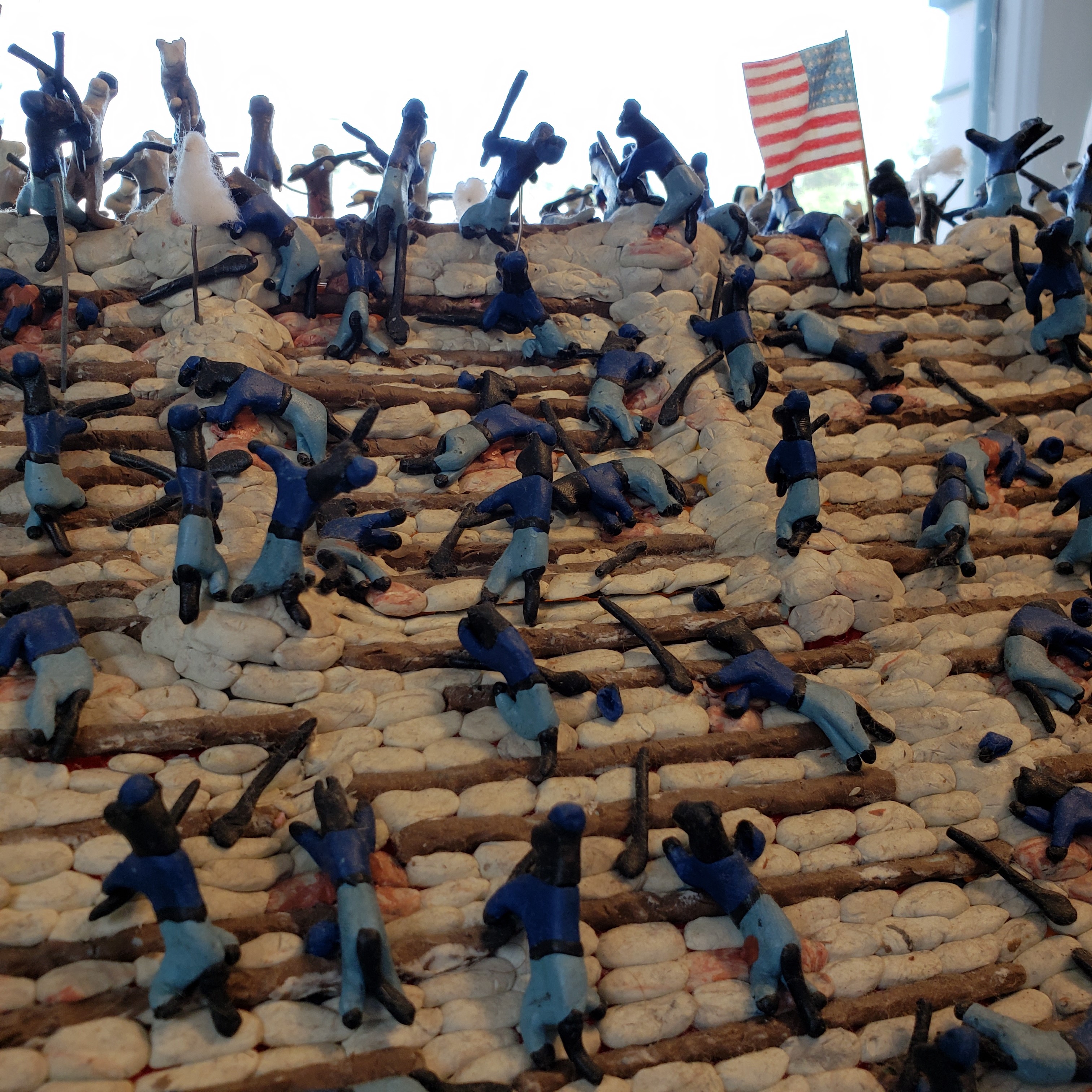
Ruth – Closest to my heart is “I Want You to Prove Yourselves,” our diorama of the 54th Massachusetts at Battery Wagner. But from a technical aspect, I would say “The Boys Are Still There,” because of all the variety on it (Hazlett’s battery coming into position by horse and hand and starting to fire, the Signal Corps, infantry, terrain, trees, boulders, aid stations, etc.), and from the research aspect (rocks based off of photos, the analysis that went into getting the 140th New York’s position correct, etc.).

What is your favorite or most fun thing to make?

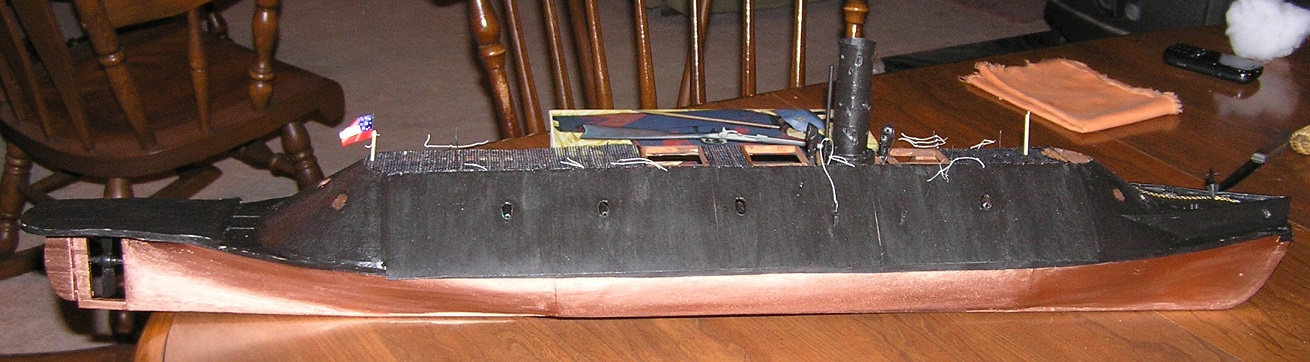
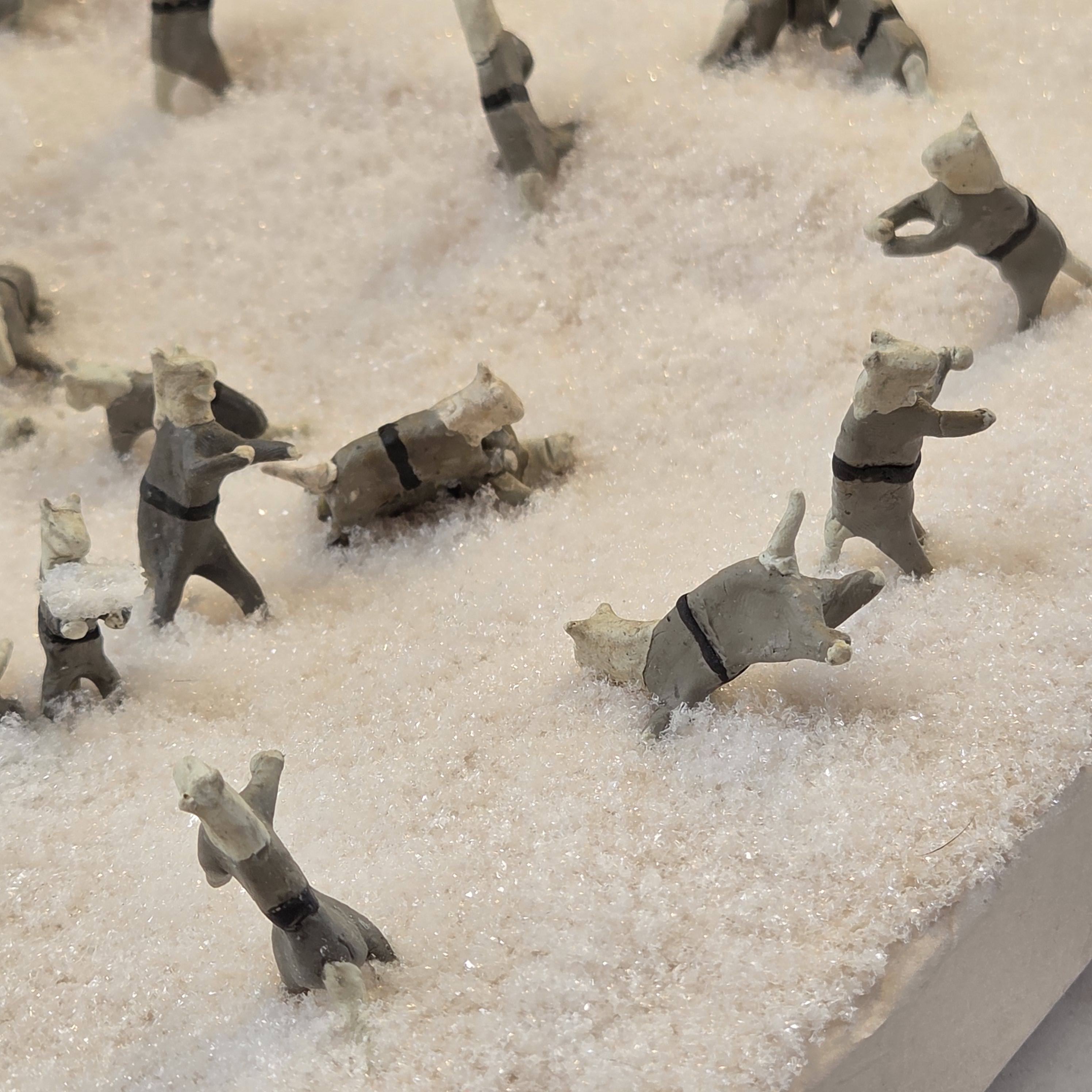
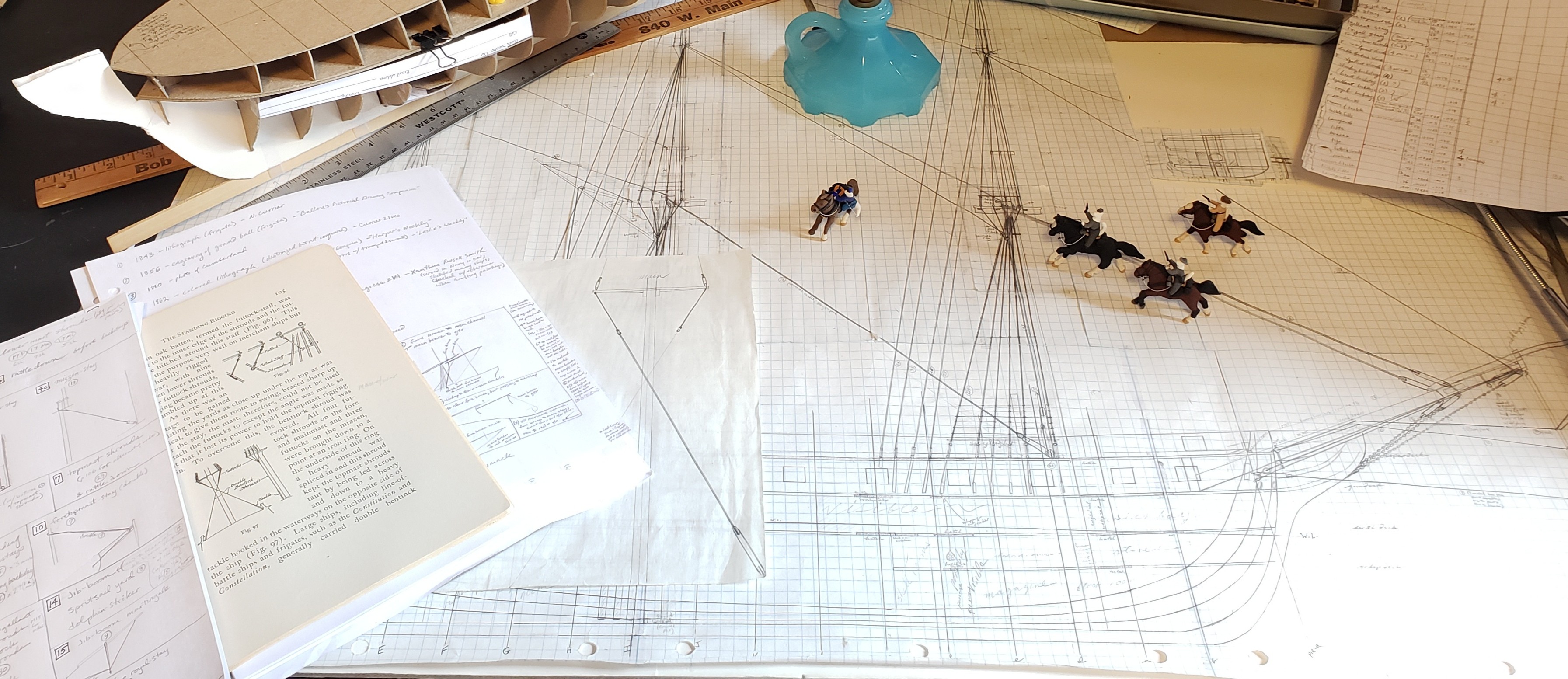
Rebecca – I like ships, so it was fun making the ironclads and Cumberland-in-the-bottle. Now, I’m having way too much fun going all-out with building USS Cumberland from scratch for our next diorama. (Ruth says, “I would rather stick needles in my eyes!”) On an “individual cat” level, it is fun bringing personality or humor into the cats (and horses). One example is the Snowball Battle, where a few cats are doing face-plants into the snow.

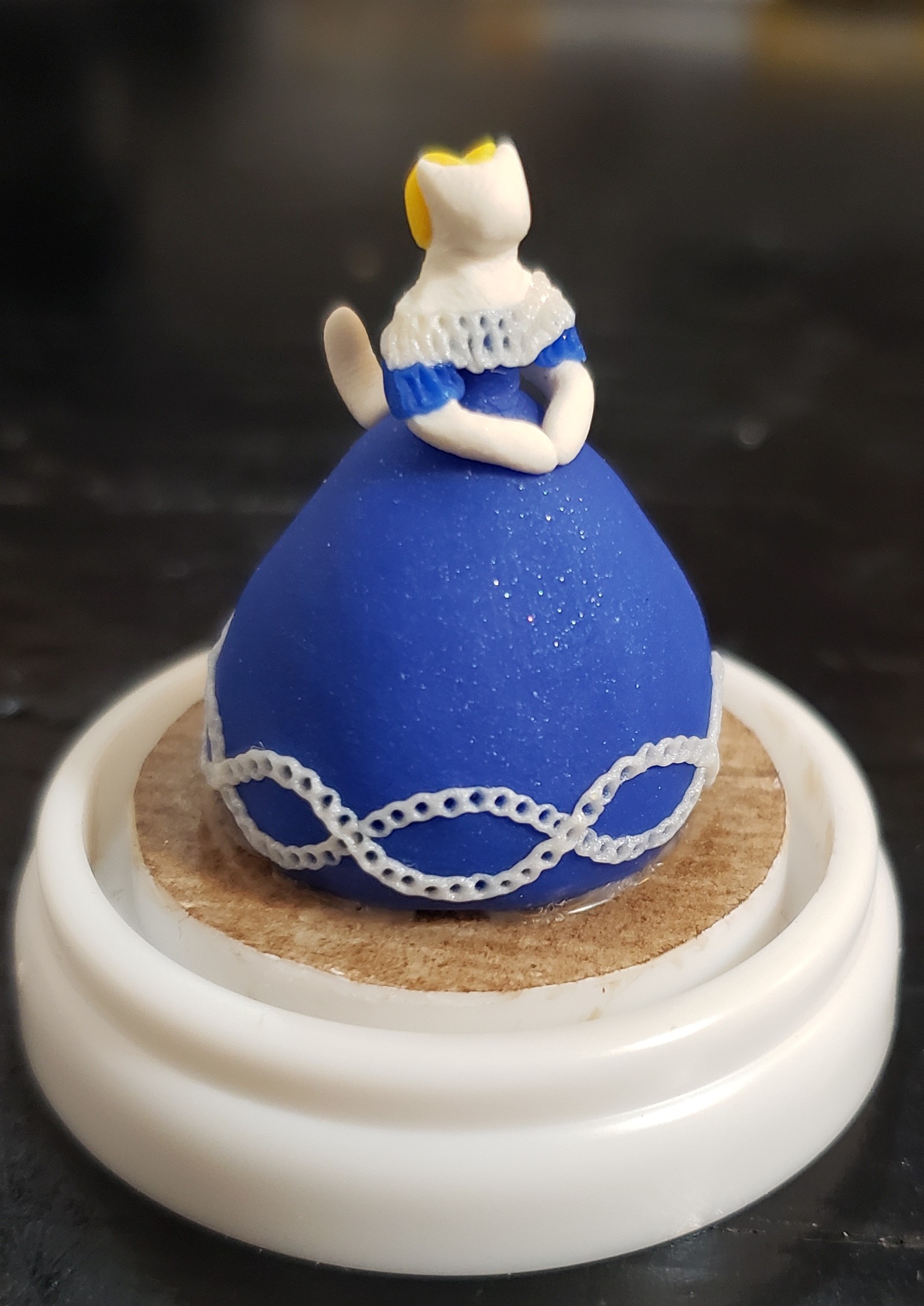
Ruth – Horses for “Come On, You Wolverines,” because of the freedom to play around with poses and markings. With two hundred new horses to make for it, we could do anything—so long as it was galloping 😉 Also, samurai and ladies in ball gowns are always fun to make! (Rebecca finds that hard to believe, as she would rather do neither samurai nor lady cats, but is happy to encourage Ruth in it!)

What is the hardest thing to make?

Rebecca – Ruth thinks that I would say the ship-in-the-bottle, but that’s not my answer. Instead, it’s the dog! Yep, Patrick remains the hardest thing for me to make. Generally, with a diorama, we just roll with what’s next and figure it out, little by little. But when I sat down to make our cats’ mascot, I blanked on what generic markings on generic dogs look like. After overthinking it, I made a plain black dog. Looking back on it, I realize it would have been easy to base the dog off of a friend’s pitbull mix that looked similar to the famous mascot Dog Jack, and every other bull-terrier type mascot that we see in Civil War photographs! The second-hardest was a horse that I made using a store-brand polymer clay. I discovered that, unlike Sculpey, the clay would not hold details, and it almost convinced me that I couldn’t make horses! (I had been making them for ~25 years at that point.) So, if you try making something out of clay and have trouble, try different brands and see which works best for you. I finished the horse and installed him on a diorama, but he’s hidden where no one can see how ugly he is!

Ruth – Rebecca thinks I would say the samurai, since each one is made with detailed layer over detailed layer. But it’s actually anything that involves calculations and measurements!

With over 10,000 cats, nearly 800 horses, a dozen main dioramas and many more smaller scenes, we have a lot to choose from! Which ones will be your favorites?

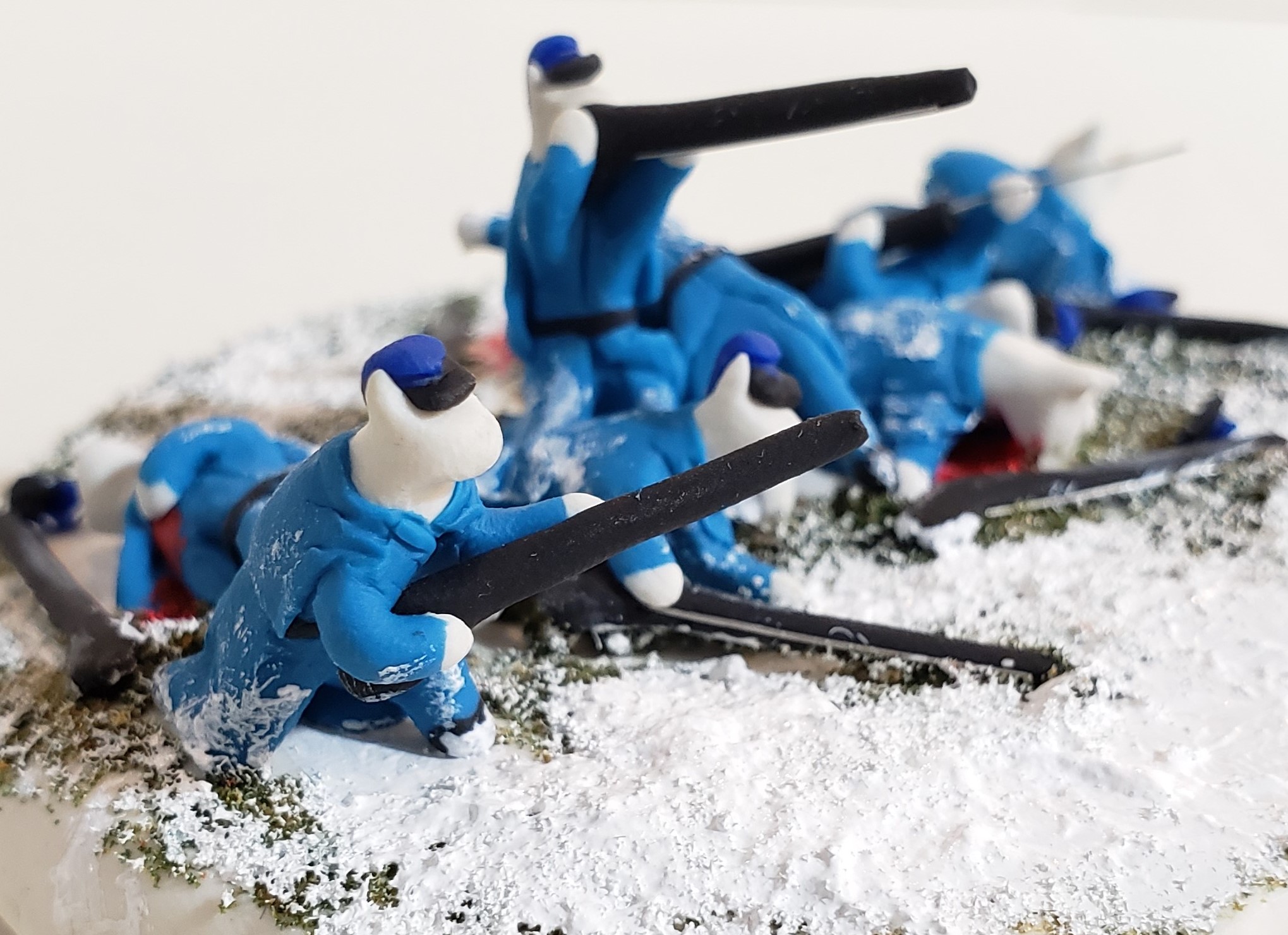
The Snowball Battle

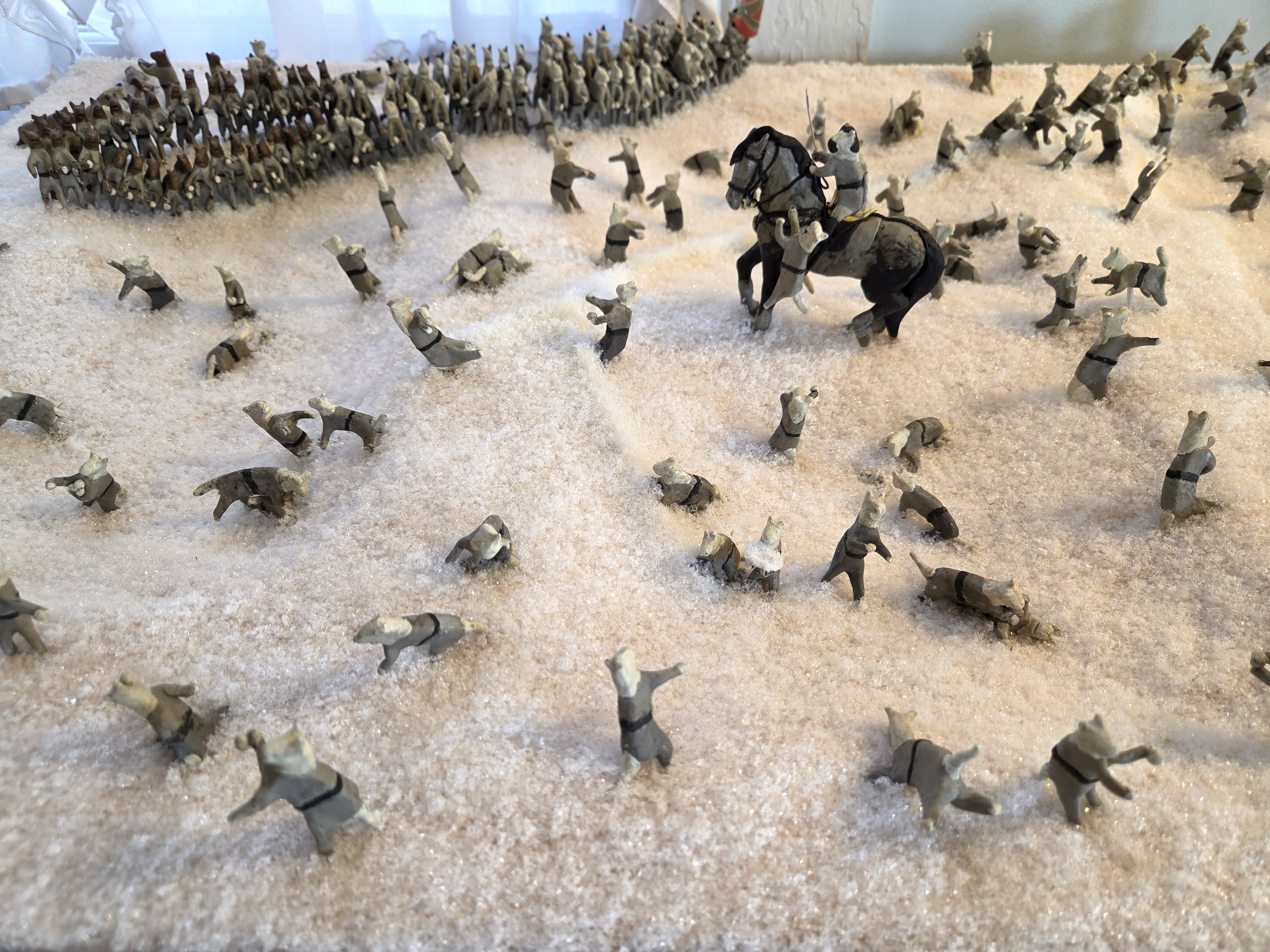
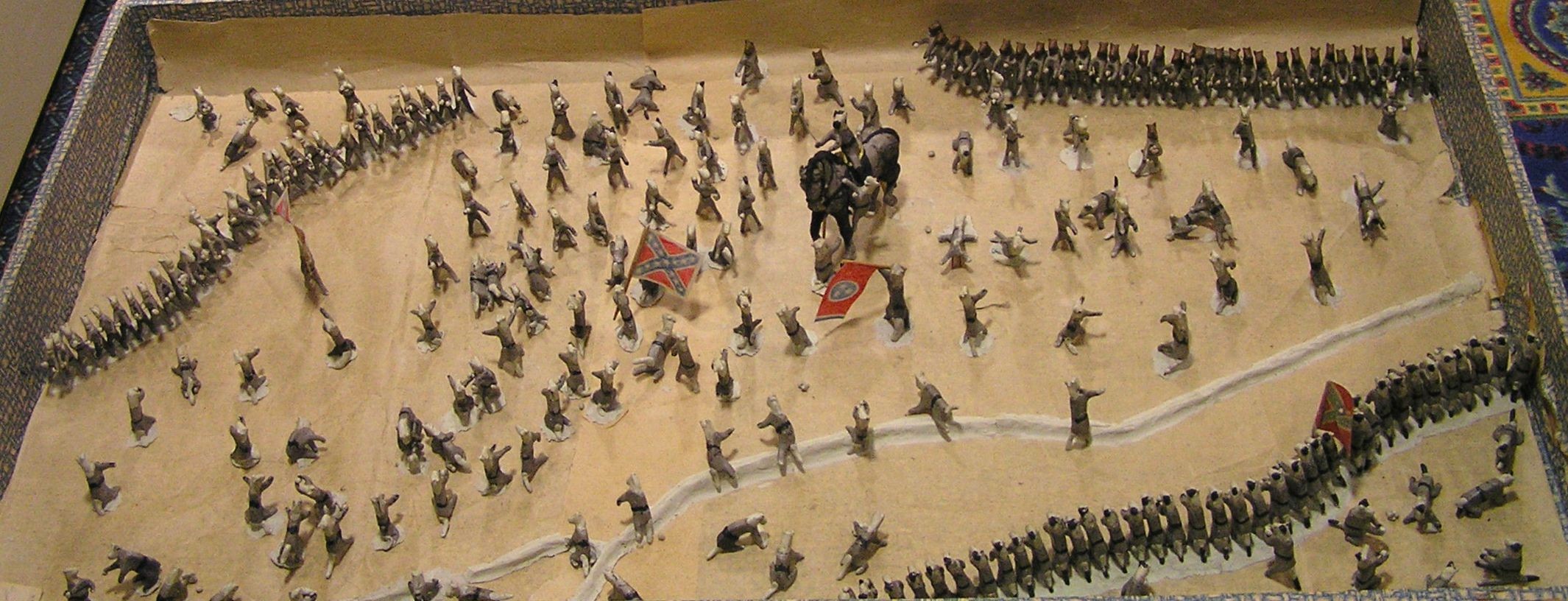
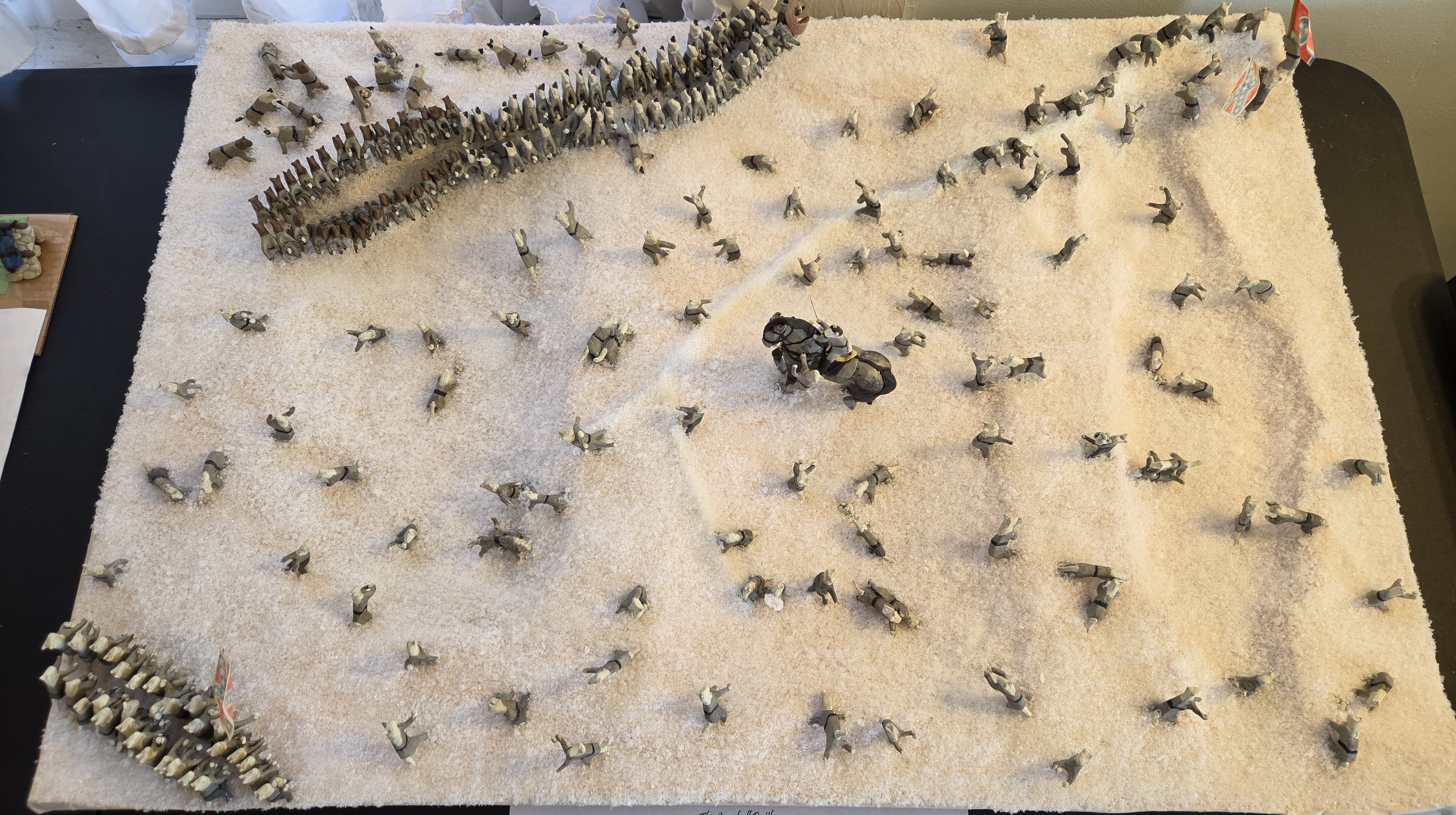
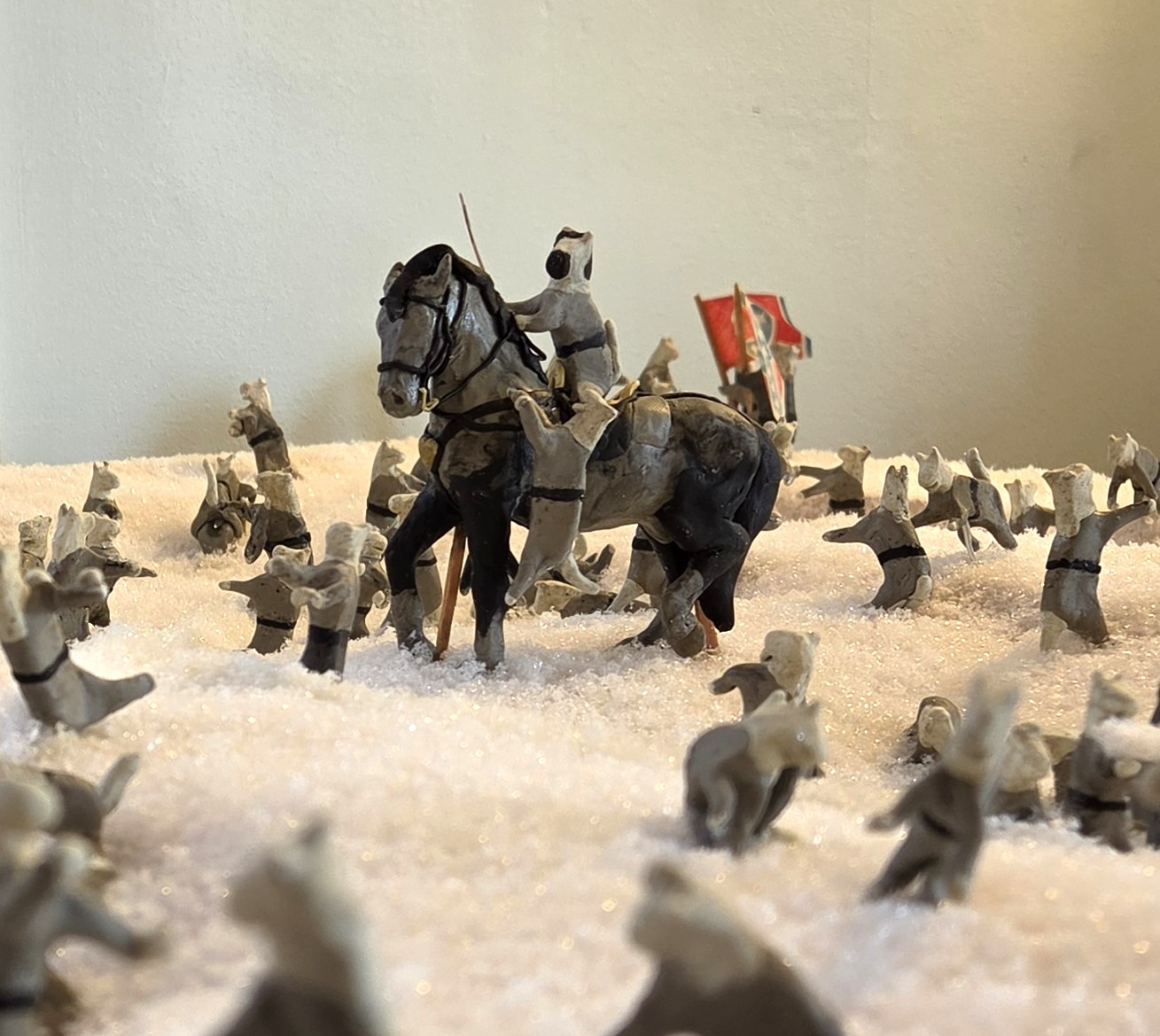
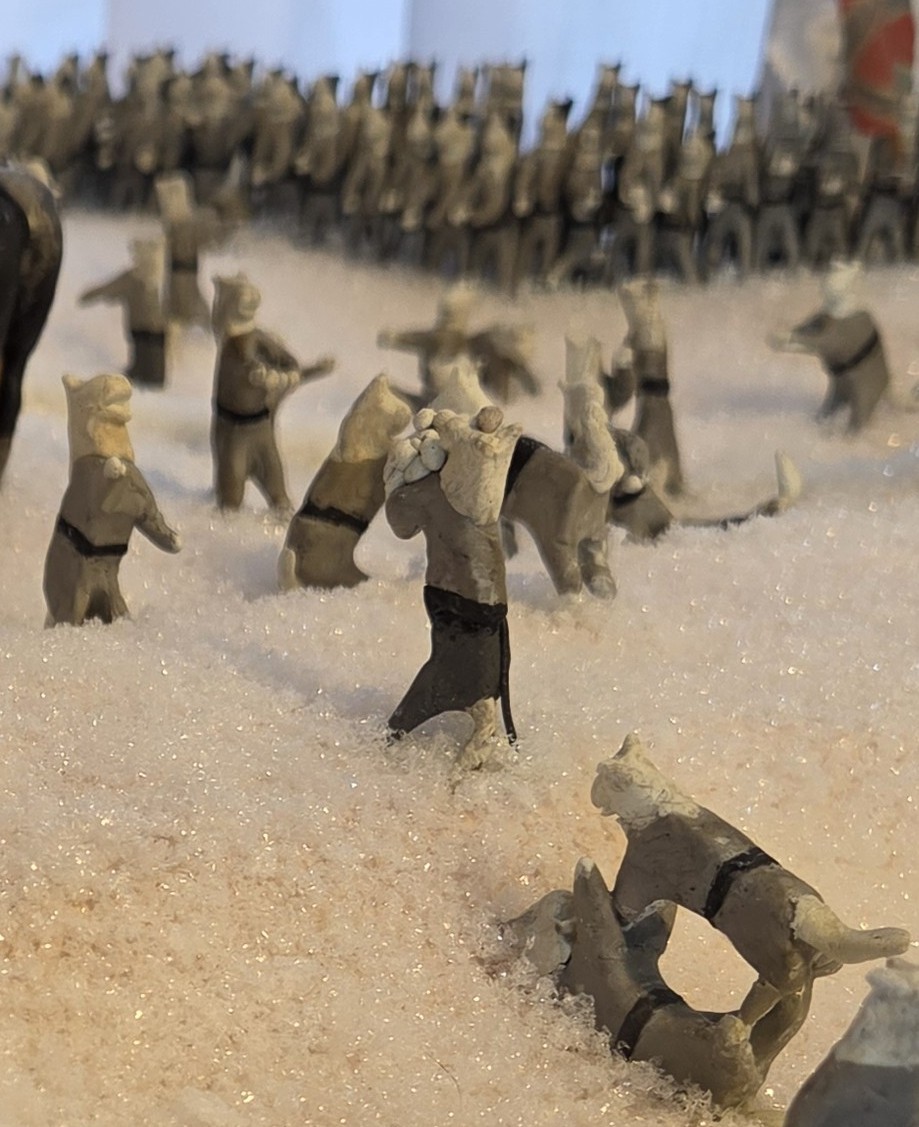
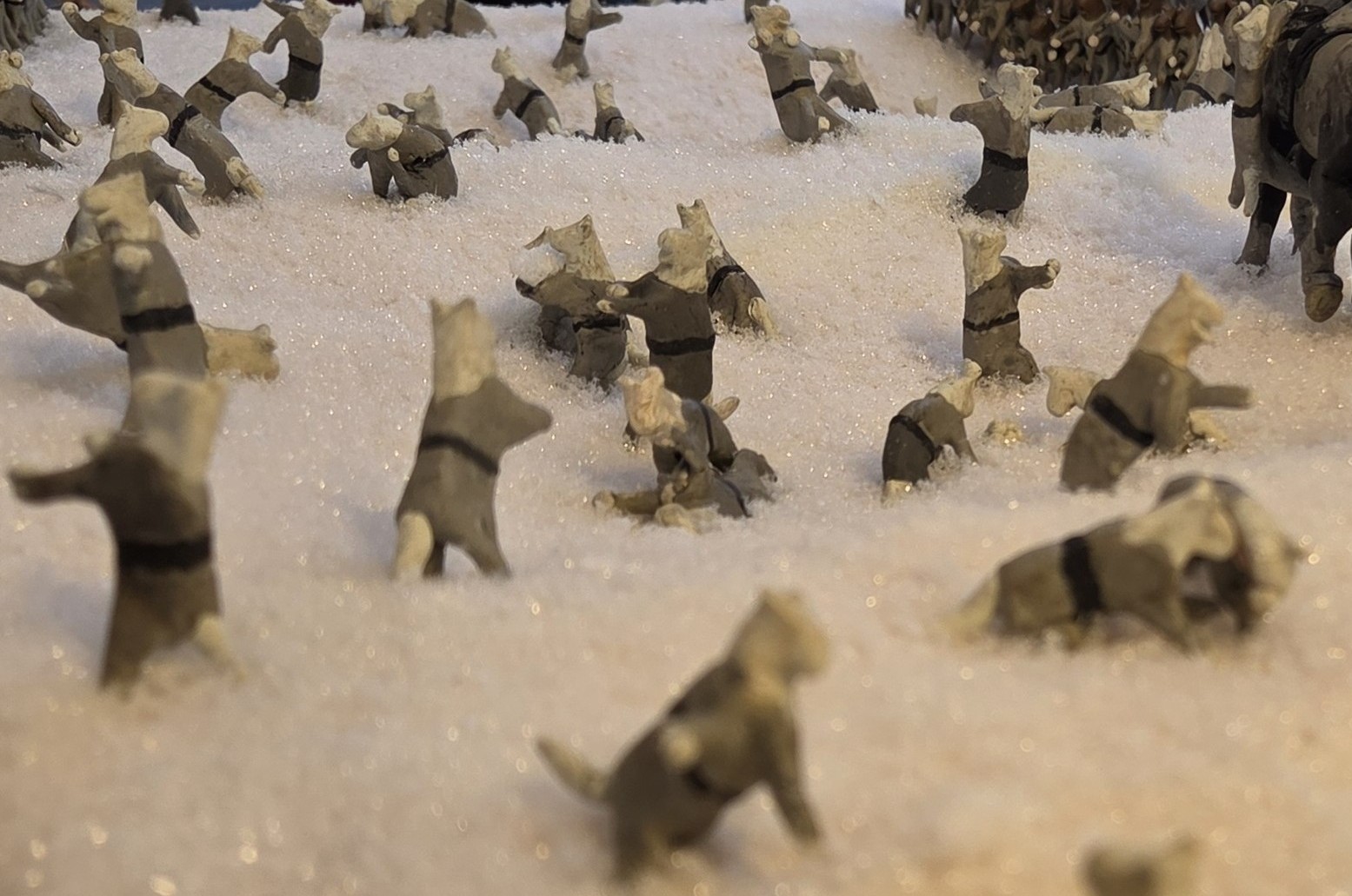
A “new old” diorama is at Civil War Tails! The Snowball Battle came on display on March 16, but its story reaches back to the very early days of our clay Civil War cats.

Our very first snowball battle diorama was actually of Union cats fighting. It first appears in a photo from early 1999, making it one of our very early dioramas (we began dioramas in 1998).  We ended up selling it at a garage sale, but the idea of such a diorama did not fade away. There are just too many stories of the fun that soldiers had in the snow! (For a few, check out our other mewsings here and here.)

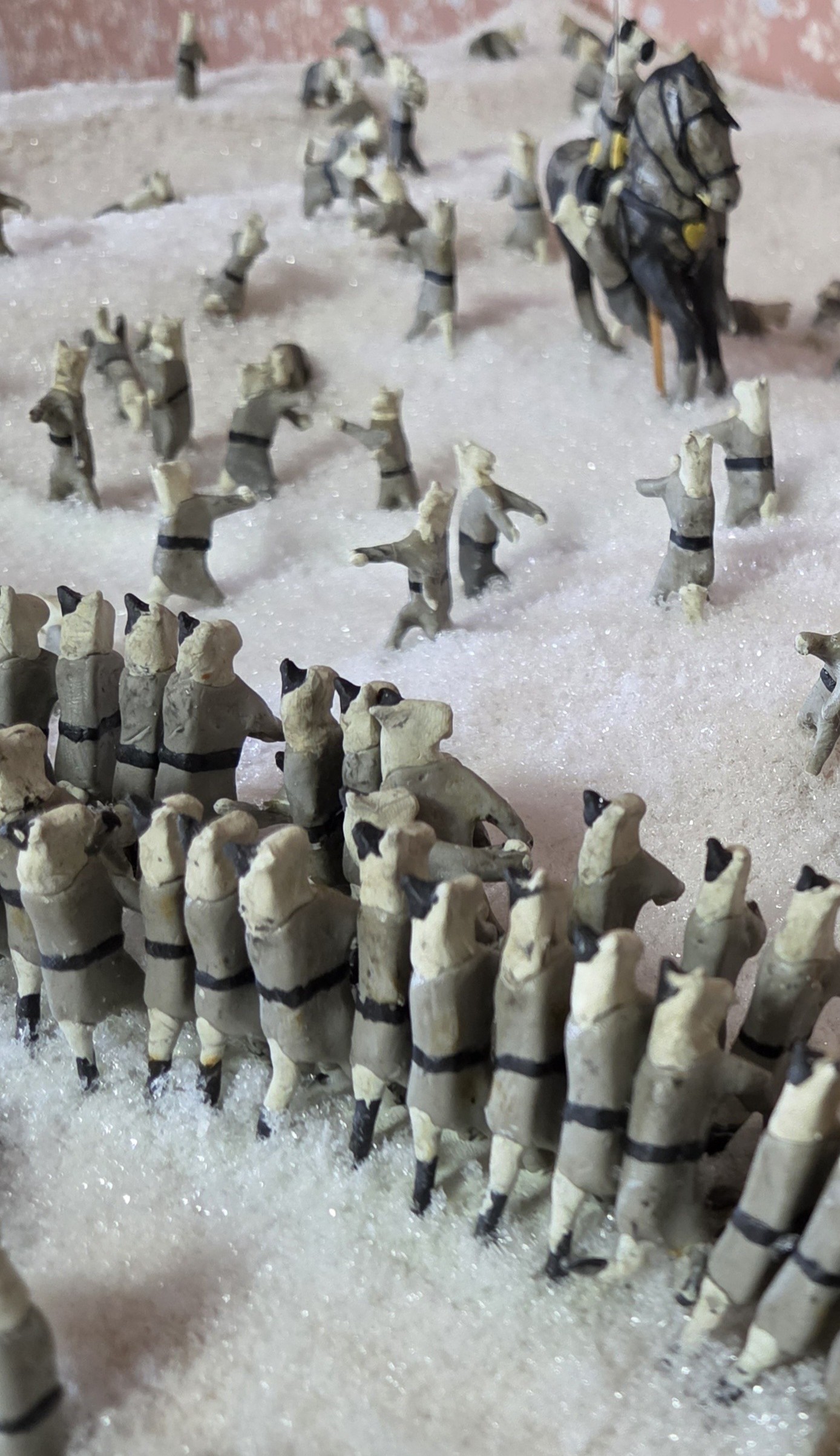
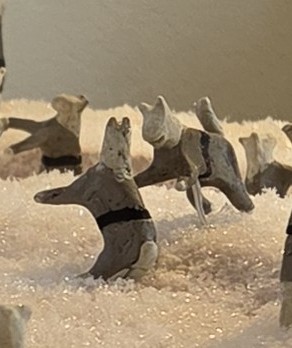
The story of Gen. Patrick Cleburne joining in a snowball fight is one that just begs for a diorama. How can you pass up a story where soldiers have to discuss whether or not to throw their general into a creek? On July 29, 2000, we began making our current version with 2-inch tall Confederate cats under Gen. Cleburne. By July 2003, the diorama was set up in a large wooden tray. The snow was white paper, and each cat had a white clay base.

Since opening Civil War Tails in 2015, the idea of bringing out the Snowball Battle has been on the wishlist, but we knew it would need a major overhaul. Finally, in January of 2026, when Gettysburg sat under eight inches of snow and we were all sick and tired of cold and shoveling, the inspiration struck. Now was the time to revamp the Snowball Battle!

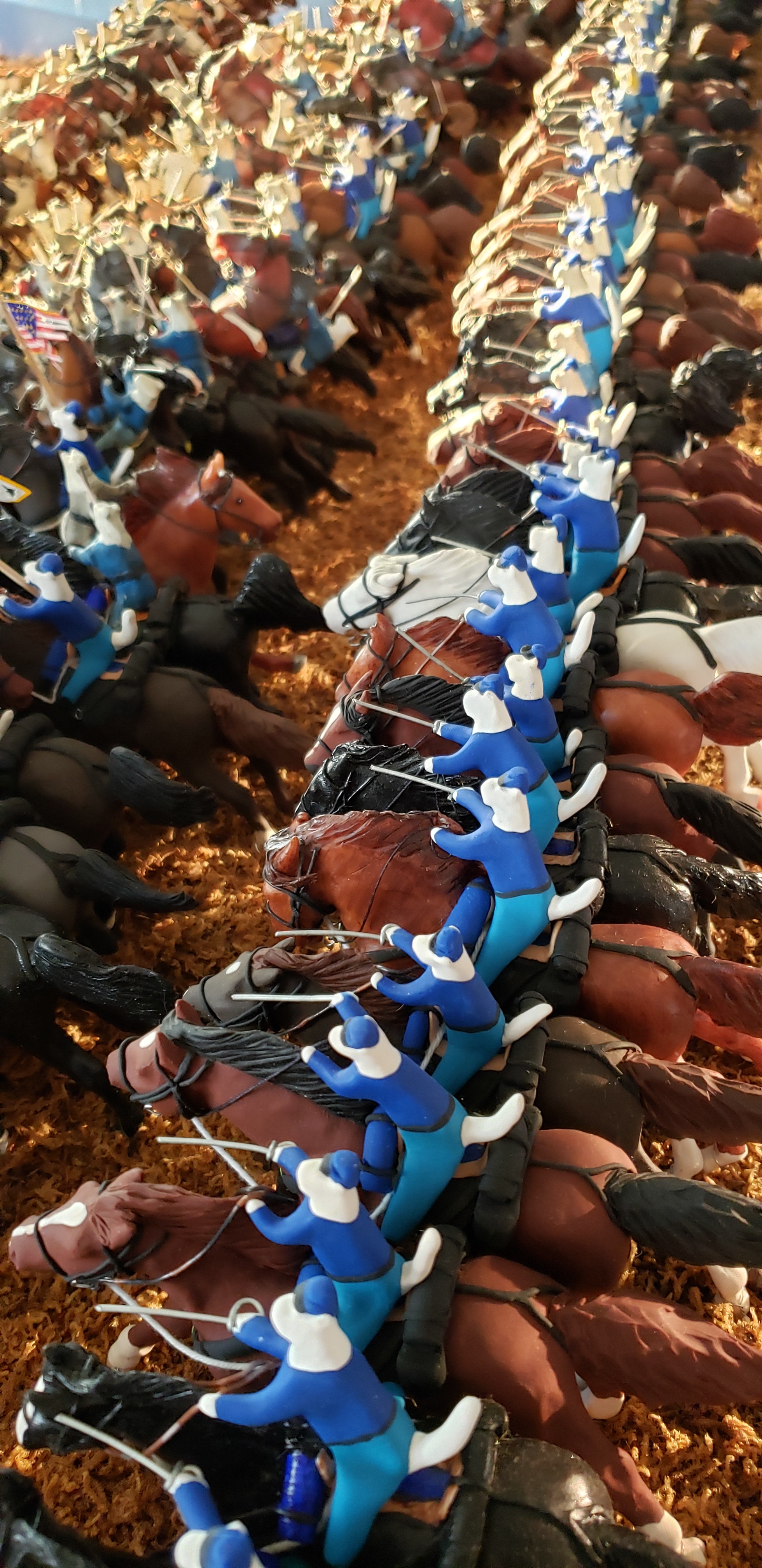
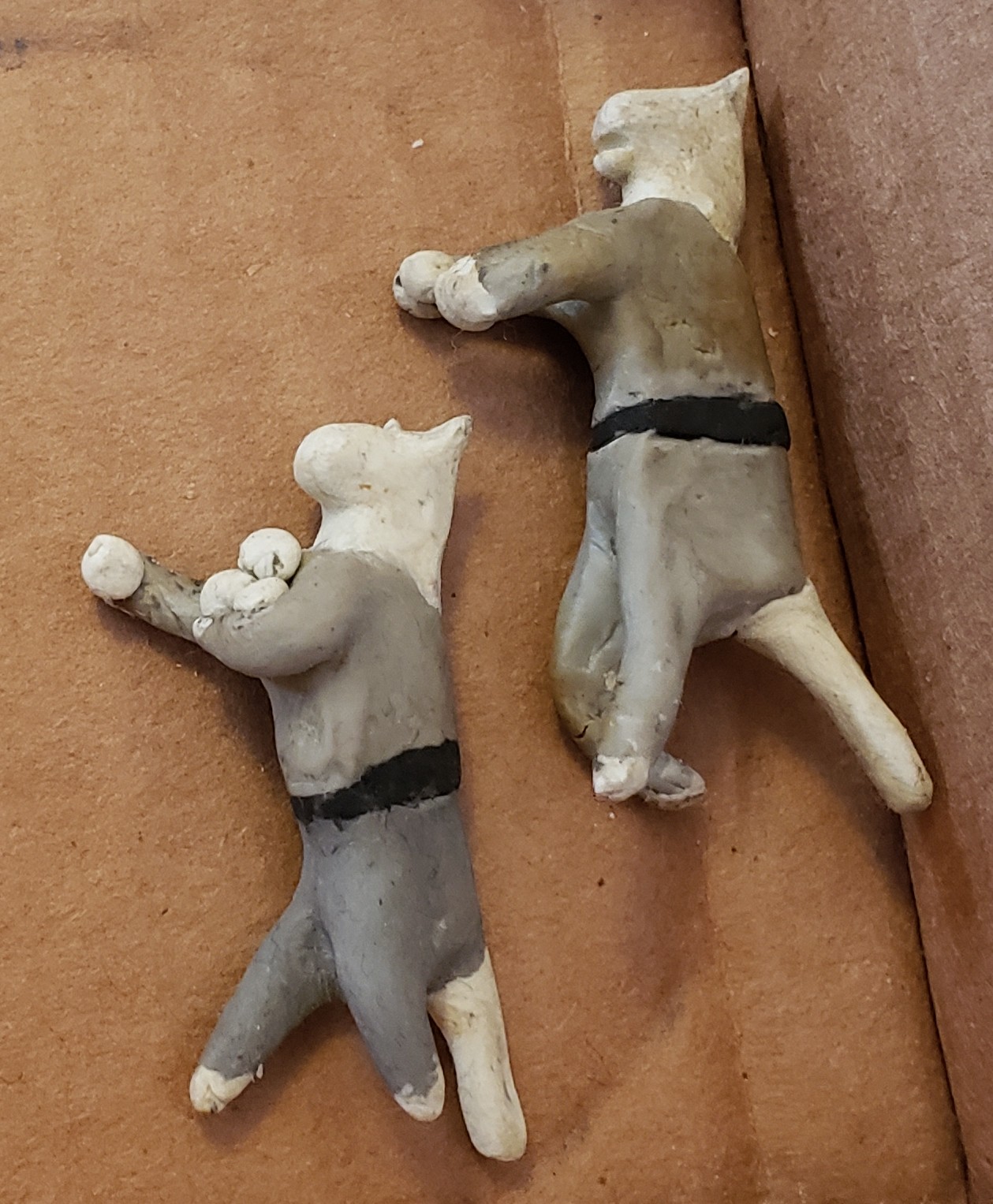
As with “Come On, You Wolverines”, revamping old clay cats involved cleaning decades of grime off of their faces and uniforms. With them being old, stiff, non-hardening modeling clay, lots of arms, legs, tails, and even heads fell off, so we did quite a bit of gluing.

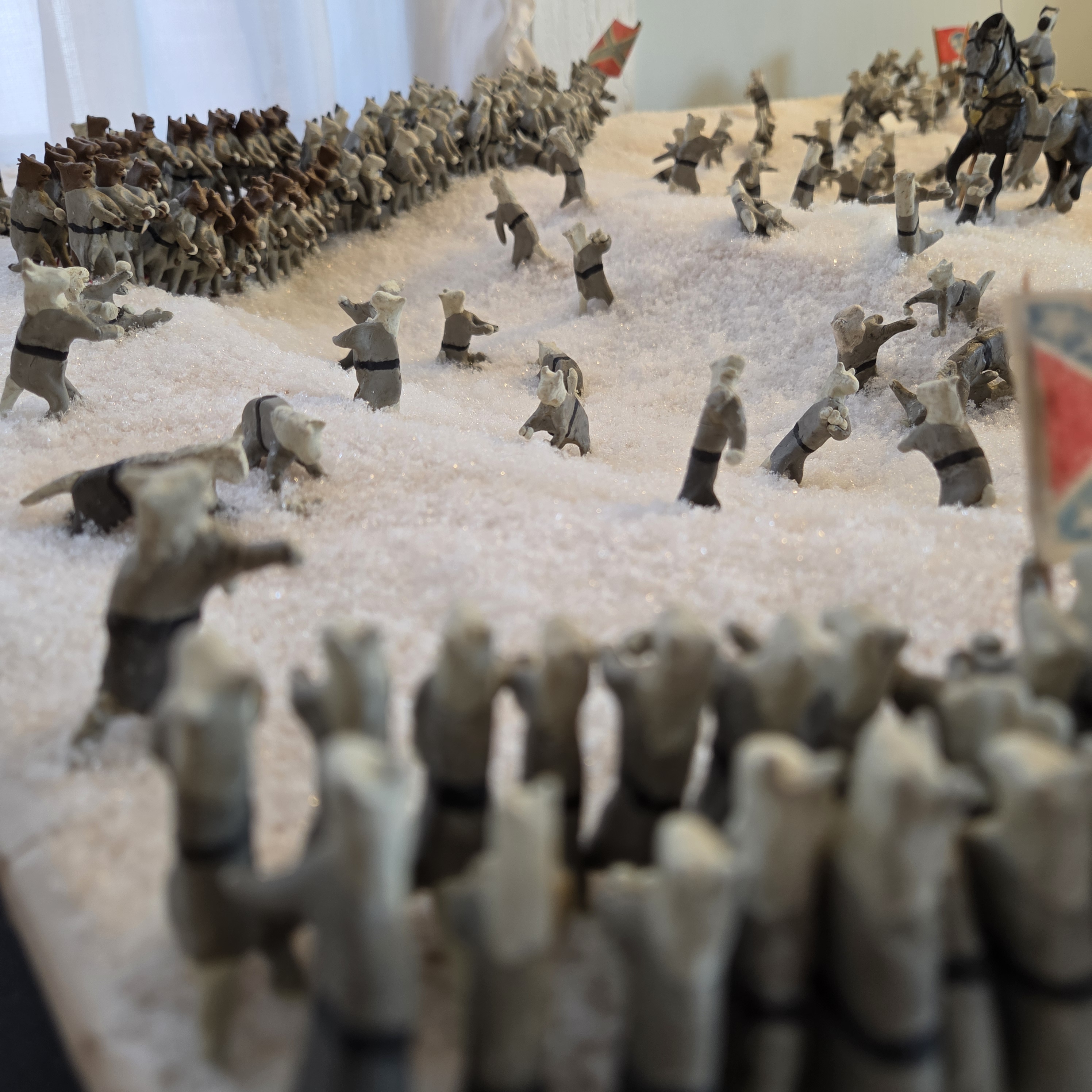
The main change, however, was creating a new base and installing new “snow.” We took the opportunity to add a little topography, too. Rebecca began gluing the cats onto the base, keeping the basic layout of the original diorama. And then, Ruth realized the charging cats were in a single rank! Civil War soldiers fought snowball battles with the same formations and tactics as a real battle, so they would be in the double ranks that Napoleonic tactics dictated. So, we had to take up the glued ranks and combine them. That would have been a big mistake to overlook! It just goes to show that even if an old diorama is loosely based off of a story—as opposed to detailed accounts and maps—we still need to pay attention to the details and check if they need to be updated for general accuracy.

On March 16, the Snowball Battle was finished and brought out on display! (Rebecca made a last push specifically in order to bring it out exactly six weeks after the groundhogs and Charlie the Groundcat [#CharlieTheGroundcat on Instagram] predicted six more weeks of winter.)

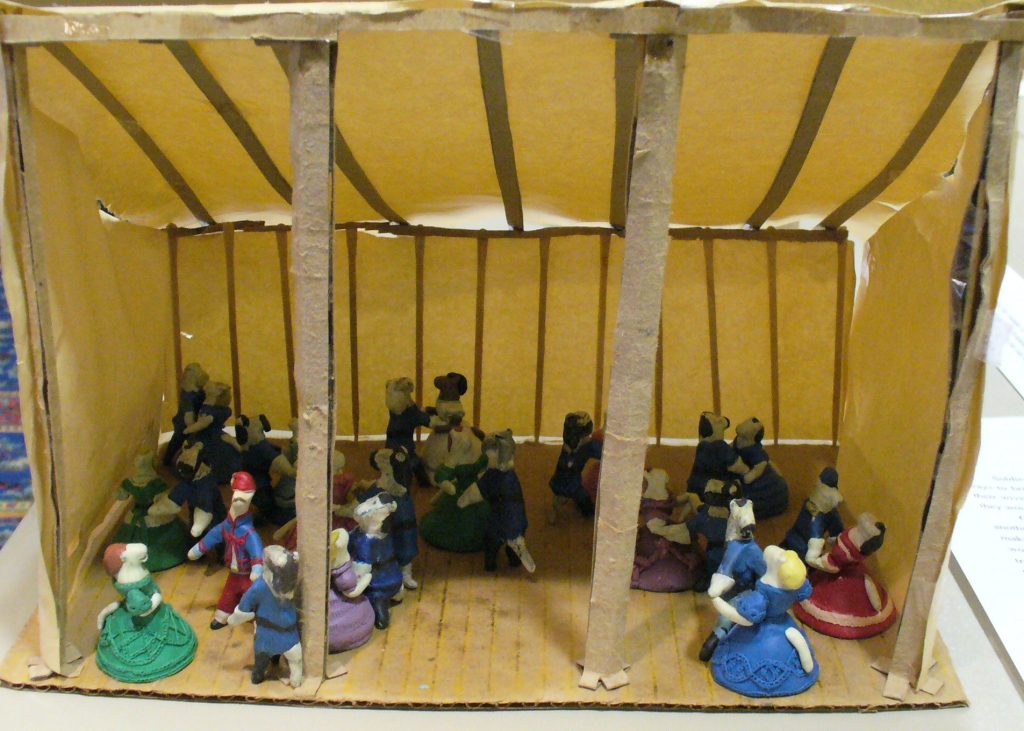
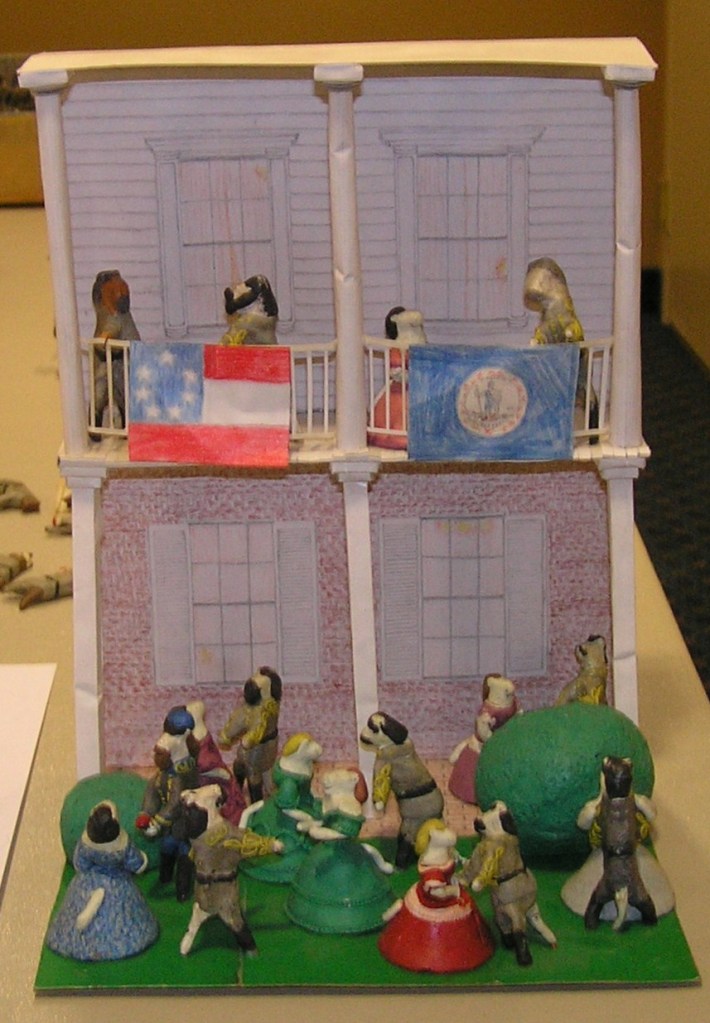
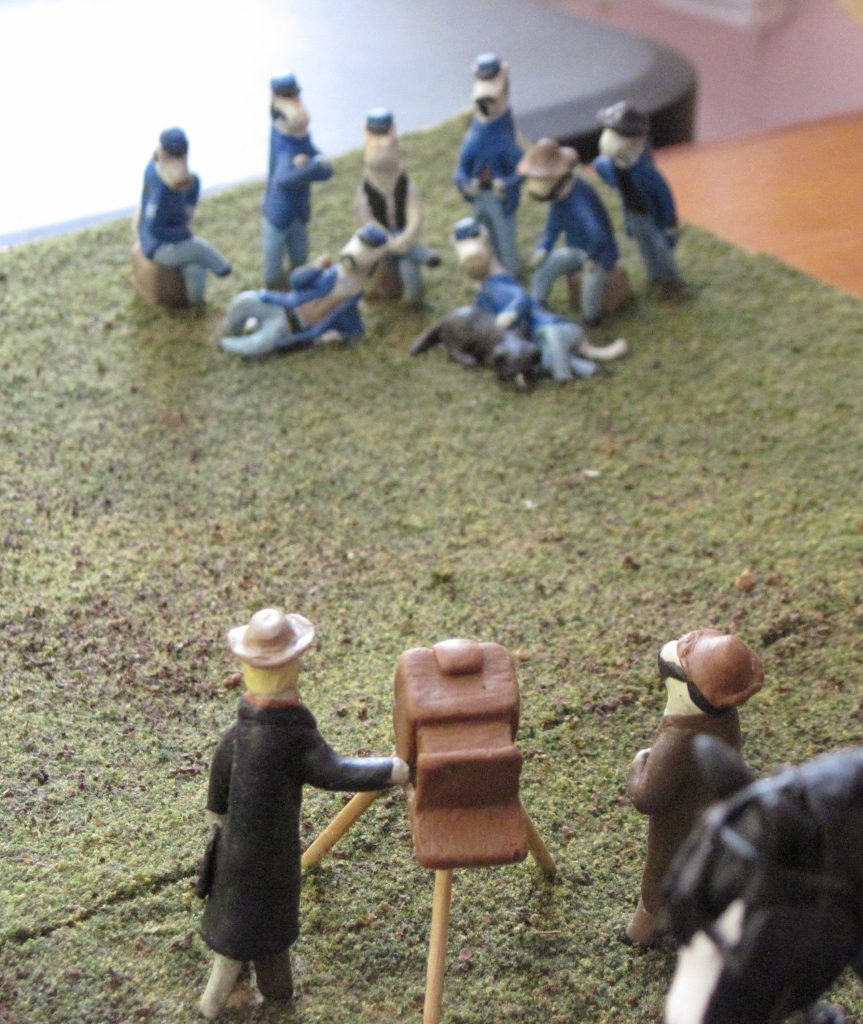
We are excited to have one more diorama showing the lighter side of the Civil War. Because the human interest stories of the war are what has always caught our interest, we enjoy sharing the fact that even though “war is hell,” the individuals involved were men and women just like we are, and they enjoyed fun, humor, and laughter just as we do. So, stop by and check out our Snowball Battle (if you’re tired of snow, feel free to come in July or August when you’ll be glad to think of snow days!), and while you are here, make sure to find our other non-fighting scenes: the Union Ball, Confederate Ball, and photographer.

Christmas 2025 – Looking Back

As we celebrate 10 years of Civil War Tails, we thought it would be fun to recap our Christmas posts. Have you read all of them? Have you missed some? Do you have a favorite?

Sometimes, we have serious or history-related Christmas mewsings. Our first one, “Christmas Angels” in 2016, focused on Sgt. Richard Kirkland. We also looked at some “Christmas Traditions” in 2018 (Kitty the Museum Cat makes a cameo – and learns that popcorn for stringing doesn’t come with butter!!).

The most fun to write are our whimsical ones.

In 2021, Kelly the Museum Dog learns what Christmas is all about, and why it means so much for her hoomans — and all hoomans!

In 2023, Joanie writes to Santa, but feels she has already received her gifts that year as she got a new home!

In 2022, the Civil War cats had to scurryfunge when the hoomans were sighted returning home a day early! Will the cats clean up the partying and return the museum to normal in time? Or will the hoomans learn that the “Night at the Museum” movies had it right??

And then we have the “Saving Christmas” Series! It all began in 2017, when the Civil War Cats saved the Nutcrackers from the Mouse King and his minions.

In 2020, the cats were back at it, saving Santa from COVID. (Ever since then, if you follow the Adventures of the Headless Horsecat, I’m sure you’ve noticed that Covid has become rather tame and a friend to the Headless Horsecat.)

Last year, Santa found himself in trouble again, and the cats had to rely on Joanie and her nose for cookies to save the day! We would like to report that Santa has not forgotten Joanie’s help, and as a reward for her services, a few days ago he made her an Honorary Reindeer!!

Merry Christmas, everyone!

Thanksgiving 2025

Today we take a moment for our annual reflection on some of what we are grateful for, here at Civil War Tails.

2025 marks ten years of Civil War Tails Diorama Museum. It may not seem long, but most small businesses do not survive the first two years. For those who do, it often takes about five years to turn a profit. This Thanksgiving, we are grateful for all of you who have helped our museum not only survive but thrive!

As we look back over our journey, we are grateful to God for how He worked all the pieces to fall into place:

  • guiding us to see the listing for this building, in the location we thought would be ideal (Baltimore Street)
  • giving us parents who supported our crazy idea and who have helped us every step of the way to make the museum possible
  • bringing the Washington Post and NPR to our museum in Spring 2016, after we opened on Labor Day weekend 2015 (talk about getting the word out quickly!)
  • continuing to bring interviewers for articles, podcasts, and websites, and
  • continuing to bring us you! Word-of-mouth is a wonderful resource, and we are deeply grateful to each of you who has told (or cajoled) a family member or friend to visit us. The best parts of our work here are to see the joy it brings you, the way that our dioramas help you to piece together the history you have just learned on battlefield tours, and the way children (and adults) are inspired to create their own dioramas or to study history.

Thank you for ten great years (yes, including 2020), and here’s to many more together!

Happy Thanksgiving, everyone!

The Adventures of the Headless Horsecat – 2025

In honor of 30 years of Civil War cats, the Headless Horsecat decided to have his photo taken with each K-Cat!

Since we don’t know Cats 1000 and 2000, he first visited the Original Civil War Cats, Generals Lee and Grant. They were very obliging when he asked for a photograph with them.

Next, he went to Cat 3000, who mistook him for one of the Confederates from Battery Wagner. An honest mistake, but he hurried away from there!

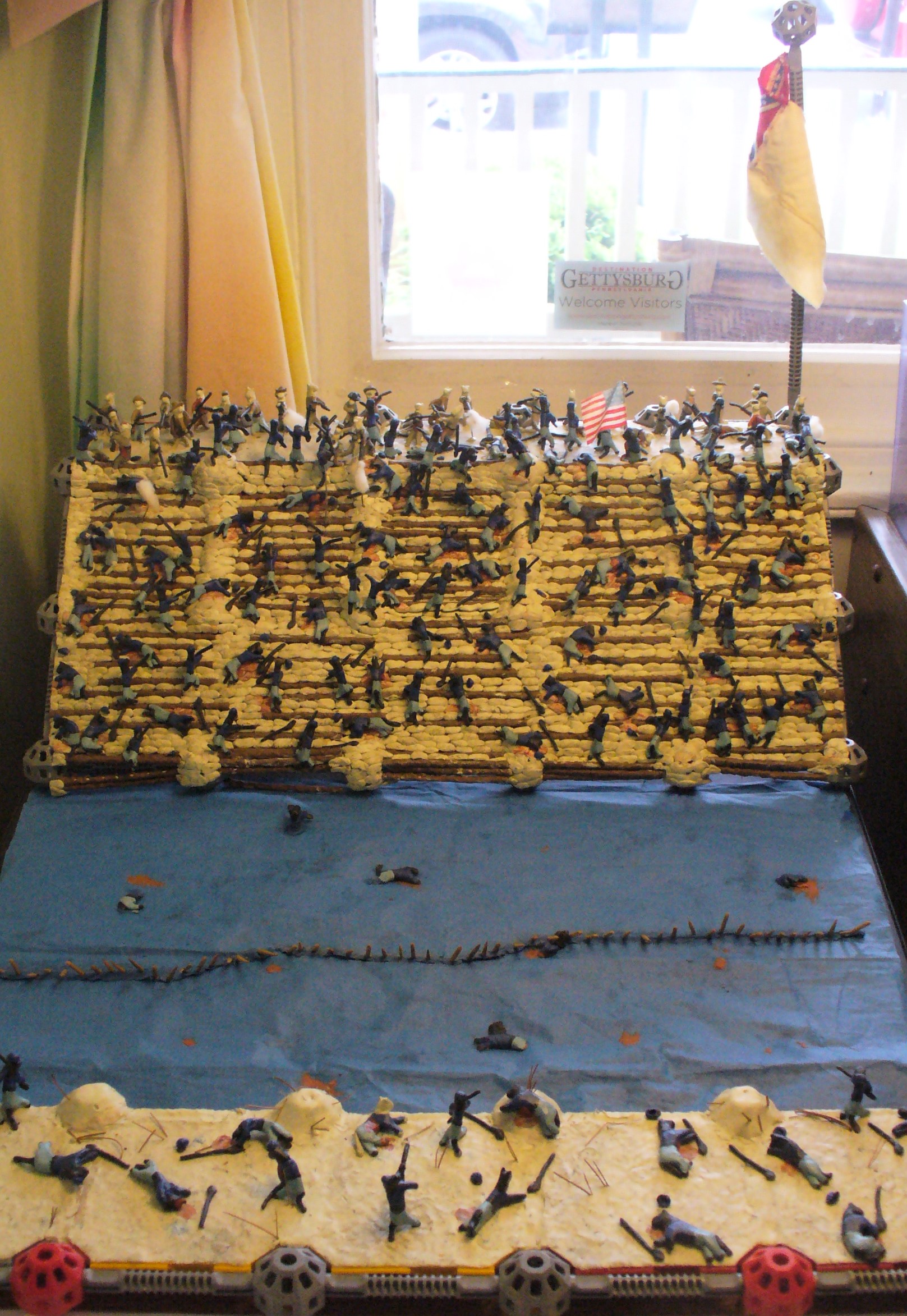
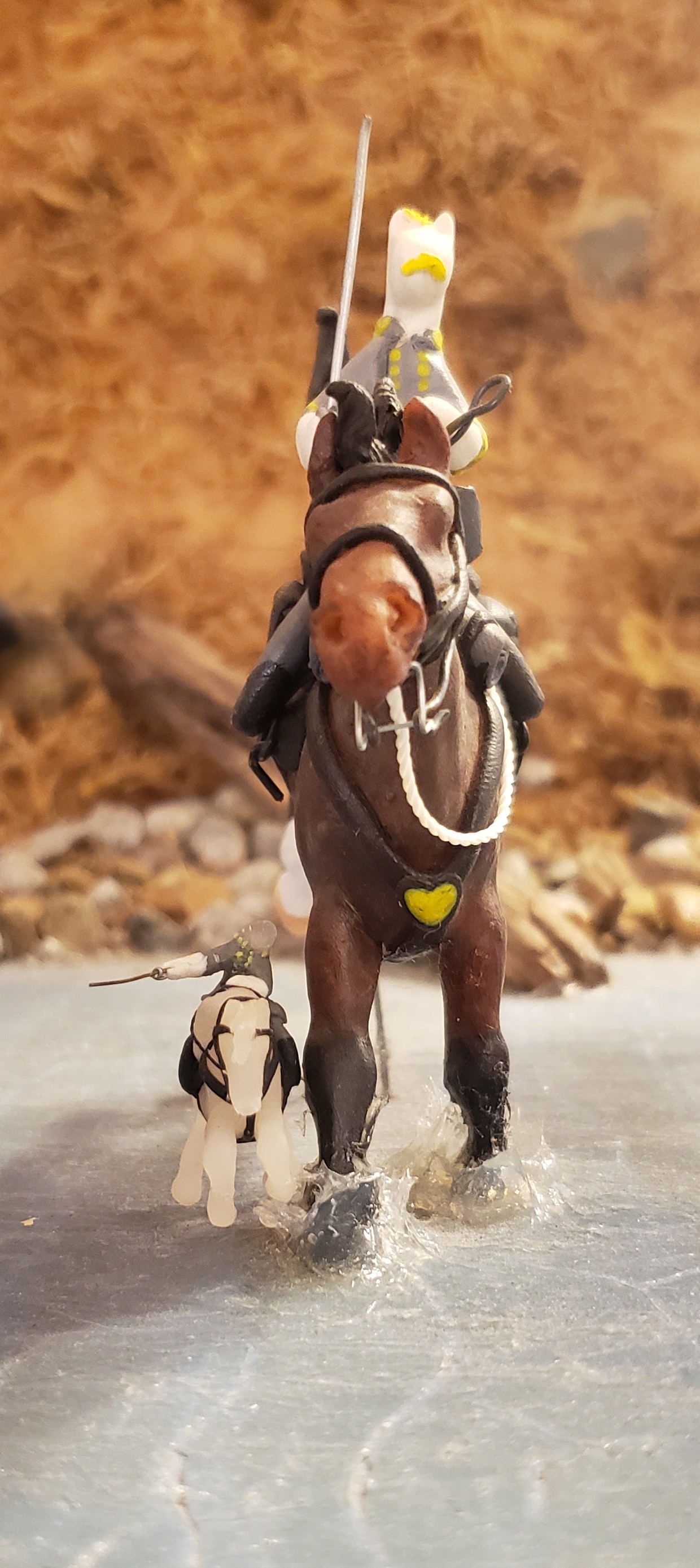
However, it seems that the little snafu got his fighting blood up, because when he reached the Angle, he joined in Pickett’s Charge and galloped past Cat 4000 to the stone wall.

There, he (almost literally) ran into Cat 8000’s spongestaff!

Deciding to take a break, he joined Cat 5000 for a swim in the Duck River.

Then, off to Little Round Top, where he pitched in with the 15th Alabama, facing Cat 6000 and the 20th Maine.

—Only to be run over by Cat 7000 in the bayonet charge!

Just in time to avoid capture, he remembered that he is a neutral party in the diorama fighting, and so he went to help direct Cat 9000’s stretcher-bearers to the aid station.

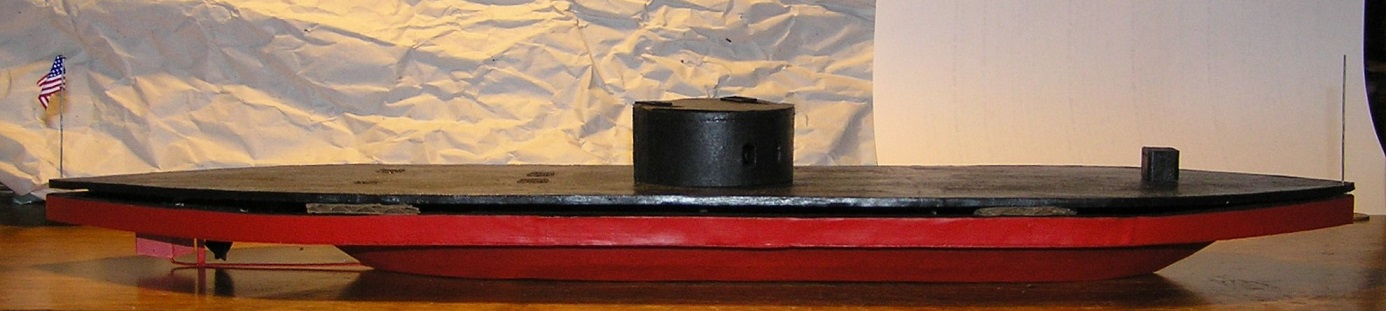
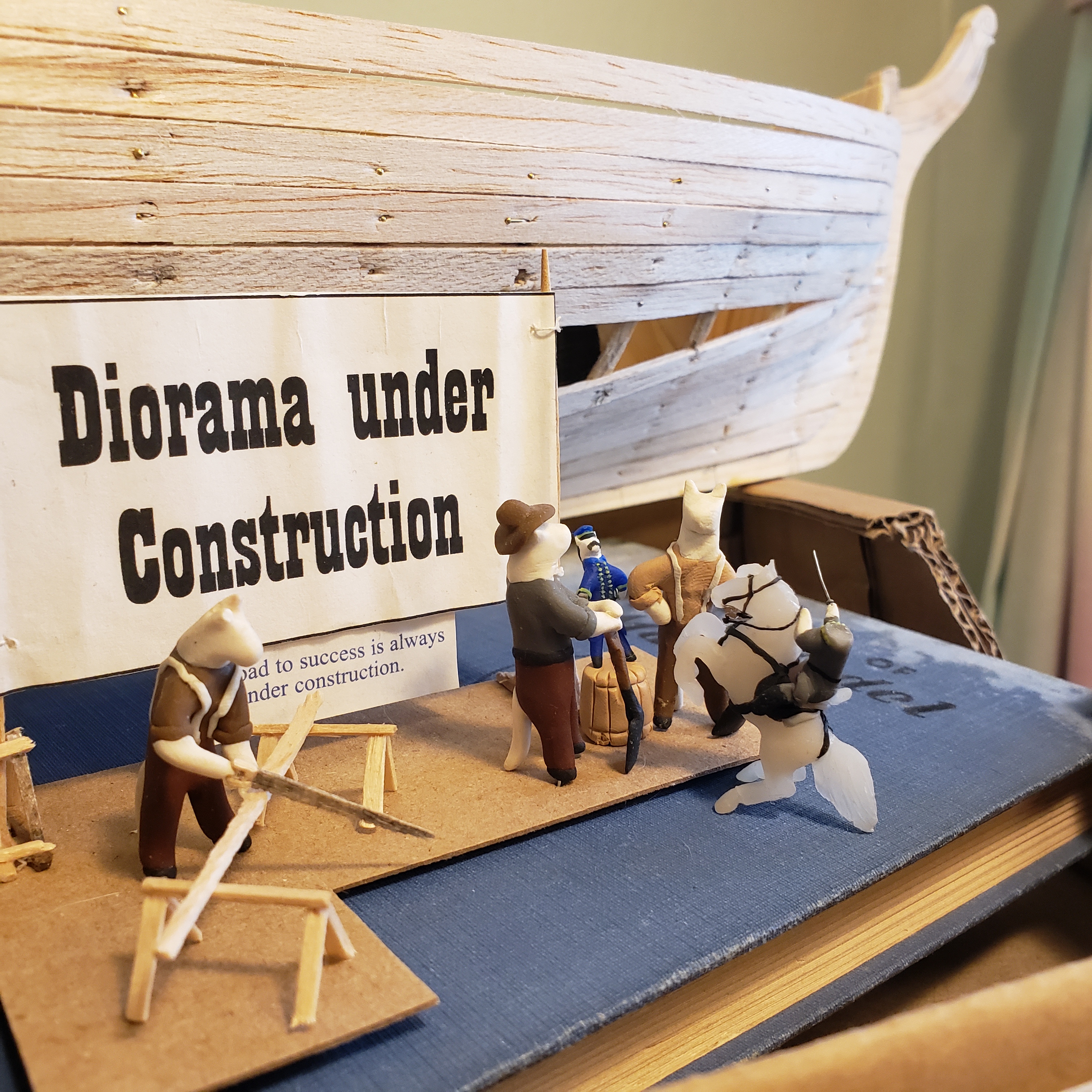
He finished his journey at the shipyard, where he and Cat 10,000 consulted about the progress on USS Cumberland’s hull, then met with some of the construction crew. Even though he really doesn’t know anything about ships and their construction, he suggested that the big hole in the hull should be patched.

Happy Halloween, everyone!

30 Years: the First K-Cat

In an earlier Mewsing, we looked at the historical figures behind our original clay Civil War Cats. Today, we focus on our first known K-Cat.

Battery Wagner – begun in Oct. 1999

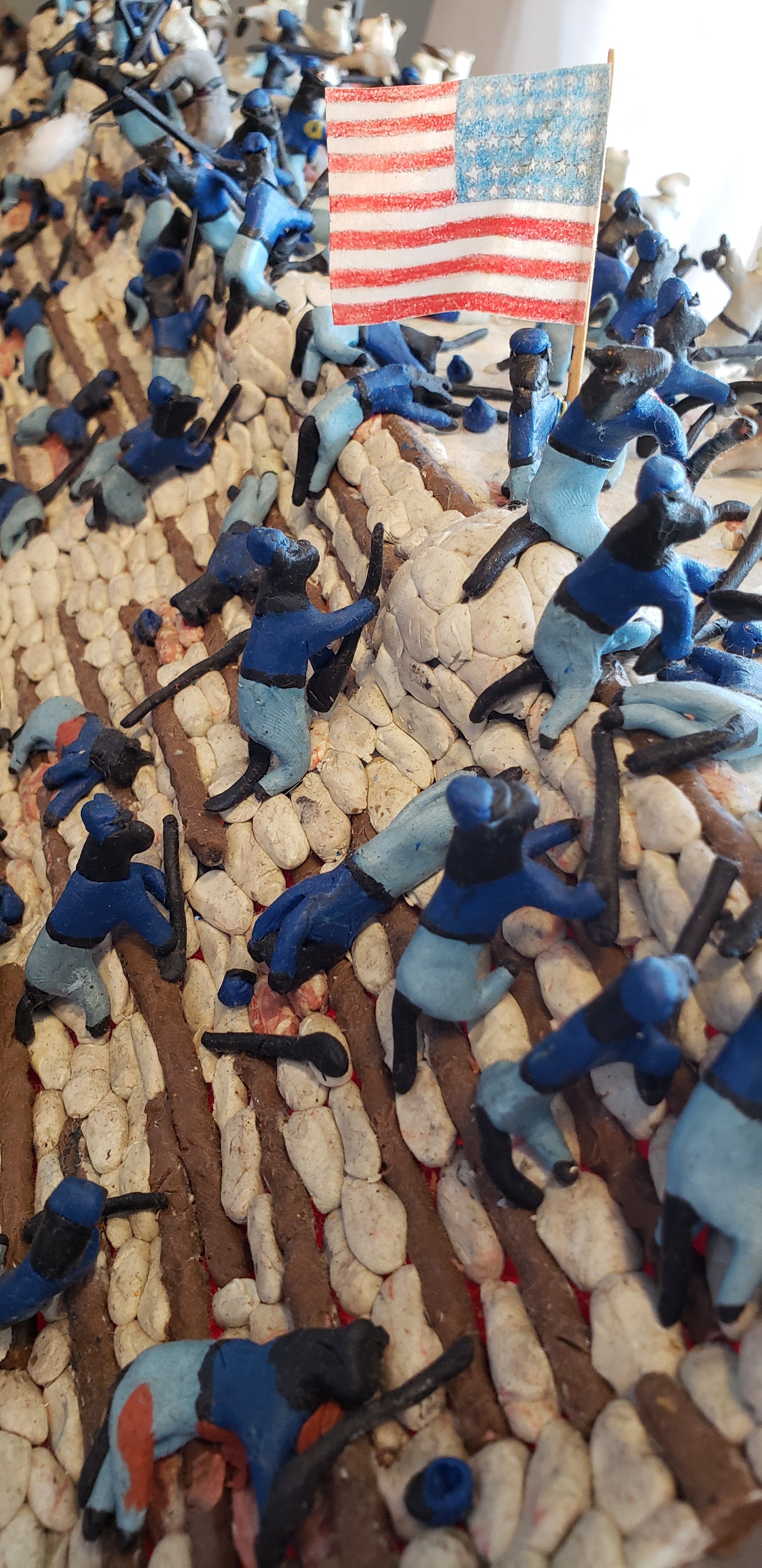
The idea of keeping a Cat Census did not come to us right away, and so we do not know who our 1,000th and 2,000th cats are. But we began counting and keeping track as we revamped our diorama of the 54th Massachusetts Regiment’s attack on Battery Wagner, to make it to-scale. We reached Cat 3,000 at the end of 1999, in time to place him on the diorama at midnight, January 1, 2000. Yes, we took the diorama to our friends’ New Year’s Eve celebration, just so we could install Cat 3K on Y2K!

Cat 3K is not an identified officer or man. Nowadays, we like to pick a specific individual to honor as a K-Cat, but originally, it was purely whoever was next to be made. So, Cat 3K represents an average soldier of the 54th Massachusetts.

A month after the Emancipation Proclamation decreed that African-American men would be “received into the armed services of the United States,” Governor John Andrew of Massachusetts issued the Civil War’s first call for “colored” soldiers, and the 54th Massachusetts Volunteer Infantry was formed.

Many of the men came from outside Massachusetts. Some came from as far away as Canada, the Caribbean, and various southern states. Because the North was still queasy about colored soldiers, the officers of the regiment had to be white. The enlisted men could only advance in rank as far as non-commissioned officer status.

Even though they had been told that they would receive the same pay as white soldiers, the men of the 54th received reduced pay. And out of that, money was taken to cover the cost of clothing—something that was not done in white regiments! The men and their officersrefused to accept their wages until both black and white earned equal pay for equal work. The fight for equal pay lasted for over a year, until the war was nearly over.

As if the prejudice from civilians and the army were not enough, the Federal government itself was slow to support colored soldiers. The men of the 54th headed south knowing that the Confederate Congress had announced that every captured black soldier would be sold into slavery, and every white officer in command of black troops would be executed—and the Federal government had not yet given any indication that it would stand up for its own troops. It was not until after the fight at Battery Wagner that the U.S. Government threatened retaliation on Confederate prisoners if the Confederacy went through with their word.

The regiment’s first taste of action came on July 16, 1863, in a skirmish on James Island, SC. Their actions in that fight earned them the respect of the white soldiers around them. Two days later, their steadfastness in the assault on Battery Wagner proved to the nation that black men could fight as well as white men.

Tens of thousands of black men would enlist before the war’s end. President Lincoln credited them with helping to win the war.

30 Years of Civil War Cats: Follow Your Dreams

In Part One, we looked at the history of our clay Civil War cats and our personal journey to start Civil War Tails. Today, we want to talk about four lessons we have learned along the way, and help you to apply them to yourself:

  1. Allow yourself to dream.
  2. Identify the kernels inside you that you keep coming back to.
  3. When you take the plunge…stick it out.
  4. Make a difference.

First, allow yourself to dream. Do not dismiss your dreams as impossible. Allow yourself to consider the possibility. When Rebecca took small business courses in college, she was merely toying with the idea of a museum, figuratively poking at it. The idea of starting a museum sounded so big and grand that it seemed impossible. But pursuing a dream is like eating an elephant. Take it one step at a time and…maybe you can. Be open to your interests, work towards your dream where and when you can, and you may be surprised at where it leads!

Second, identify the kernels that you keep coming back to. What are you passionate about? What idea keeps rattling around in your head?

Sometimes it takes time to identify them. And sometimes it requires listening to the people around you. Other people can help you discover the kernel that will bring out your potential, because it is easier for them to see your gifts, talents, or passions that you think of merely as “just a hobby” or “just the way I am.” Or, they might help you find a way to do something with your skills, because they know of jobs or opportunities that you have never thought of. Or, as with us and Helen, they might have the persistence to keep mentioning a good idea until you finally listen!

Once you’ve identified the kernel, develop it. See how your other strengths, skills, talents, passions, interests, and knowledge can help to develop that kernel. For example, starting (and running) our museum involved more than just our cat-making abilities.

  • It took knowledge: Ruth, being a lawyer, knew what type of lawyer we needed to find to help us set up the business and take care of the legal requirements.
  • It took skills: Rebecca’s work as waitstaff taught her that customers are not just paying for the food, but for the experience. And the staff is part of making that experience enjoyable and memorable. That is knowledge and a skill that translates to a museum—and any job. People come not just for the dioramas, but for the experience. How can we make the experience enjoyable and memorable for our visitors?
  • It took passion: People often comment how much they enjoy seeing our passion, whether in the amount of work and time it took to make the dioramas, or in chatting with us and hearing us pour out the stories that inspired our dioramas.

But once you have dreamed and identified the kernels in your life and taken the plunge to develop them—then what?

Our third point, stick it out. We’re very fortunate to have a museum centered around our passions. But in all honesty, even with a dream job, you won’t love every day. So how do you keep going?

We have a very practical tip, which we have found helpful: Remember the 5-stars. That is, remember the good responses and interactions. Let’s face it, you can have tons of 5-star reviews and Likes, but it’s the lone 1-star review that sticks in your head and starts you doubting and second-guessing. So, remember the 5-stars.

We have taken to writing down the nice comments we get from museum visitors. Then, at the end of each month, we compile them into a “monthly report.” That way, when we’re feeling discouraged, we can go back and read comments like, “This was a joy!” “This is the best museum we’ve been to!” or even, “This was better than Mardi Gras in New Orleans!” (yes, someone actually said that!)

Keeping a log or diary of the good days is a very practical way to remember why you do what you do, to help you keep plugging forward, and to reorient you back to your original goal or aim.

Lastly, whatever you do, do it with excellence, and you will make a difference. You may not see it day by day, but as you reflect on past months and years, and especially if you keep a “5-star log,” you can see the impact you are having on others.

Over the years, we have developed specific strengths, skills, talents, interests, passions and knowledge to become the Civil War Tails Diorama Museum. The result has impacted people with our passion, detail, and historical accuracy.

  • As kids, we were detail-oriented perfectionists.
  • Over time, we developed our skills in research and analysis, our knowledge, our perfectionism, our steady hands and patience, our attention to detail, and our desire for accuracy.
  • Now, licensed battlefield guides enjoy seeing a historically-accurate, to-scale, miniature view of one point in time on the battlefield they know so well. And people who had their doubts about clay cats appreciate the detail and accuracy.
  • As kids, we liked making things out of clay and whatever we had around the house.
  • Over time, we honed our skills to greater precision and detail and learned about new materials, so now we can recreate battlefield topography and precise rock formations from photographs.
  • Now, visitors can visualize what they are learning about. One visitor said the Civil War Tails experience was “life-changing,” because this was the first time she could visualize what the battle looked like.
  • As kids, we liked the individual “people stories.”
  • Over time, we developed our passion to not only recreate for ourselves but also to share the stories of the people in the Civil War.
  • Now, we are
    • Raising awareness of less-known actions, including East Cavalry Field here at Gettysburg  
    • Inspiring kids to study history even to the point of forming their own history club or making their own dioramas
    • Making history accessible for adults who were not interested in it before. Something “quirky” can be unexpectedly awesome and informative, and help to make a “boring” subject interesting!

Your strengths and skills and talents, your interests, passions, and knowledge can impact lives. Develop them. Value life-long learning. Take training opportunities with an open mind and enthusiasm. Remain curious and open to new experiences and knowledge. Keep honing your skills.

If you do what you do well, it will impact people, even in ways you do not expect. We did not set out thinking, “We’re going to make a difference.” But we have. By pursuing excellence in our research, materials, and presentation, what used to be “just clay cats” has helped people see history in a new way, helping to honor and tell stories of the people in the Civil War.

How will you make a difference?