In an earlier Mewsing, we looked at the historical figures behind our original clay Civil War Cats. Today, we focus on our first known K-Cat.
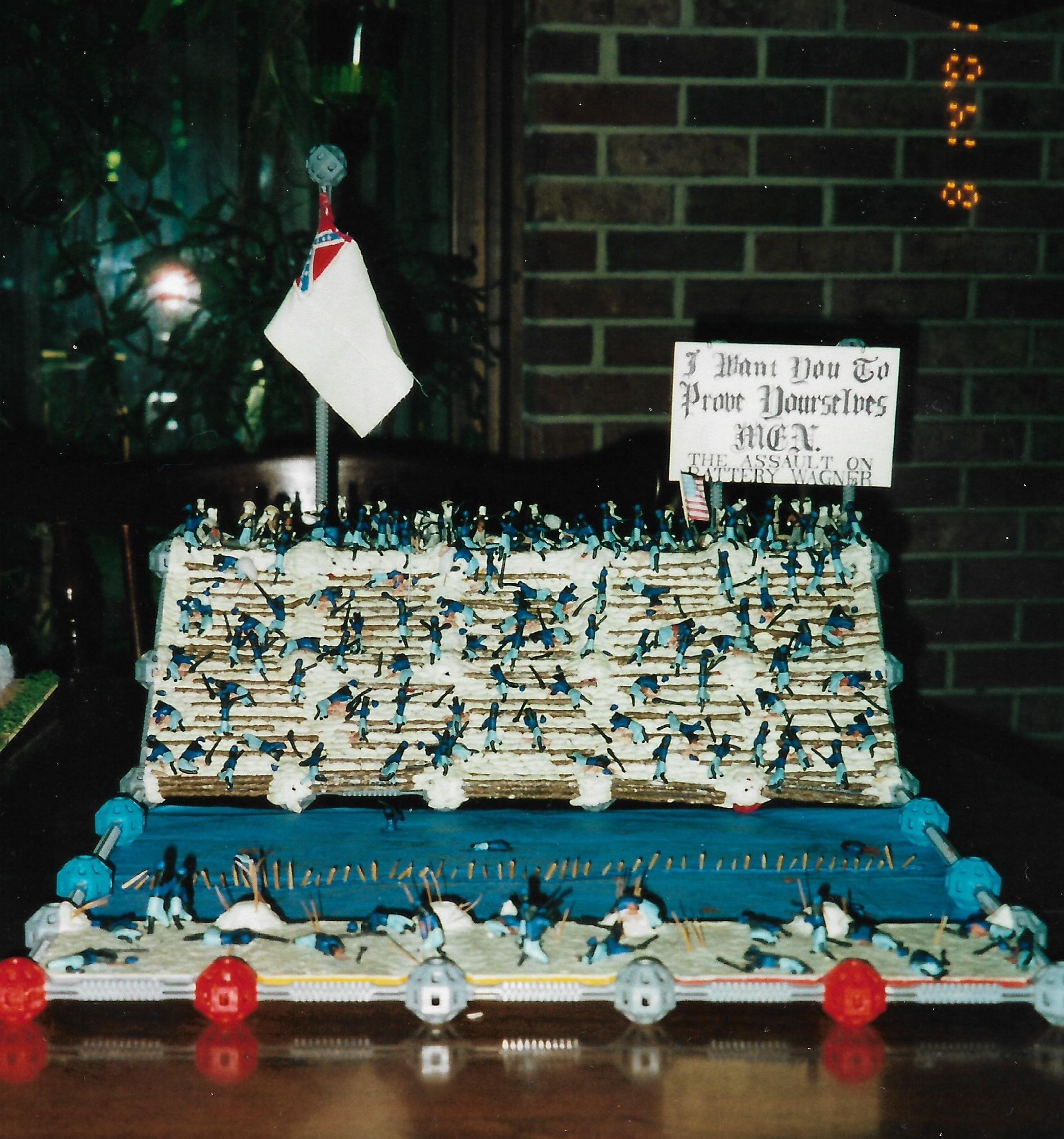
The idea of keeping a Cat Census did not come to us right away, and so we do not know who our 1,000th and 2,000th cats are. But we began counting and keeping track as we revamped our diorama of the 54th Massachusetts Regiment’s attack on Battery Wagner, to make it to-scale. We reached Cat 3,000 at the end of 1999, in time to place him on the diorama at midnight, January 1, 2000. Yes, we took the diorama to our friends’ New Year’s Eve celebration, just so we could install Cat 3K on Y2K!
Cat 3K is not an identified officer or man. Nowadays, we like to pick a specific individual to honor as a K-Cat, but originally, it was purely whoever was next to be made. So, Cat 3K represents an average soldier of the 54th Massachusetts.

A month after the Emancipation Proclamation decreed that African-American men would be “received into the armed services of the United States,” Governor John Andrew of Massachusetts issued the Civil War’s first call for “colored” soldiers, and the 54th Massachusetts Volunteer Infantry was formed.
Many of the men came from outside Massachusetts. Some came from as far away as Canada, the Caribbean, and various southern states. Because the North was still queasy about colored soldiers, the officers of the regiment had to be white. The enlisted men could only advance in rank as far as non-commissioned officer status.
Even though they had been told that they would receive the same pay as white soldiers, the men of the 54th received reduced pay. And out of that, money was taken to cover the cost of clothing—something that was not done in white regiments! The men and their officersrefused to accept their wages until both black and white earned equal pay for equal work. The fight for equal pay lasted for over a year, until the war was nearly over.
As if the prejudice from civilians and the army were not enough, the Federal government itself was slow to support colored soldiers. The men of the 54th headed south knowing that the Confederate Congress had announced that every captured black soldier would be sold into slavery, and every white officer in command of black troops would be executed—and the Federal government had not yet given any indication that it would stand up for its own troops. It was not until after the fight at Battery Wagner that the U.S. Government threatened retaliation on Confederate prisoners if the Confederacy went through with their word.
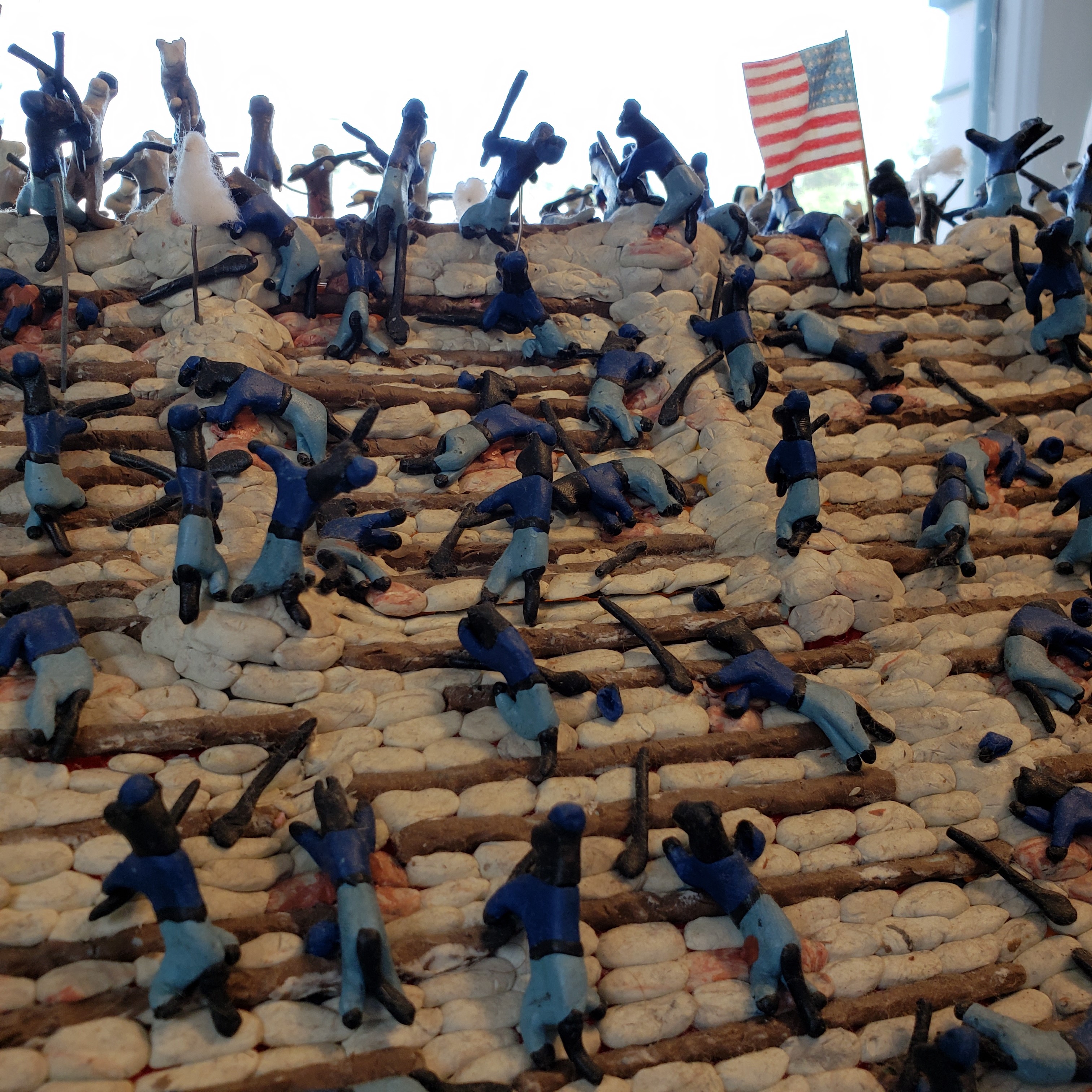
The regiment’s first taste of action came on July 16, 1863, in a skirmish on James Island, SC. Their actions in that fight earned them the respect of the white soldiers around them. Two days later, their steadfastness in the assault on Battery Wagner proved to the nation that black men could fight as well as white men.
Tens of thousands of black men would enlist before the war’s end. President Lincoln credited them with helping to win the war.
 Civil War Tails at the Homestead Diorama Museum - Gettysburg miniatures