Today we celebrate the completion of our diorama of Little Round Top, “The Boys Are Still There”!

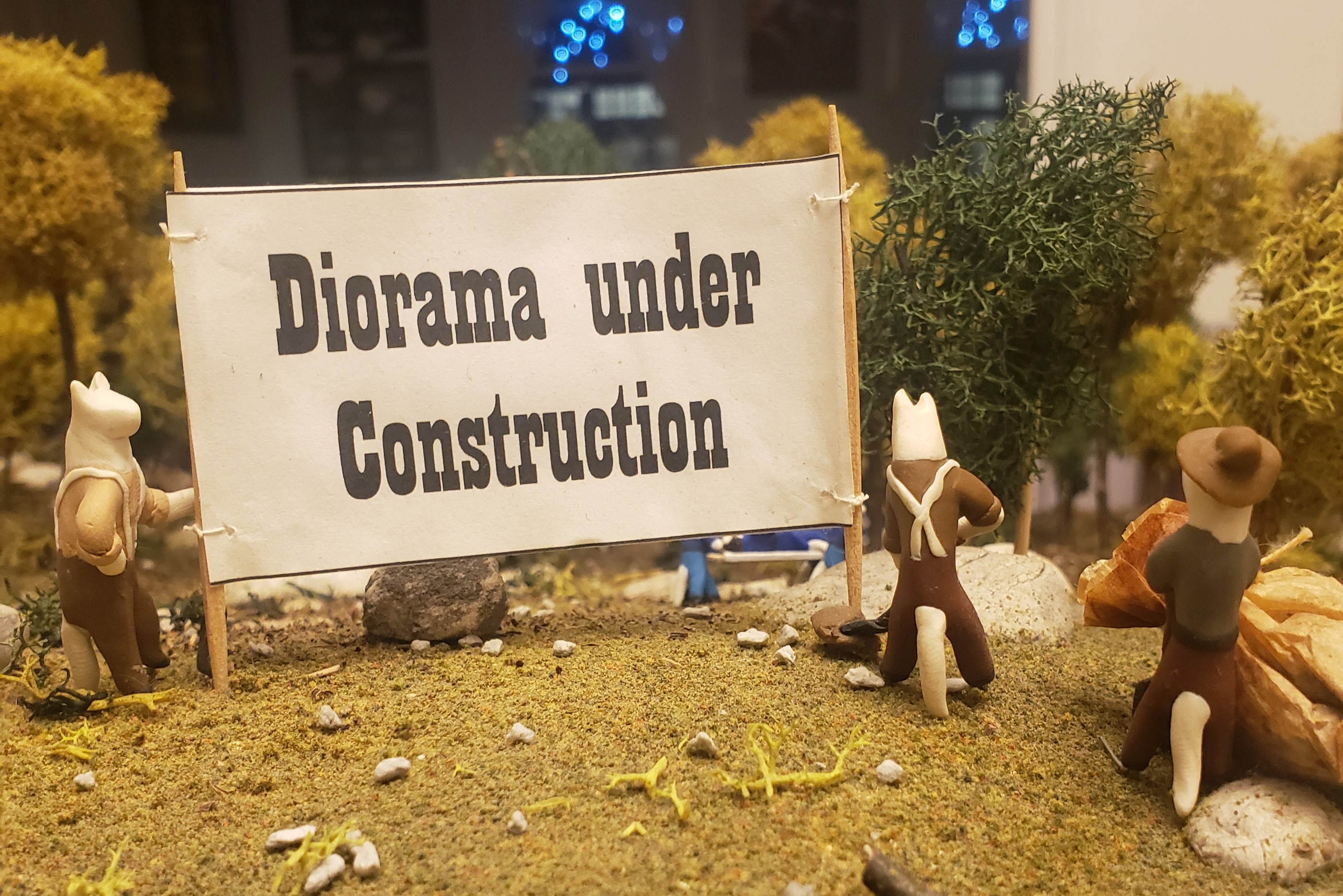
On February 9, 2024, we placed the last trees and ground cover, and the diorama was done! Our construction crew could finally pack up their billboard and head off to a well-earned vacation!

Dedication:

And then we found Mr. Bennett’s work. By reconciling soldiers’ first-hand accounts, he has reached a very clear picture of what Col. O’Rorke, Adj. Farley, and the regiment most likely did. Not only has he written articles and a regimental history for the 140th New York, but he graciously supplied us with the first-hand accounts and his own writings, and answered our questions. We cannot thank him enough for his help. “Invaluable” only scratches the surface.
Trivia:
Our page on “Making Little Round Top” tells how we designed and made the topography, and our page on Little Round Top tells the history, but here is some fun trivia about the diorama:
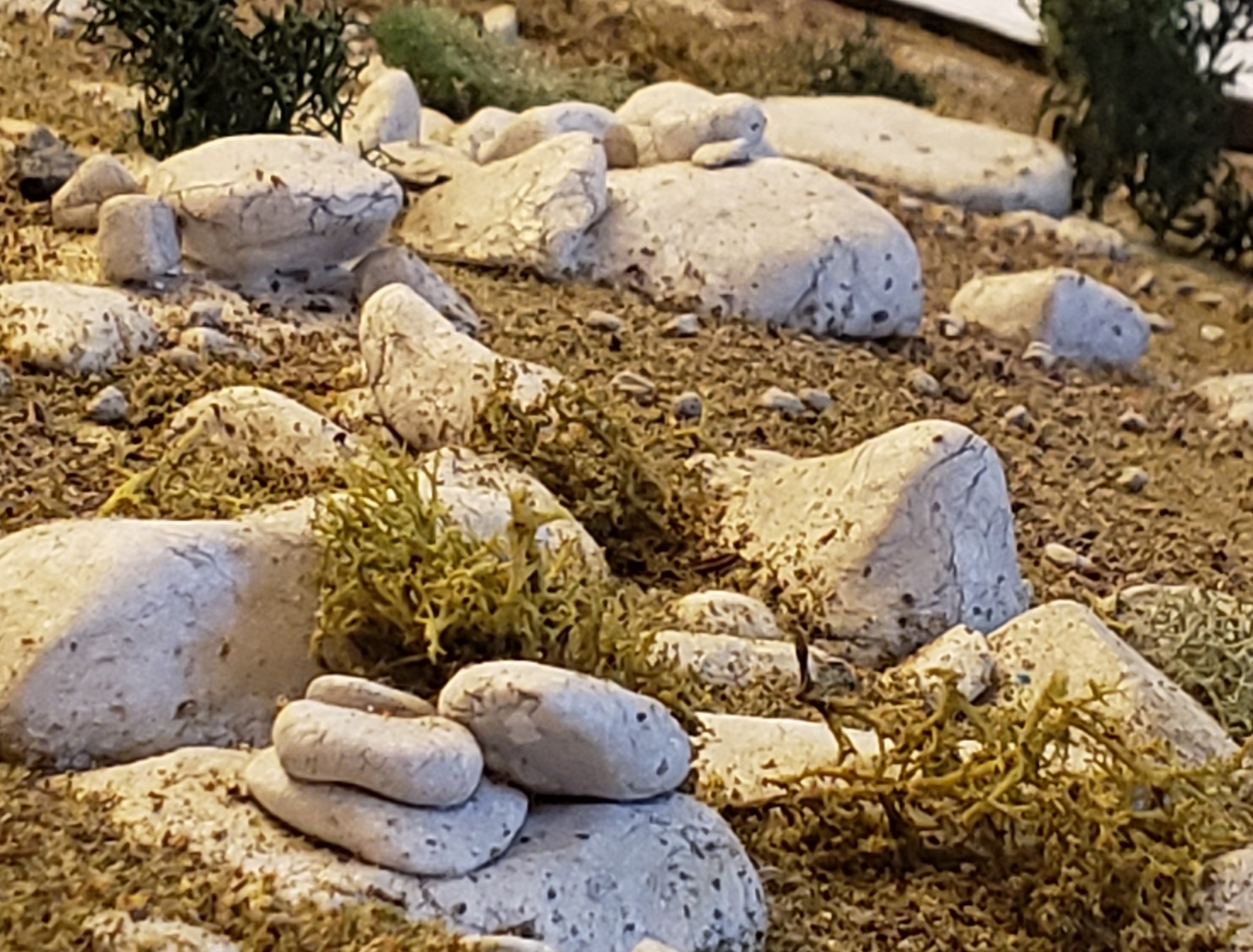
There are 2,600 hand-sculpted clay boulders on the diorama based off of photos from the battlefield (period, early 20th Century, and current). Our dad still remembers how cold it was when the three of us tromped over the hill in the dead of winter, taking hundreds of photos of thousands of rocks. (Hey, winter is a good time for rock photography—there are no leaves on the trees!) And yes, Rebecca counted all 2,600. Apparently, counting the cats wasn’t nerdy enough for her! Now, this trivia probably has you wondering, do rocks outnumber cats? Or do cats outnumber rocks?
There are 2,650 cats on the diorama: 1,525 Union and 1,125 Confederate. In case you’re curious, that is just shy of our diorama of the Angle. “The Fate of Gettysburg” holds 3,000 cats.
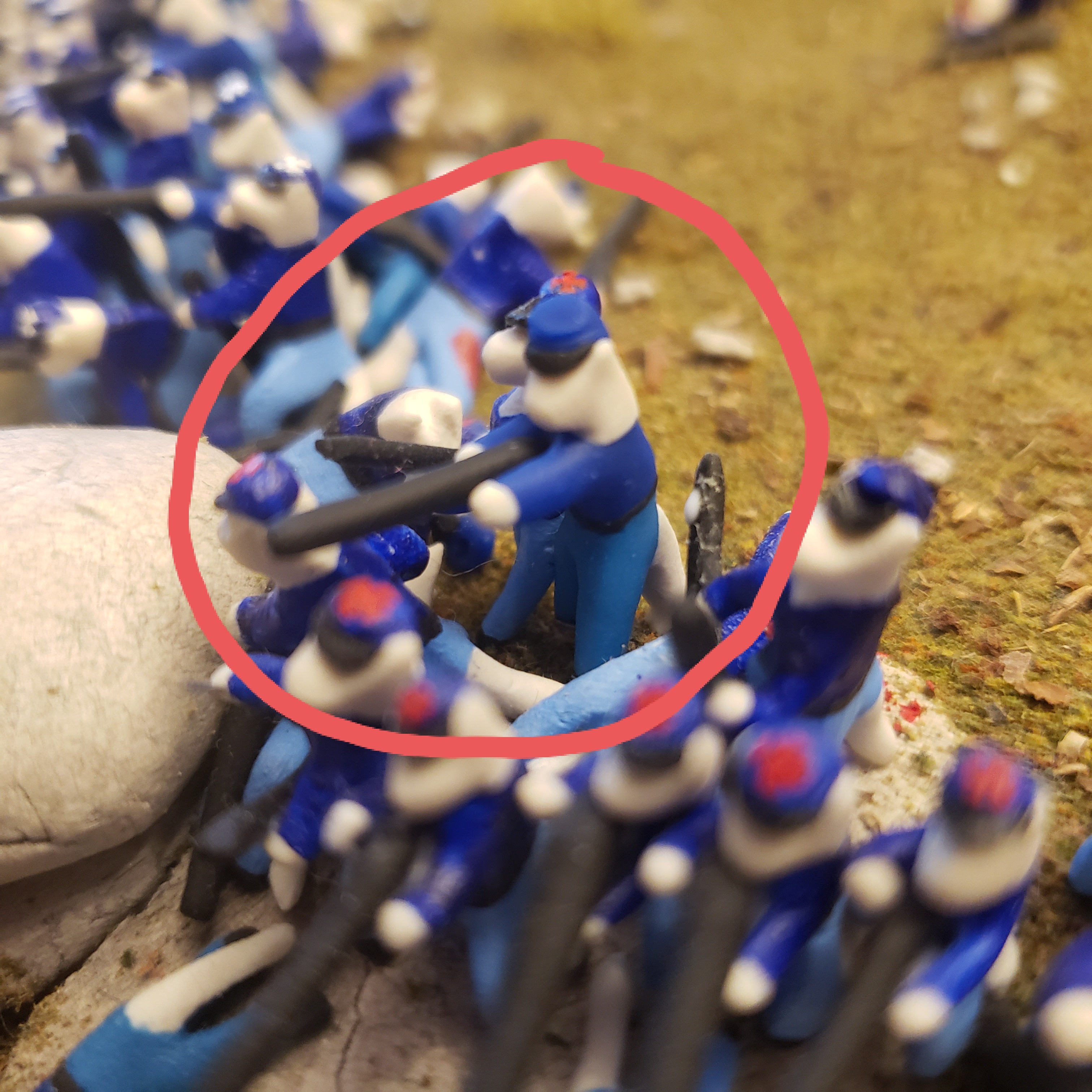
This is the 2,000th cat installed on Little Round Top. He is a private in the 16th Michigan. Rebecca did not give him a corps badge purely so we could be sure to remember which he is. It also helps that he is near the big rock that the 16th Michigan’s monument stands upon today.
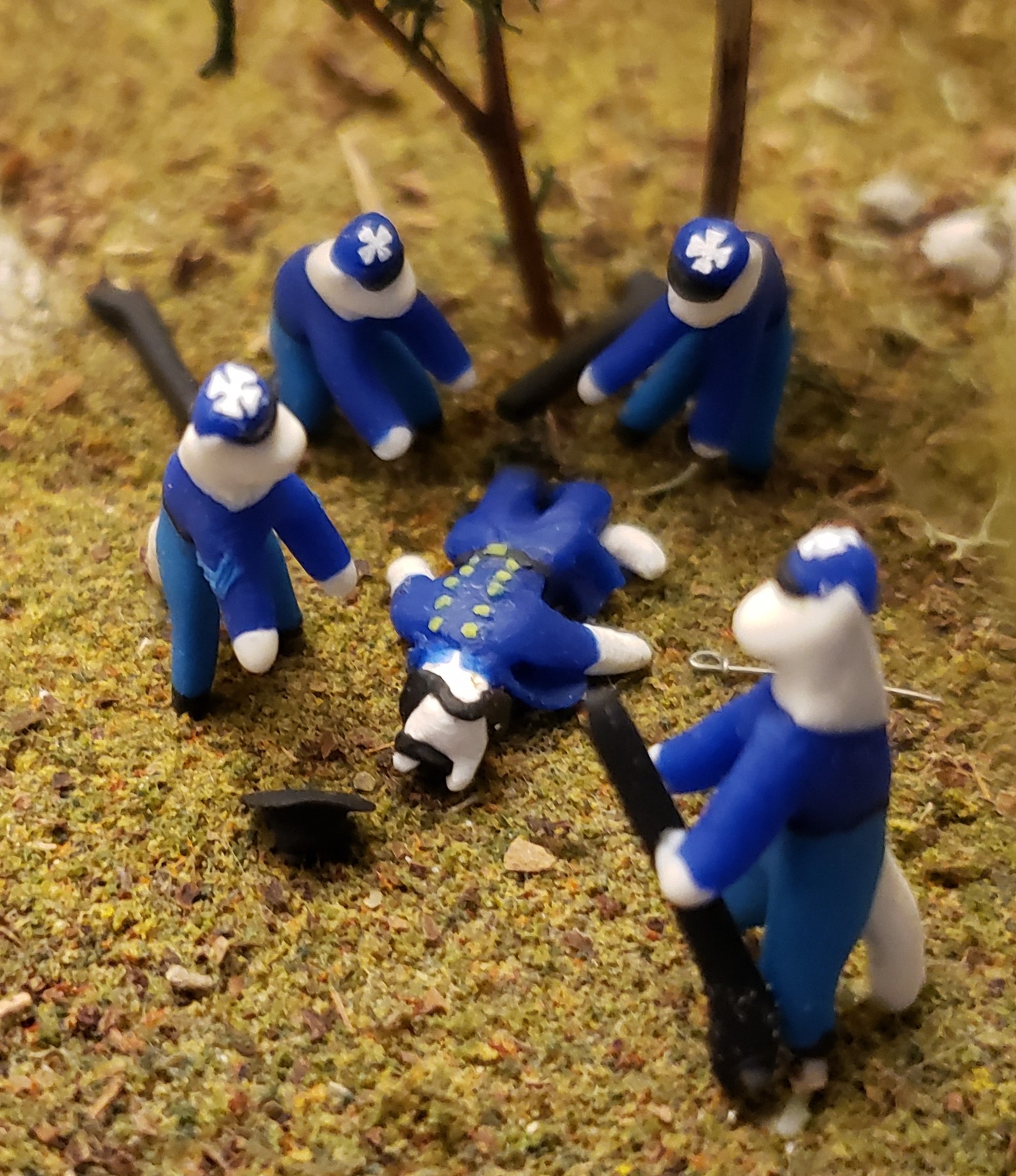
The last cat made for the diorama is Col. Patrick O’Rorke.
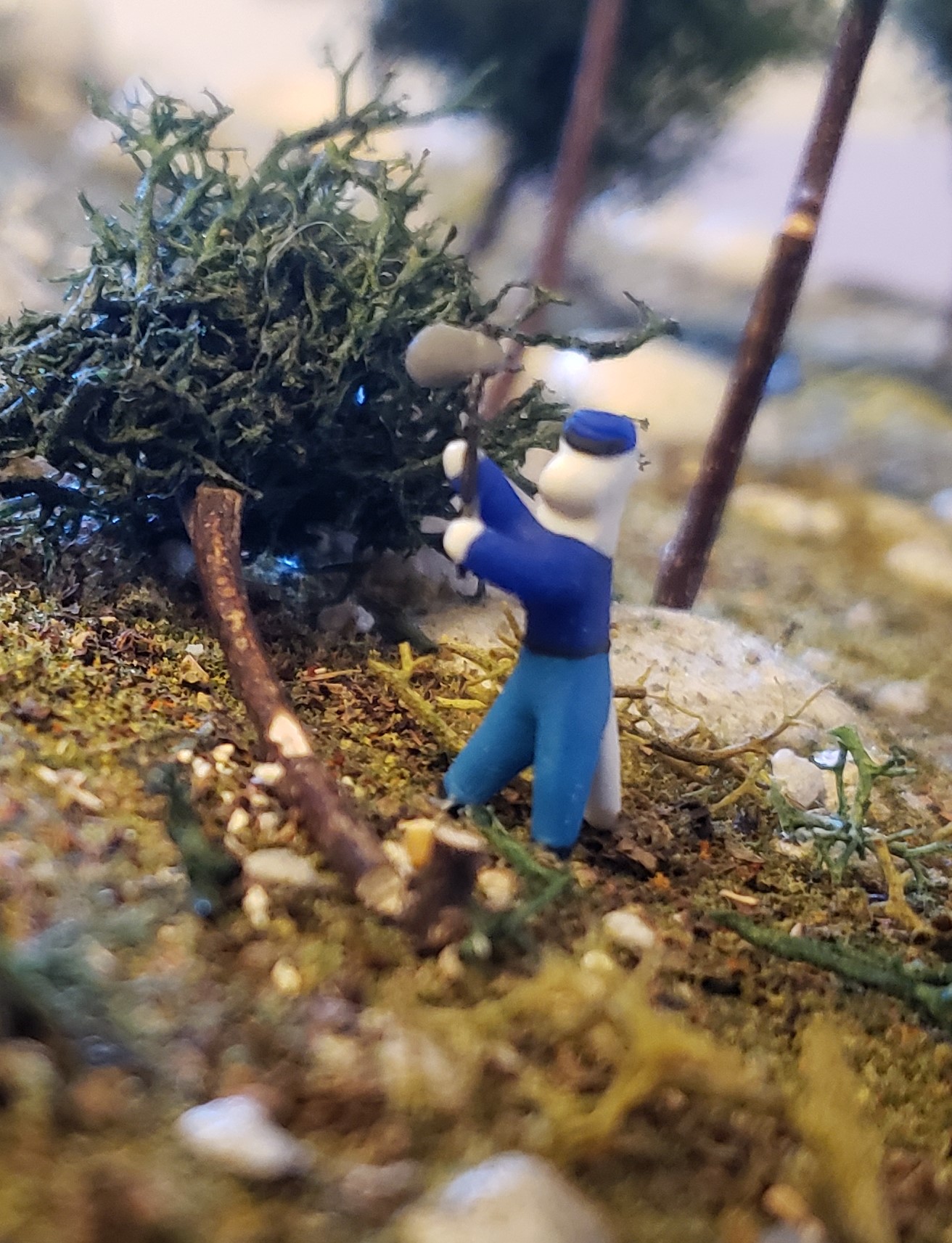
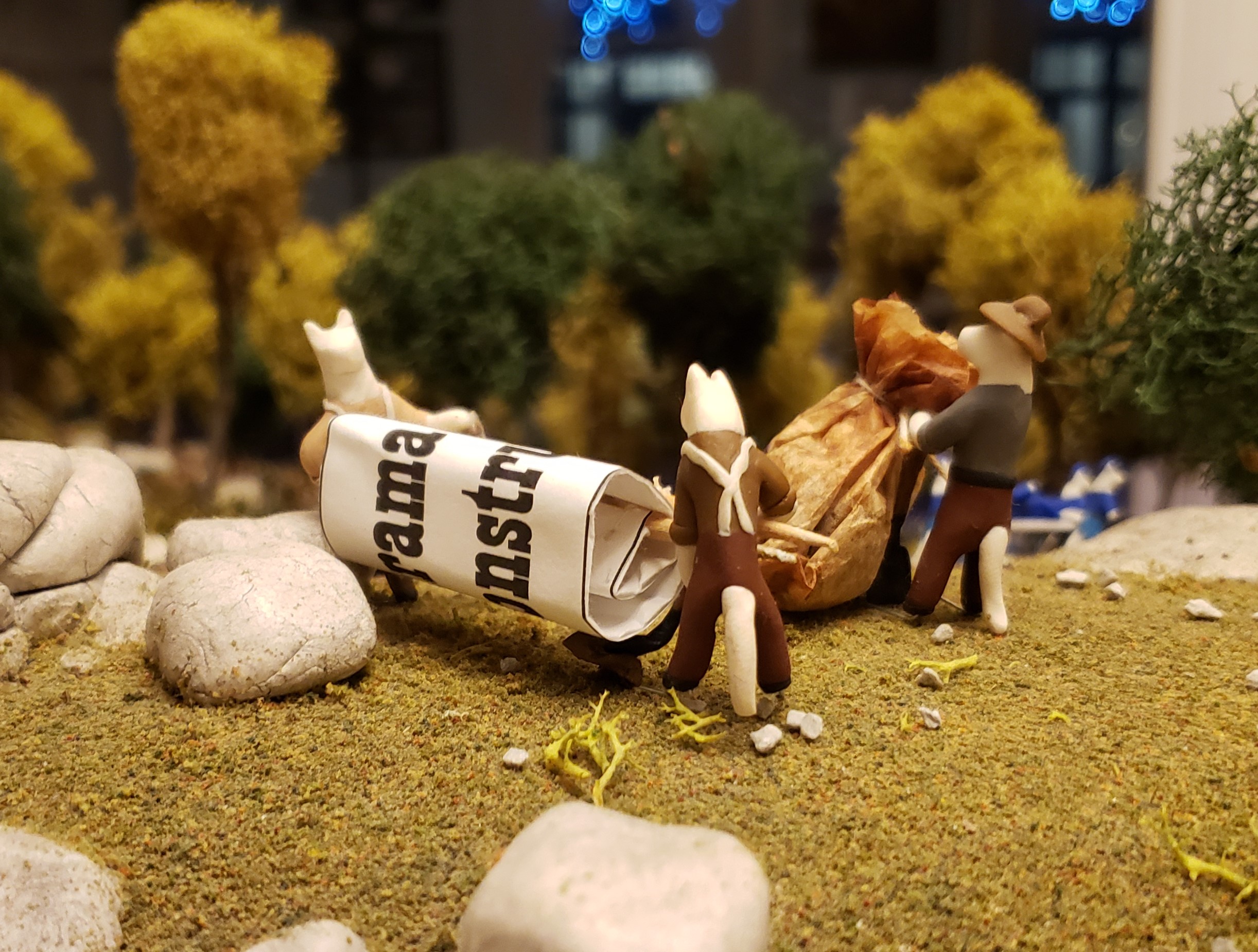
The last cat installed is one of the engineers or “sappers” working to clear a route for Hazlett’s artillery and Weed’s brigade of infantry.
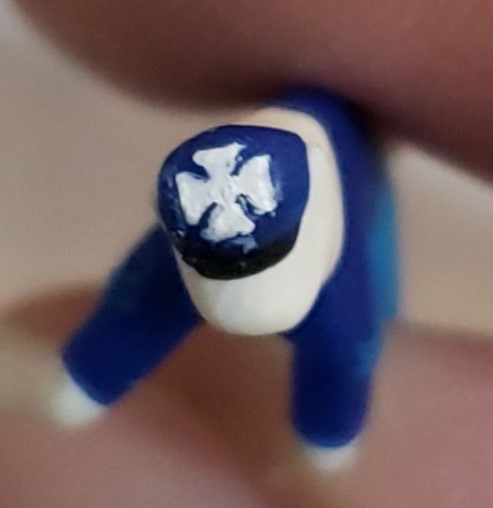
The last corps badge Rebecca painted is on Sgt. John Wright, of the 140th New York. He and several others carried Col. O’Rorke’s body to the rear. After painting badges on nearly all of the Union infantry’s kepis, it was a strange moment for Rebecca when she realized that she probably will never have to paint another Maltese cross corps badge! Or, at least not for a while.
Three K-Cats are on the diorama. A K-Cat marks each 1,000 on the Cat Census that we keep.
Cat 6000 is Col. Joshua Chamberlain, 20th Maine

Cat 7000 is Maj. Ellis Spear, 20th Maine

Cat 9000 is Col. Strong Vincent

So, what total did “The Boys Are Still There” bring our Cat Census to? 9,828. We are a mere 172 cats away from Cat 10,000!! Stay tuned! (But don’t hold your breath—we need to do some research on USS Cumberland, first.)
Oops, we just spilled the beans! What’s next, you were about to ask?
Rebecca is beginning research for a diorama of the ironclad CSS Virginia (Merrimack) sinking the wooden sloop of war USS Cumberland, as a companion to our diorama depicting the inconclusive duel between the ironclads the following day. As we interact with visitors, we have come to realize that many people don’t know about the first day’s fight—a day which has been called the worst defeat for our navy until Pearl Harbor. As part of that day’s fighting, Virginia rammed Cumberland, and then the two ships pounded each other until the Union sloop sank. While Cumberland’s shots had no serious effect on the ironclad, Virginia’s wreaked havoc on the wooden ship. Lt. John Taylor Wood aboard Virginia remembered, “No ship was ever fought more gallantly.”
Ruth is working on a cavalry skirmish in Rockville, Md., in 1864. Facing charging Confederate cavalry, Col. Charles Russell Lowell ordered his Union cavalrymen to dismount and turn their horses loose, in order to have every man on the firing line. Ordinarily, one in every four men would hold the horses. In his book The Guns of Cedar Creek, author Thomas A. Lewis likens the order to telling sailors to scuttle their ship in the middle of the ocean. Fortunately for Lowell’s men, other Union soldiers caught the horses, and his thin line was able to break up the Confederate attack.
 Civil War Tails at the Homestead Diorama Museum - Gettysburg miniatures
congrats !! A fine report. facts plus diorama stats. Love , Mom
LikeLike