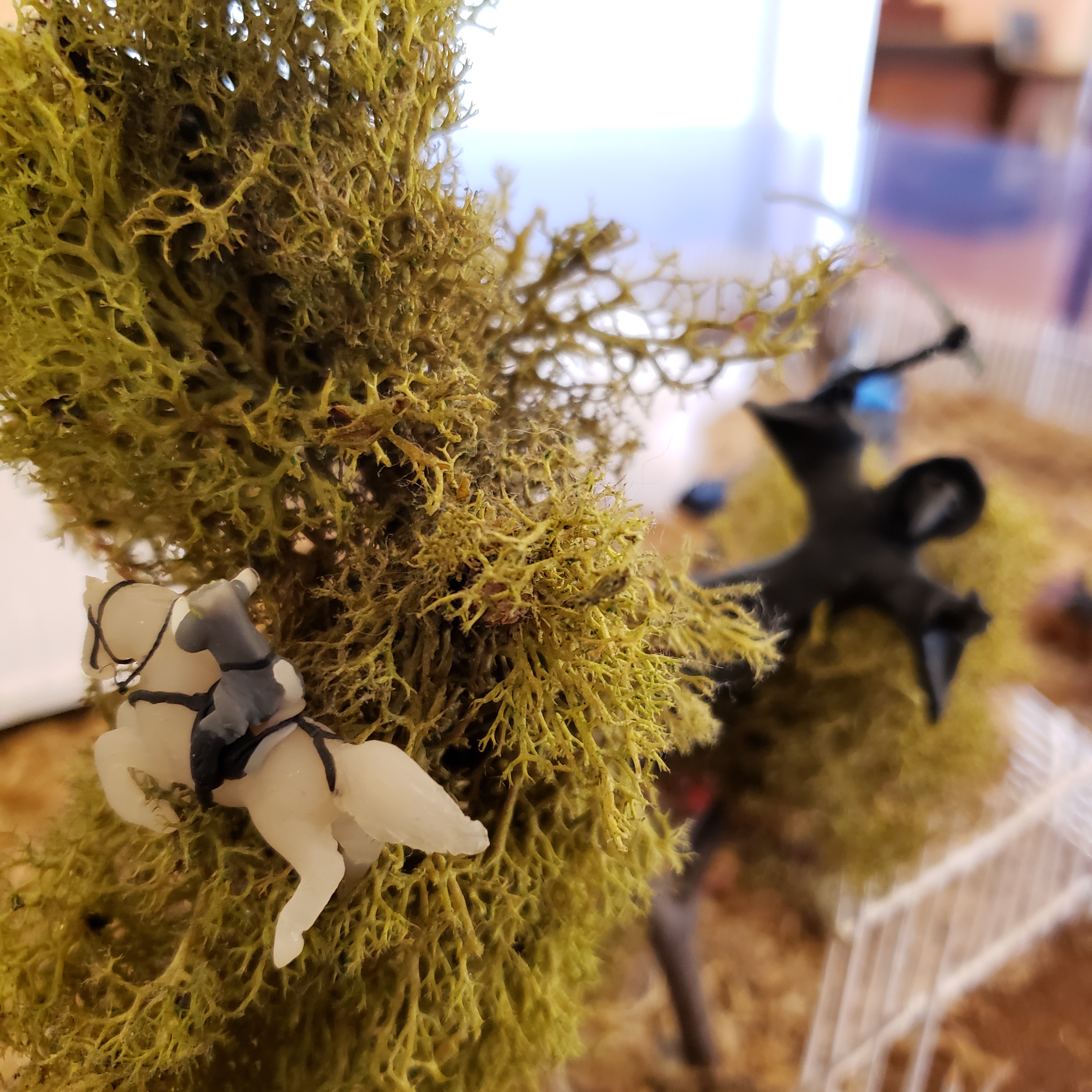
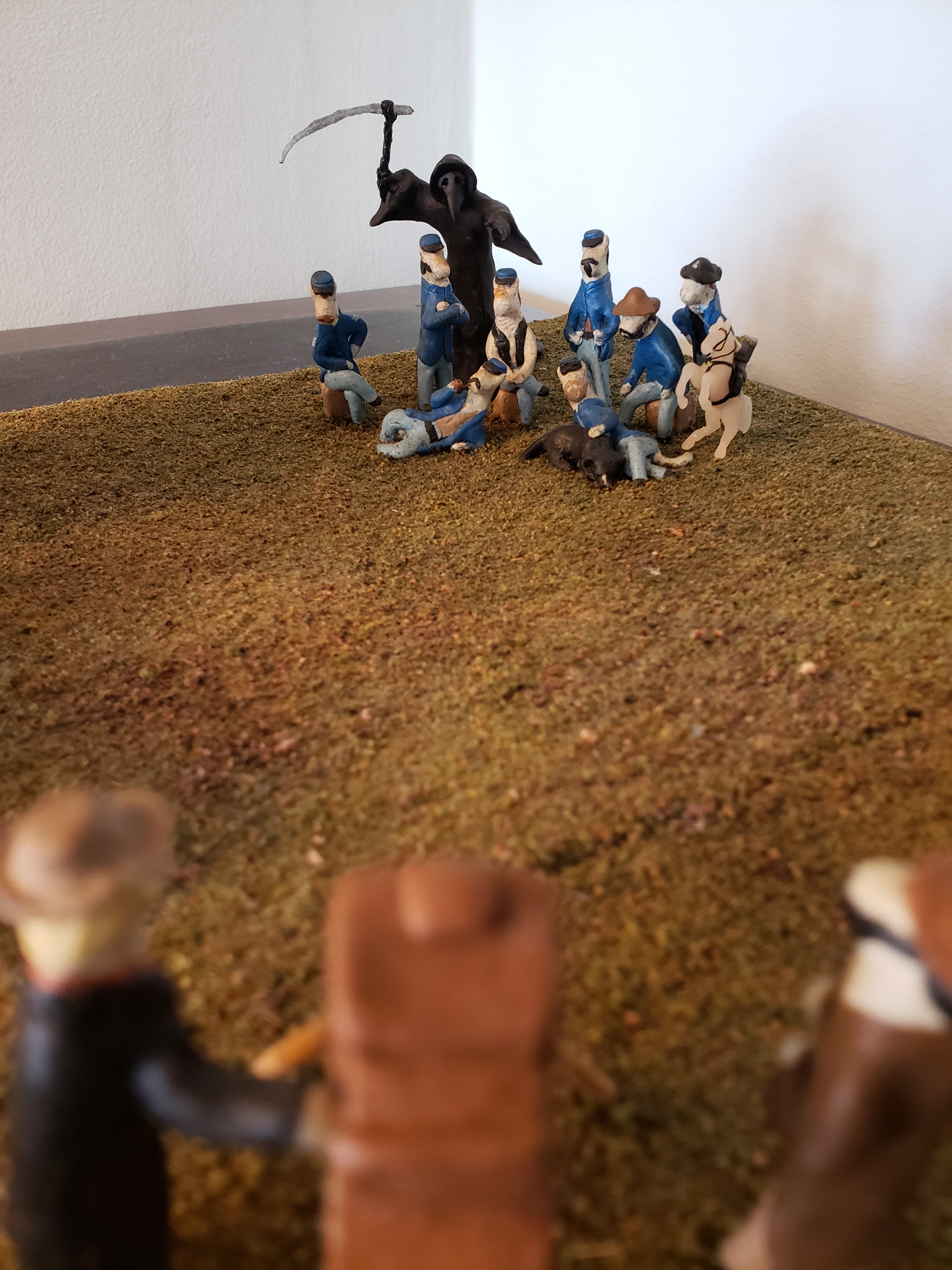
The Adventures of the Headless Horsecat 2023

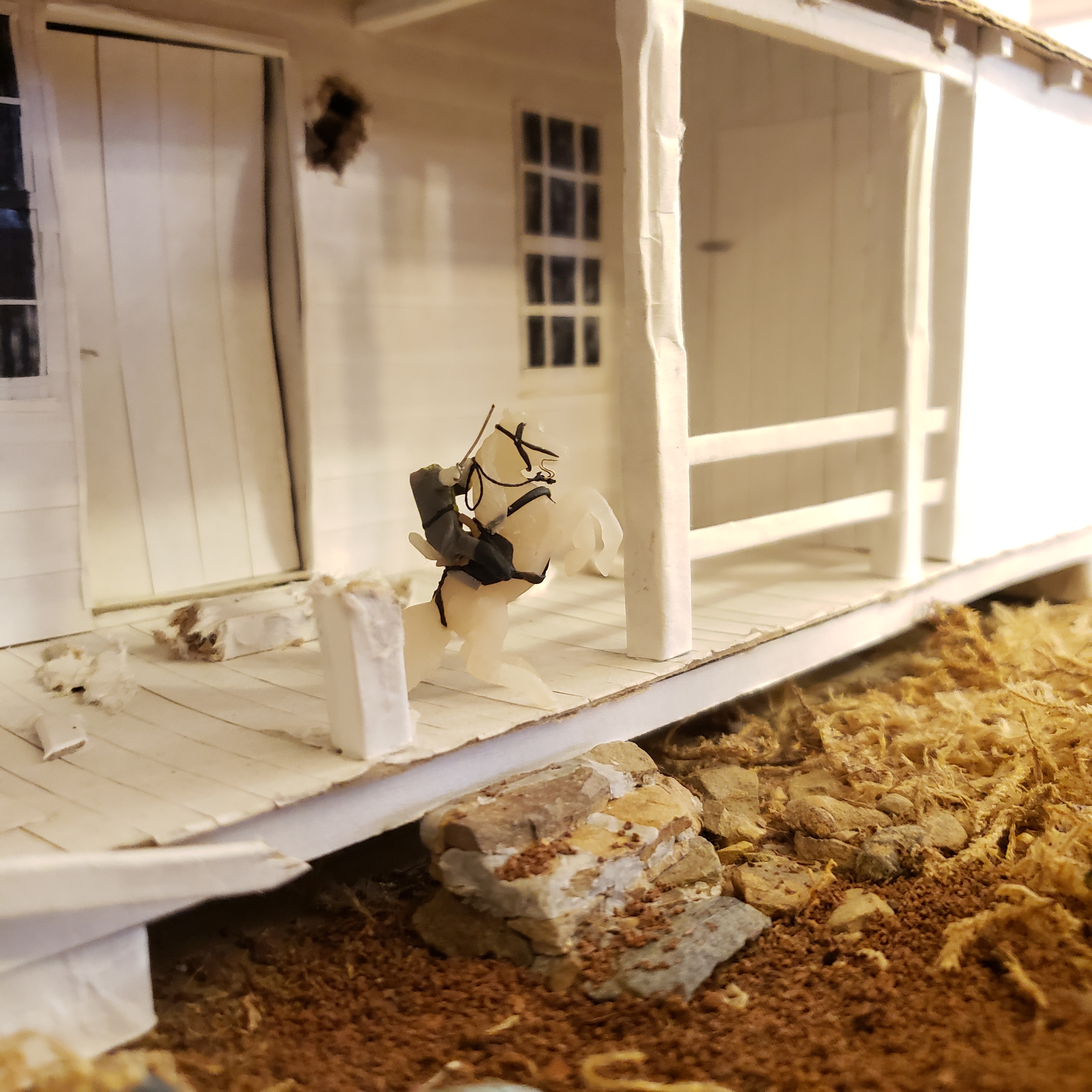
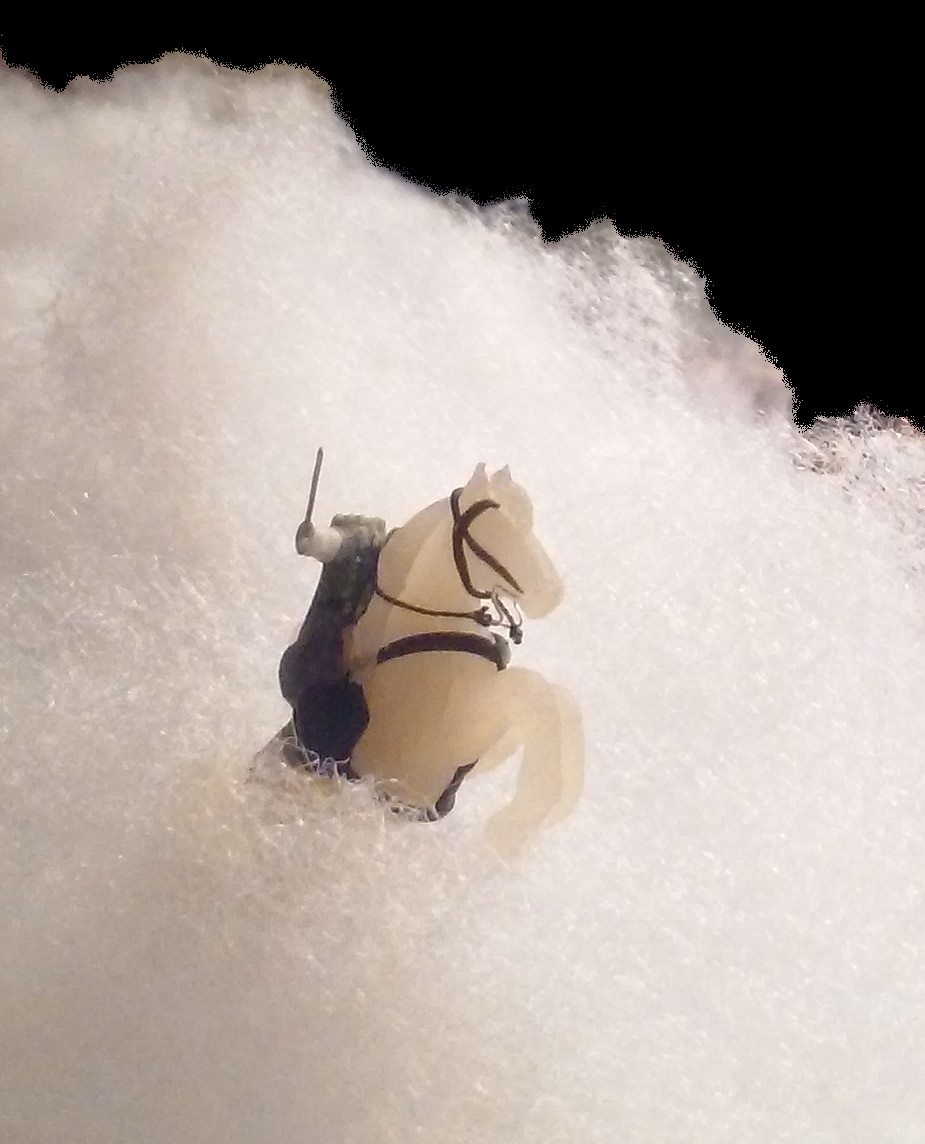
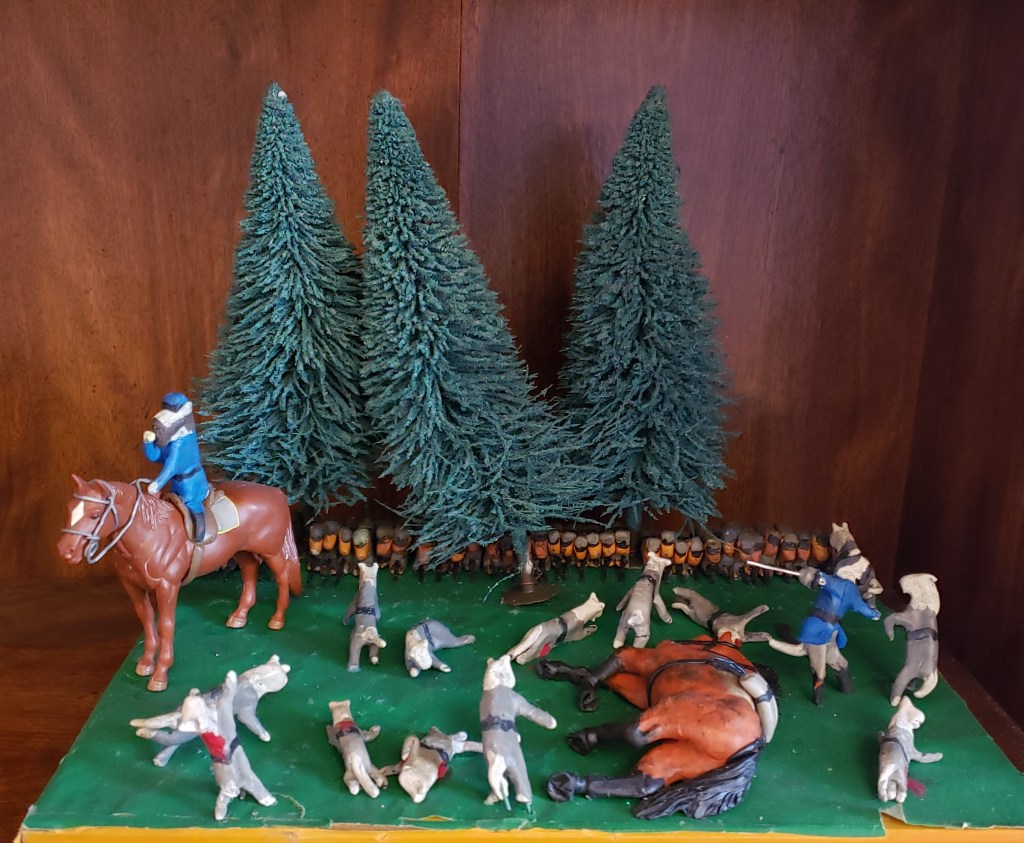
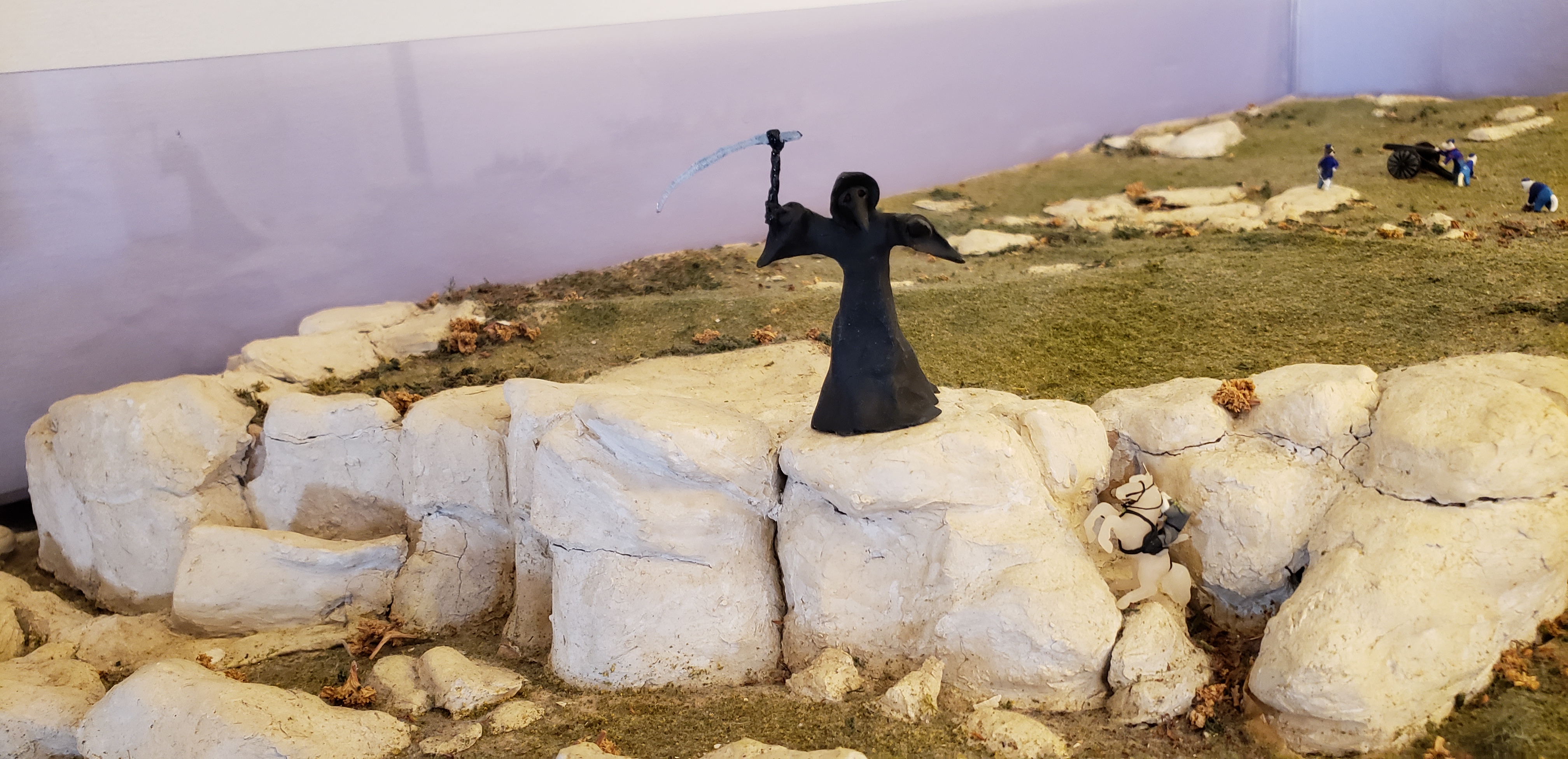
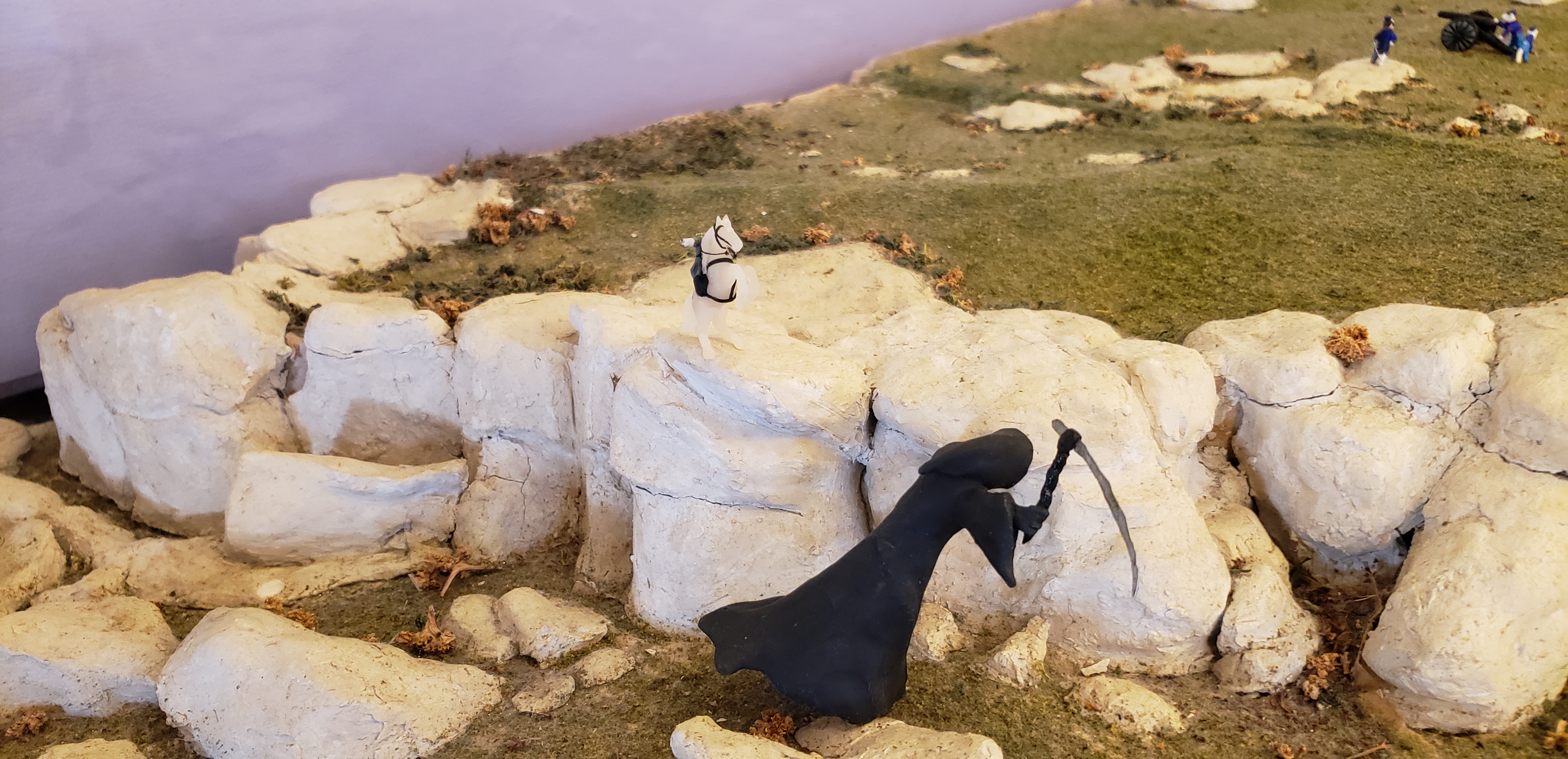
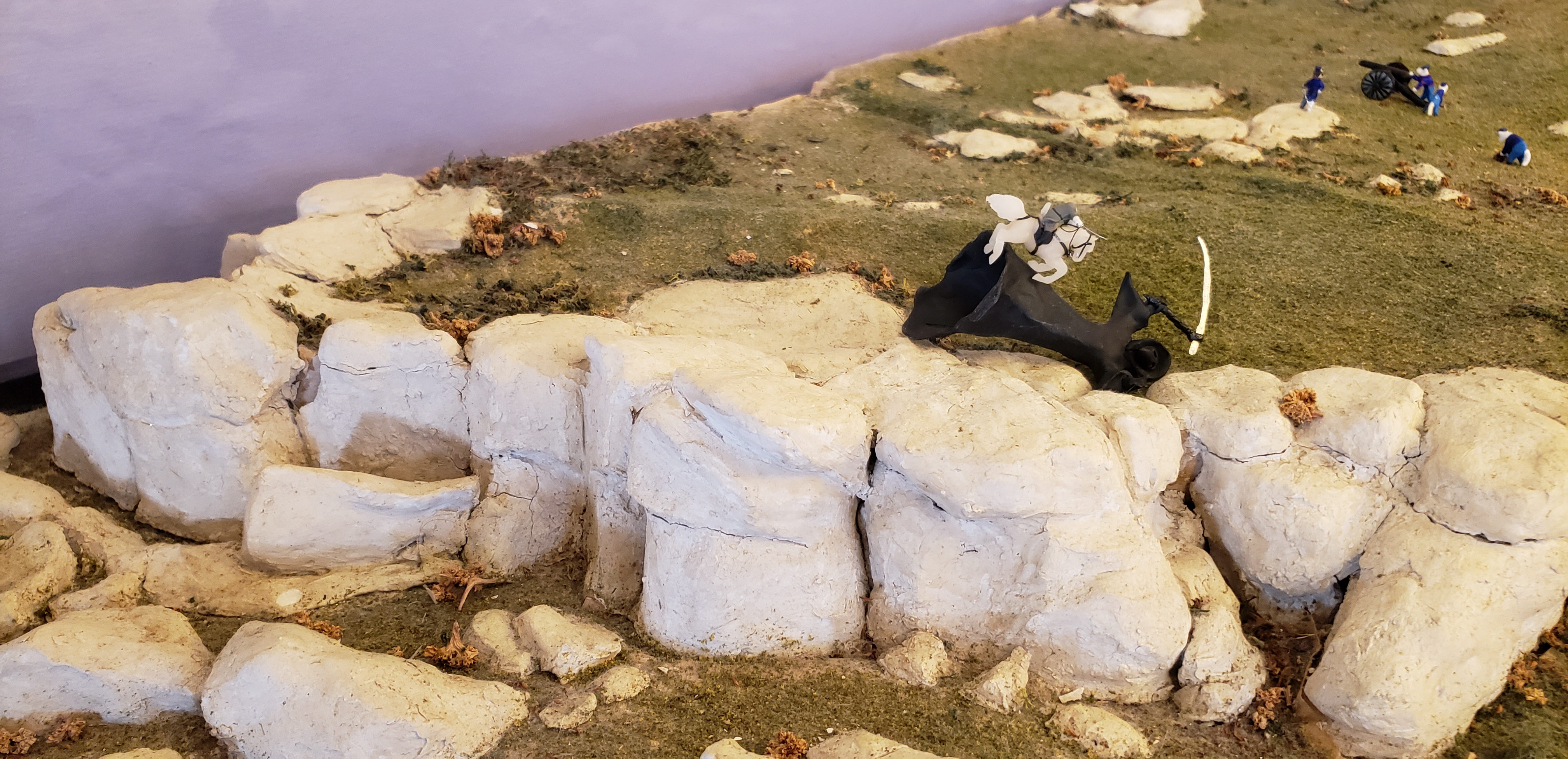
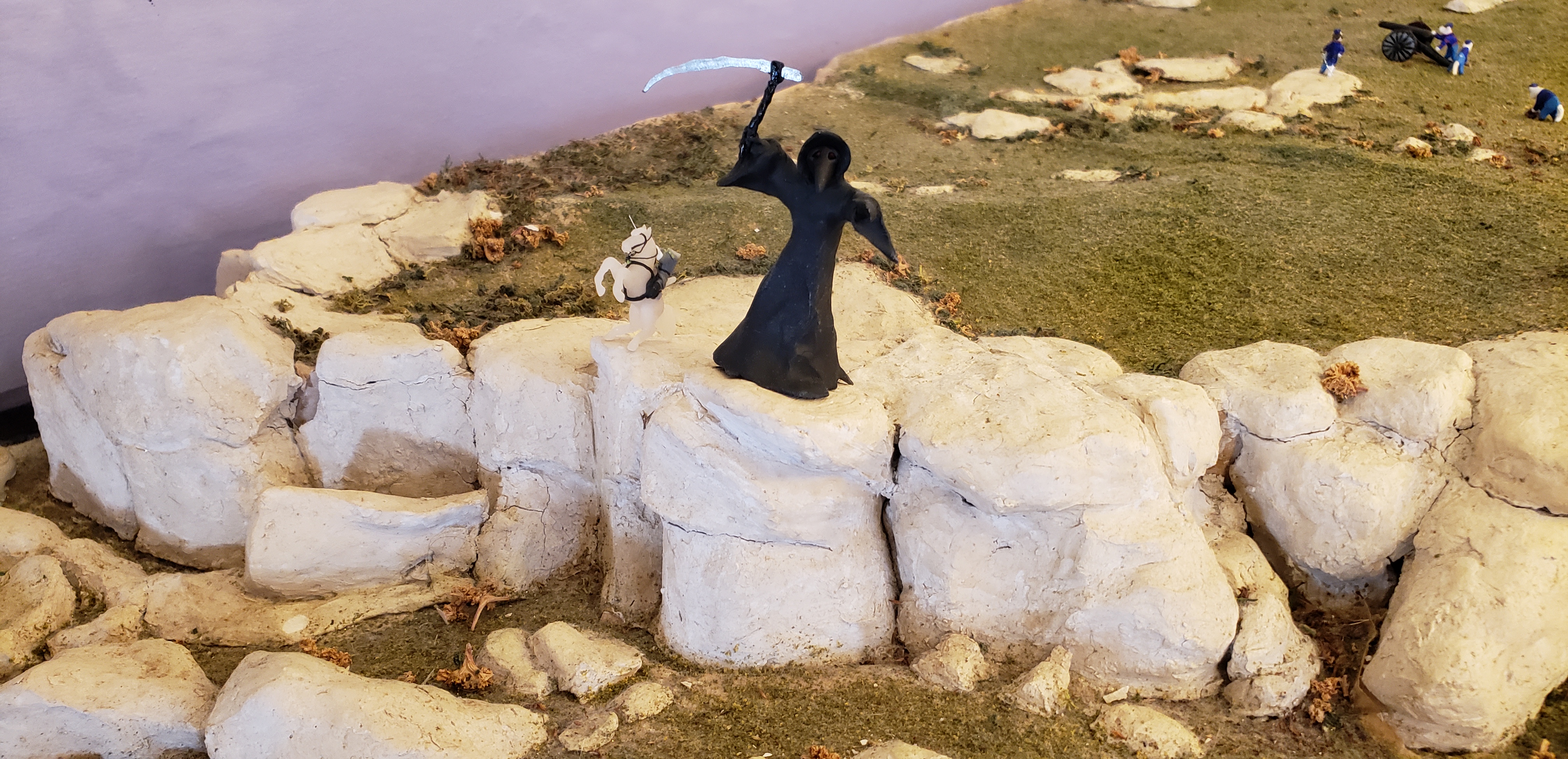
It’s October and you know what that means! It’s time for the Headless Horsecat’s yearly adventure over the dioramas of Civil War Tails!

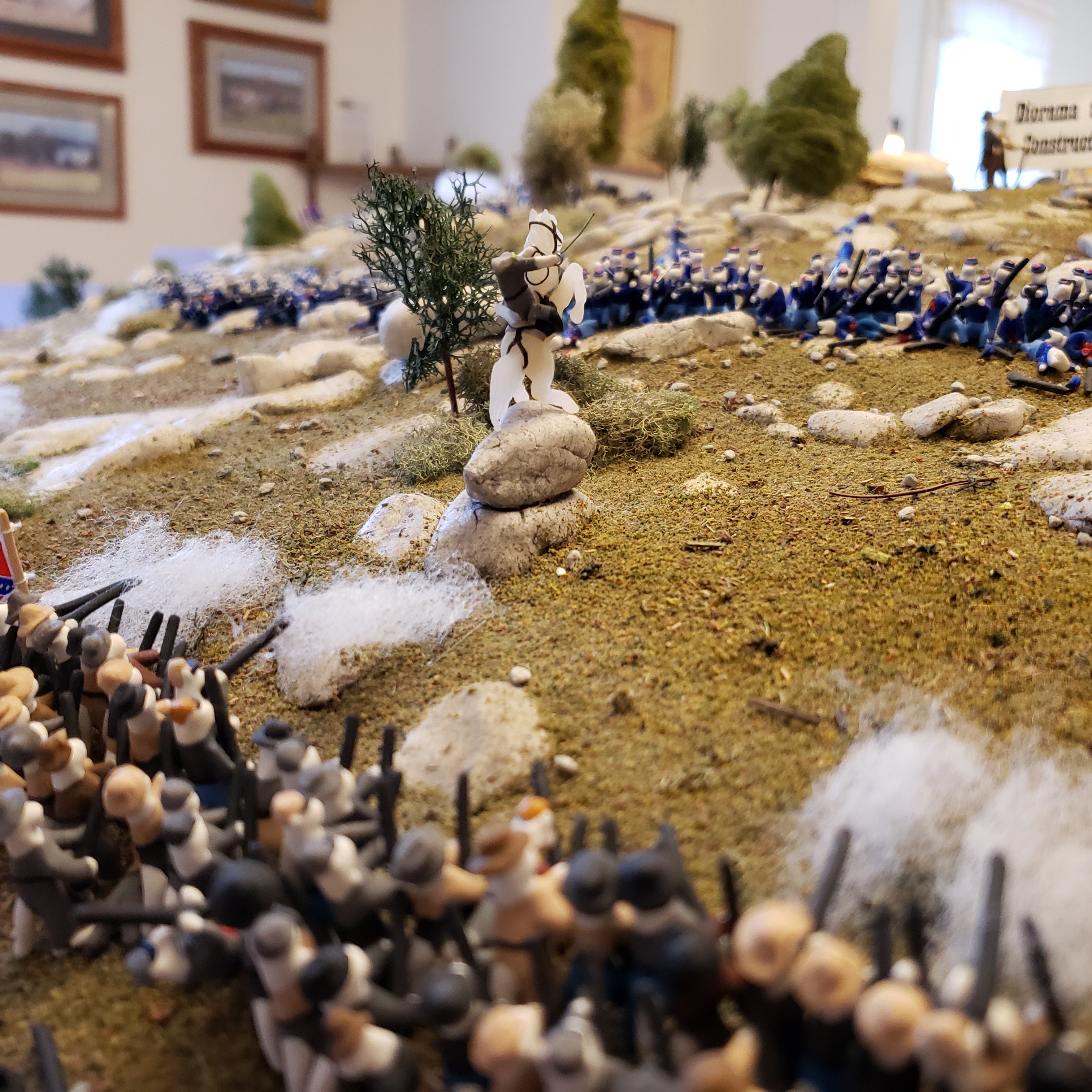
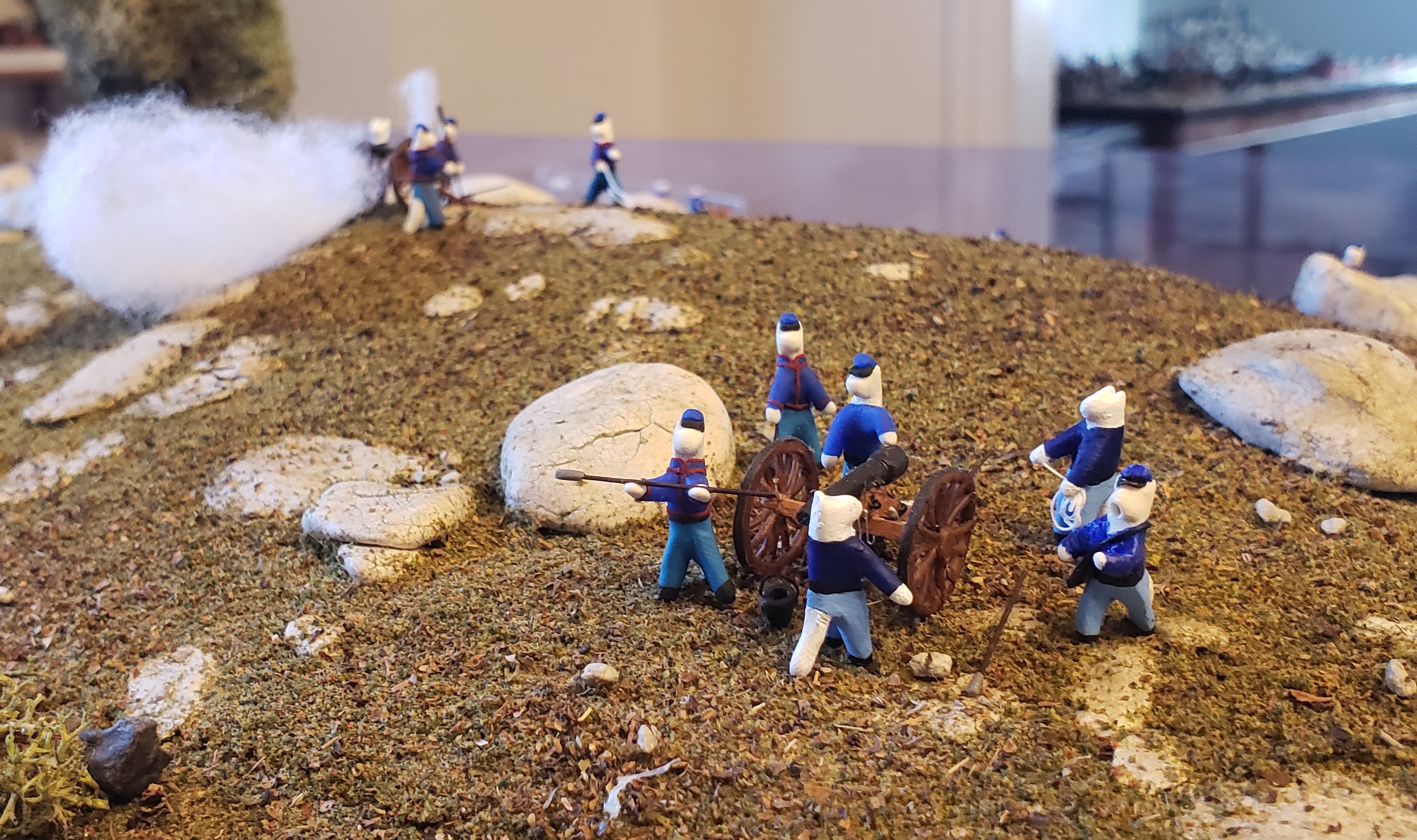
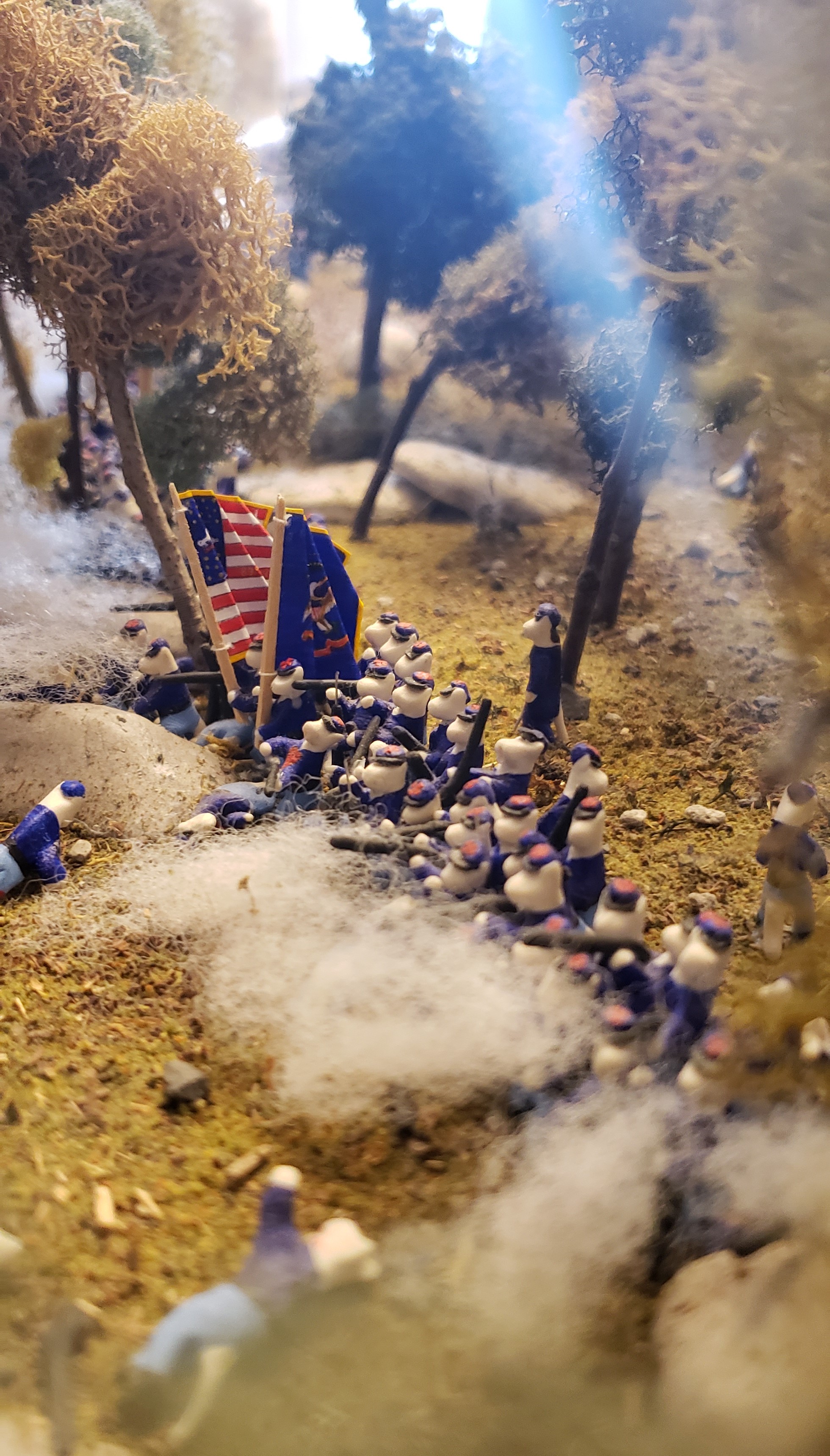
He starts by checking on the progress on Little Round Top.

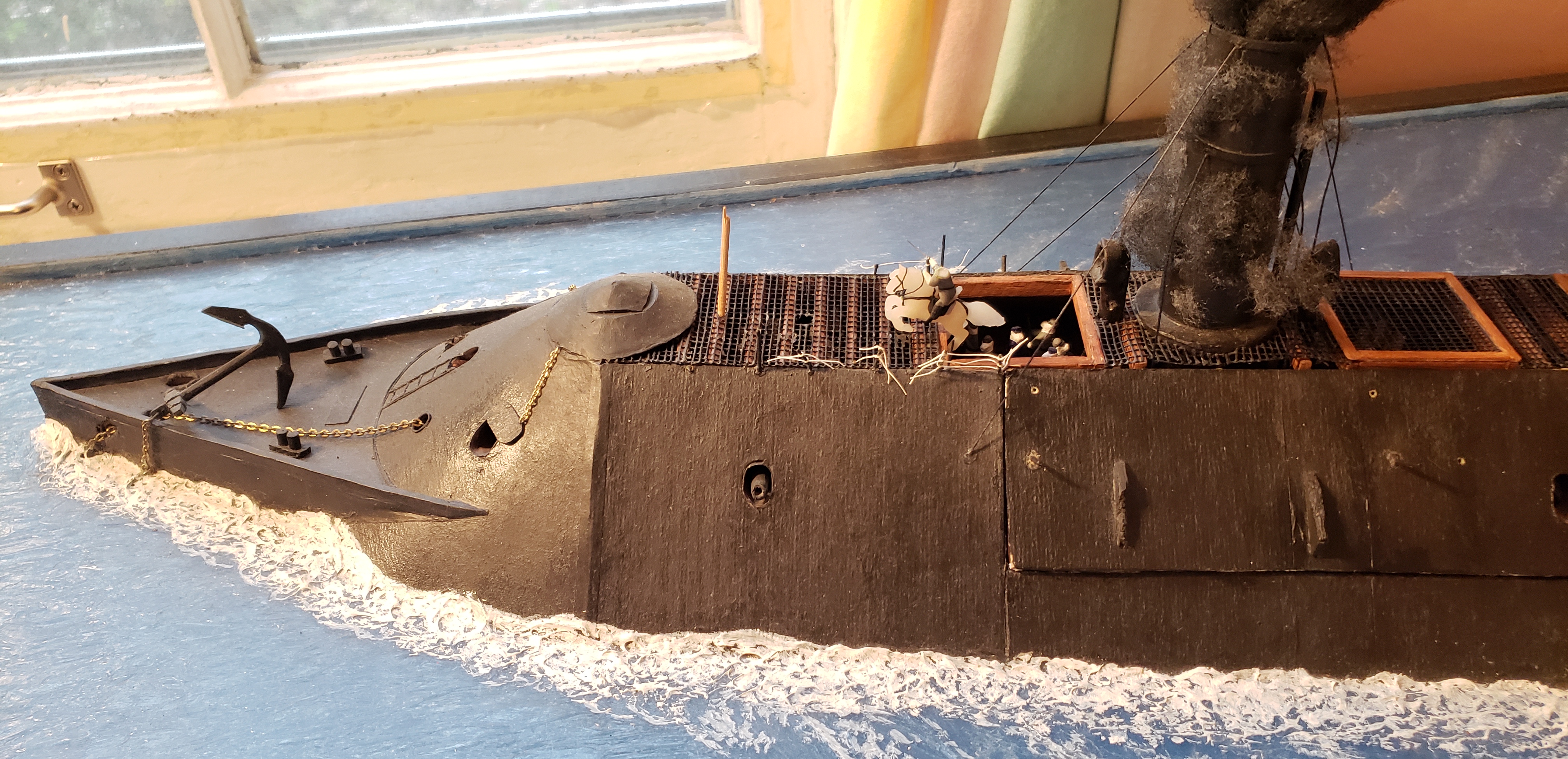
Then he visits the waterfront and haunts, er, inspects the ships!

But, small as he is, even he couldn’t fit into the bottle!

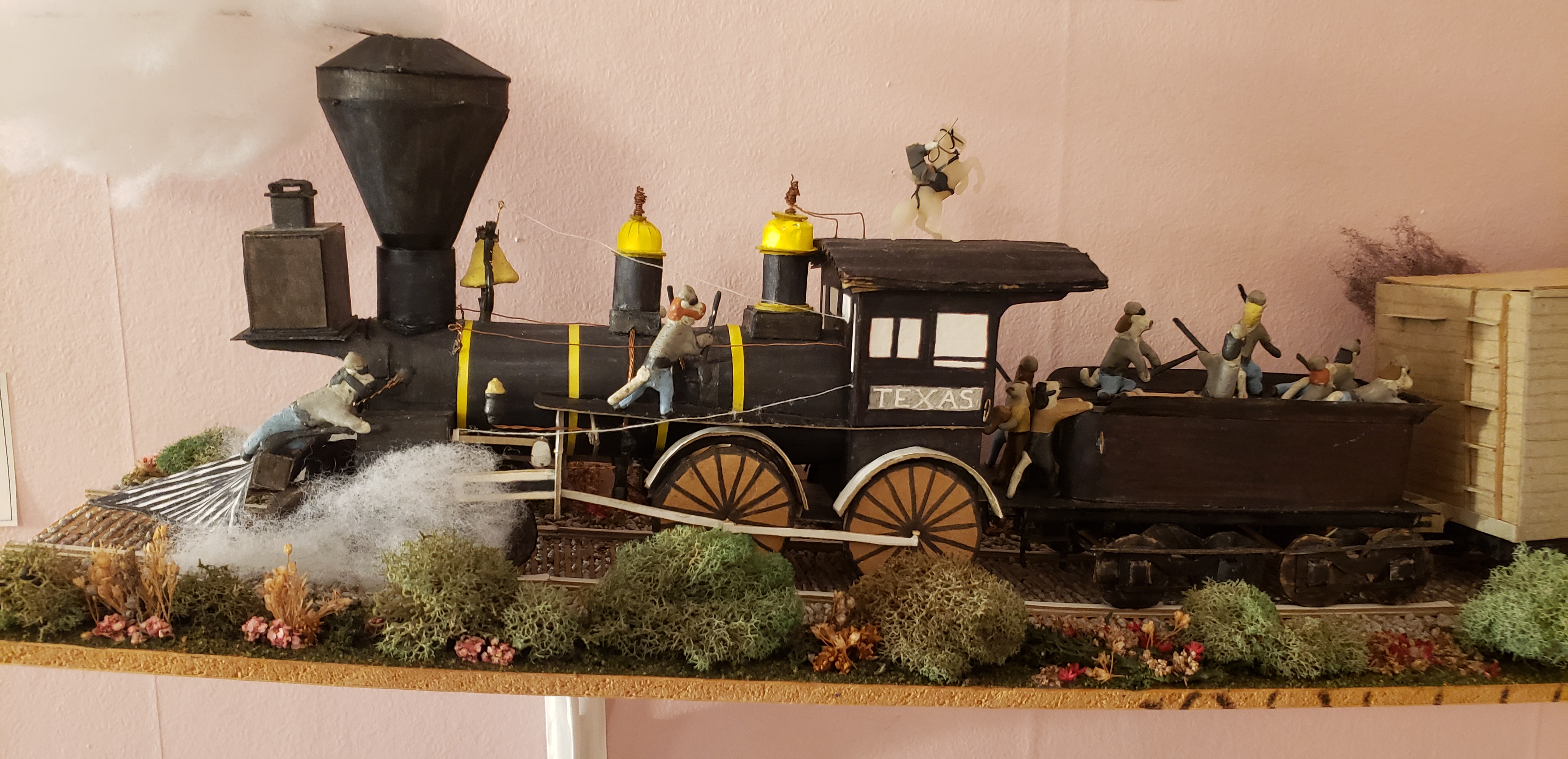
Now, what kind of adventure would it be if it didn’t include a train ride?

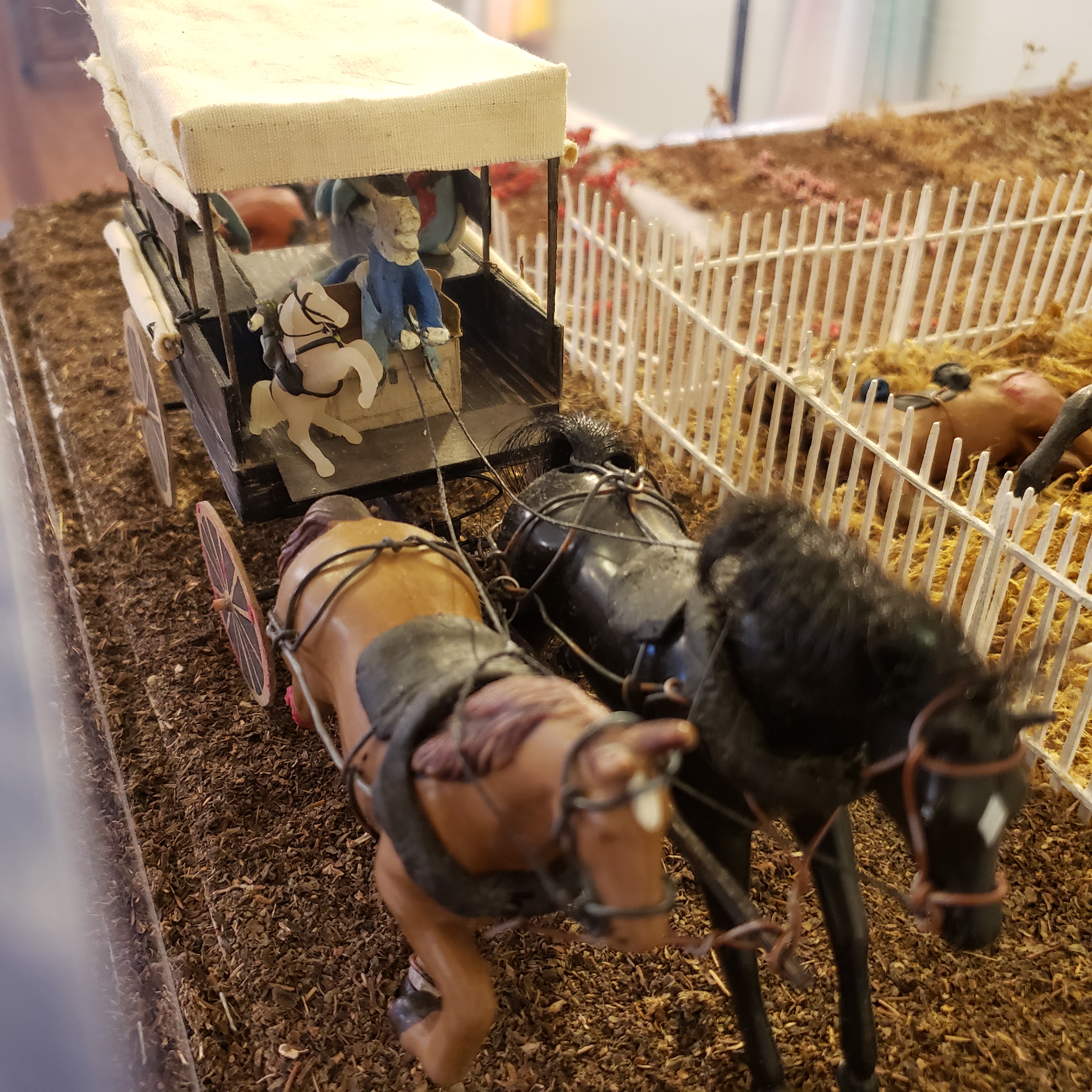
Then he hitches a ride over to Gen. Meade’s Headquarters, on his way to the Angle…

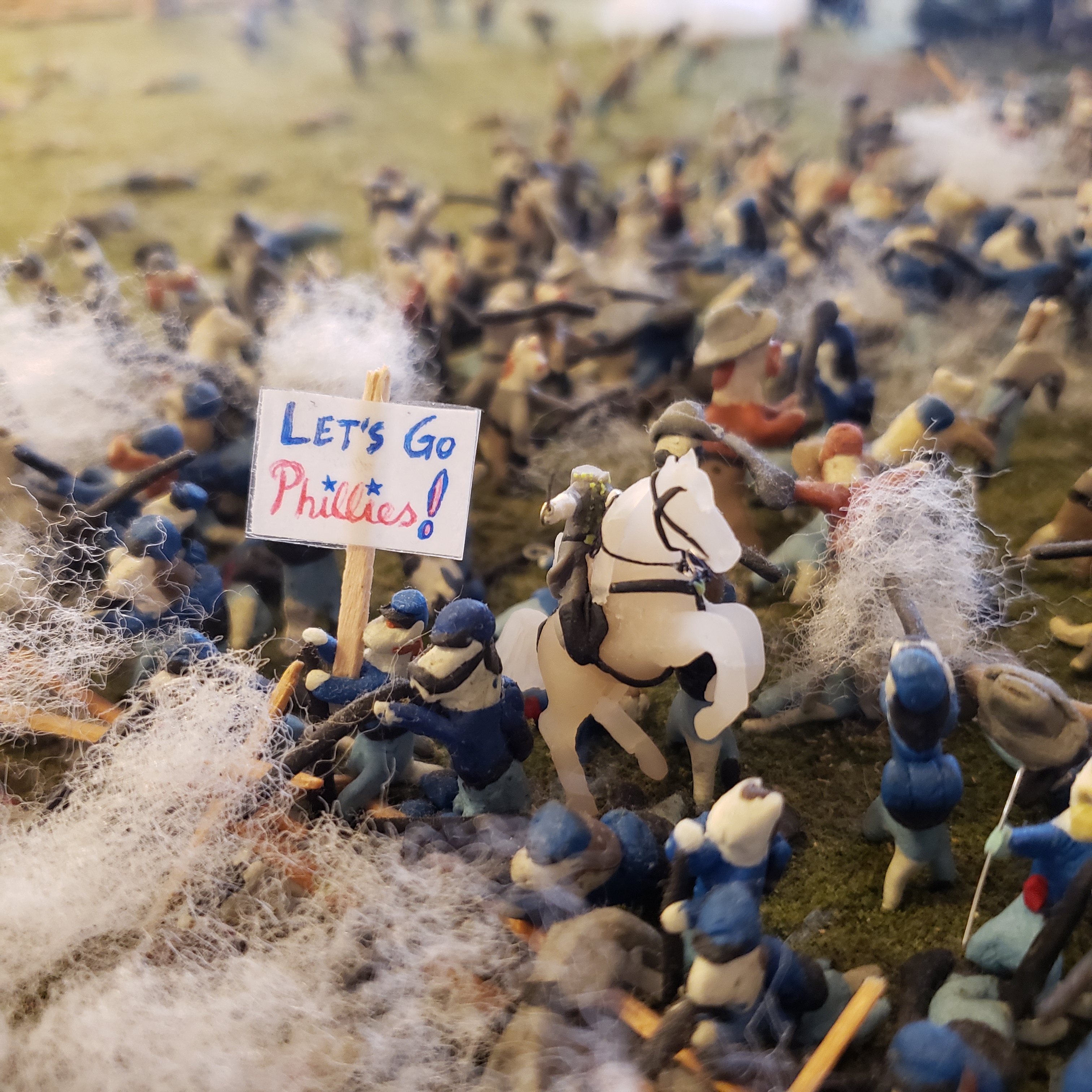
…Where he joins the 69th Pennsylvania, who seems to be a little distracted from the battle this October.

Hey, what do you expect? They’re part of the Philadelphia Brigade!

Happy Halloween, everyone!

Can’t get enough Headless Horsecat? Check out all of his adventures here!

FAQ #2: What Inspired This?

Today we look at another set of FAQs, this time about how we started. (You can find our first FAQ Mewsing here.)

“What inspired this?”

The simple answer is, “It just happened.” When we were 11 years old, Rebecca read biographies of Generals Lee and Grant. Liking the two generals, she made them out of modeling clay. Then we became interested in the Civil War and kept making the officers we liked, and troops for them to command. Making our armies kept us reading, and reading fed our armies. A few years into it, we began making dioramas, inspired by the stories we read. Sometimes, we show generic scenes, such as a camp. But most often, we show a specific story. Our first “permanent” diorama (i.e. on a shelf, not the floor) portrayed the moment when Gen. Jackson received his nickname “Stonewall” at First Bull Run, showing that even early in our Civil War interest, it was the stories of the individuals that fascinated us.

“Why cats?” – the most common question we hear. Since we always had cats as pets when we were kids, we “catified” and personified everything. And so Lee and Grant naturally came out as cats in uniform, with beards.

“Is there a deeper meaning to their being cats?”

Nope! In fact, we can tell that there was no conscious intent because, a few years later in high school, when people started asking, “Why are they cats?” Rebecca’s initial reaction was, “I don’t know. I was eleven; I wasn’t thinking about remembering why I did it.” So, we had to ponder and surmise what our 11-year-old selves were thinking! It helped when we remembered that when we would play Robin Hood as kids, we would always be cats, and the imaginary Sheriff of Nottingham and bad guys would be dogs. So clearly the “catification” of humans began well before we made Lee and Grant out of clay. Now, their being cats serves a purpose by making the difficult subject of the Civil War accessible to visitors, both children and adults alike.

Around Civil War Tails: Little Round Top Edition!

The race is still on!

The Gettysburg National Military Park has been busy on the actual Little Round Top, completing the paved path around the New York monument (the castle) and finishing the path all the way to Hazlett’s Battery’s monument. They have even returned the cannons to their places!

Progress continues on the Little Round Top diorama at Civil War Tails, too! The Park Service began the rehabilitation of Little Round Top at the end of July 2022, but we at Civil War Tails didn’t decide to actually race them until October. (And no, the Park Service doesn’t know we are racing them. It is just for our own motivation and amusement.)

In November, we installed the first of Hazlett’s artillery on the crest. Gun #1 is firing, and Gun #2 is being loaded.

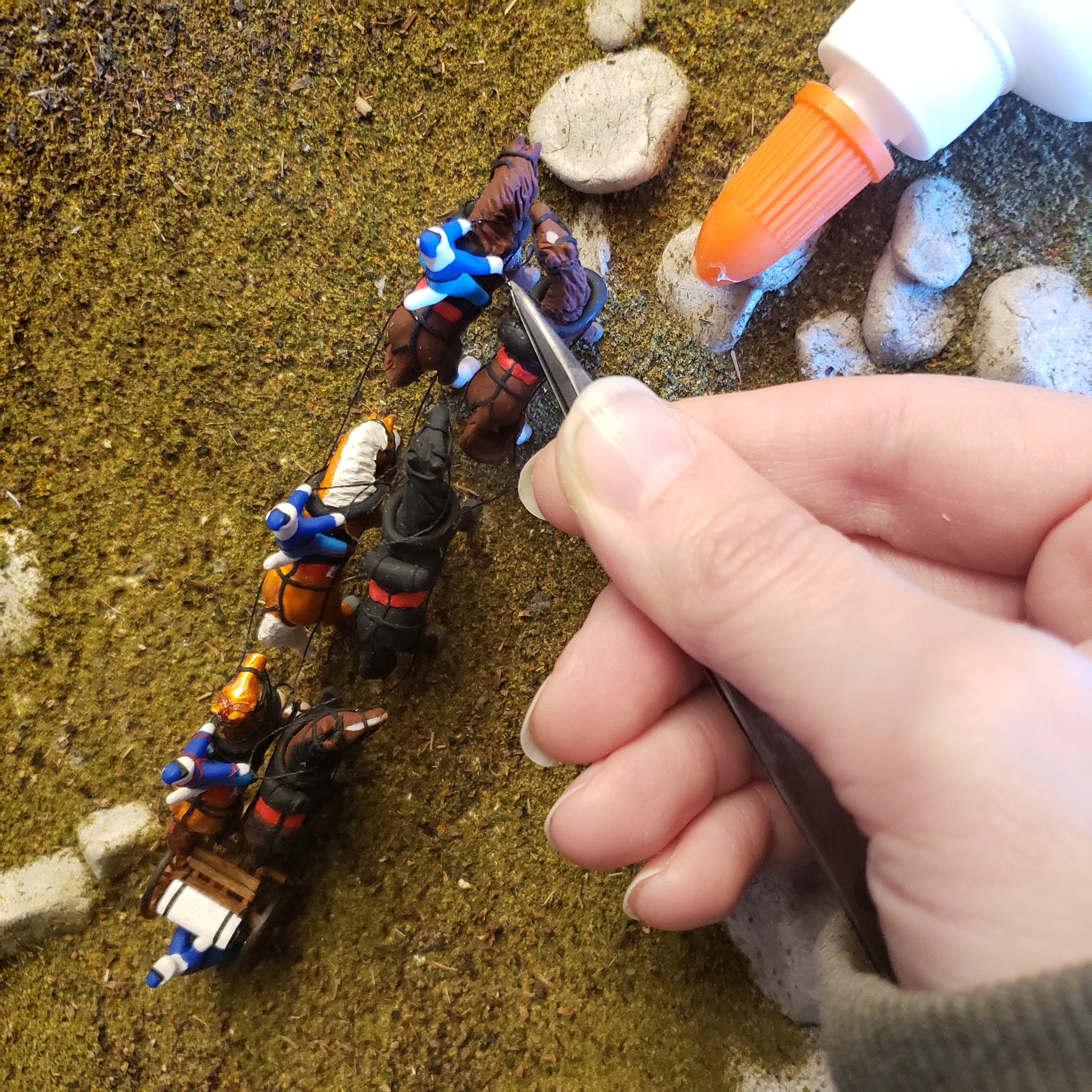
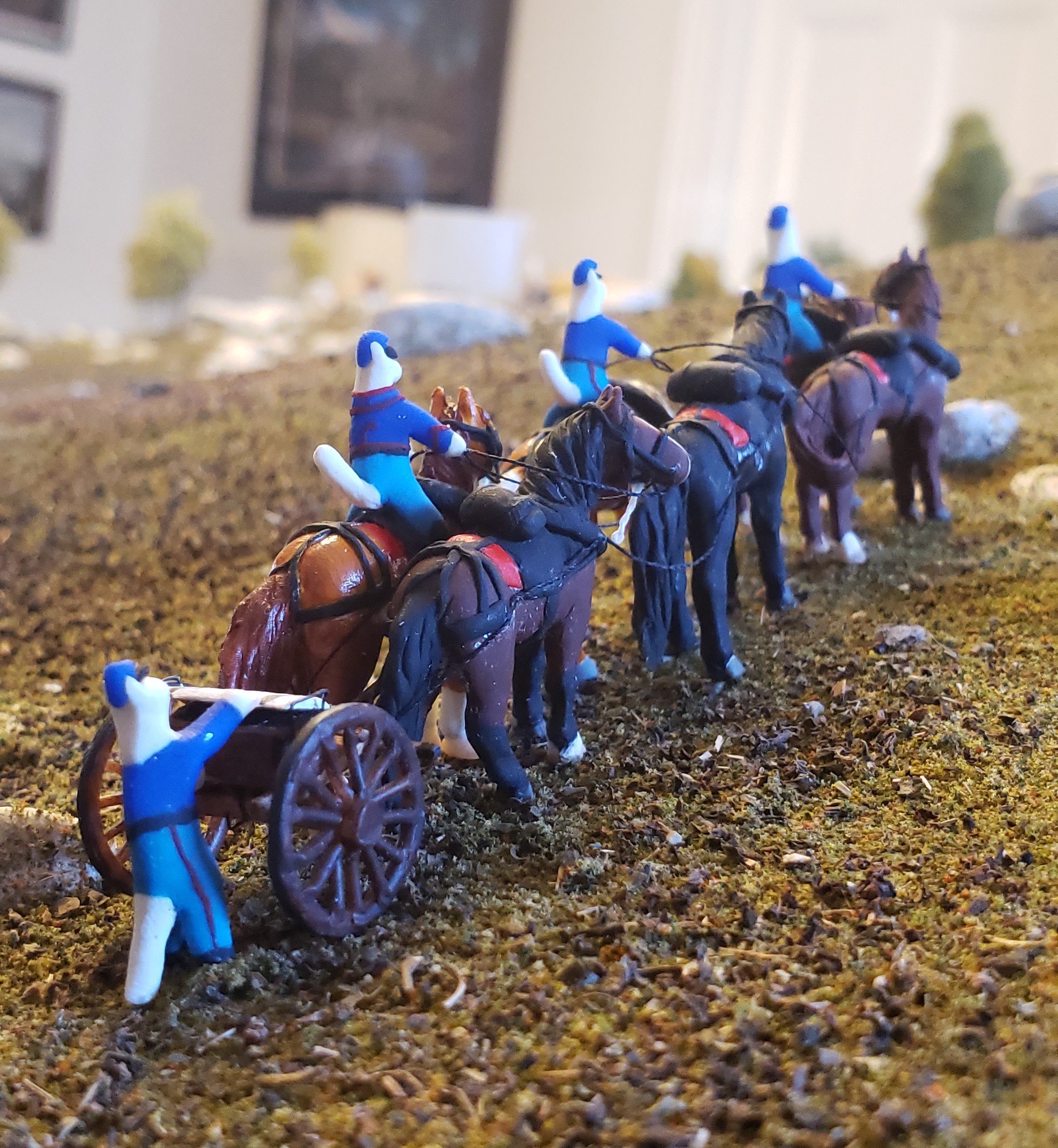
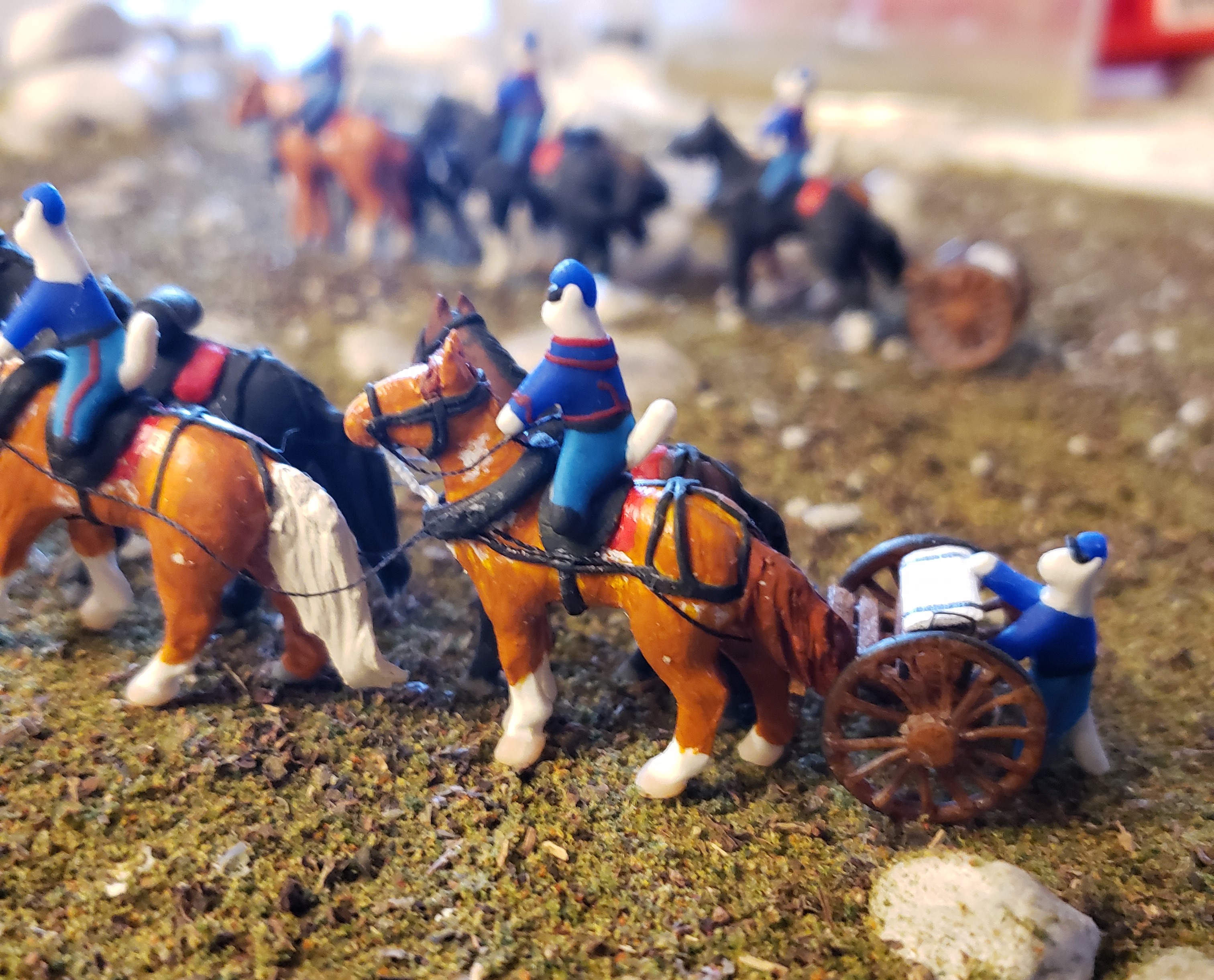
We also installed the limbers for Guns #1 and #2.

Limber for Gun #2:

Limber for Gun #1:

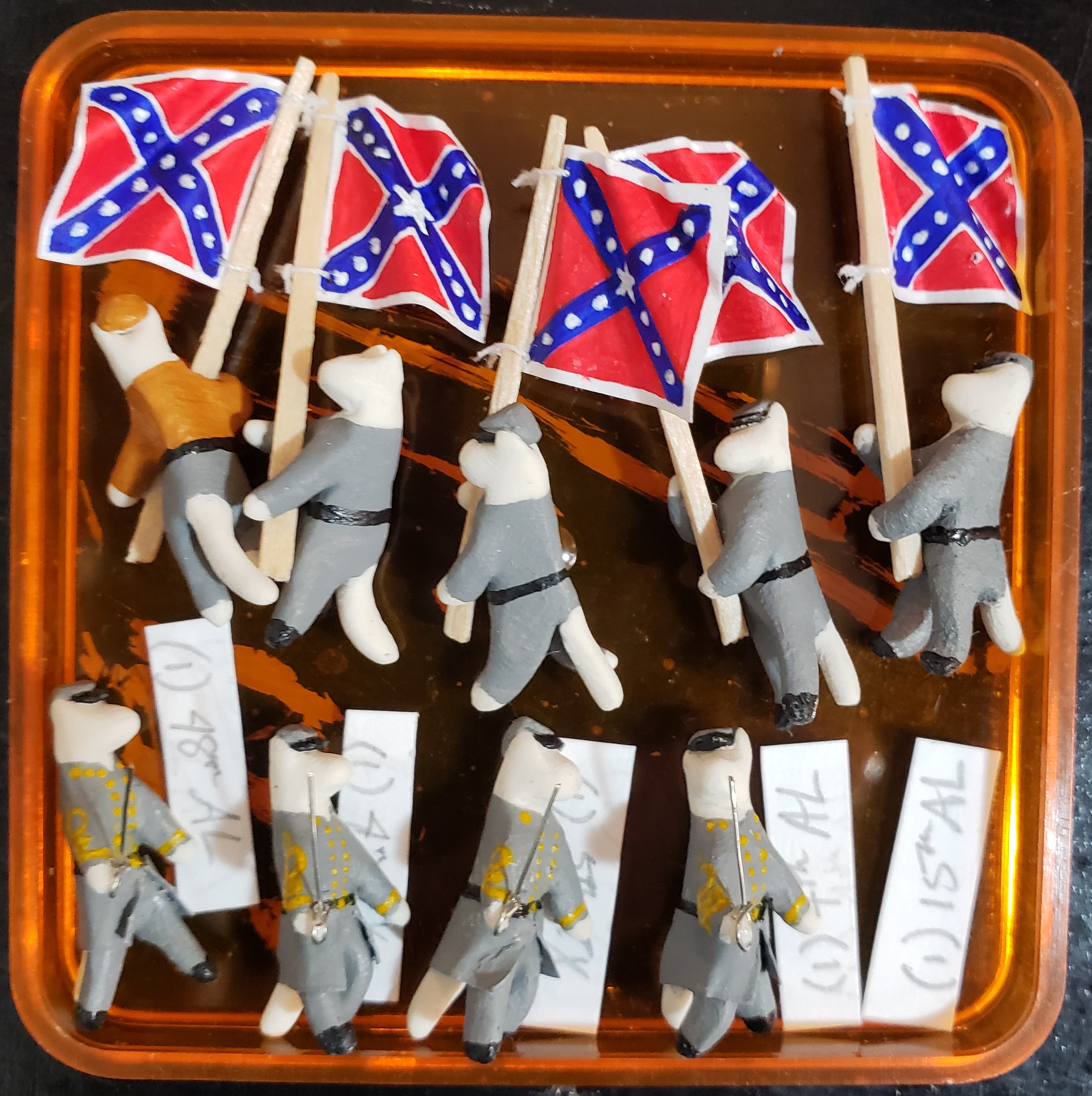
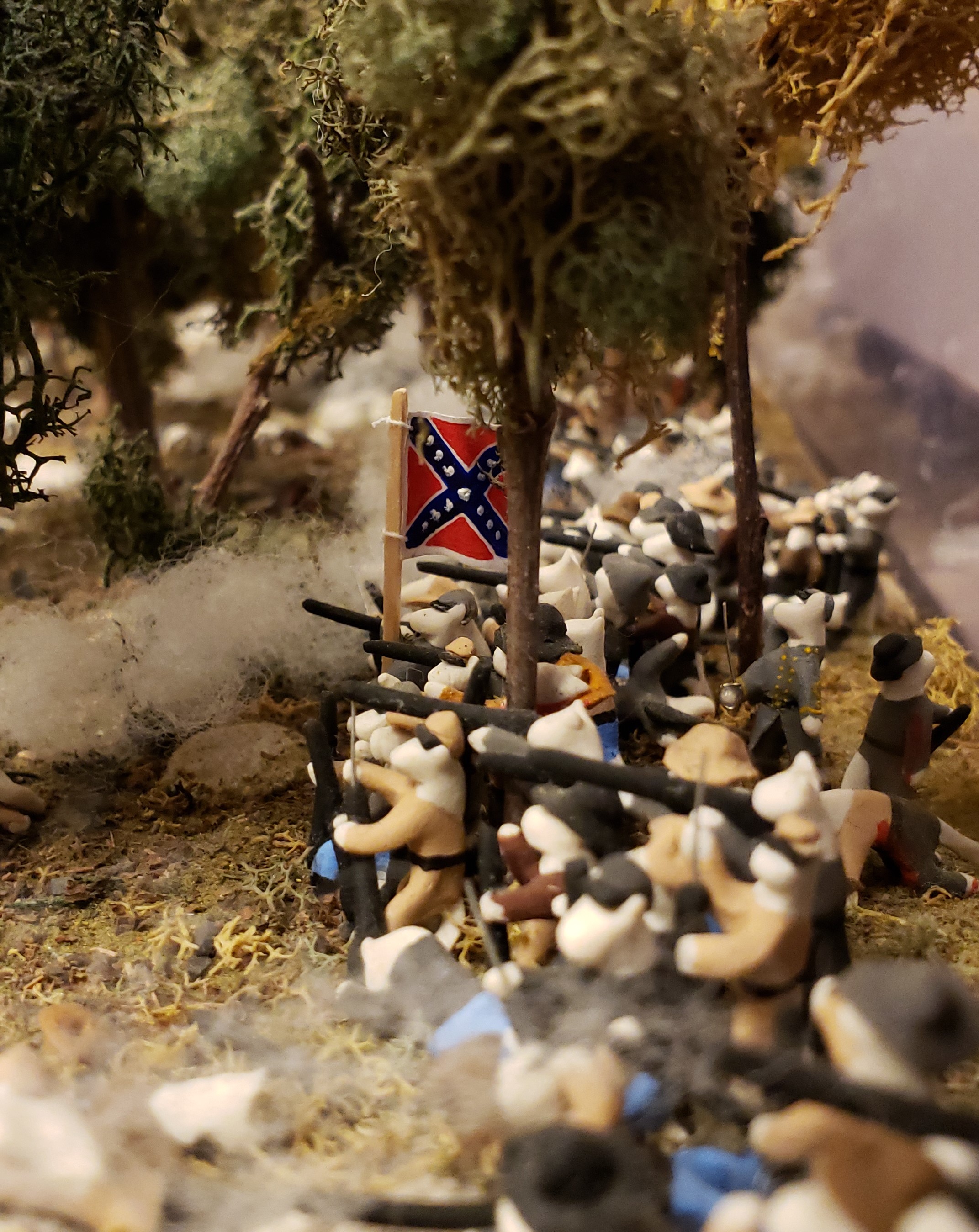
In December, we painted and installed the Confederate officers and flags. (Click on an image to see the caption.)

By February 2023, we were finishing installing Companies A and G of the 140th New York:

…with, of course, the elixir that powers our progress—coffee!

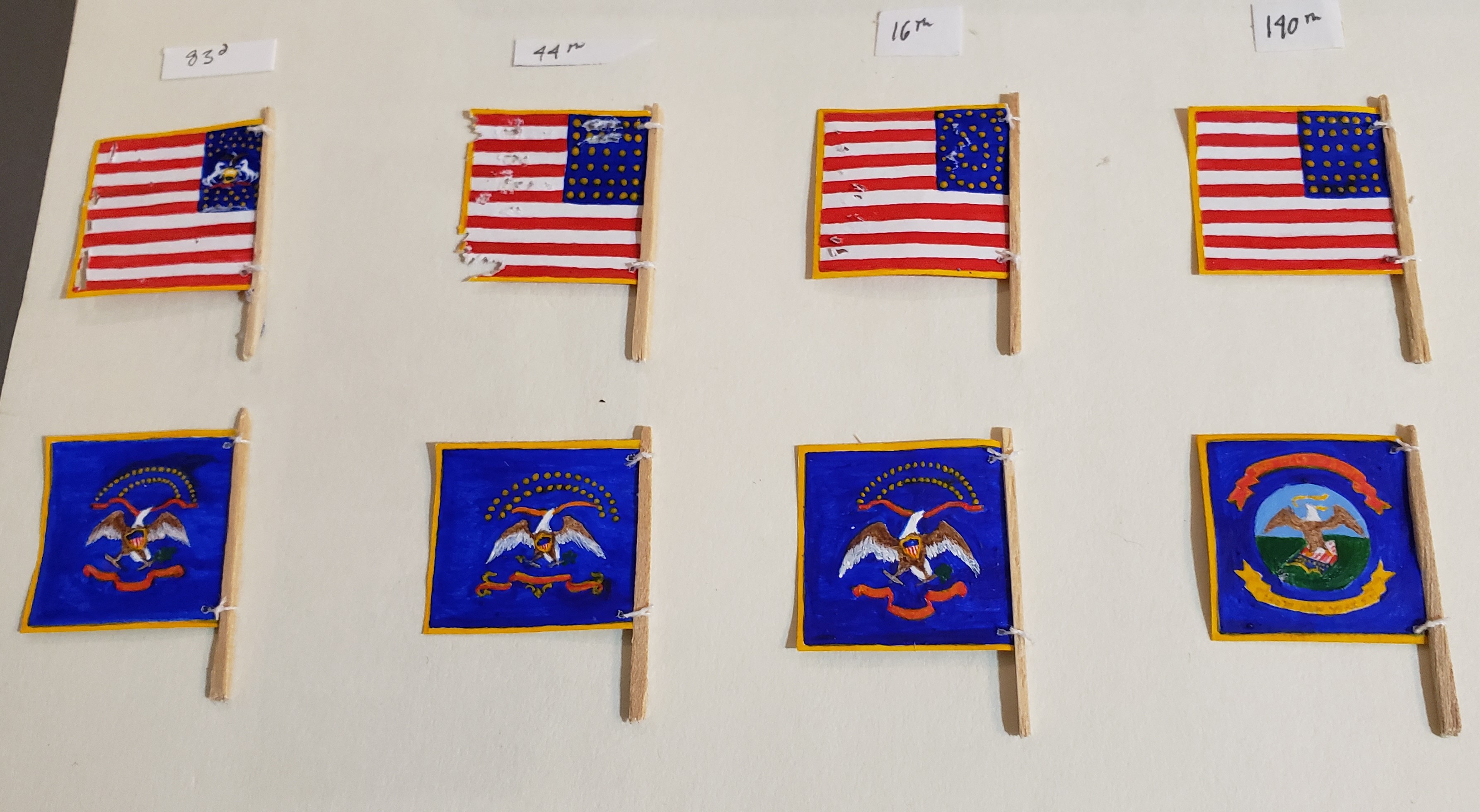
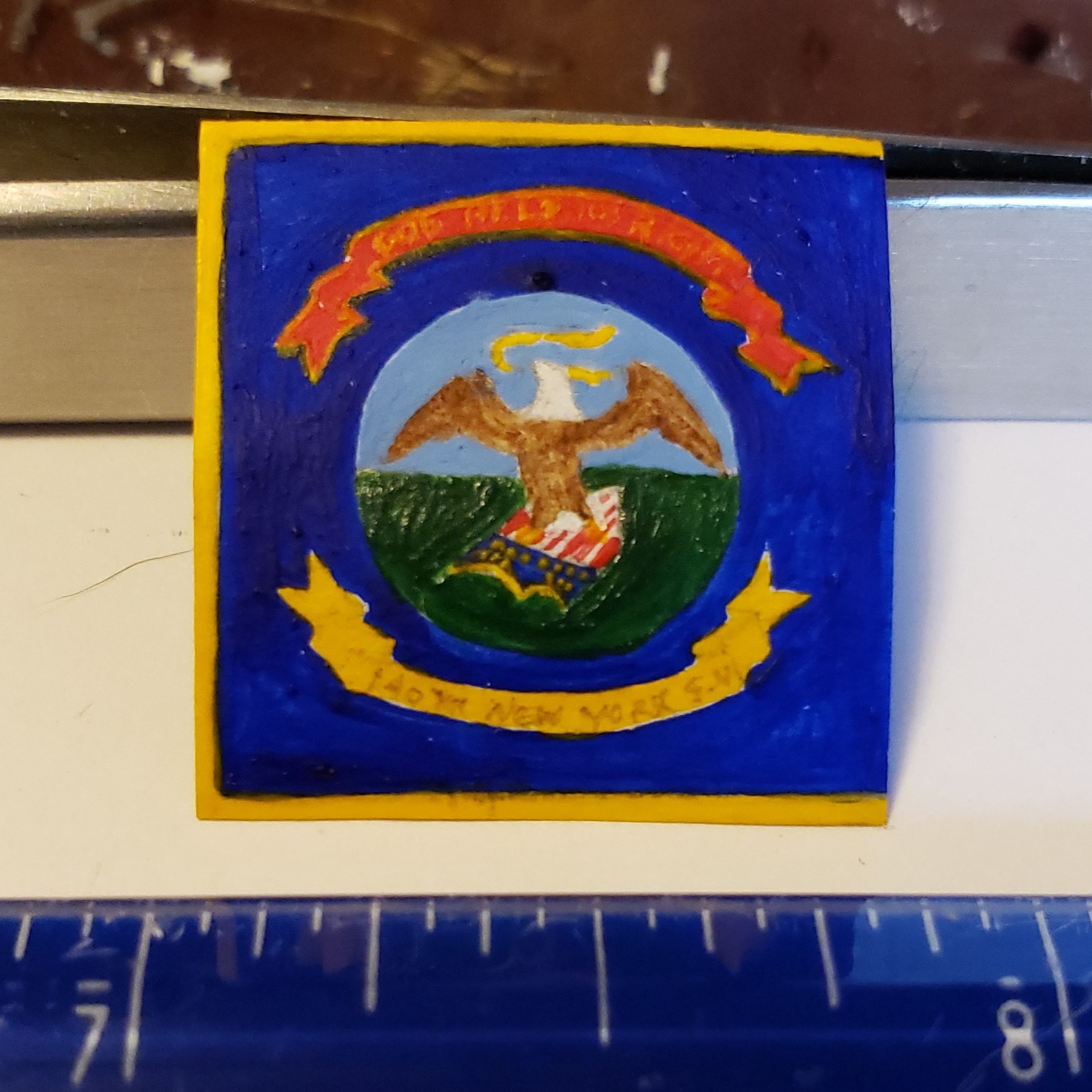
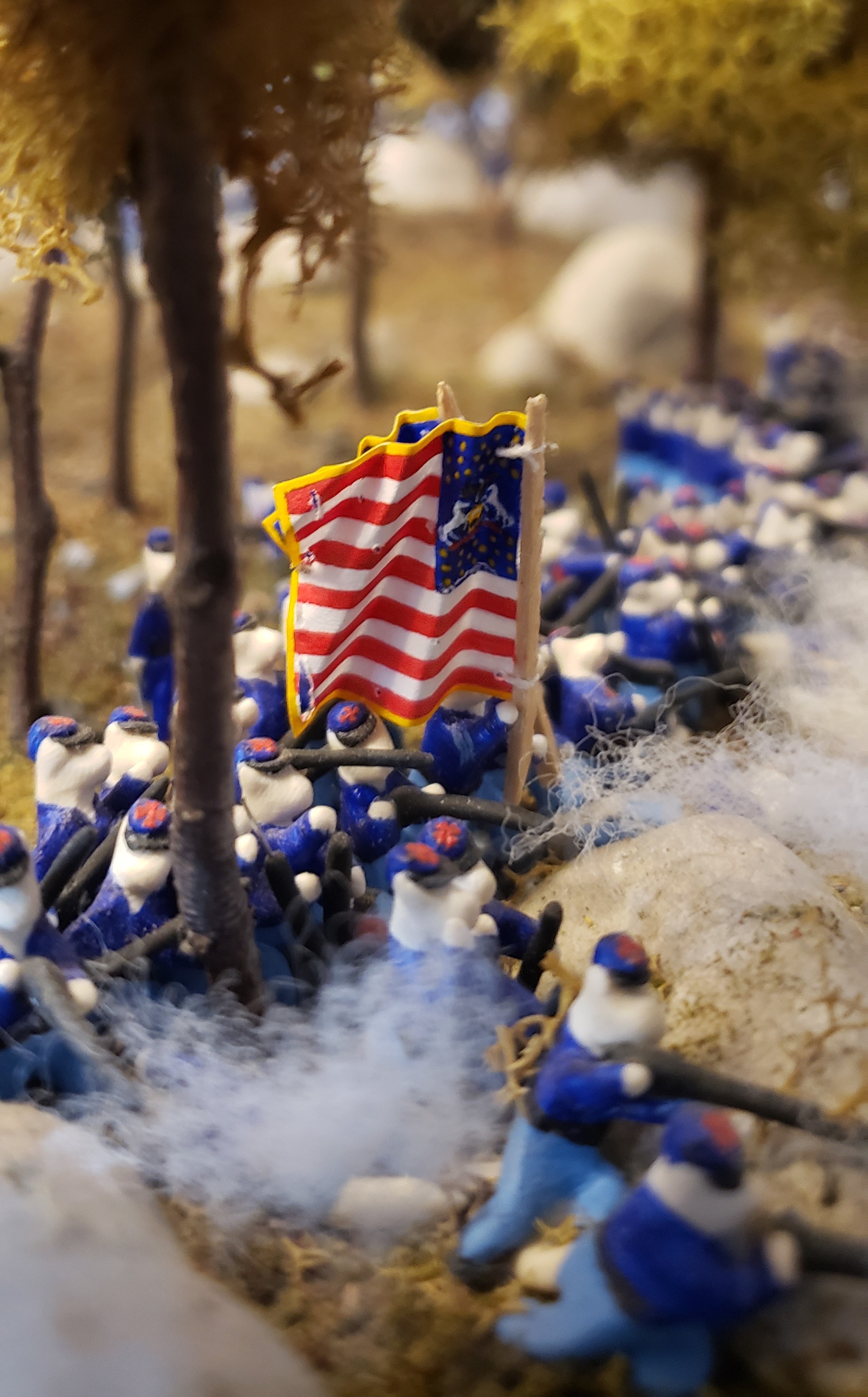
From December to February, we were also busy painting the Union flags. Each regiment has both national and regimental colors. The 140th New York has an unusual regimental flag, with a different design on either side. Many thanks to Mr. Brian Bennett for his research and artwork of the flag, so I could tell what I was looking at in photos of the original flag!

The two sides of the 140th New York’s regimental colors:

Click on an image for the caption.

On March 28, 2023, the 2,000th cat was placed on Little Round Top as we finished installing the line of the 44th New York and 16th Michigan.

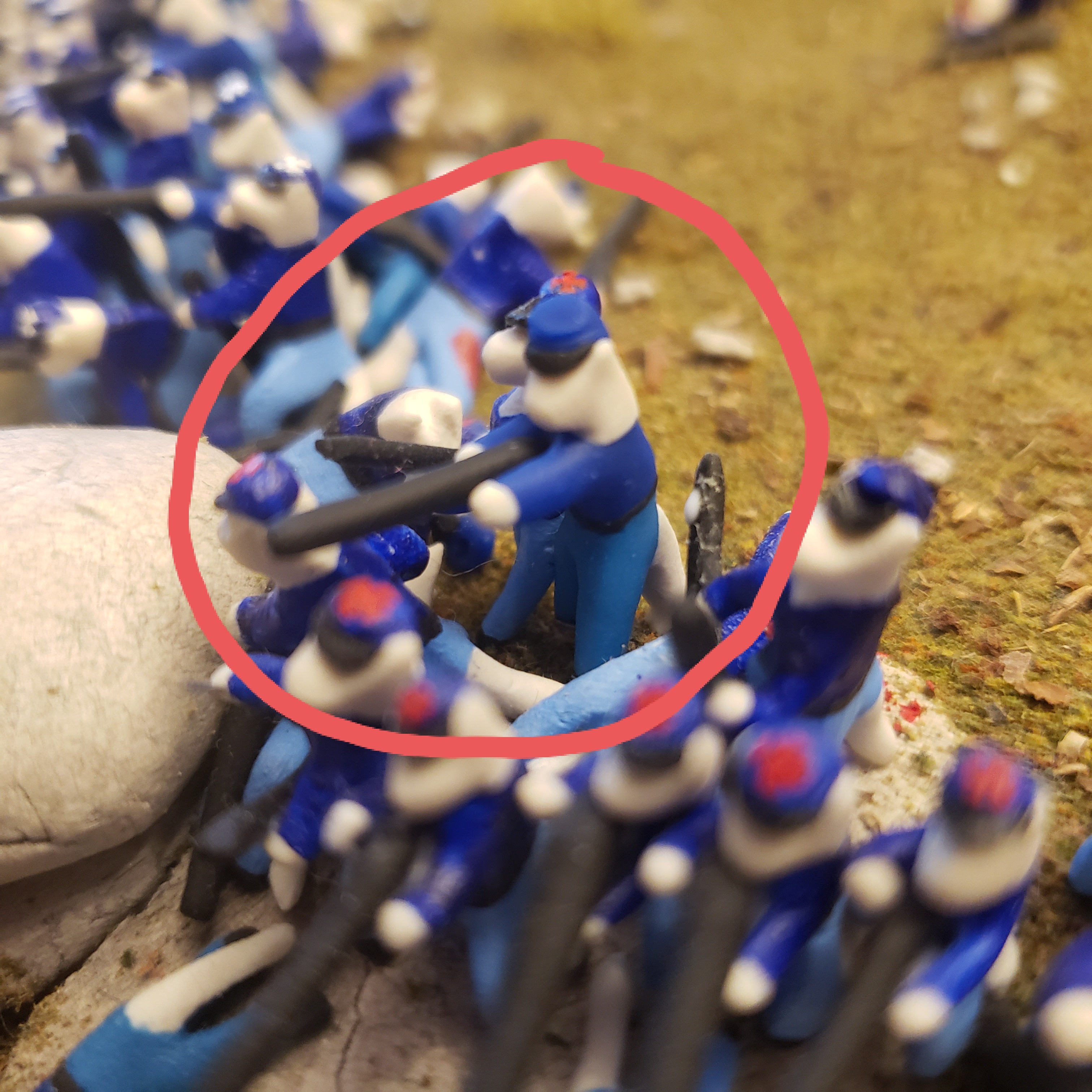
We ended up with extra kneeling infantrycats in various poses related to loading and firing their rifles. So, we got creative with how to use them up, when we needed standing Union and advancing Confederate soldiers, not kneeling.

Quite a few were able to be used as “falling after being shot.”

Others are tending their wounds.

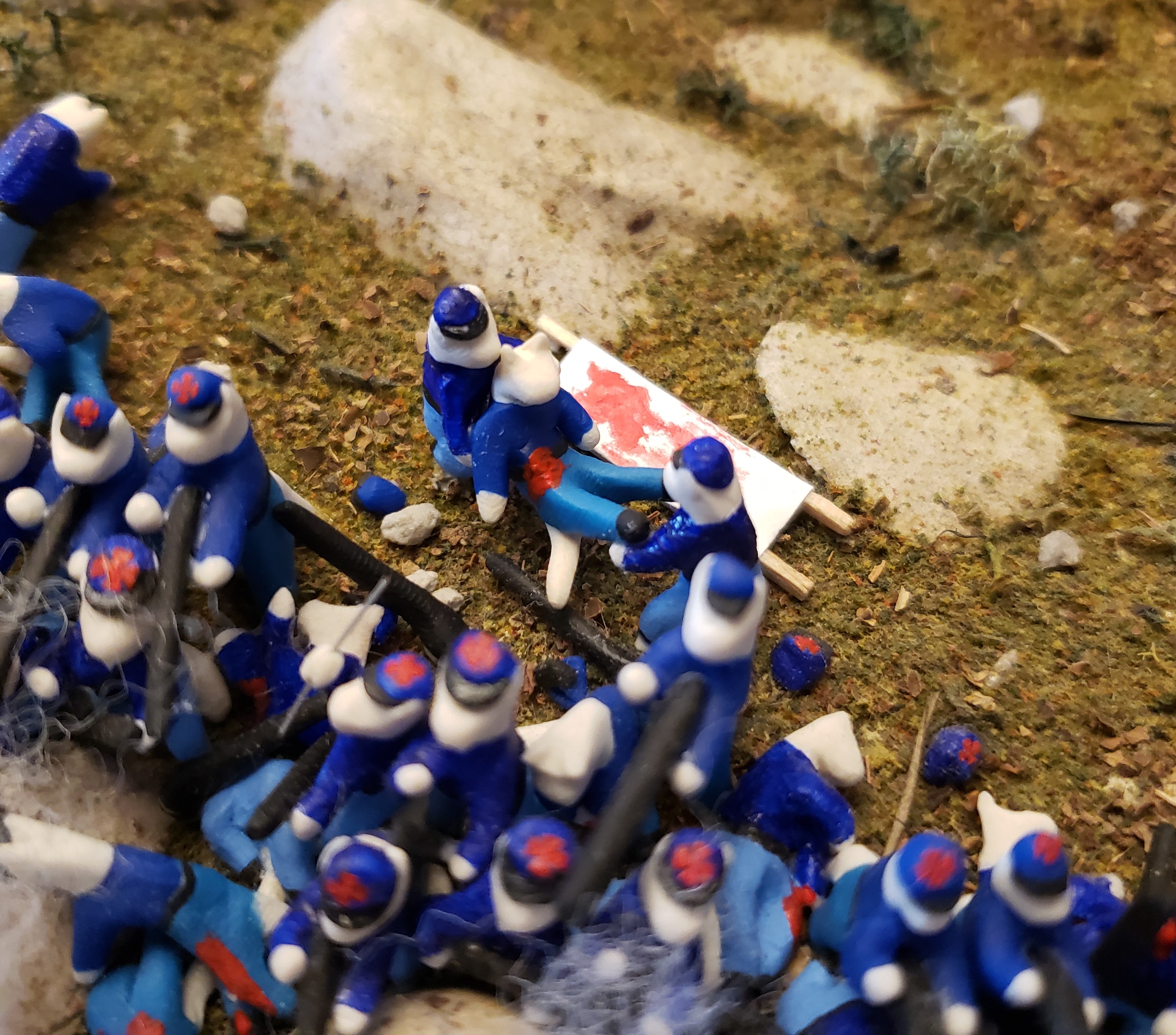
Surprisingly, we found we could use some as stretcher bearers, either picking up wounded on the battle line or dropping them off at the aid stations.

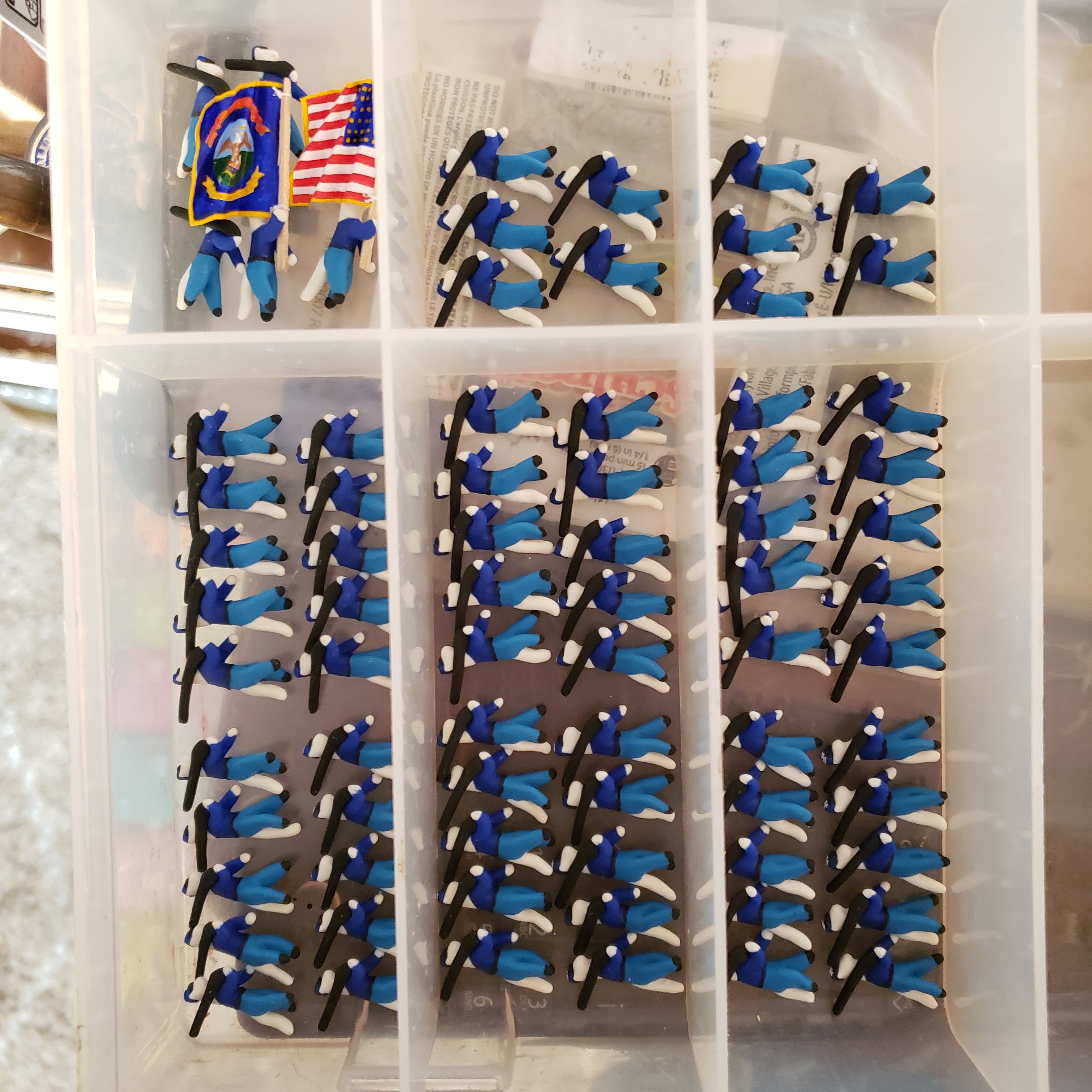
In May, we began installing the eight companies of the 140th New York that paused on the crest to form into line before left-obliquing to join Companies A and G. Of course, just like the other Union soldiers, they need corps badges painted on their kepis before installation.

May:

June:

July:

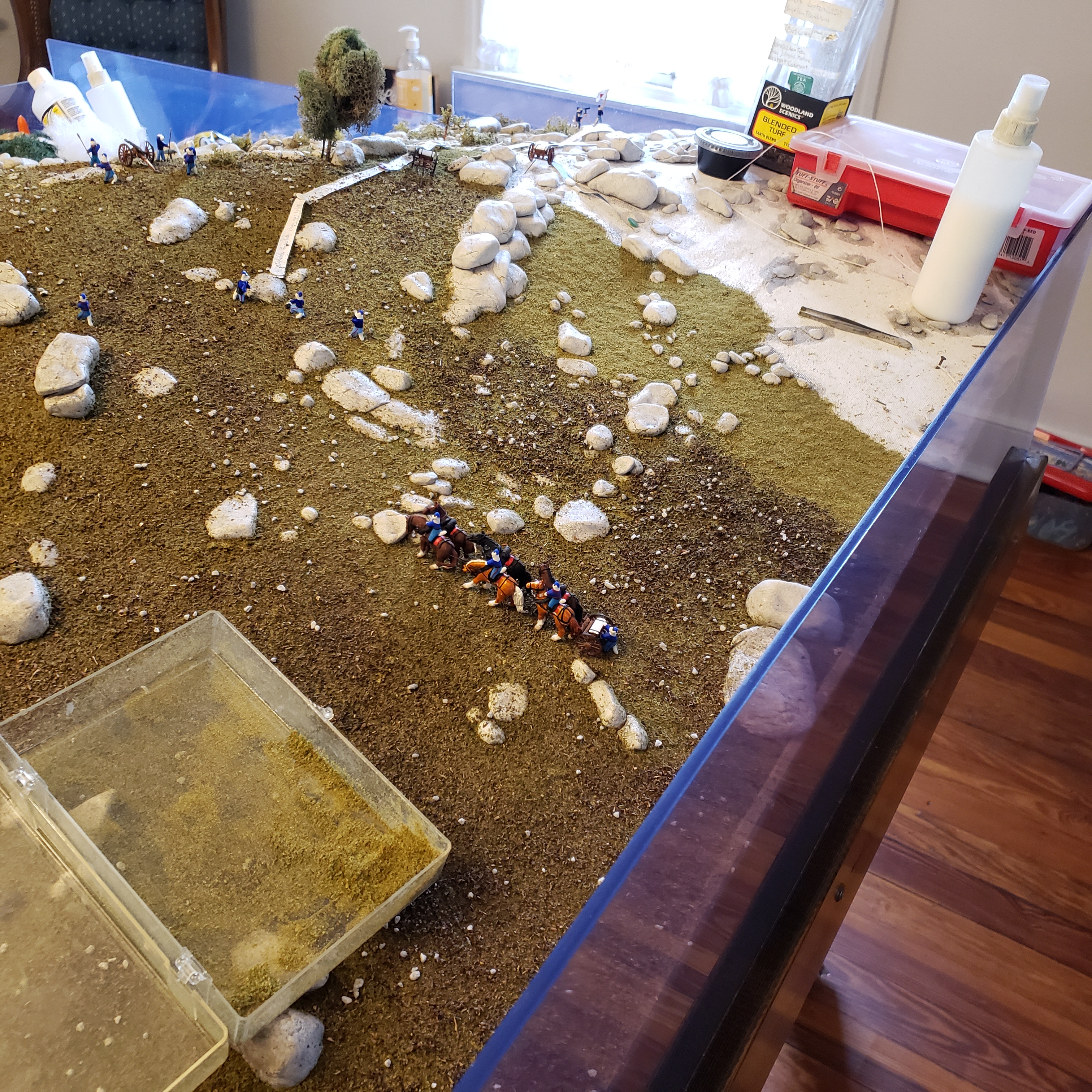
In early July, we also finally finished the ground cover!

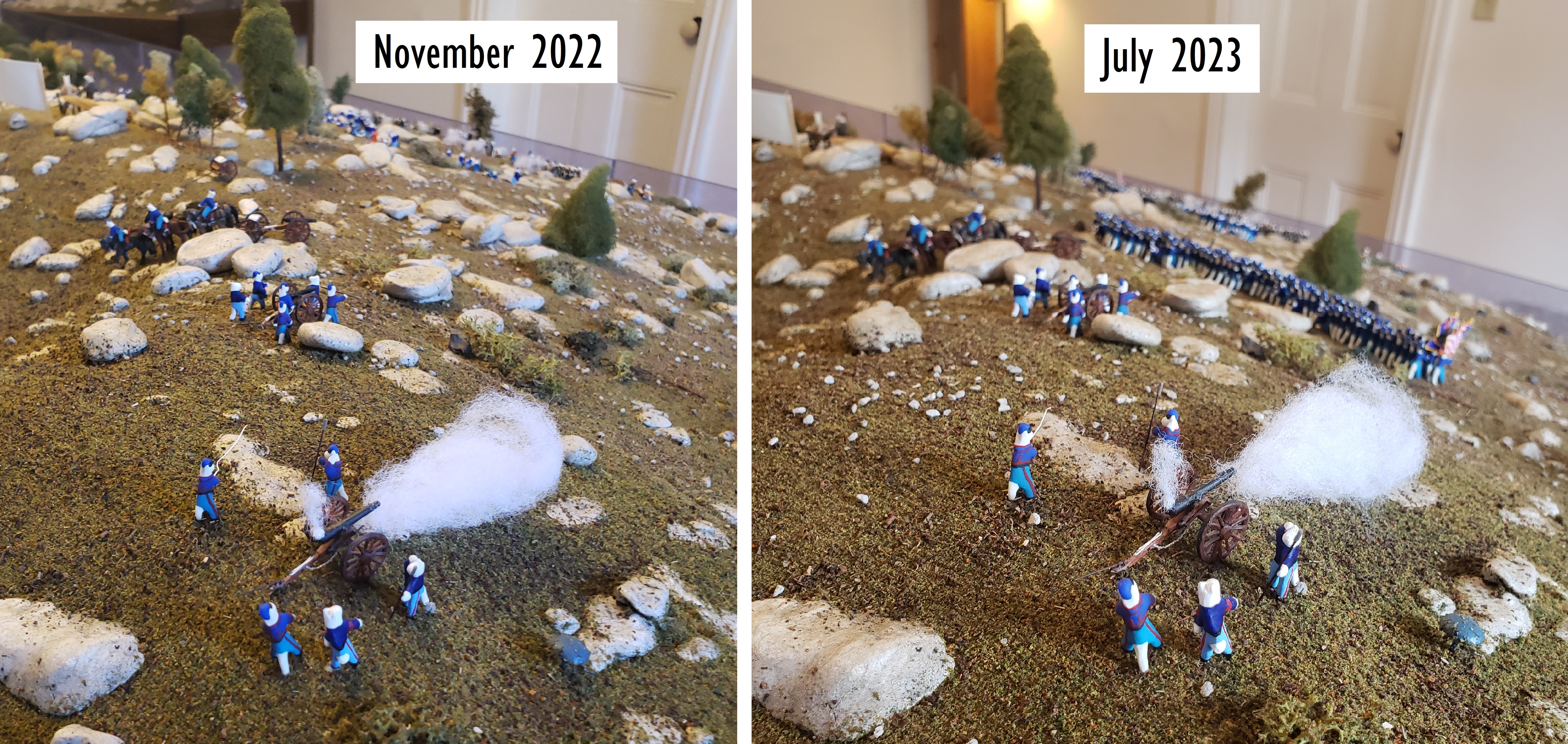
Before and After:

Why Study History?

Today is the 160th Anniversary of the first day of the battle of Gettysburg. Thinking about all of the events planned in town to commemorate the event also prompts us to ponder the questions Why care? Why study history? Today’s Mewsing suggests a few answers.

Where We Come From

Some parents hope their kids will follow in their footsteps. When we study history, we are like those kids, looking to our forebears to learn who we are, in this case as citizens of the United States.

On the flip side, other parents hope their kids will not make the same mistakes as they did. Looking to the past allows us to learn from the mistakes of past generations, just as future generations will hopefully learn from our mistakes.

We should look at both sides of this coin as we study history. An emphasis on one over the other will lead us to either idolize and sugarcoat the past or throw our entire history in the trashcan.

Perspective to Understand and Evaluate Our Own Time

An even balance when studying history leads to perspective. Learning about past events can help us to understand and evaluate the times and world we live in. Nothing happens in a vacuum, and it helps to understand what led up to an event, past or present. It can lend insight into what could happen in the future, based on past courses of events. This can prompt us to encourage or change current trends, or it can reassure us that things like this have happened before and folks have made it through.

Who We Are (National “Genealogy”) and How Experiences Have Shaped Our Nation

An important reason to study history is to learn our “genealogy” as a nation. On a personal level, it can be interesting to study genealogy and learn where our family came from, what occupations the individuals held, where they lived, and so forth. Have your family’s generations moved around a lot? Or did they stay in one town for generation after generation? So too, it can be interesting to see what led to the forming of our nation, what prompted various actions and events, and so forth.

This can also lead us to see how experiences have shaped the country, just as our own personal experiences shape us. For example, our reaction to something might be shaped by how we were raised, the current stress in our lives, and how much coffee we have had so far today. When studying history, we might ask what experiences, big or small, influenced or prompted an event.

Motivations and Examples

Studying the human stories—individuals, and not just broader concepts and movements—can inspire or teach us to be better people ourselves. As children, we learn by watching older kids and adults. So too, we can learn from the examples in history, both good and bad.

But because human beings are complex, we need to recognize that an individual can have both aspects to emulate and to avoid. So for example, a brilliant army commander can have a dubious character. But his personal life or beliefs don’t mean we cannot admire his leadership or tactical prowess. Likewise, his skill as a military leader does not mean we need to applaud his beliefs or personal character.

Looking at what drove people to act helps us to understand what was important to them. We should then evaluate whether or not those ideals, goals, and convictions are still important today, particularly if people were willing to die for them. We also need to realize that motives are often complex and multi-layered, as people do “what they need to,” to get “what they want.” So, while we might not agree with a particular motivation or action, we might agree with the broader concept underlying it, or vice versa.

As you study history, no matter the subject and aspect, remember that our job as students of the past is to evaluate what we read and not to blindly embrace or discard a person, event, culture, or time period as a whole.

So, read some history today! Pick out the good and admirable, learn from the bad, and appreciate the work of previous generations who were living their lives the best they could, day-by-day, just as we are.

If the idea of reading history scares you, try out our book! (Available here or here.) Yes, that’s a shameless plug, but hey, it’s easy to read and chockful of pictures of cats!

The Great Locomotive Chase Steams Forth

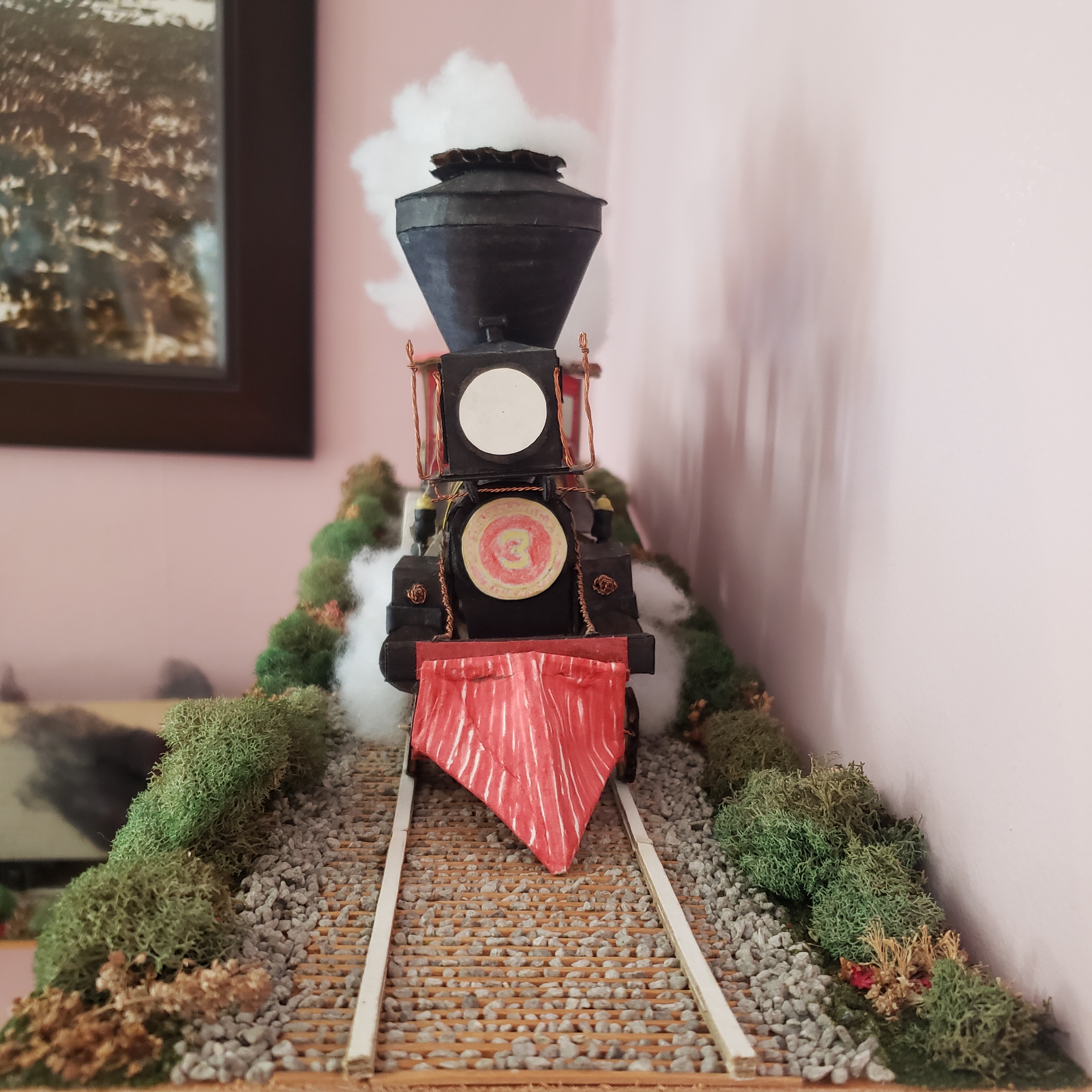
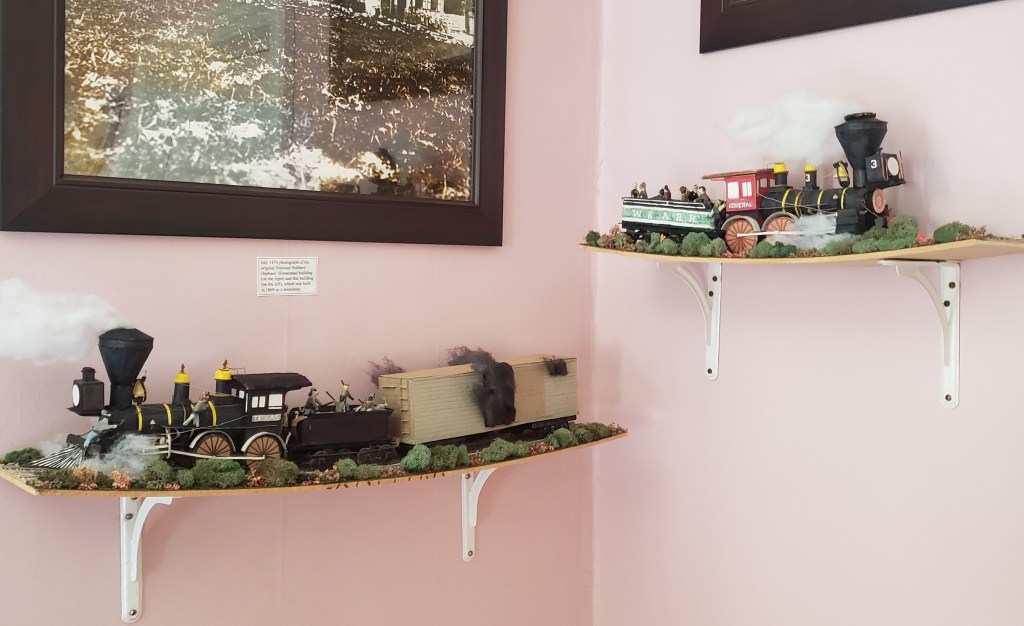
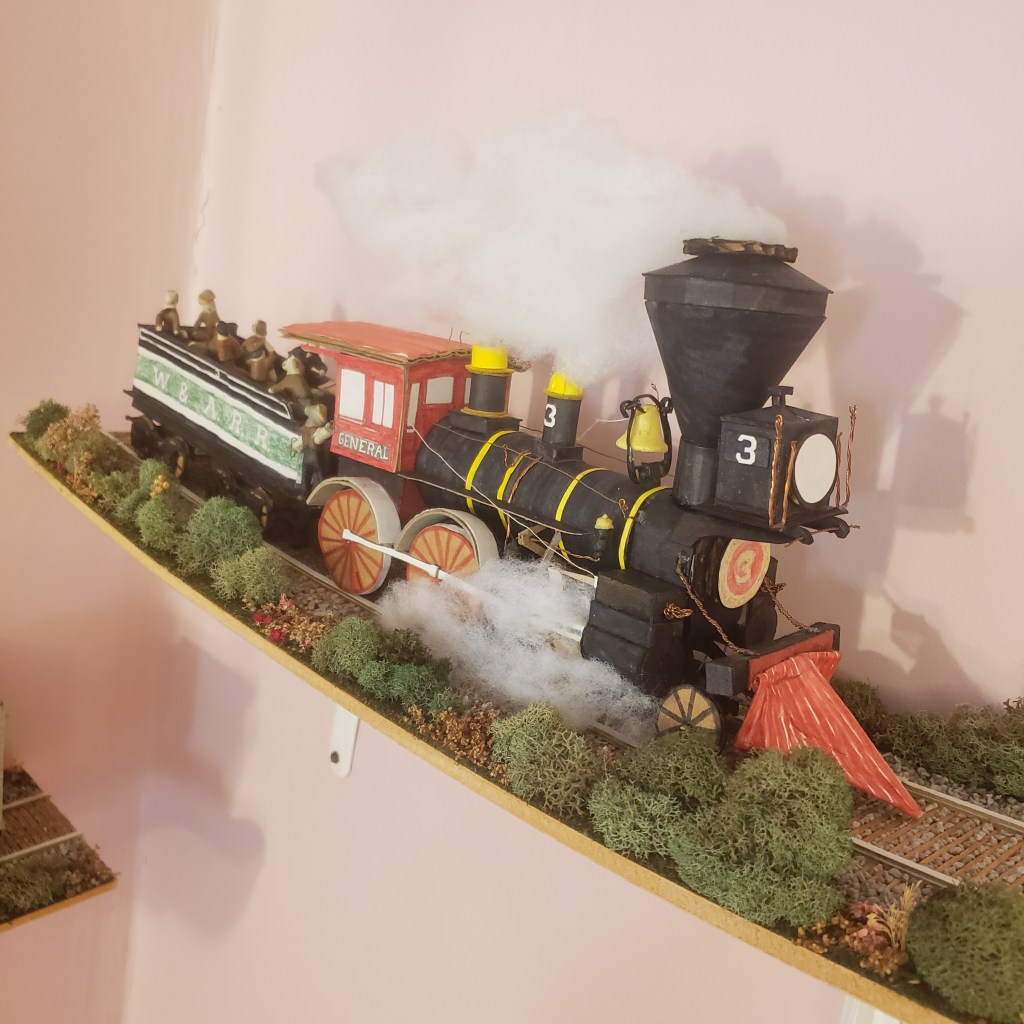
You’ve seen it on our puzzles, calendar, and prints! You’ve asked about it, and we listened! The Great Locomotive Chase is finally on display!

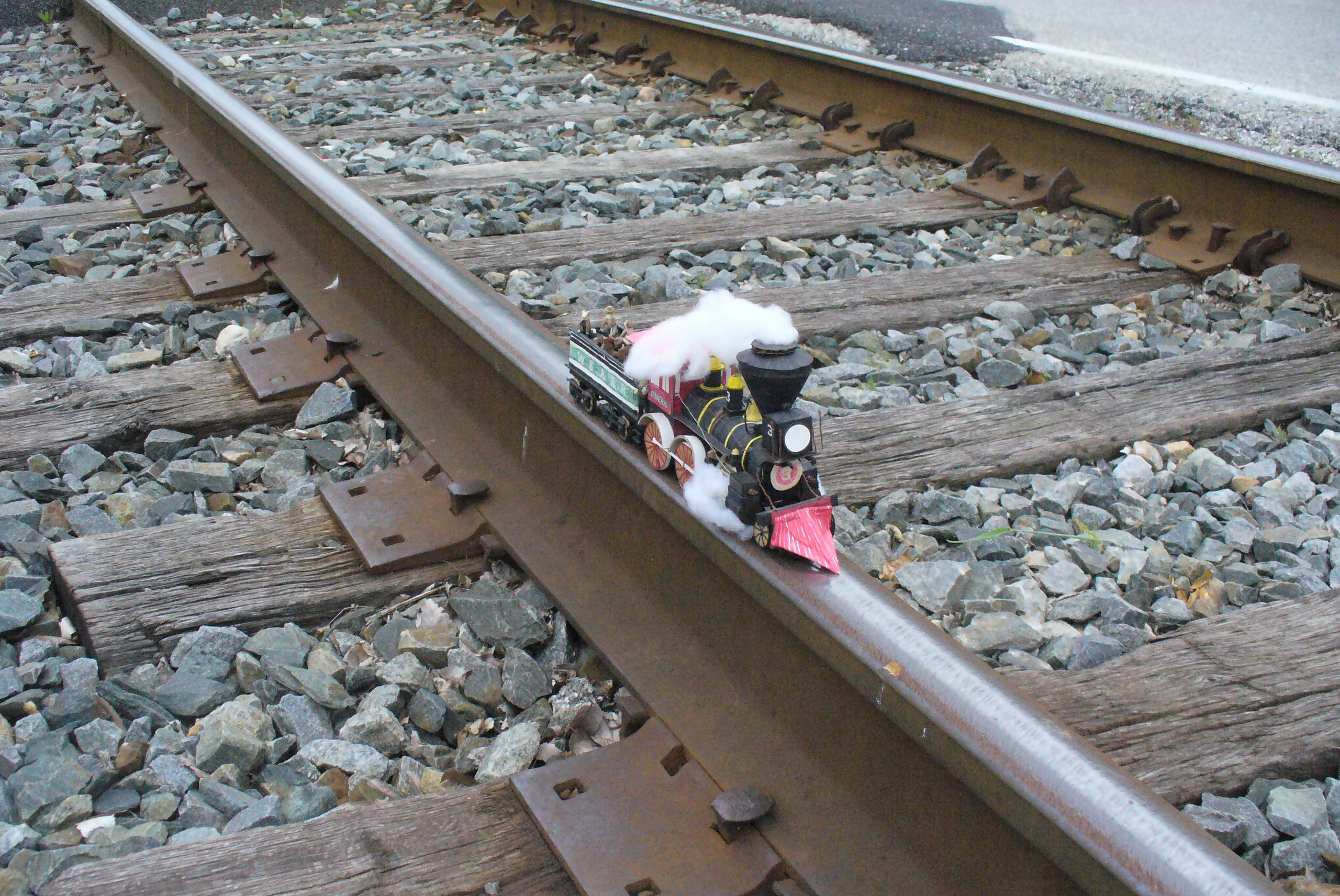
If you have been to Civil War Tails since 2018 or purchased that year’s calendar, you might know this photo, showing the locomotive General on a railroad track. But where was the General in the museum? The answer was “Nowhere”; it was in storage, along with the Texas and the rest of their diorama. Ever since opening in 2015, we have wanted to bring out “The Great Locomotive Chase,” but we could not settle on a good plan of how to display them.

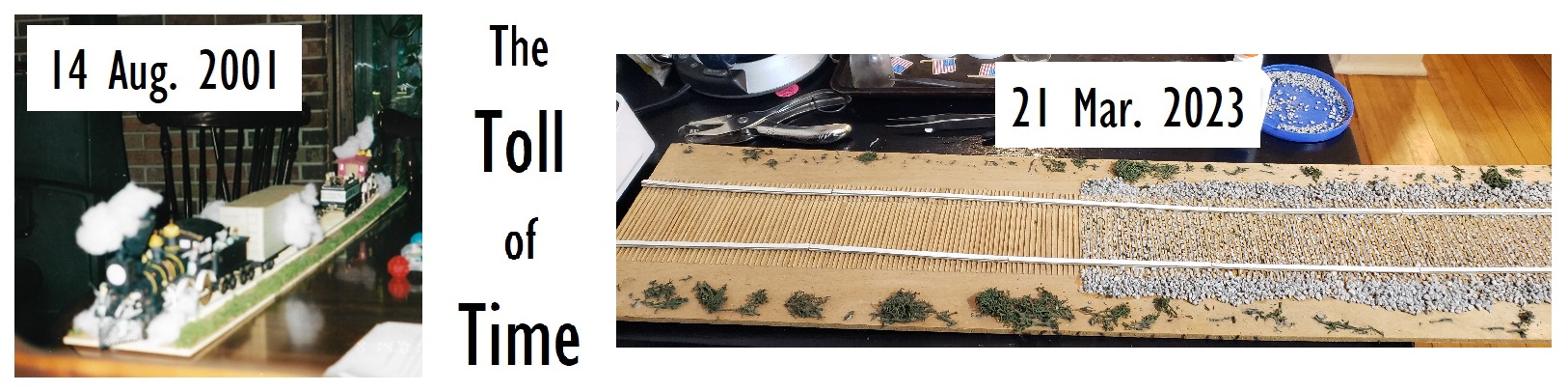
According to our photo record, Ruth made the diorama sometime between July 2000 and August 2001, after reading about the Great Locomotive Chase. In August 1862, James Andrews and a small band of Union raiders stole the Confederate locomotive General in Georgia and steamed northward, damaging track and telegraph wires along the way. The General’s conductor pursued them, ultimately chasing them down in the Texas, in reverse. Ruth made our locomotives and boxcar from cardboard, paper, string, and wire. The track uses toothpicks for the ties, and cardboard for the rails.

The first photo of “The Great Locomotive Chase” diorama, taken Aug. 14, 2001.

Time can be rough on dioramas, and over the years, the reindeer moss “bushes” along the tracks were banged and bumped so much that by 2015, few remained, giving the track a plain, uninspiring appearance. The General lost a wheel, and we were always a little afraid to ask how much more damage might exist. Add to that the dilemma of how to display the fragile locomotives in reach of sight but not touch, and for the last eight years, we have been at an impasse.

In mid-March, after talking with a visitor who was very interested in the General, we began seriously pondering the logistics of making it happen. As we did so, we discovered the wall near the diorama of the ironclads. We had moved a clock, and now it seemed as if the empty wall were begging for the General and Texas to come out.

When we pulled the pieces of the diorama out of their storage trunk, we discovered that the Texas and boxcar were basically ready to go! One Confederate cat on the Texas had lost an arm, and it took us a while to find a spare arm for him (and the doors for the boxcar), but other than that, they were in perfect condition. Not bad for bumping around in a trunk for over 20 years. The General needed minor repairs, but nothing major—and yes, we still had the wheel that had broken off!

But what about the uninspiring track? We added “talus,” tiny fake rocks, which involved placing nearly every rock between the ties by hand, with tweezers. To keep us from growing bored while placing and gluing rocks, we listened to an audio CD of A. Conan Doyle’s Sherlock Holmes adventure, The Hound of the Baskervilles.

Once the tedium of the talus was over, we added new reindeer moss bushes. We also used dried flowers to represent grasses, wildflowers, and undergrowth. Looking at the result, one would never know it’s just a plain toothpick track on a flat board!

Perhaps the trickiest part, believe it or not, was figuring out where to put which locomotive. With cardboard trains and an old track, the imperfectly aligned wheels did not always line up with the wavy rails where we wanted to place the engine. But there might be another section of track where the misaligned and the wavy matched. We tried the locomotives on this end and that, added the boxcar, sorted it all out, cut the board into two (a longer piece for the Texas and boxcar, and a shorter for the General)—and then when all was finished, both locomotives decided they didn’t like their designated ends of the track! So, we spent more time, putting the Texas on one end of its board, then the other, then farther forward, farther back, etc., and then repeating the process with the General. At last, we could glue the locomotives and boxcar permanently to the track.

In the meantime, we decided to spruce up the boxcar by painting its smoke. During the raid, Andrews’ men set the boxcars on fire when they uncoupled them from the General as obstacles for the pursuers. Our boxcar does not yet show visible damage from fire on the outside, so we chose to do very little in the way of flames. We painted its fluff as smoke with a little glow of fire inside.

With the finished diorama installed on the wall, it was time to celebrate! After waiting eight years, the 22-year-old locomotives had finally found their place in Civil War Tails. And what better way to celebrate than by watching Buster Keaton’s The General, a hilarious silent movie from 1926 showing a fictionalized version of the Great Locomotive Chase!

Next time you visit Civil War Tails, check out “The Great Locomotive Chase”!

You Can Do It: Rigging a Ship

If you like making miniatures of the Civil War era or earlier, at some point you might have to rig a ship. Guess what? It’s easier than you think! In today’s Mewsing, we will show you simple ways to add rigging without losing your mind and with accuracy so that no matter how simplified, at least it’s correct!

When I (Rebecca) made our model of USS Housatonic, I was starting from scratch and had never even put together a kit of a ship. So when it came to the rigging, I thought, “Please tell me I don’t need all the rigging you see in [the movie] Master and Commander!” Spoiler alert: the answer is no, you don’t. And even with the simplified rigging that our Housatonic has, we had one visitor (who had experience on ships) comment with surprise that the rigging was correct, which he doesn’t always see on model ships.

To rig Housatonic, I looked on Google for diagrams of rigging, and learned all about standing rigging, running rigging, how to furl a sail, how to clew up a sail…. But don’t worry, we’re not going to cover that here. Our tips will be for beginners. When you want to go deeper into rigging, there are plenty of diagrams online, or model ship kits that will tell you how to rig it, or forums online to go really in-depth into tying rigging with the knots used on a ship (which is even beyond my interest at this point).

Let’s get started! We’ll introduce rigging in steps. If the thought of rigging scares you, just do Step 1 and leave it at that. It’s still better than bare masts! If you get to the end of it and think, “That wasn’t so bad!” go ahead and try Step 2.

Tip: I tie the rigging to the masts and spars, but if you don’t want to deal with trying to tie knots, you can just glue the string/thread in place.

Step 1: At the most basic level of rigging, your ship needs stays to keep the masts from falling over, either forward/backward or side-to-side. Use black string/thread because “standing rigging” (i.e. rigging that doesn’t move) is always black.

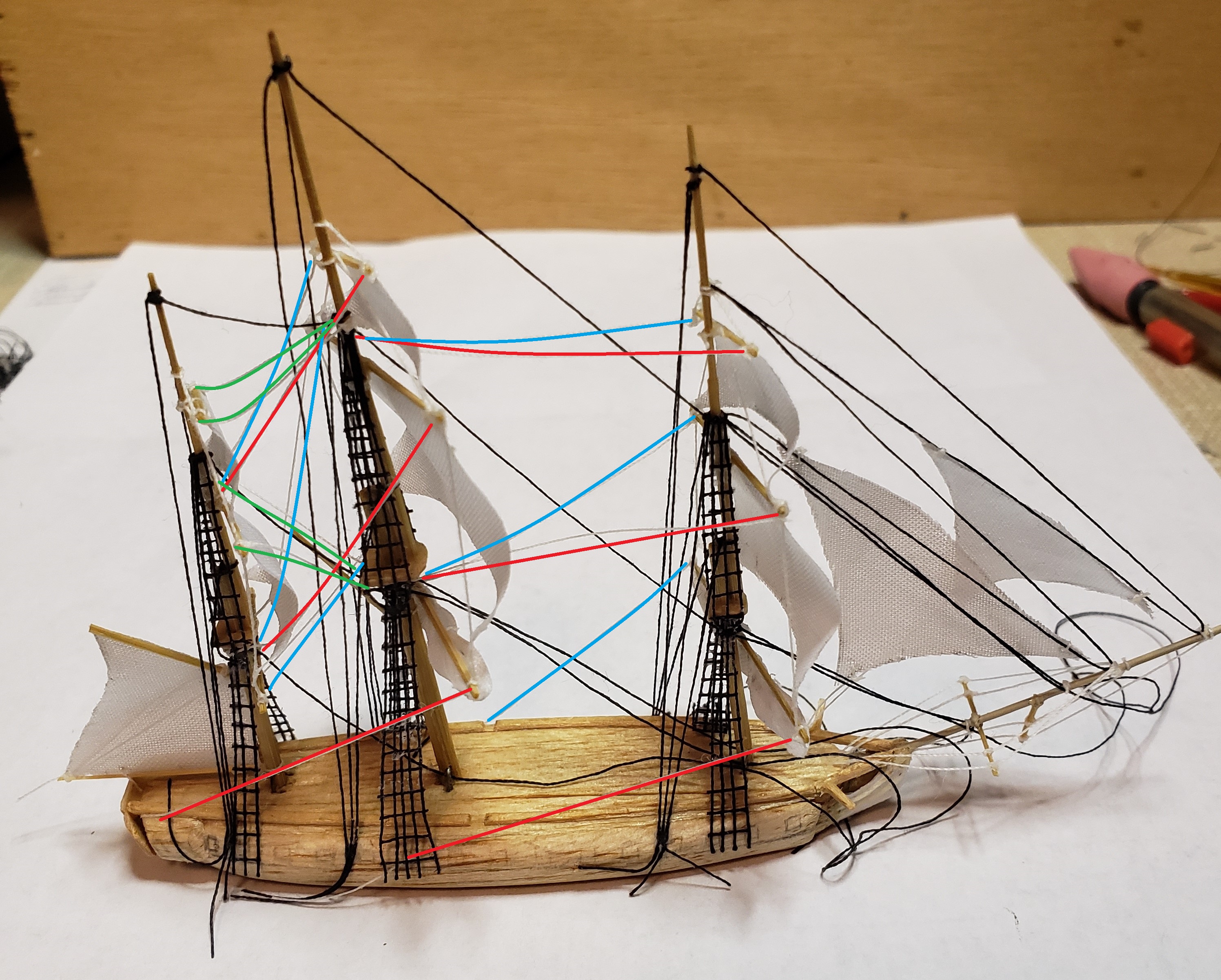
In this picture, the fore-and-aft stays are marked in red. As you can see, there are more of them on Housatonic, but I only marked the ones that I would consider essential to give the impression of rigging. You can see that on each mast, the rigging is the same. The lowest runs from the fighting top down to the deck. The next one up runs down to the fighting top of the mast in front of it. And so forth.

In the next photo, you can see the backstays that run to the sides of the ship, marked in blue. Note that they do not run from the fighting tops, however. For that, you need the shrouds, i.e. the ladder-like rigging (marked in green, in our picture). If you don’t want to tackle the grid-like rigging, I would suggest you at least run a couple strings to represent the shrouds, because otherwise it will look strange that your lower masts are unsupported side-to-side, but the upper masts are.

See? Now, that wasn’t hard, was it? Even for a beginner’s effort, you have a ship that has rigging, and the rigging is not random or a guess. Good job!

Ready for more? On to Step 2!

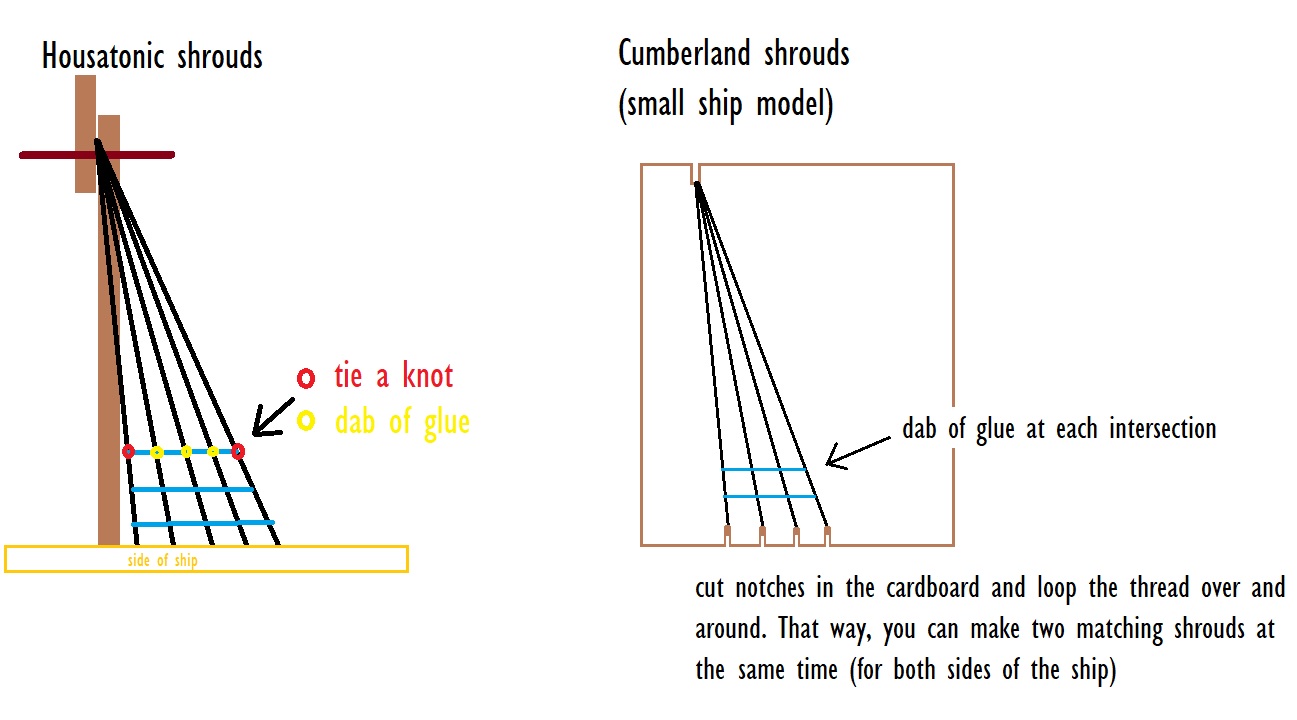
Step 2: This is probably the most difficult of our steps, but it should be done next. Shrouds, like stays, are black. To make them, glue (or tie) string/thread into a grid. Model ship kits usually come with a jig that makes this easier. With Housatonic, the ship is big enough that I just ran the vertical lines (shrouds) from mast to side, and then added the horizontal threads (ratlines), knotting them at each intersection. Or, you can just tie a knot at the beginning and the end, with dabs of glue at each crossing in between (see the diagram below).

With a small ship, such as our USS Cumberland ship-in-a-bottle, the shrouds are small enough to use only glue and not bother with knots. I used an old model ship kit jig, but you can make one with a piece of cardboard (just be careful that your shrouds don’t glue to the cardboard!).

To be correct, each section of each mast needs shrouds. You can see them in the photos above of Housatonic. On the upper shrouds, measure your fighting tops, etc. where the shrouds end so you can space the verticals correctly. You don’t want the base of your shrouds to be too wide!

Step 3: If you’re still reading this, you are either addicted or a glutton for punishment. On to the “running rigging” (i.e. the rigging that moves). Use white thread, because running rigging is natural, not black.

Braces are the running rigging that moves the spars to angle the sails. In the photo, the starboard (right) braces are red, the port (left) are blue. Note that on the mizzen mast, they run forward to the main mast (green lines), since there isn’t a mast behind the mizzen.

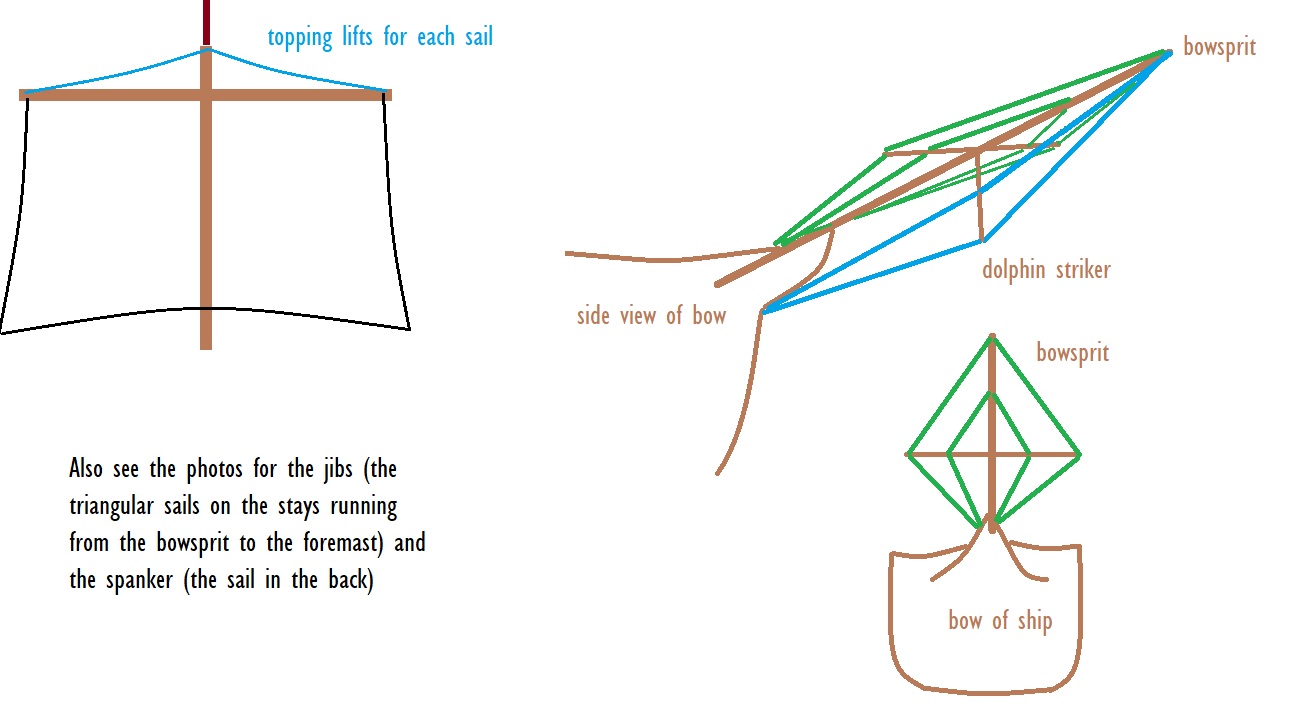
Step 4: There are a few more simple touches to add if you like. They’re a bit beyond our purview in this Mewsing, but you can see them in the photos above of Housatonic and Cumberland.

My usual mantra is, “If you feel yourself going crazy, back off on the detail or take a break.” But in this case, why not try pushing yourself? Give rigging a try!

‘Twas the Night Before Christmas 2022

‘Twas the night before Christmas, and all through Civil War Tails every creature was stirring, including the mice. The clay Civil War cats were taking full advantage of the fact that the humans had gone away for Christmas. Every diorama had emptied, and miniature cats swarmed everywhere—dancing at the ball under the towering 8’ Christmas tree, sipping eggnog or mulled cider around the smaller skinny tree, taking sleigh rides around the snowy white tree, and nibbling popcorn under the Civil War tree. Cavalry and artillery horses frolicked with reindeer. Infantrycats and kittens of all scales mingled on Little Round Top, skiing and sledding down slopes of whipped cream. Patrick, the only clay dog, lay snuggled in one of Kelly the Museum Dog’s blankets, a nibbled Pupperoni—almost as big as he was—by his side, and mumbling something about “…are as comfy as she says!”

In the kitchen, the real mice danced with Nana Kitty’s toy mice, enjoying some time off from worrying about the real critters; the kittens were shut away upstairs, and Kelly was off on vacation at the kennel.

The clay cats had sent a courteous email to Kelly, wishing her a Merry Christmas and asking how it was going, but all they got was an away message of “woof woof woof.” Patrick was no help—every time he read it, he just started giggling and never told the cats what it said. They had a sneaking suspicion it was something very doggy and anti-cat.

Gen. Lee stretched his paws to the heat vent and purred. “Just think, Ulysses, tomorrow we get a Christmas all to ourselves! I can’t remember ever having a Christmas where we could be ourselves.”

Gen. Grant hiccupped from the chair beside him. He had promised Julia that he wouldn’t drink too much of the famous eggnog until tomorrow, so he could avoid a Christmas Day hangover, but he’d lost count of cups around noon, and now he had had just a teensy weensy bit too much. Julia just threw her paws in the air and went off to gather some ladies to join her in making another batch of eggnog for tomorrow. “It’s such a shame we can’t let the humans in on the secret,” he said. “I mean, they know now, after watching ‘Night at the Museum.’”

“Yes, and my cats on Little Round Top let slip once. Fortunately, Reb chalked it up to miscounting and thought nothing of it. But it was a close call. We really can’t let slip like that.”

A slip of the lip might sink a ship,” Grant began caterwauling and ended up hiccupping and giggling.

“General,” Lee said stiffly, “I think you need some coffee.”

A frenzied clatter of hoofbeats interrupted Grant’s reply. It was Private Quinlan Sullivan, mounted on an artillery horse that trailed the traces from its harness. The cat saluted. “Capt. Hall begs to report, sirs. Car Jack has been sighted, coming through town.”

Both generals sat bolt upright.

“What?” Lee exclaimed.

“That’s impossible!” Grant chimed. He frowned. “It is Christmas Eve, not Christmas Observed Monday, right?”

“Yes, sir. But the signal station at the Square reported a red Ford Focus coming through.”

“There are lots of red Focuses that look like Jack.”

Quinlan gave him an “I know, general” look. “This one had reindeer antlers and a Rudolph nose. The Middle Street station reports it had Jack’s bumper stickers.”

“Oh dear,” Lee murmured.

Grant pushed himself out of his chair. “Private, get back to Little Round Top and fire a signal gun. We’ve got to get everyone’s attention!”

The artillerycat saluted, wheeled his horse, and galloped off. Moments later, the solid booms of two cannons echoed around the museum. The merry mayhem fell silent with startled apprehension.

Lee stood on the top of the barrister’s bookcase, overlooking the mess of party paraphernalia below. He took a deep breath. “We’ve just received word that the humans are on their way home. They already passed Middle Street!”

“High Street,” Grant said grimly, reading a note a winded courier from Bigelow’s battery had just handed him.

“High Street!” Lee yelped. “We only have minutes! I never thought I’d say this, but… Everyone: SCURRYFUNGE*!!!!”

9,161 pairs of ears perked straight up, and more than a few tails bushed in panic. Then the stunned silence exploded into chaos.

On the ironclads and USS Housatonic, drummers beat “to quarters” and sailors sprang into action, hefting their swabs over their shoulders and dashing for the ski slopes.

The real mice disappeared in a twinkling, leaving the fridge door open and peanut-buttery pawprints around the peanut butter jar that lay on its side on the butchers block. Housatonic sent a detail of sailors to get the kitchen ship-shape. “Mind you,” the captain called after them, “I want a clean sweep down the butcher’s block! Clear it for action!”

Ladies ran in every direction, hiding pots of eggnog and mulled cider around the dioramas so the soldiers could enjoy their libations later.

Artillery teams from Hazlett’s battery dragged the enormous chairs back into place, every horse and cat seemingly trying to pull each chair by himself.

Infantrycats from the Angle swarmed over the floor, gathering up picks and returning them to the picture frames and garlands. The cats from Devil’s Den followed close behind, sweeping up the glitter trail and running, not to the trashcan, but to their diorama with armfuls of glitter and sneaky grins. The humans insisted on stealing their glitter every January. Well, now they would have secret stashes among the caves and crannies of the boulders, and no one would ever know, except them!

“They’re at the Steinwehr traffic light!” Prof. Lowe shrieked from his observation balloon Intrepid. “Hurry!”

Lee paused in his sweeping and looked around him in dismay. “I hope that light is as long as Mom always says it is…”

Grant wiped sweat from his forehead. “Well, it’ll gain us a minute, anyway.”

Cats swarmed up the floor lamps, gathering up the tinsel that draped like Spanish moss and untangling it from candy canes. Lt. Haskell, fully engulfed in a shiny, sticky pile, shook his head and muttered, “It’s as bad as a feather dipped in molasses!”  

The sailors swabbed the whipped cream frantically. Occasionally, a kitten would sled past, get a mopful of sticky fluff in the face, and tumble off the sled, giggling.

The ambulance from Meade’s Headquarters galloped hither and thither, collecting scattered ornaments, and then circling aimlessly as its frenzied driver tried to remember which ornaments came from which tree.

Miniature rubber ducks waddled in every direction, quacking and getting in the way. Patrick channeled his inner border collie and herded them back onto the player piano. They waddled after him when he left, and after three failed attempts, he took them to Ft. Sumter’s water instead, where they remained happily paddling in quacking circles. Relieved, he darted to his diorama, curled up, and went to sleep.

The whistles of the two locomotives screamed a warning. “They’re in the driveway!” the engineer of the Texas hollered.

The scurryfunging reached a fever pitch. Glitter and tinsel flew, wooden cranberries rolled everywhere, wrapping paper crackled, and dog toys squonked.

Suddenly, silence.

A key turned in the lock.

Lee cast one last glance around the spotless museum and breathed a sigh of relief. Grant gripped his pencil and braced himself on his table, focusing on staying in his chair and looking a little green.

The door opened, Ru entered and dashed across to turn off the house alarm, and then human chatter replaced the clay cat meows and Sculpey horse neighs.

On the Angle, Lt. Haskell’s eyes suddenly widened. The limber team from Cowan’s gun was missing. Haskell gulped. But the humans were busy unloading the car, hurrying upstairs to greet the kittens, dashing to the thermostat to turn up the heat, and shoving boxes of Oram’s Donuts* into the fridge.

After the humans were finally tucked into bed and silence had fallen once more, a faint clip-clop of hooves crossed the museum and Cowan’s limber team slunk onto their proper diorama. The cats grinned sheepishly. They’d lost their heads and followed the first limber they saw and ended up on Little Round Top. By the time the galloping team had slowed to a halt, the back door had been opening and it was too late to move the gun.

Patrick texted Kelly that night, “Missed a fun woof. Wish woof were here. Merry Woofmas.”

Kelly texted back, “Grass here is woof! And so many woofs to talk woof wiff! Gotta bring you next woof! Woof woof woof! Merry Woofmas!”

*Scurryfunge – A hasty tidying of the house between the time you see the neighbor coming and the time they knock on the door.

*Oram’s Donut Shop is home to the best donuts in the world. Just saying 😉

Thanksgiving 2022: “A Joy”

When I started thinking about a theme for this year’s Thanksgiving Mewsing, what quickly came to mind was our visitors who have commented, “It’s such a joy!” Sometimes they mean the museum and sometimes the conversations with us. It has struck me, as they go on their way and I ponder their words, that it is actually a strange and wonderful reaction to have. Who would ever think that a war museum could bring joy to its visitors? So, this year, we would like to thank you for making such a reaction possible, and for sharing that reaction with us.

Making our Civil War cats and dioramas has been a hobby for 20 years and a business for 7 years. We have always enjoyed making “our guys” and creating scenes with them. I think that, being a natural packrat, dioramas are my way of holding onto a story from history that I find interesting. So, we certainly have enjoyed our dioramas and clay cats, personally.

In high school, we began showing our dioramas to other people—to fellow homeschoolers and to the residents at the retirement community where we worked. Bringing smiles to faces was the highlight of these interactions for us and planted the seed for a museum. If our friends enjoyed seeing and learning from the dioramas, maybe others would too!

In 2015, Civil War Tails Diorama Museum became a reality, and it has been a fun, wild ride for us. Bringing smiles to faces is still the highlight of our work. But it still surprised me the first time a visitor used the word “joy.” But I can say for our part, it certainly is a joy to talk with our visitors, to share our dioramas, to make history accessible for non-history folks and inspire them to want to learn more, to instill an interest in history and/or dioramas in children, and to talk about the historic details with Civil War buffs, including Licensed Battlefield Guides. It’s fun seeing which dioramas catch the visitor’s eye, hearing really good questions from very young visitors (leaving us thinking, “Wow, you’re so much smarter than we were at your age!”), and laughing with visitors over the Headless Horsecat or the construction crew on “The Boys Are Still There.”

The stories that inspired each diorama and the historical detail that works to portray each story are the foundation of our museum, but Civil War Tails will always reflect the fun that we have had over the last quarter century of making Civil War cats. We are so blessed to get to share our dioramas with you, and we thank you for bringing smiles to our faces as we see you enjoying our creations.

Happy Thanksgiving!

The Adventures of the Headless Horsecat 2022

The Headless Horsecat and the Grim Reaper are back! (For other sightings, check out 2021, 2020, and 2019.)

It looks like a bit of hide-and-seek going on…

They’re both happy that Devil’s Den is reopened! Time for some fun on the rocks!

After a busy day, there’s no better way to relax than to photo-bomb your buddies’ photo!

Happy Halloween, everybody!

Can’t get enough Headless Horsecat? Check out all of his adventures here!

Civil War Ambulances

Recently, we took some time to rehab the ambulance on our diorama of Gen. Meade’s headquarters at Gettysburg. We made it at least thirteen years ago, and it has weathered the time and kids quite well, considering that it is mere cardboard and wire, but it certainly needed some attention and tender loving care. Now, after an afternoon well-spent with a glue bottle, it is back on display, looking all spruced up and much more…upright than it was! So, today we are Mewsing on ambulances.

When we think of a Civil War ambulance, we probably picture the four-wheeled variety, such as the one on the diorama. But there was also a two-wheeled version. While numerous, it was less popular with the wounded. The four-wheeled type was steadier and therefore more comfortable, relatively speaking.

Looking inside, you can see the seats for the wounded. The seats could unfold and convert into a second level. This way, wounded men who could not sit up could be put above and below, maximizing the space.

On the outside, you can see rolled up stretchers stored on the sides of the wagon bed.

By the time of Gettysburg, wounded soldiers would be treated initially at the regimental aid station, which was set up a safe distance behind the firing line. They might have a tourniquet put on a limb or be given some whiskey or opium for the pain, and then an ambulance would take them to the field hospital a few miles to the rear. There they would await their turn with a surgeon.

Ambulances served in other capacities as well. On the march into Pennsylvania, Confederate Gen. Richard Garnett needed to travel in an ambulance since he had been kicked in the lower leg or ankle by a horse and could not ride or even sit up for long periods of time. On July 1, Union staff officers transported the body of Gen. John Reynolds from Gettysburg in an ambulance. When Gen. George Meade learned that Reynolds was either badly wounded or killed, he sent Gen. Winfield S. Hancock ahead to take control of whatever situation he found on the field. Hancock started off in an ambulance so that he could spend the travel time in reviewing maps in order to get the best possible grasp of the situation and arrive prepared. But, Hancock’s chief of staff Lt. Col. Charles Morgan recalled, the ambulance could “not keep pace with the General’s anxiety,” and so finally they switched to their horses so they could travel faster.

Our ambulance portrays one mentioned by newspaper correspondent Sam Wilkeson. In describing the cannonade which preceded Pickett’s Charge, he wrote:

Through the midst of the storm of screaming and exploding shells, an ambulance, driven by its frenzied conductor at full speed, presented to all of us the marvelous spectacle of a horse going rapidly on three legs.  A hinder one had been shot off at the hock.