One of the most rewarding aspects of running our museum is when we hear how a child has been inspired to make dioramas after seeing ours. But sometimes this inspiration can be scary—for the parent! Make a diorama? Where do we start? What do we use? I’m not craftsy! Don’t panic—keep calm and read today’s Mewsing!
Making your first diorama is really as simple as you want to make it. In my opinion, there are two rules to making dioramas:
- If you like it, it’s perfect. When it comes to your diorama, the only opinion that matters is yours.
- If you feel yourself going crazy, back off on the detail.
With these two rules in mind, let’s venture into some concrete tips for making your first diorama. This is not an exhaustive list, but it should help to calm fears and inspire confidence by giving you ideas to start the creative juices going.
- Use a box for a base. Actually, a box isn’t necessary—our original version of “First Bull Run” had our cats and trees set up on a shelf. However, if you want a base, there’s nothing easier than a box. It’s sturdy, you can glue materials onto it, and you can poke holes in it for toothpick fence posts or if you need to wire something down. On our modified “First Bull Run,” we wired down the trees and cats.


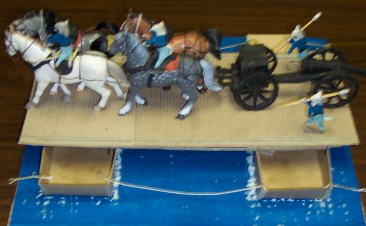
- Use colored paper. Whether you have colored paper or use paint, marker, or colored pencil, paper is the easiest ground cover ever. Green paper for grass, brown paper for dirt, blue paper for water, and done!
- Use anything you have lying around. If you want to do a Civil War scene, it’s okay if you don’t have Union and Confederate soldiers, horses, and cannons. You can use any toys you have. Star Wars figures? Designate one as Gen. Lee or Col. Chamberlain. No horses? Use toy zebras or dogs or giraffes. A diorama tells a story, and it can still tell the story of, say, Chamberlain’s bayonet charge down Little Round Top, even if the colonel looks like Luke Skywalker and his troops are marshmallow Peeps. After all, our soldiers all have tails!
 Keep your eyes open. Look for things you can use on your diorama. Do you have a yard? Find twigs or sticks for trees or logs. Is there gravel on your driveway? Pick up some stones for rocks on your scene. We have even used dried snippets of mums for saplings on Devil’s Den and the Angle.
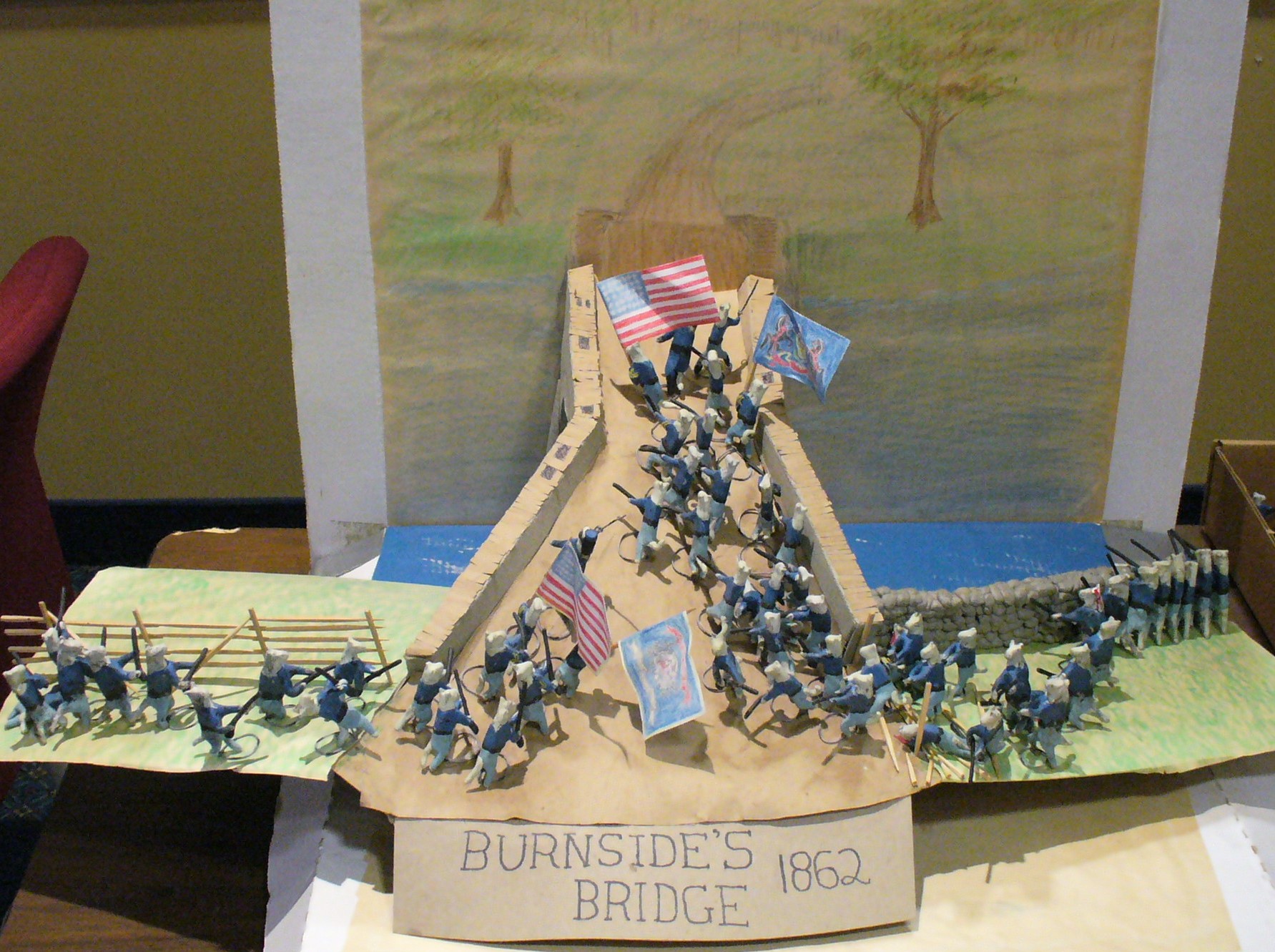
- Draw a backdrop instead of making a big scene. Many of our early dioramas had backdrops. The Confederate Camp had a night sky made of black construction paper with glitter for stars. The little scene of Gen. Robert E. Rodes getting shot has a simple backdrop of a galloping artillery team, hinting at what was happening around him without our needing to make a team of horses. Sometimes, we drew more complicated backdrops. “The Burning of Darien” involves several houses engulfed in flames. The backdrop of “Burnside’s Bridge” continues the bridge across the creek and shows the far bank.


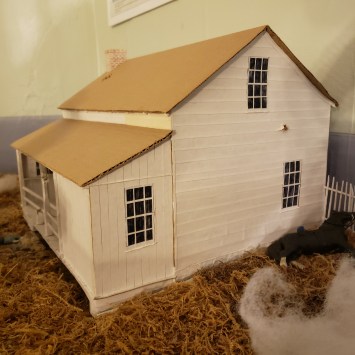
- Use cardboard. Cardboard is a wonderful thing. Do you want a house or barn on your diorama? You don’t have to buy a plastic one. Just get a piece of cardboard (a cereal box is great) and draw the front of your house on it. Cut it out. Draw a side. Cut it out. Keep going until you have all four sides, then tape them together. A couple of rectangles for the sides of the roof, and you have a house! Later on, you can get more complicated, but don’t worry about that now. (Someday, we’ll Mews about how we made the Leister house for our diorama of Gen. Meade’s headquarters.) We also used cardboard to make the walls of the room where Gen. Lee surrendered to Gen. Grant, folding it to the right size and shape, and drawing the windows, curtains, and other features on it.
- Copy a picture. If you’re having trouble envisioning what you want to do, find a picture and then arrange your figures to match it. A couple of our old dioramas are based off of paintings by one of our favorite Civil War artists. When we were kids, we learned how to draw animals by copying pictures in books. It’s a good way to learn as you start out, and then as you improve, you will venture out on your own and let your imagination take over.
Making a diorama is not as hard as it sounds, so long as you do not try to do too much. Start small. In 1995, Rebecca made two clay cats as toys. We never imagined those cats would explode into a 26-year-long hobby and a museum of thousands of cat-soldiers teaching history!

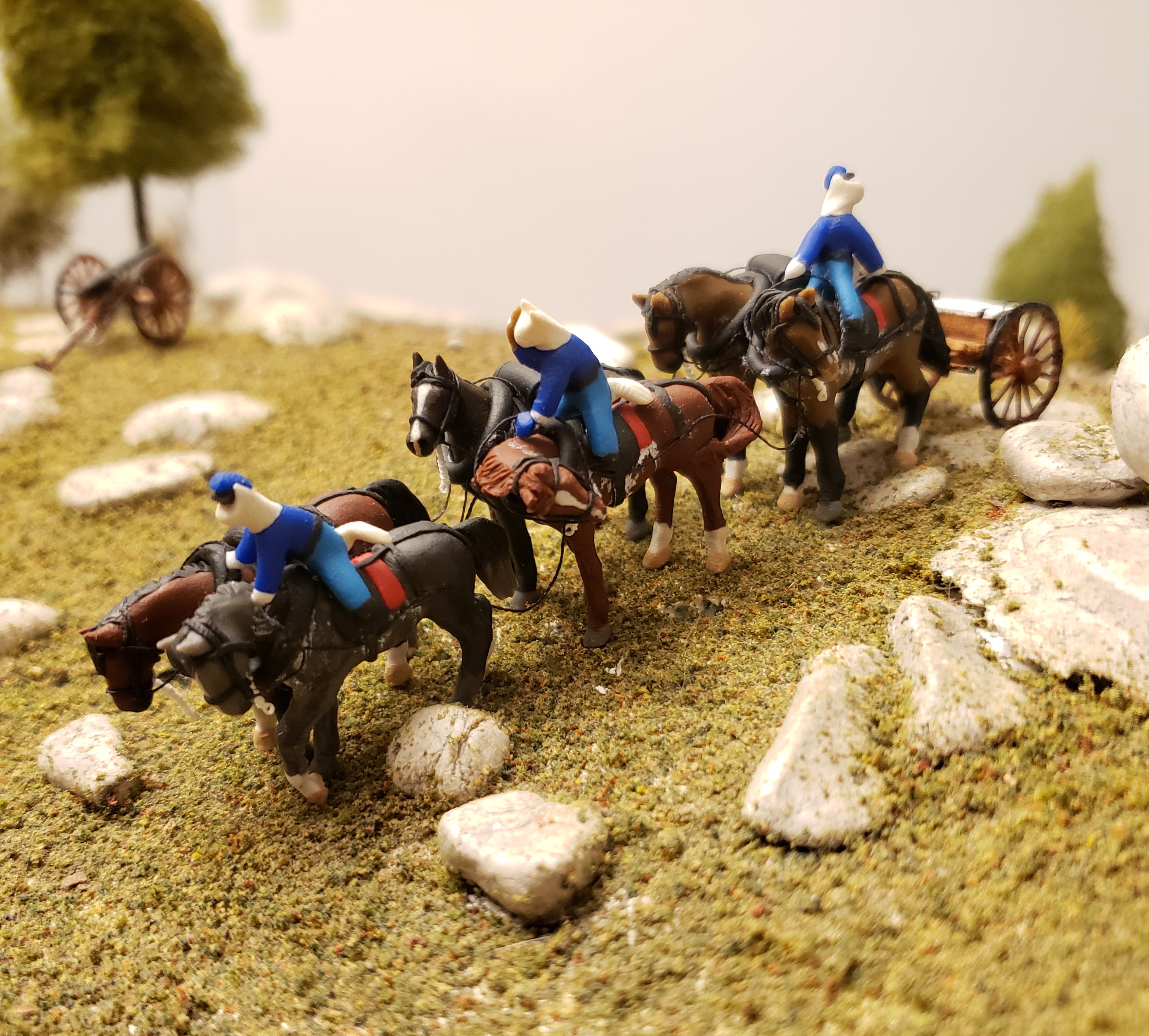
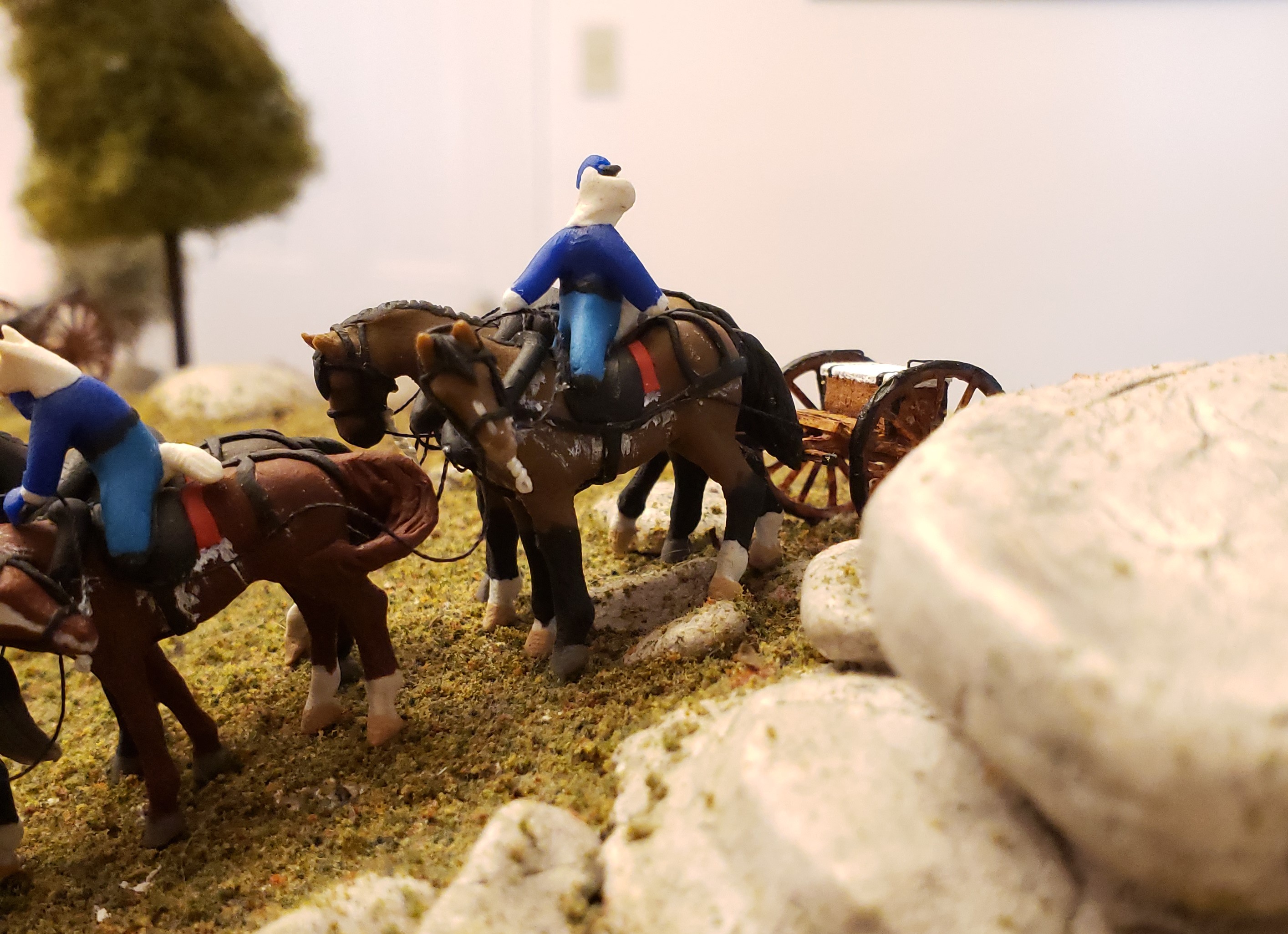
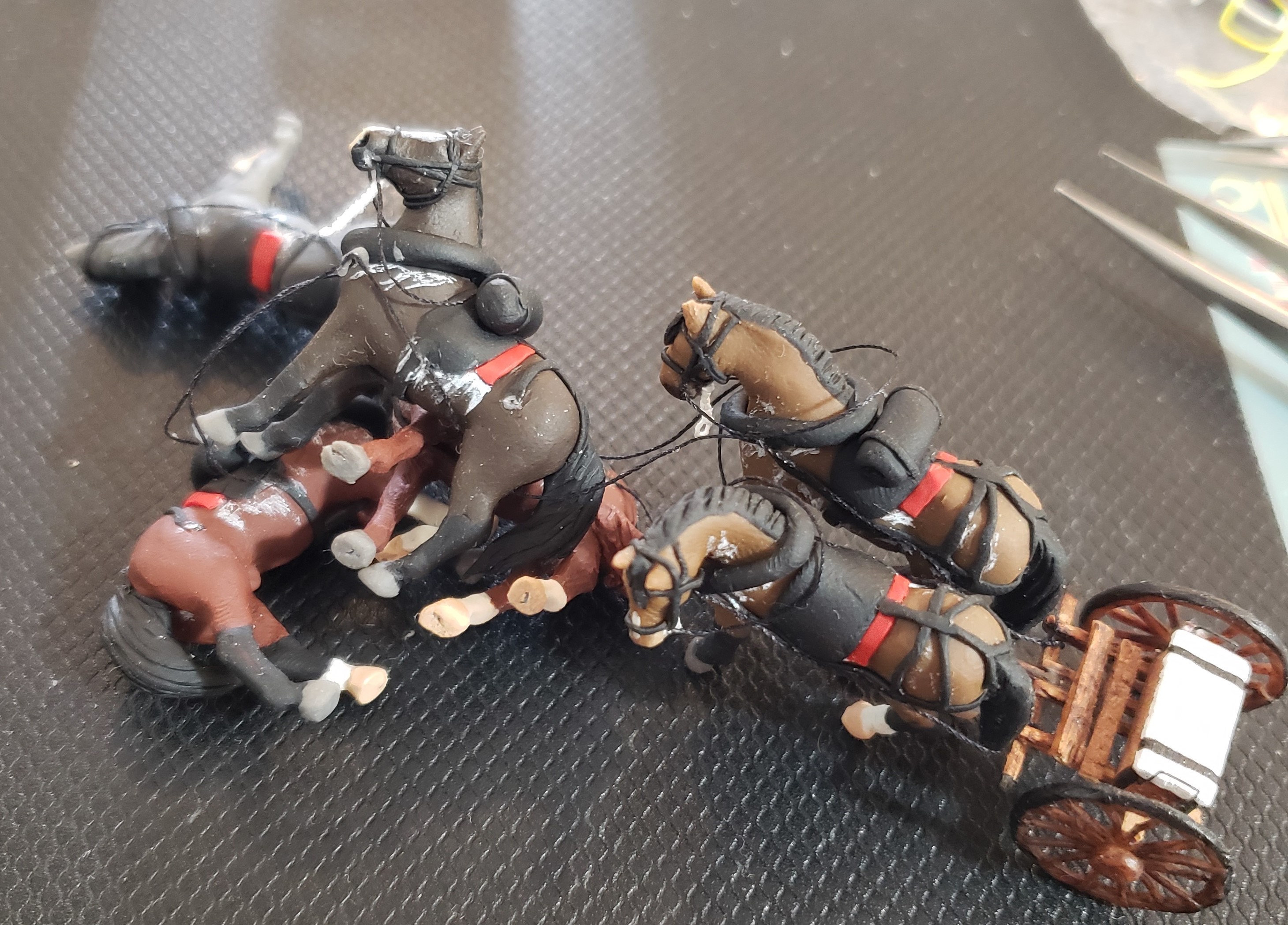
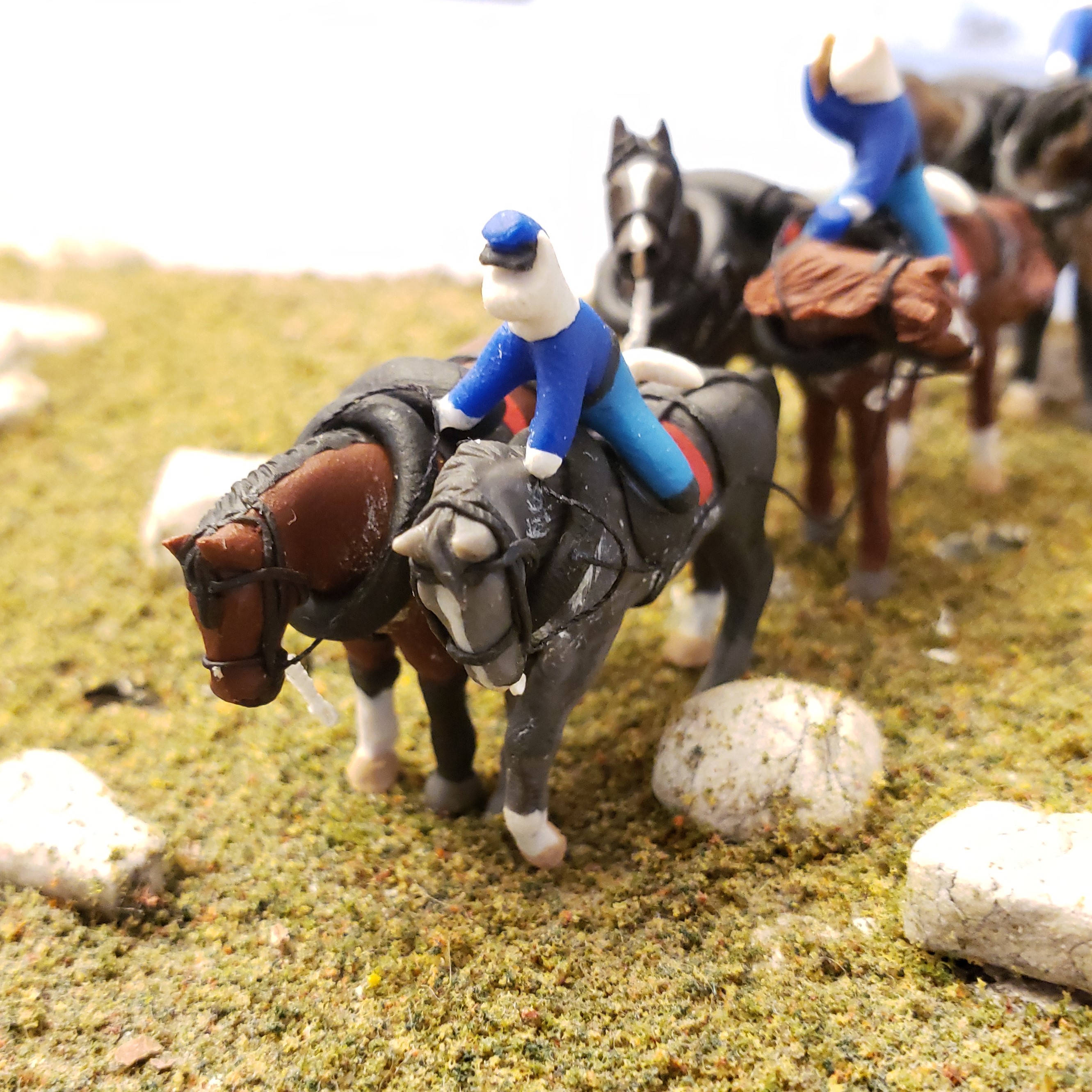
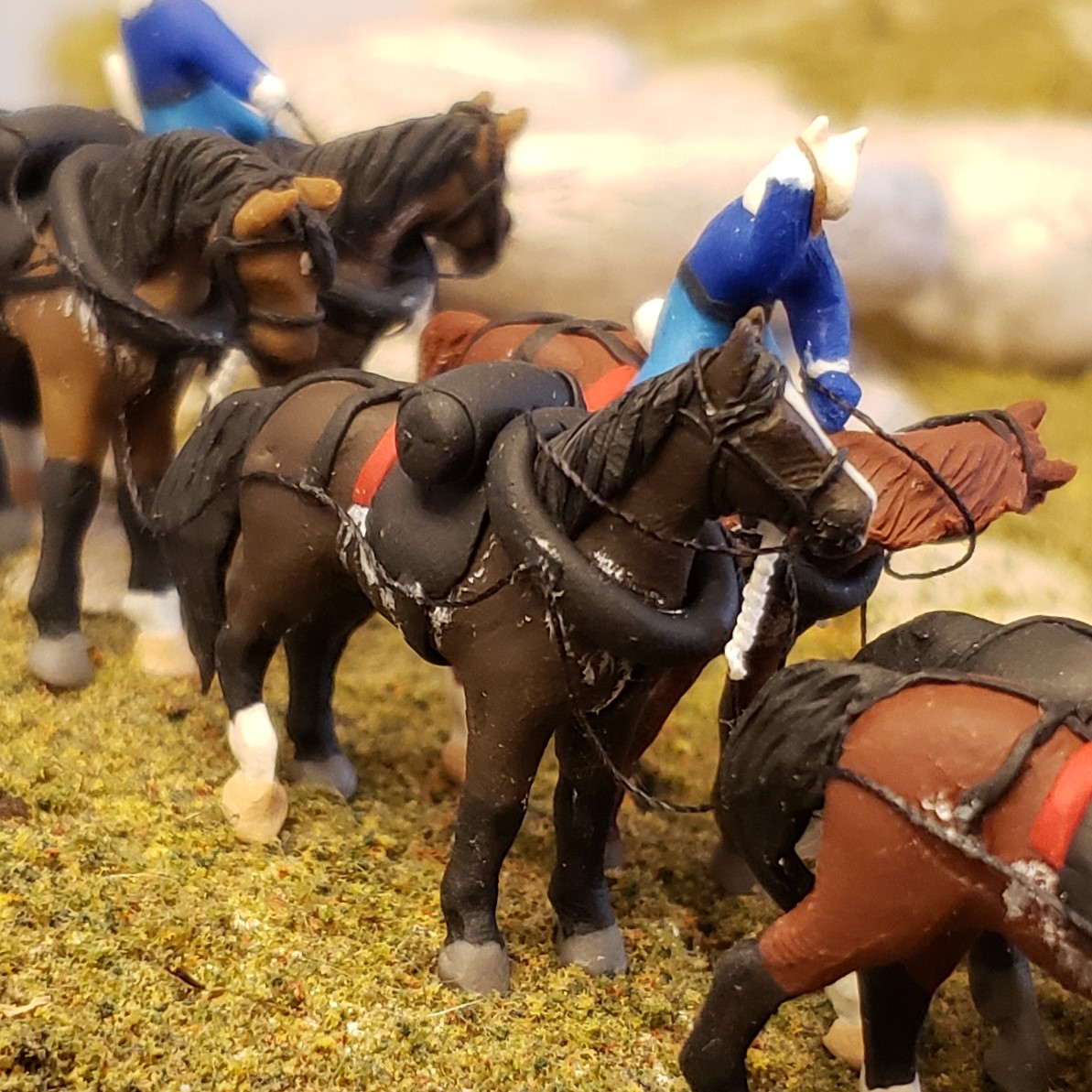
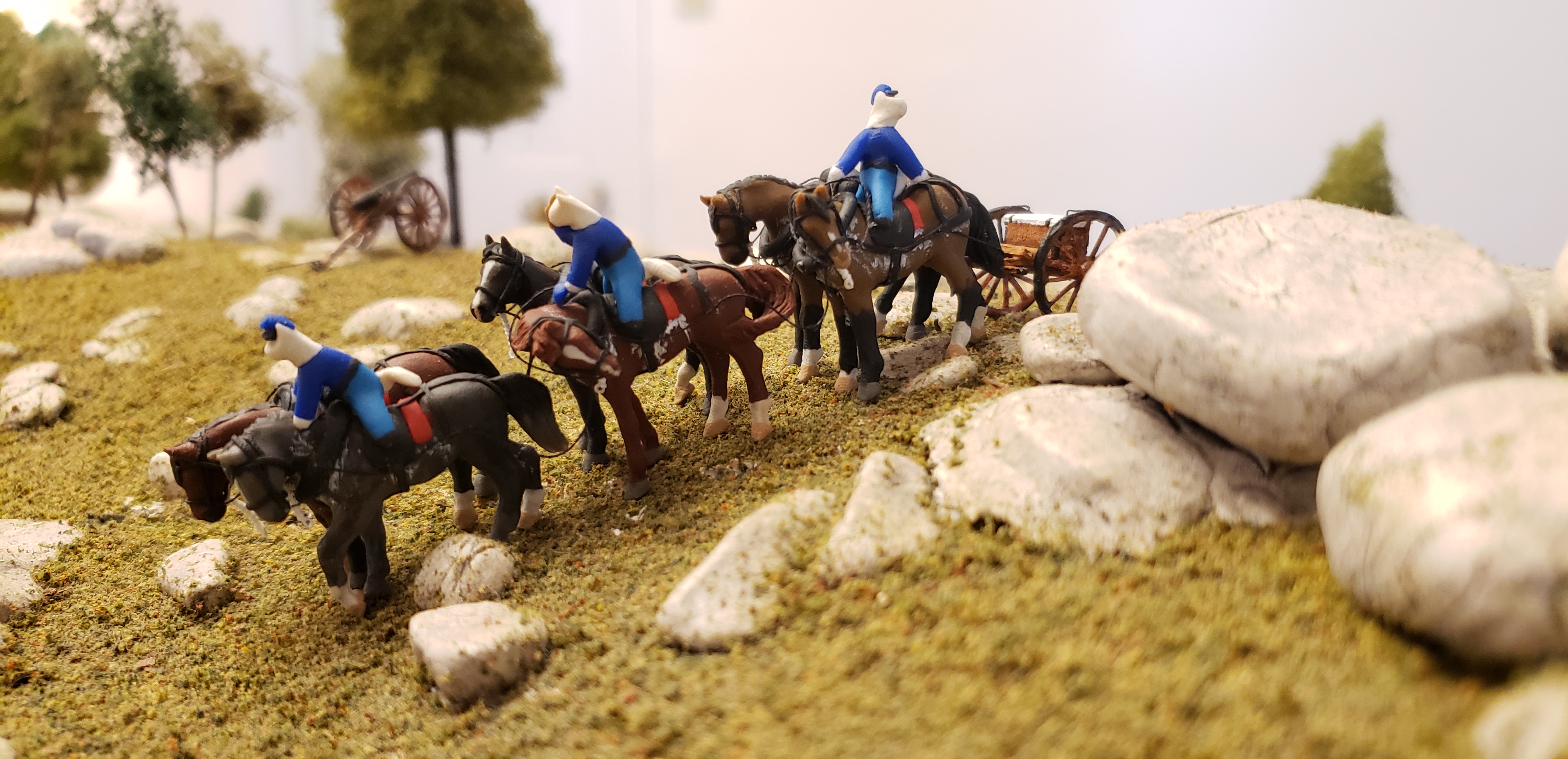
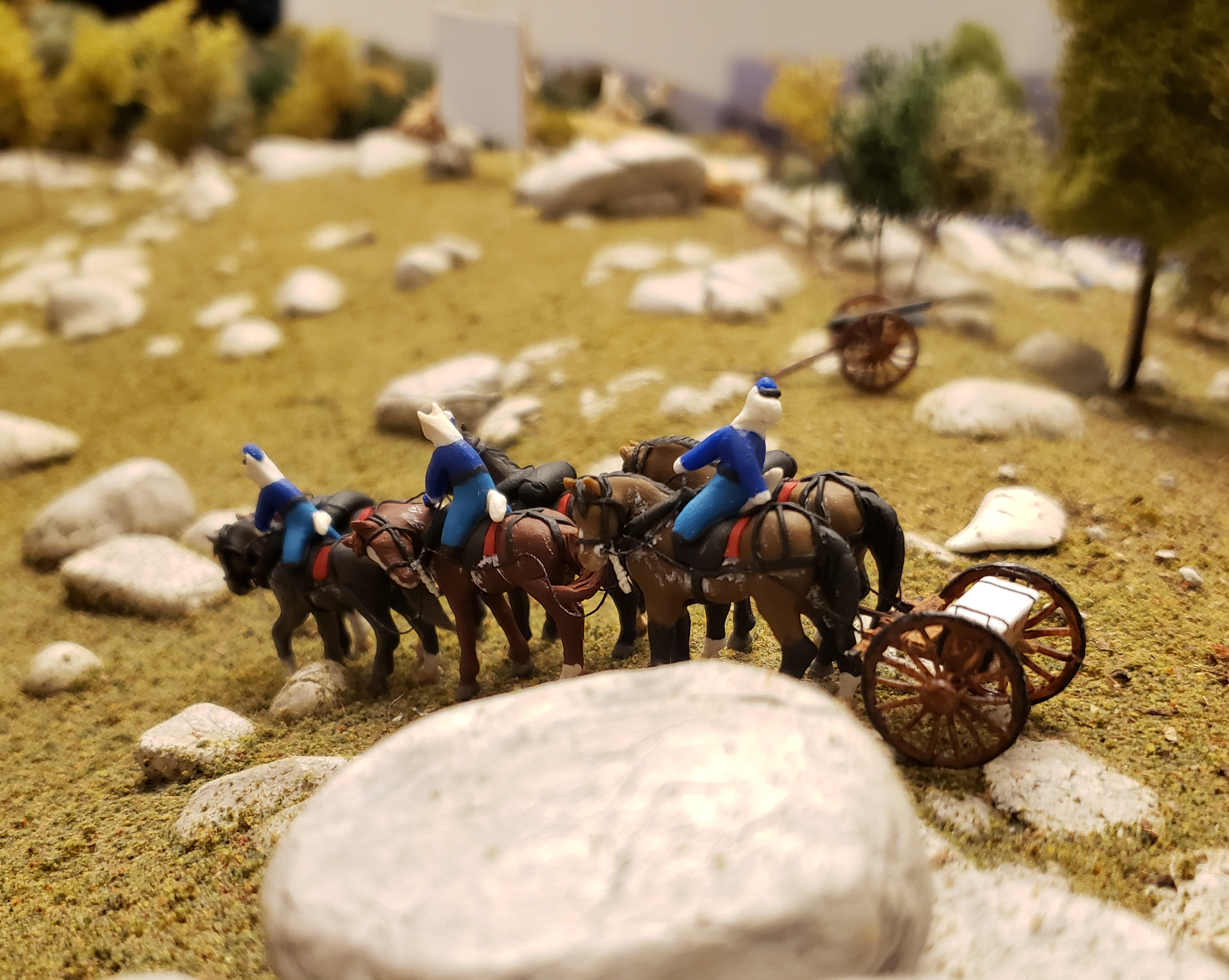 Before installing the limber on the diorama, Rebecca had to measure out the location. A photo from the early 20th Century shows a memorial gun tube near a particular boulder along the path to the castle-like New York monument, indicating the placement of one of Hazlett’s guns. The cannon in the background of this photo is located at that rock. Artillery pieces were typically placed 14 yards apart, so Rebecca measured the distance for a 1:96 scale (3/4” tall cat) from that cannon and boulder. Then, it was just a matter of placing the limber and gun #3 (the latter is not installed yet) where the rocks would allow for wheels and horses.



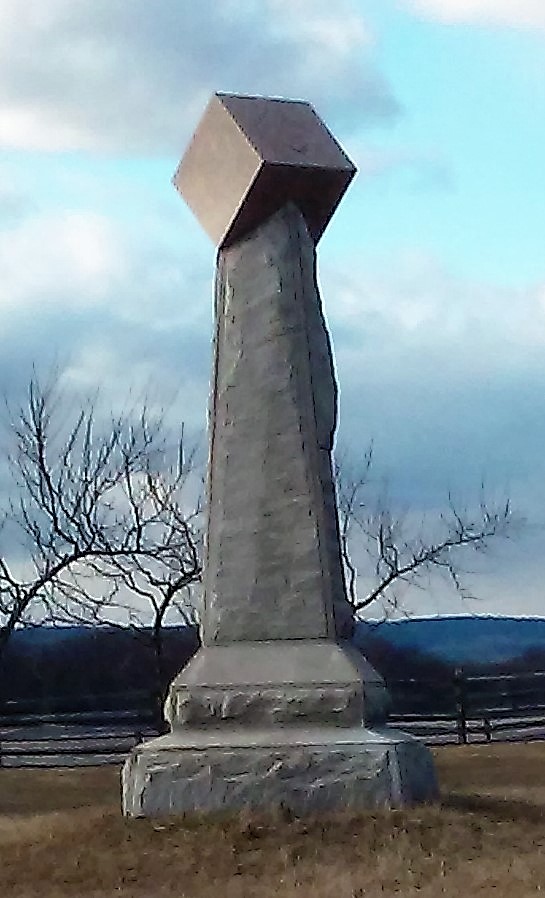
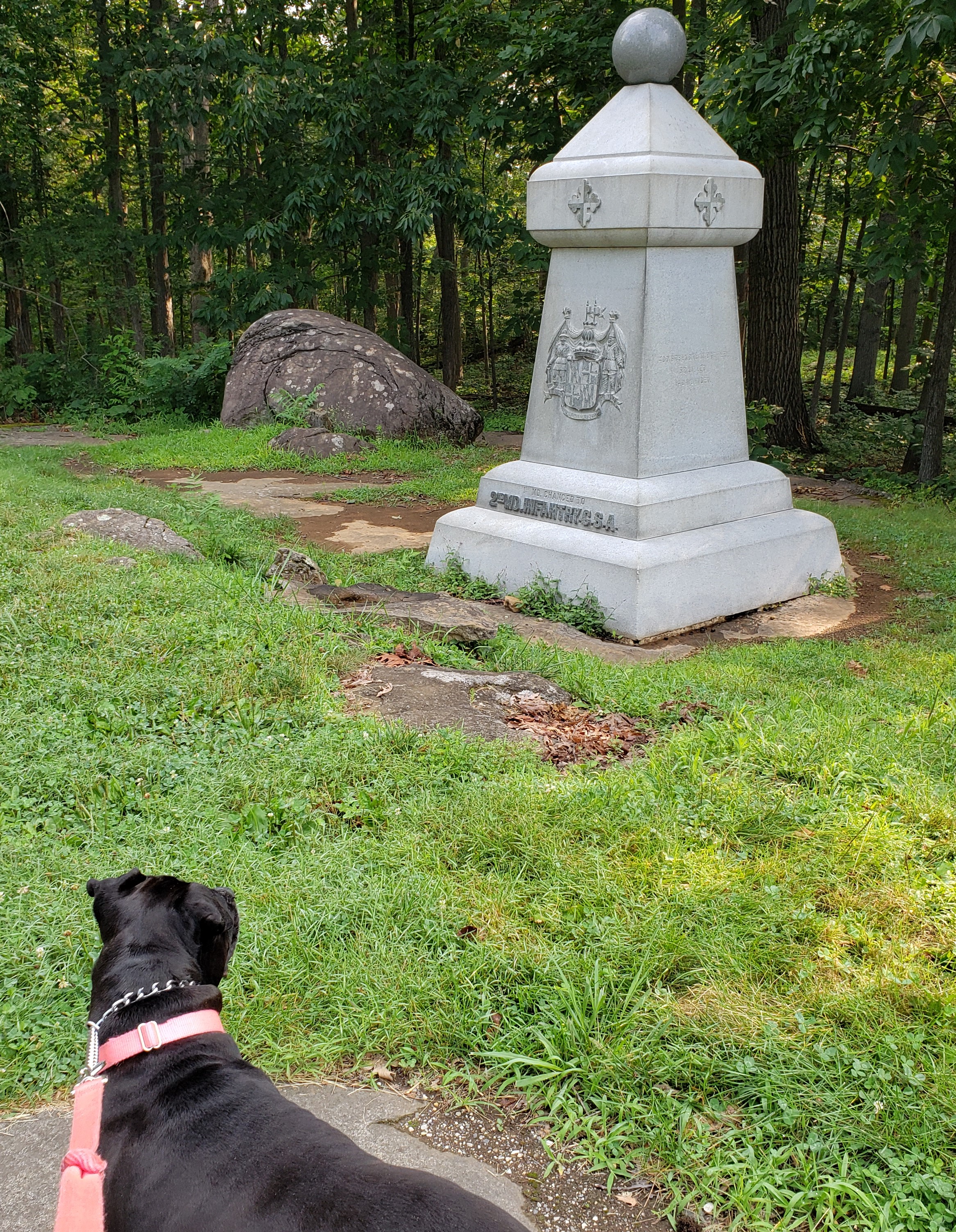
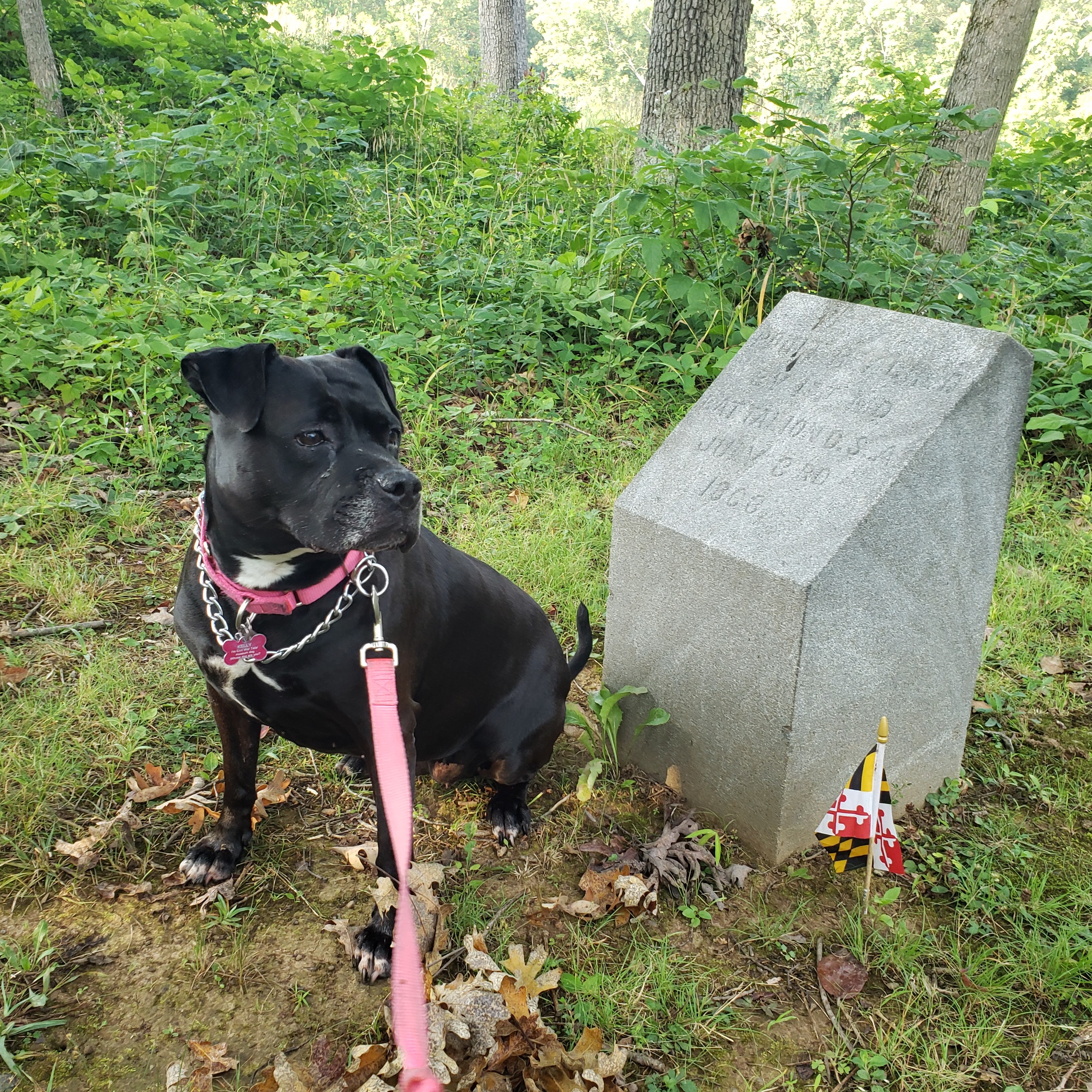
 The hunt stems from one that Rebecca made the other day for a young visitor to the museum. We began talking about corps badges, which you can see on our Little Round Top diorama’s Union cats. But did you know they are on the monuments around the battlefield? Ever wonder why one monument has a star, another a crescent moon, another a diamond? Those are all corps badges, which were a source of great pride for each unit of the Union Army of the Potomac. See how many corps you can identify! You do not need to know about the battle to do it. But if you are a buff, you can still have fun with it! We also invite you to find each of the most common types of artillery on the battlefield. Think all cannons look alike? Think again!
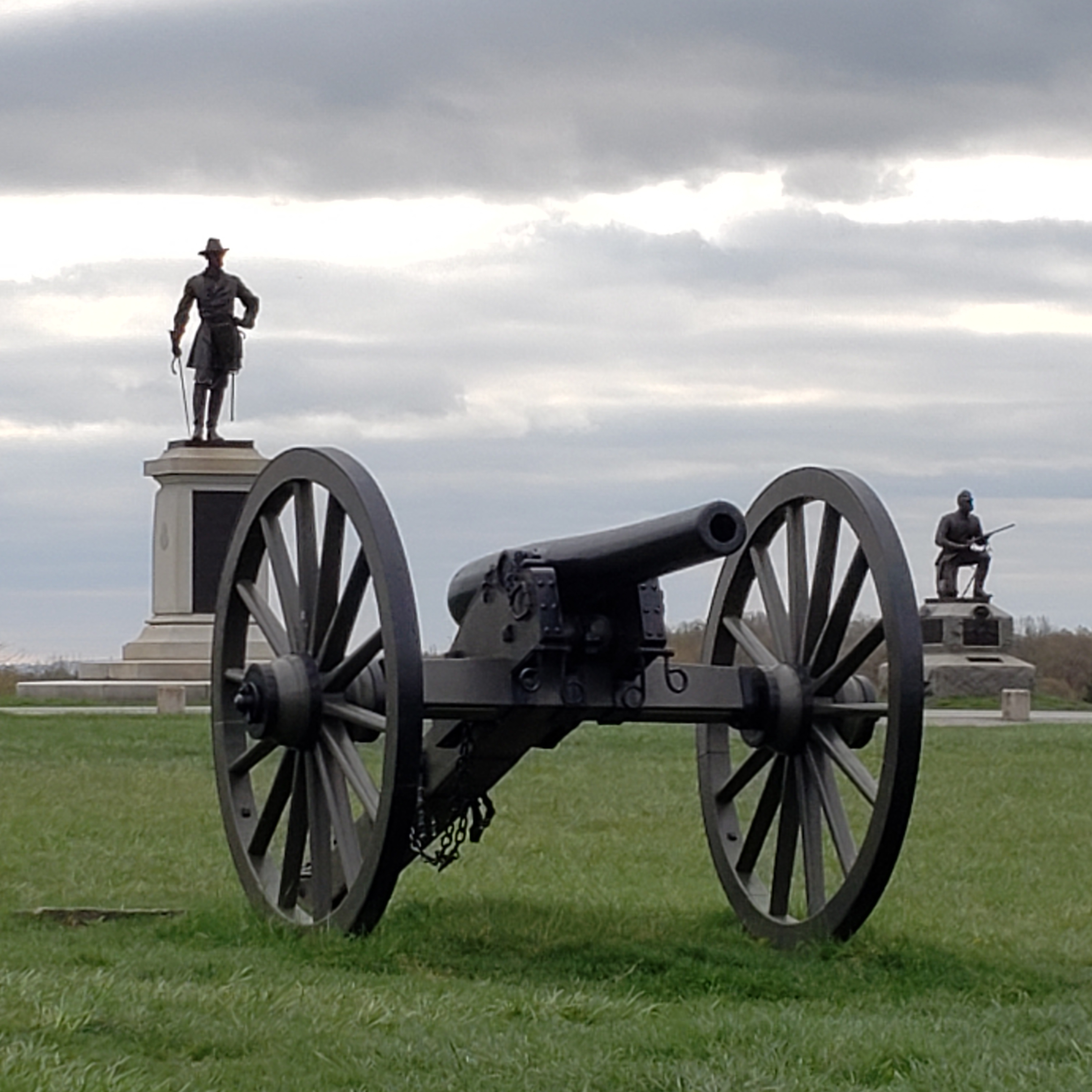 Once you have completed the scavenger hunt, you will be able to go home and tell your friends or school teacher, “I learned the difference between a Napoleon smoothbore cannon and a Parrott rifled gun” or “Hey, that star makes me think of the XII Corps’ badge.” Maybe your friends won’t be impressed, but your teacher will be!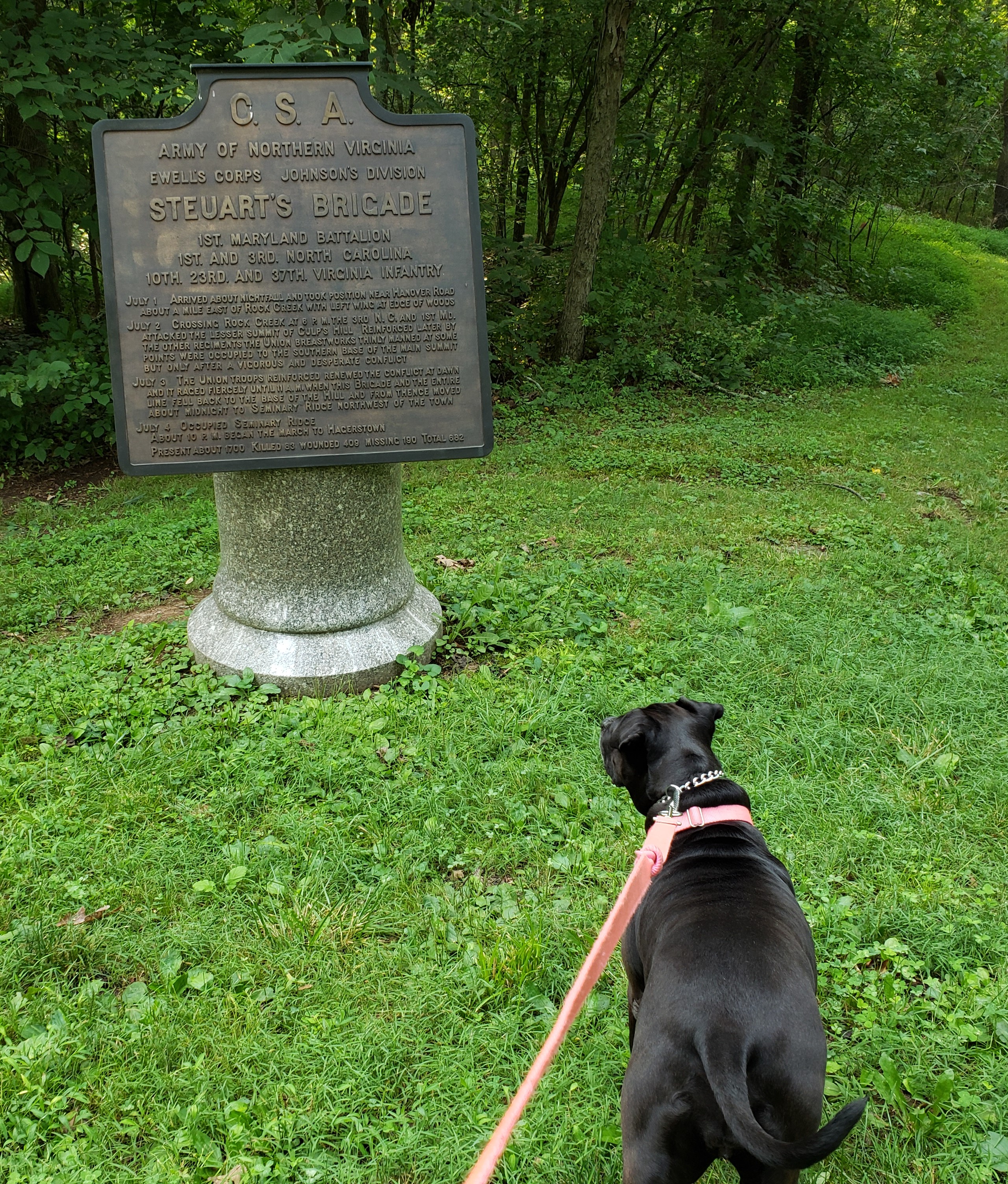


 The next consideration is scale. For a small scene, such as “Desperation at Skull Camp Bridge,” we could use a larger scale because the scene would not involve a lot of figures. A scale of 2-inch-tall cats is okay if there are only sixty soldiers involved. But it would be impossible to use cats of that size for a to-scale diorama with 3,000 soldiers, such as “The Fate of Gettysburg,” unless you have a warehouse to fit it in!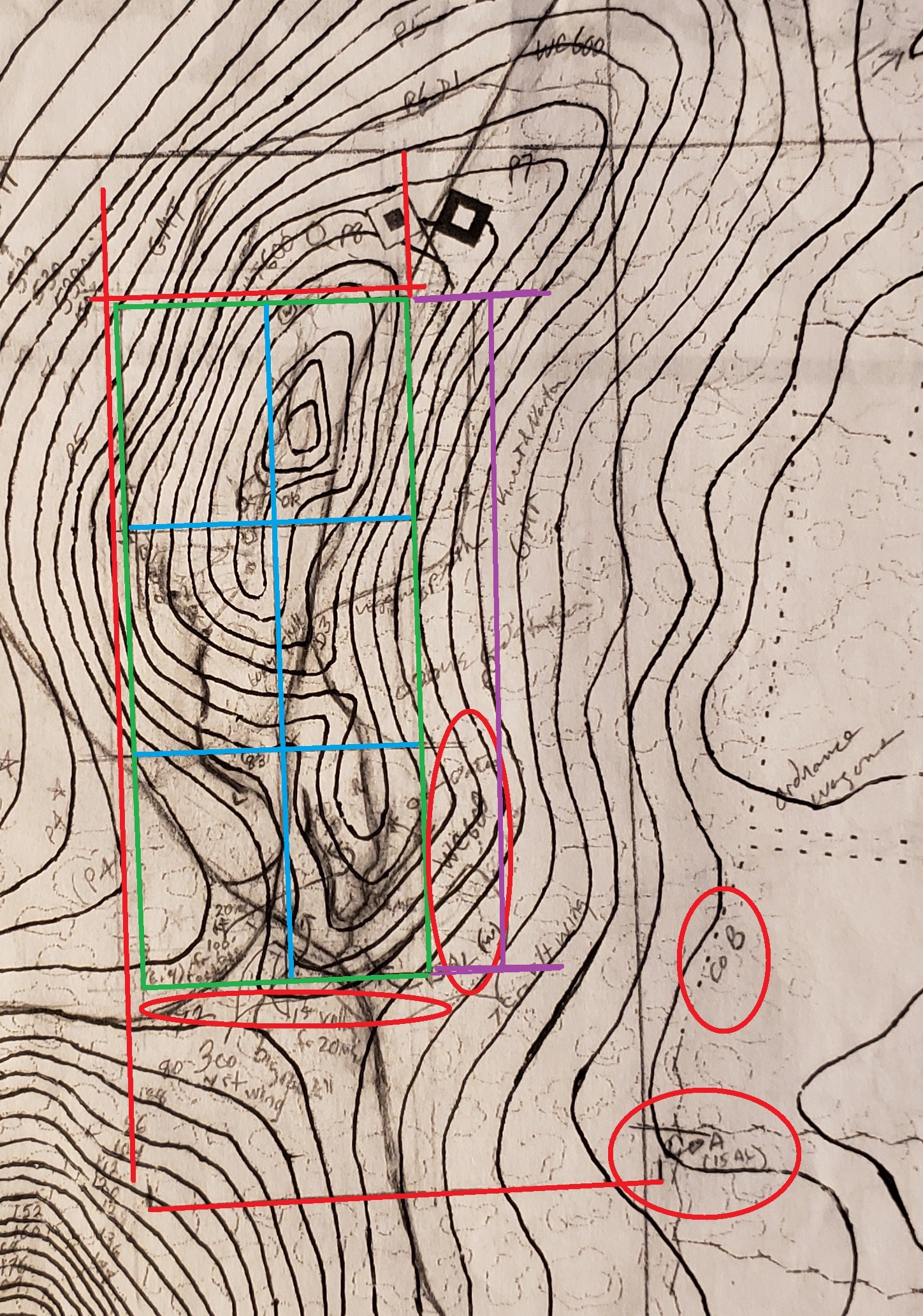

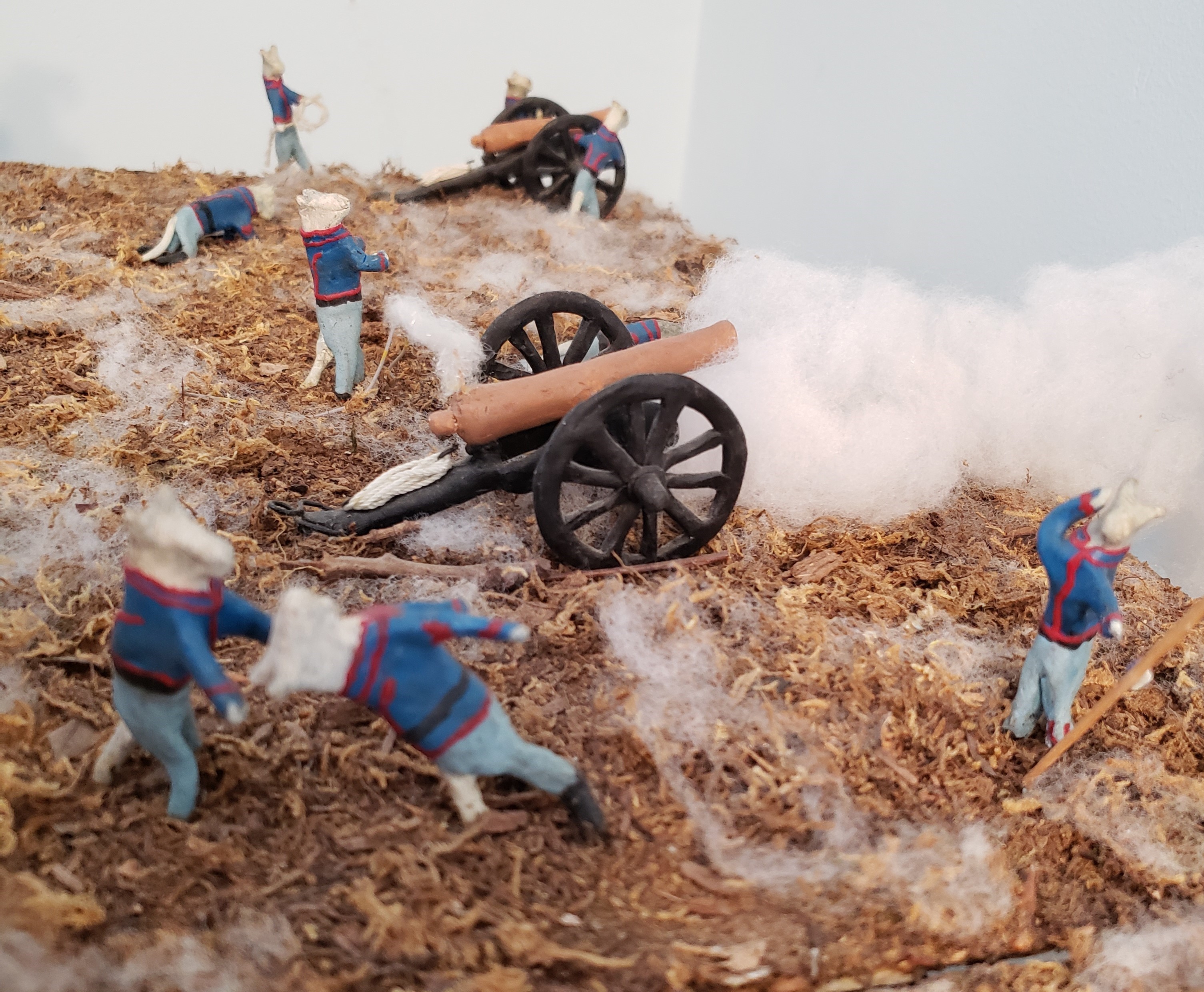

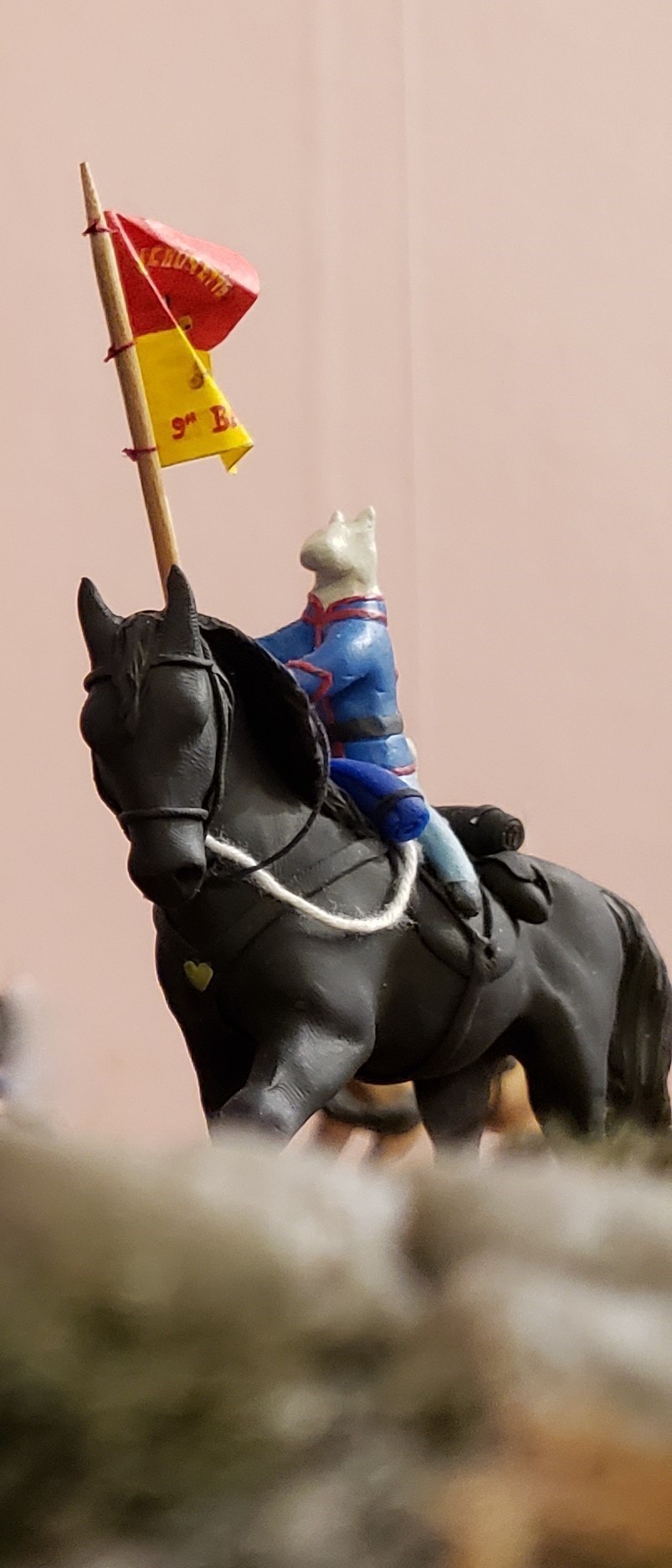


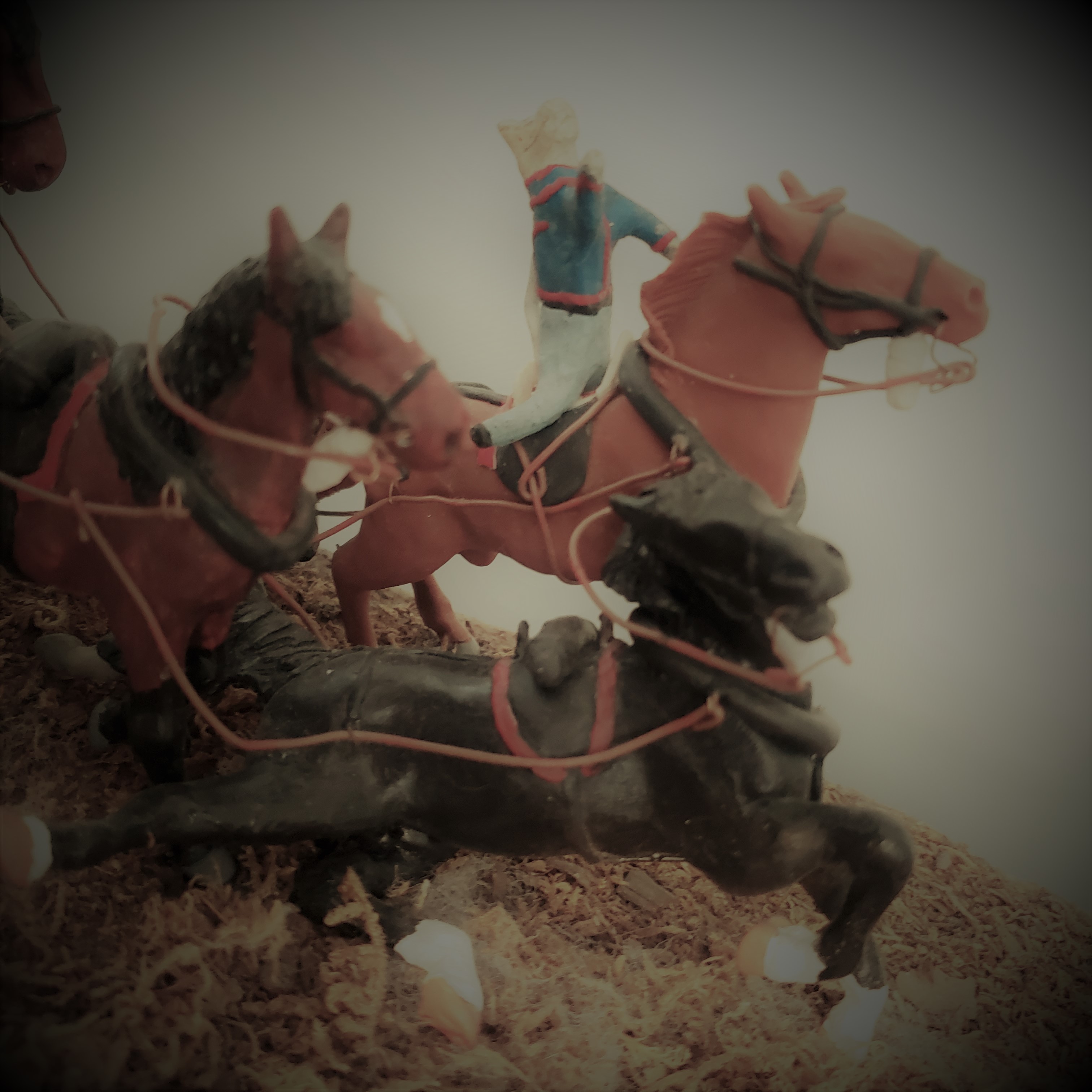


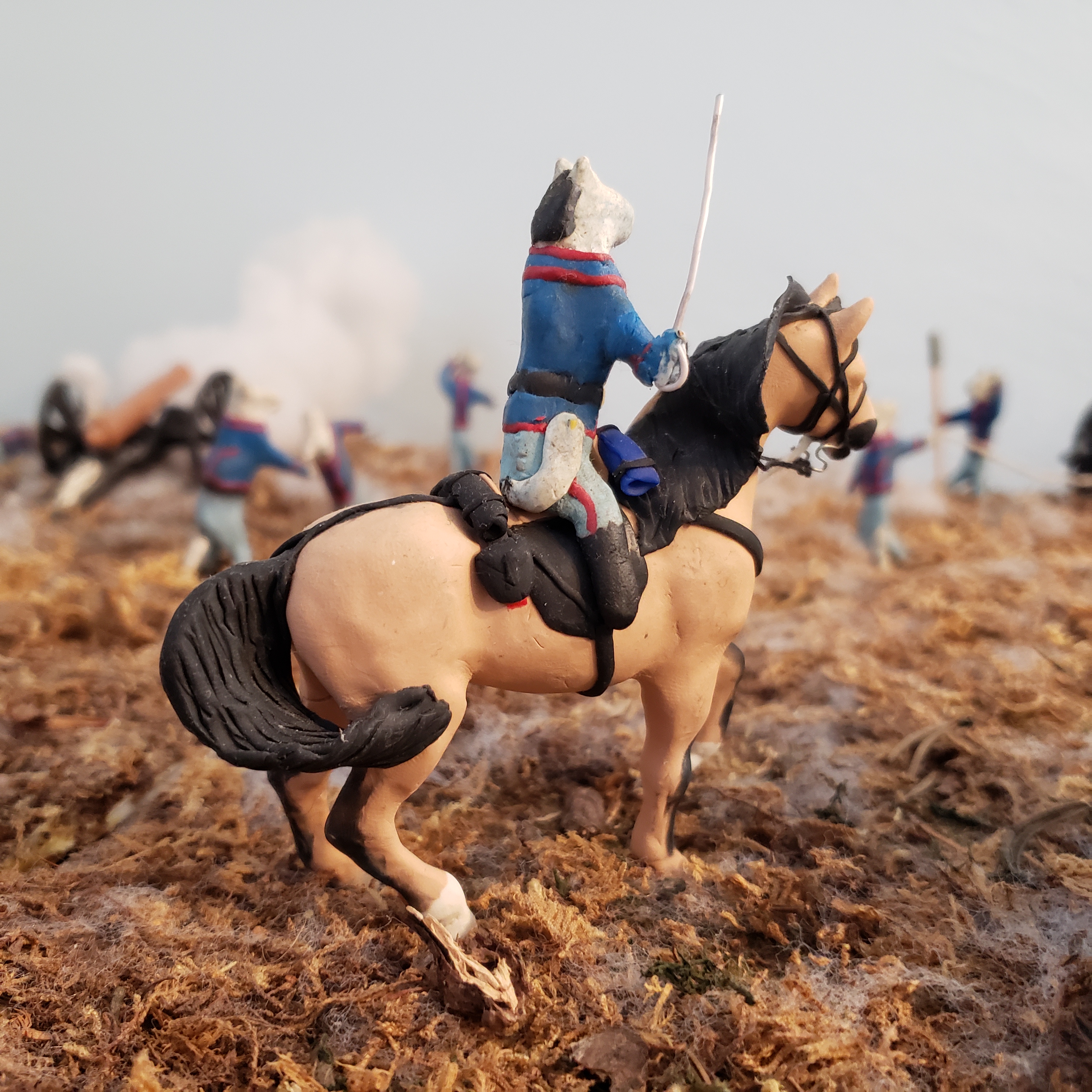
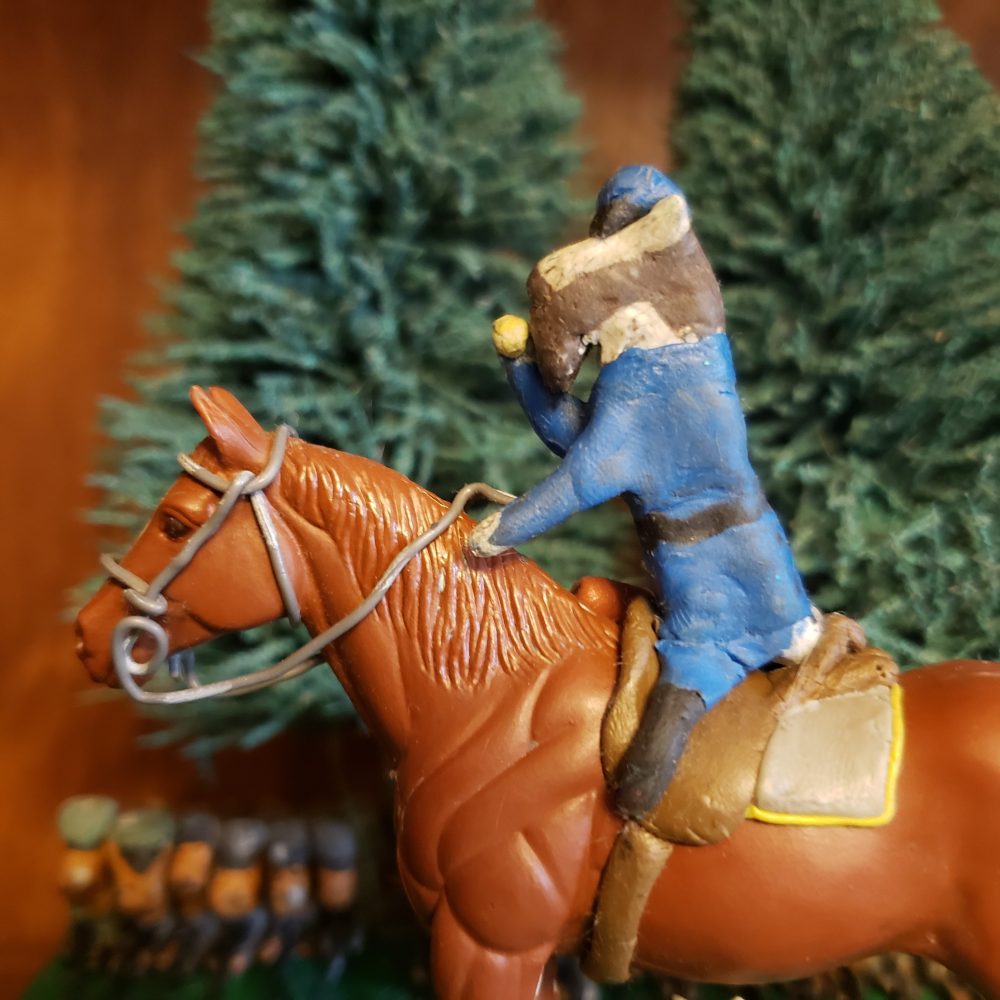 On the evening of May 1, Lee met with Jackson. As they talked, Gen. Jeb Stuart rode up and told them the Union army’s right flank was in the air. Lee looked at Jackson. “What do you propose to do?”
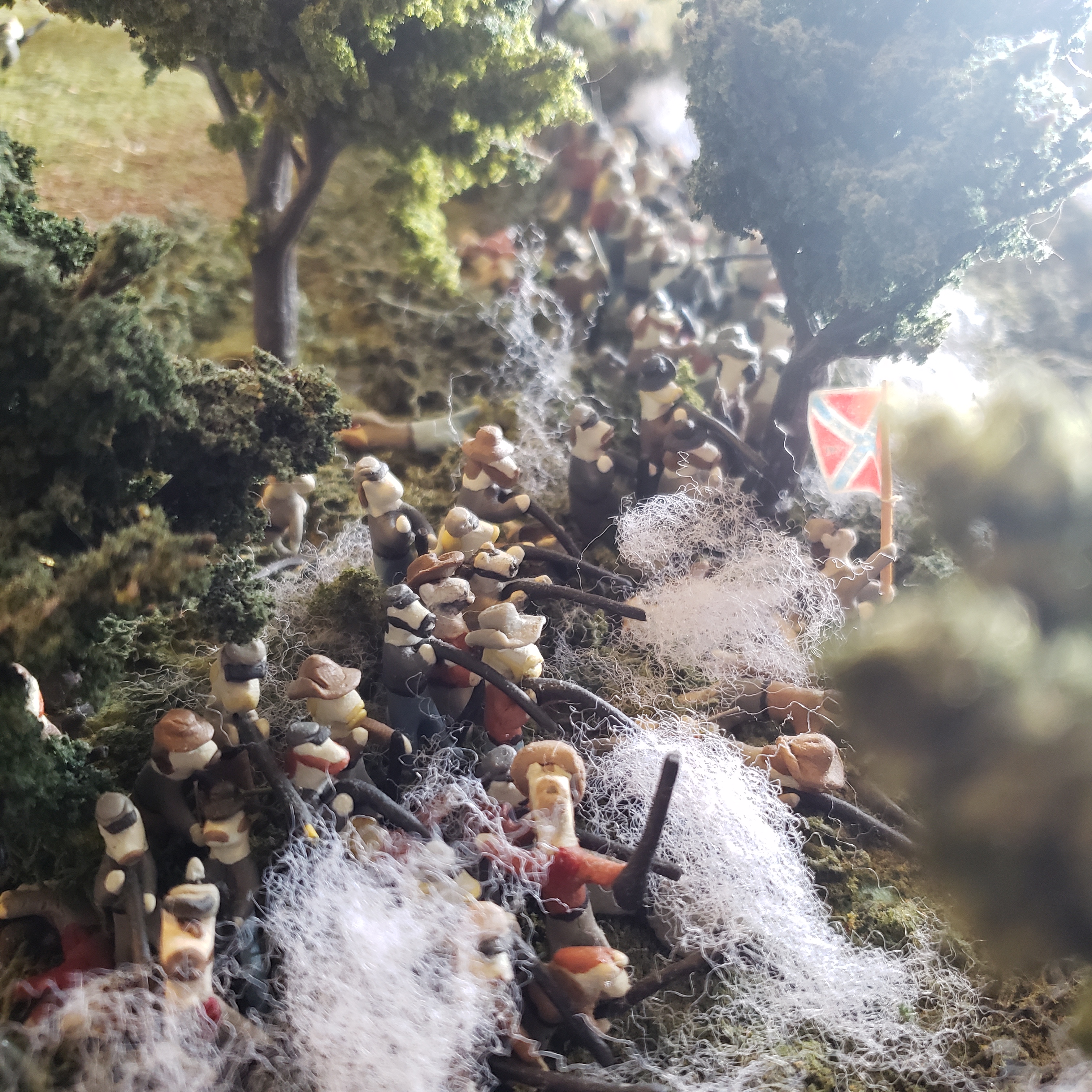 The gray lines swarmed over the surprised Union soldiers, some of whom were so scared they couldn’t even fire their guns before being swept away by the gray juggernaut. The Union flank crumbled. By the time darkness halted the attack, two miles of the Union line had been rolled up.
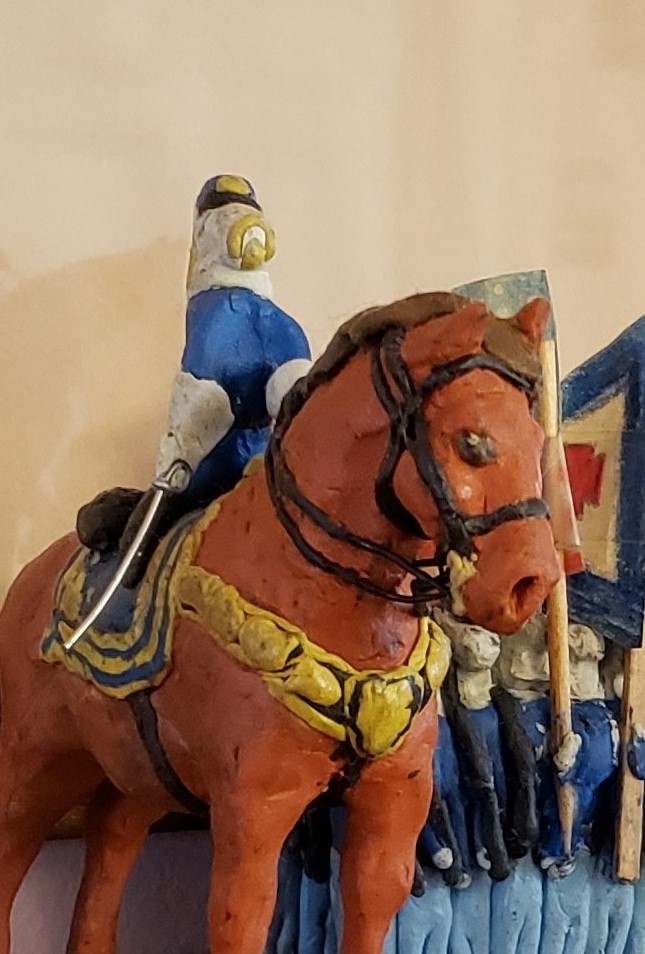 On the evening of April 9, 1865, Gen. Joshua Chamberlain received word that he would command the Union troops receiving the surrender of the Confederate Army of Northern Virginia. Gen. Grant had been generous in his terms to Gen. Lee, but he did feel and insist that the Confederates should lay down their arms before Union troops representing the Union army. Chamberlain, feeling “this was to be a crowning incident of history,” asked his corps commander, Gen. Griffin, if he could use his old Third Brigade, who he had served with for two years and commanded after Gettysburg. “I thought these veterans deserved this recognition,” he recalled in his reminiscences. Griffin obliged, transferring Chamberlain to command of the Third instead of the First Brigade.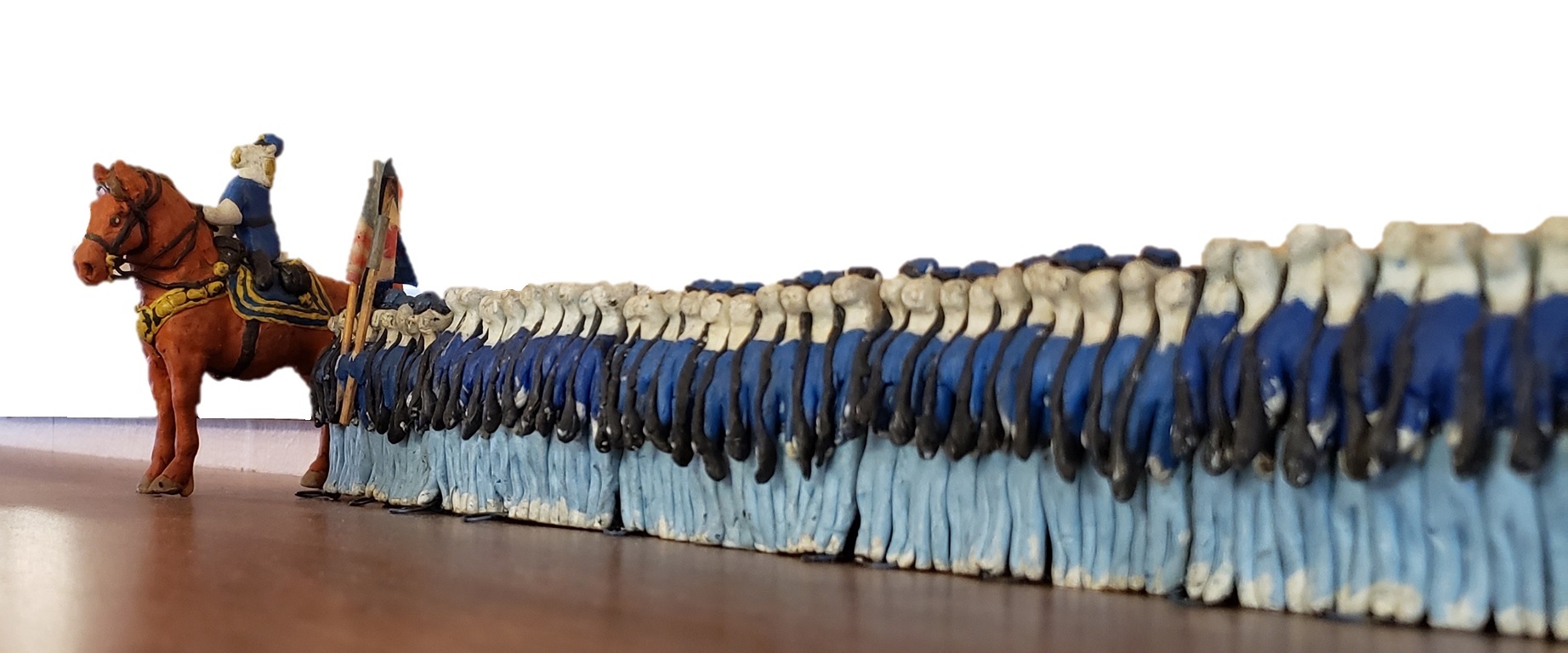
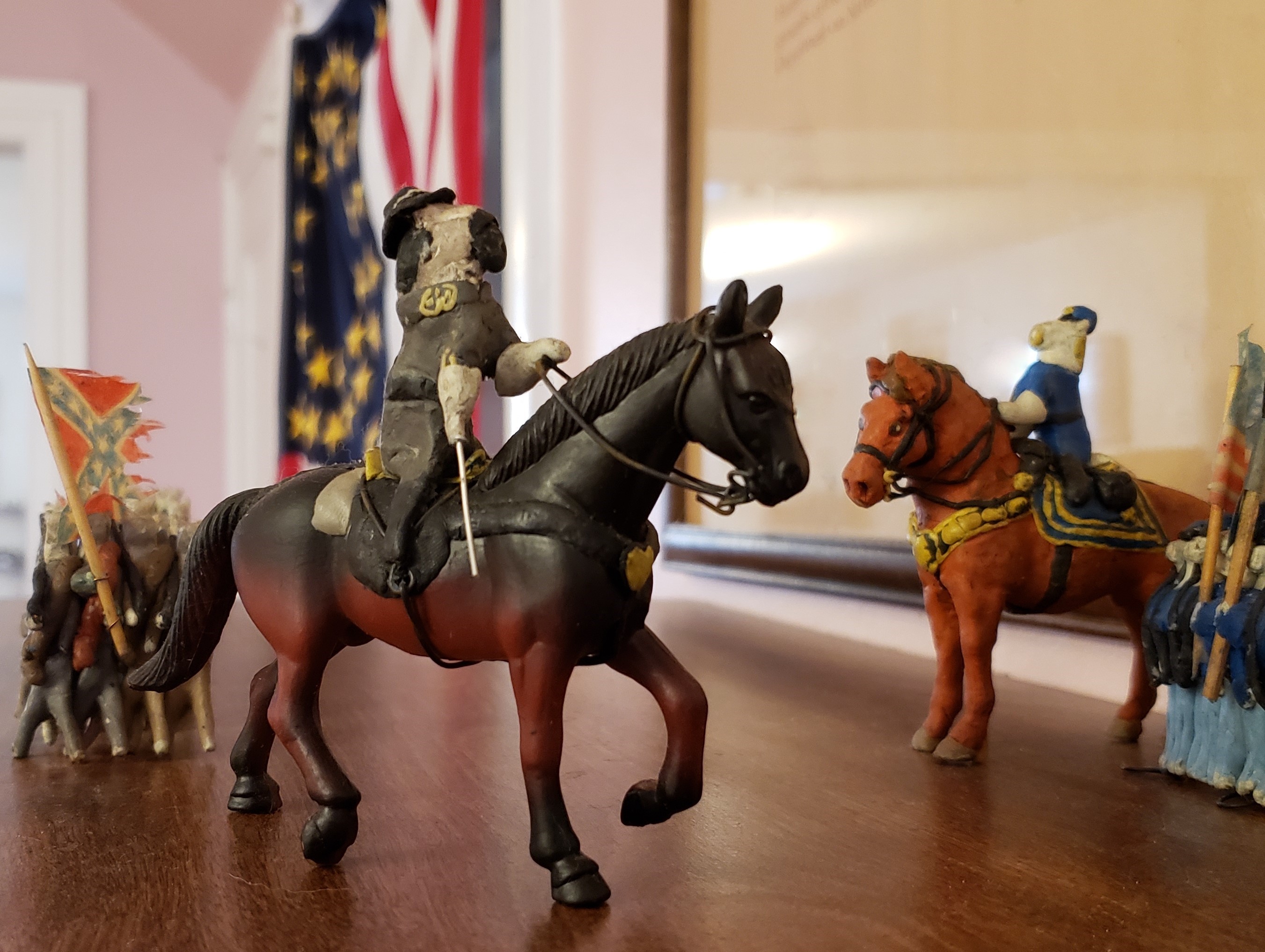 At the head of the first Confederate division, Gen. John B. Gordon rode, Chamberlain recalled, “with heavy spirit and downcast face.” Suddenly, a bugle rang out and the whole Union line “from right to left, regiment by regiment in succession,” shifted their rifles from “order arms” to “carry arms”—the soldier’s salute. Gordon “catches the sound of shifting arms, looks up, and, taking the meaning, wheels superbly, making with himself and his horse one uplifted figure, with profound salutation as he drops the point of his sword to the boot toe; then facing to his own command, gives word for his successive brigades to pass us with the same position of the manual,—honor answering honor.”
 Civil War Tails at the Homestead Diorama Museum - Gettysburg miniatures