In 1995, Rebecca read biographies on Generals Ulysses S. Grant and Robert E. Lee. Then, she made our first clay Civil War cats—Grant and Lee. People sometimes ask why we didn’t do one army as cats and the other as dogs. It’s a logical question, and even when we would play Robin Hood as kids, we would be cats which meant the imaginary Sheriff of Nottingham and other “bad guys” would be dogs. So, why didn’t one general come out as a dog?
The simple answer is Rebecca liked both generals, so they were both “good guys” and therefore cats. This is probably counterintuitive to the polarized opinions today. But history is complex, not cut-and-dried, and we have always enjoyed reading the stories of people. It never mattered to us which side they fought on, or what color their skin. There were cool guys (and gals) throughout the thirty-four states of the Union (yes, that includes the eleven that seceded). So, enjoy a few of the snippets of human life and glimpses of real people that have “stuck” with us through years of being Civil War buffs.
One of the stories that first caught Rebecca’s interest (and, since it involves a horse, probably cemented Grant as a “cool guy”) was told in that first biography she read. While at West Point, Grant was average in his studies, but extremely skilled at riding. When on a horse, he seemed part of the animal. One horse at West Point, named Big York, was notoriously hard to handle and no one could ride him. Grant not only succeeded in riding the sorrel, but jumped him over a 6-foot-high rail!

Often, emotion draws us to a story. Sometimes it is the pathos, as with Gen. Richard Garnett, who led his brigade in Pickett’s Charge on horseback, because he could not walk after being kicked by a horse. He could have sat it out, instead of making himself a target on Red Eye. But he rode because, in 1862, “Stonewall” Jackson had accused him of cowardice, and even though anyone who knew Garnett knew he was no coward, he still felt he must regain his honor. That day he was killed, and his body was never found.

Sometimes, you wish a story could have a different ending each time you read it, like that of Gen. Stephen Ramseur, a Confederate brigade commander at Cedar Creek. Only 27 years old, he wore his best uniform with a flower in a buttonhole, celebrating the birth of his first child. He hoped for a victory so he could secure a furlough and return home to see his wife and baby. Instead, he was shot through the lungs and mortally wounded. He never even knew if the newborn was a boy or a girl (she was a girl).

Humor often makes a story or individual memorable. Any time I think of Prof. Thaddeus Lowe’s observation balloons, I think of the story of Gen. David Porter ascending in one, only to have the guide lines snap. As the balloon began to drift away, men on the ground shouted up to the general to pull the release valve. He did so and the balloon promptly dropped—and landed smack on top of a tent full of officers eating breakfast! Despite the chaos that must have resulted, Gen. Porter nonchalantly climbed down from the balloon and walked away as if nothing had happened.
Sometimes it’s just a tidbit we find amusing. Col. Wladimir Krzyzanowski served in the Union XI Corps. He caught our fancy when we were in high-school, but not because of anything he did—so why does he stick in our minds? Partly because he was good-looking, but also because of the trouble people had in pronouncing his Polish name. His division commander Gen. Carl Schurz maintained that this was the reason Congress did not confirm Krzyzanowski’s promotion to brigadier general. In the army, fellow officers avoided the difficulty by dubbing him “Kriz.” If you’re also puzzled about the pronunciation, a Park Ranger at Gettysburg once mentioned that he had asked some Polish tourists, and they suggested it might have been “shevs-now-ski” or thereabouts. No wonder they nicknamed him!
We all find stories interesting, whether fiction or non-fiction, social media or family emails, gossip or news. But sometimes it’s just nice to set aside the drama of everyday life, sit back, and read a good story. With history, the added bonus is that the characters really existed!



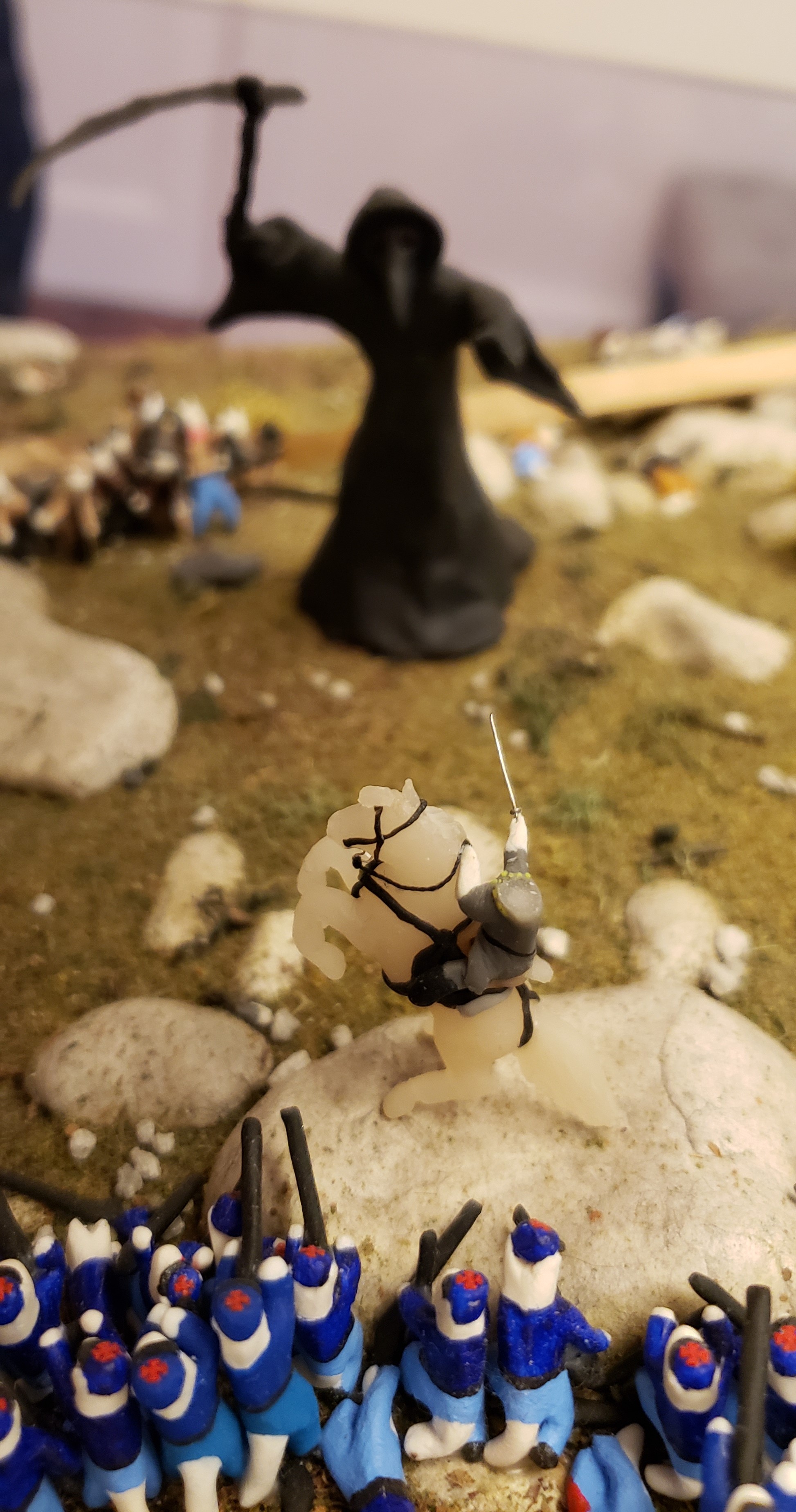 “Back off, meow!”
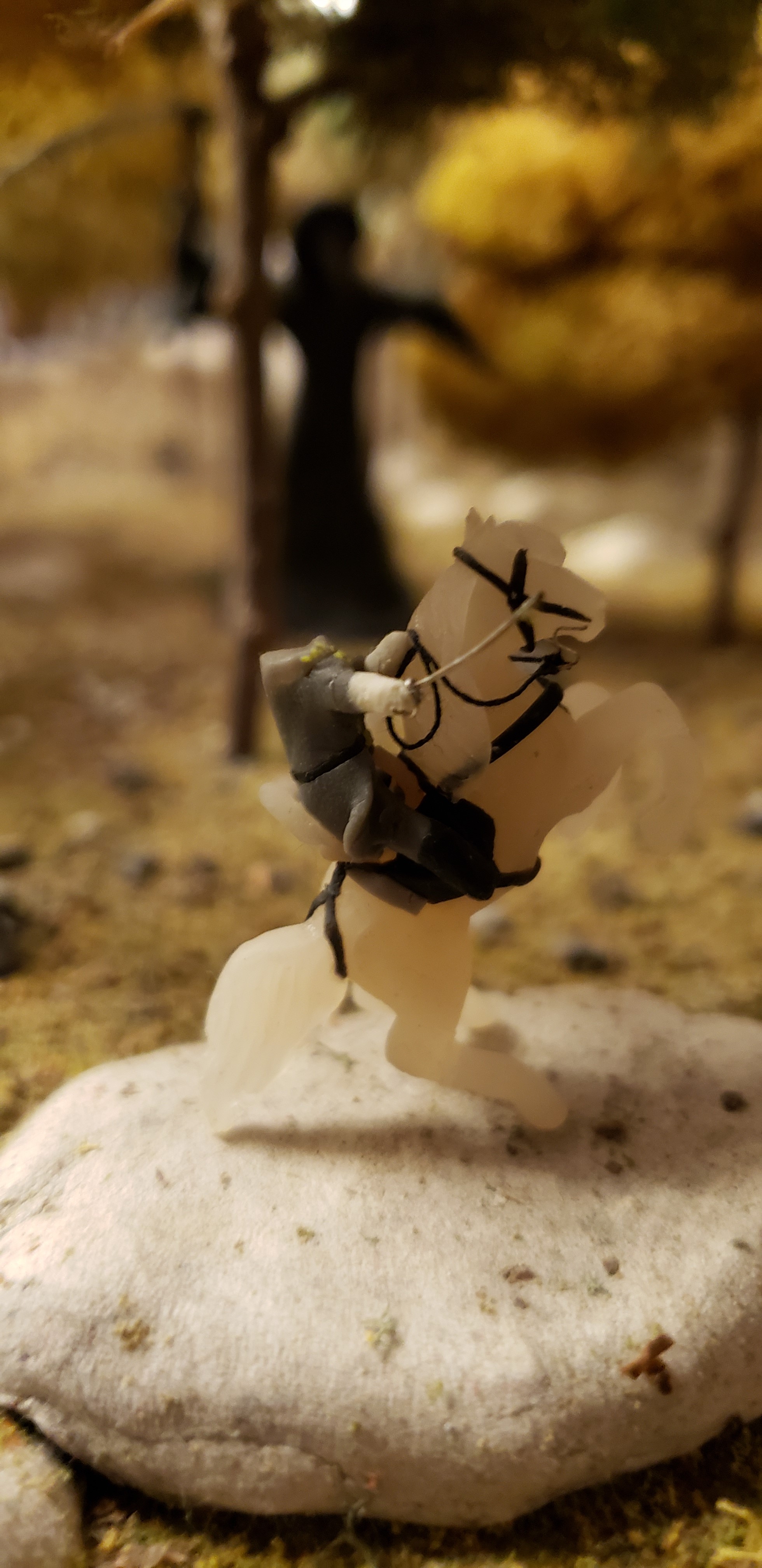 “Watch out!”
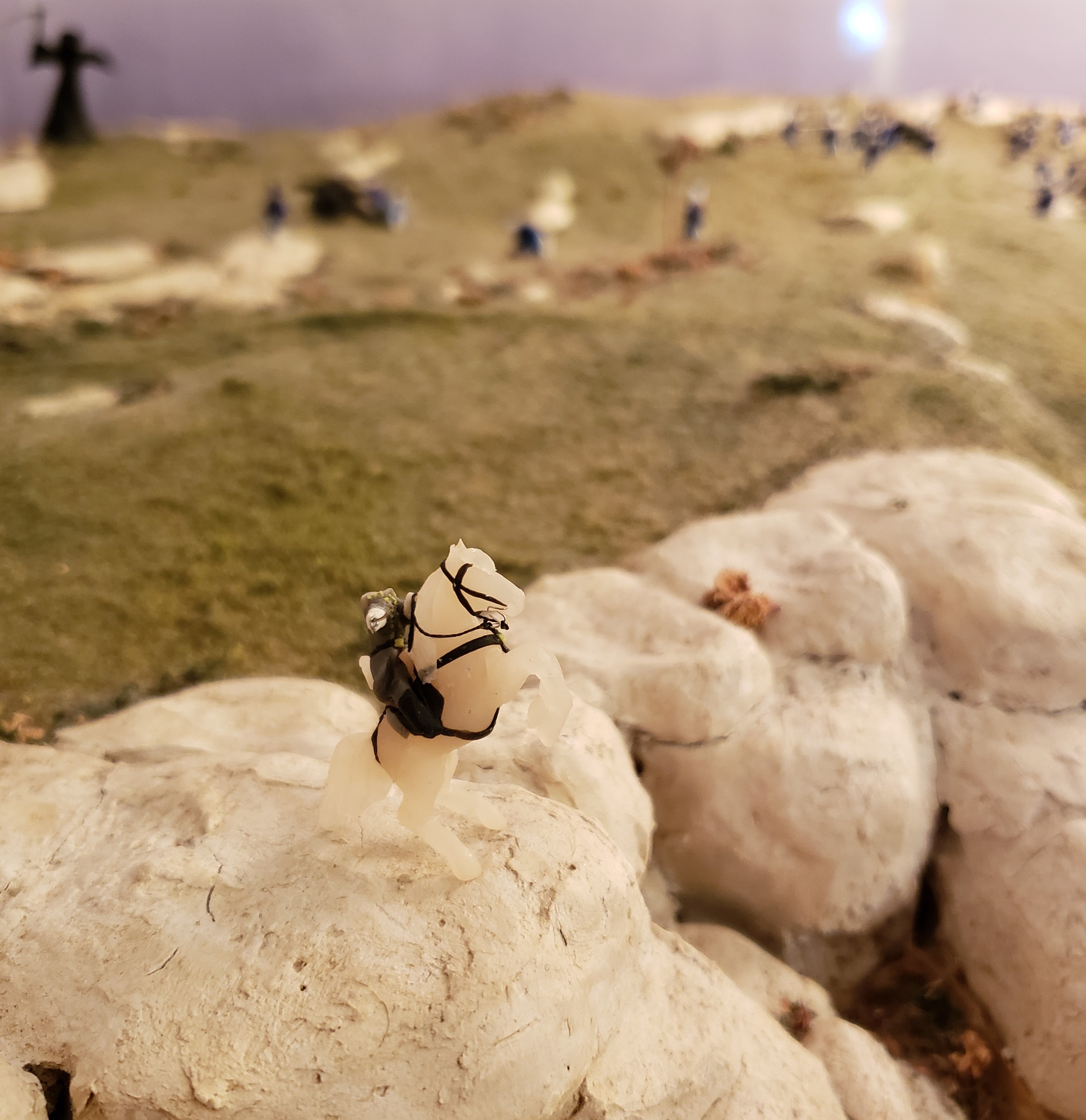 Just hangin’ out on Devil’s Den for Halloween.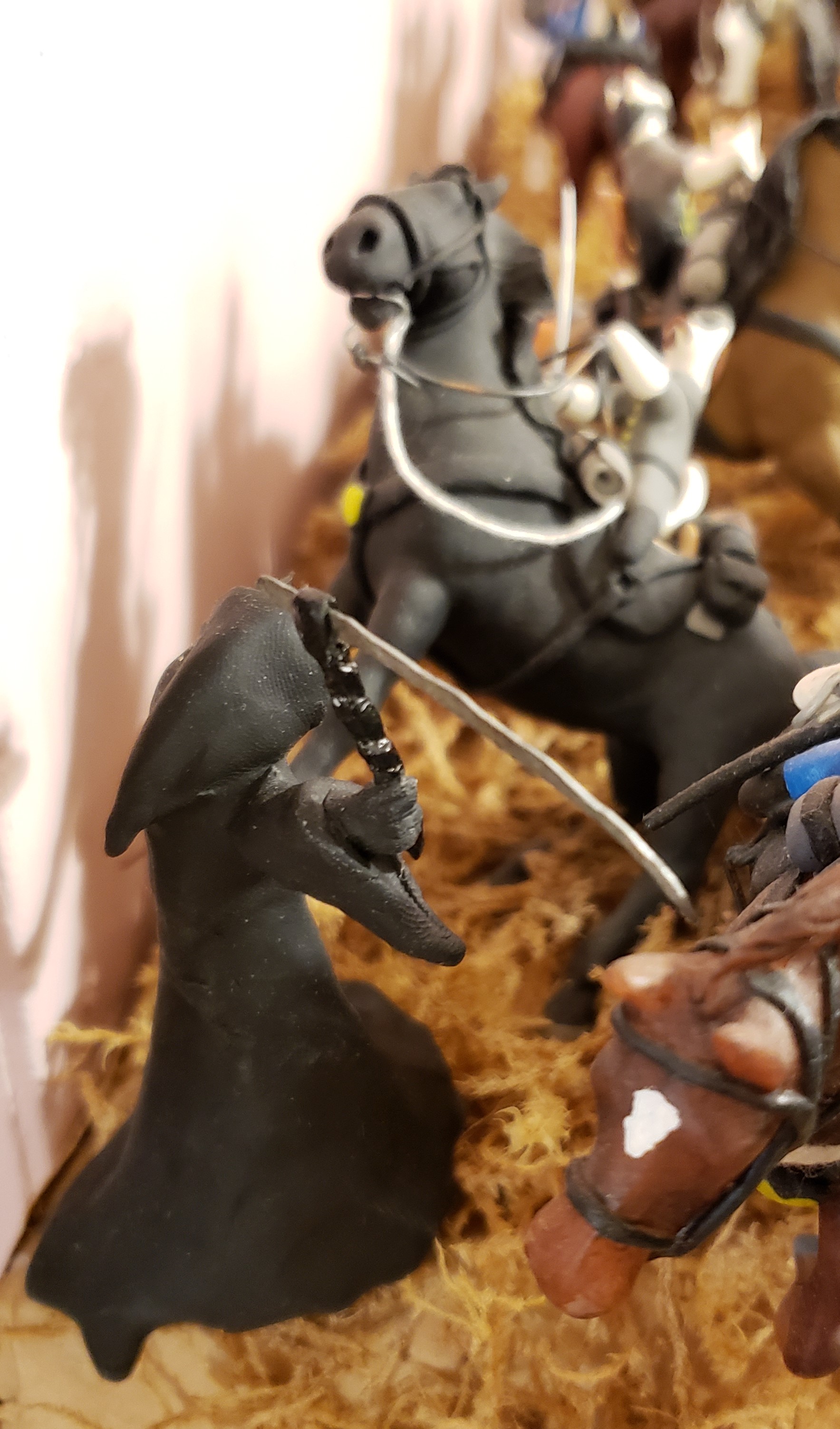
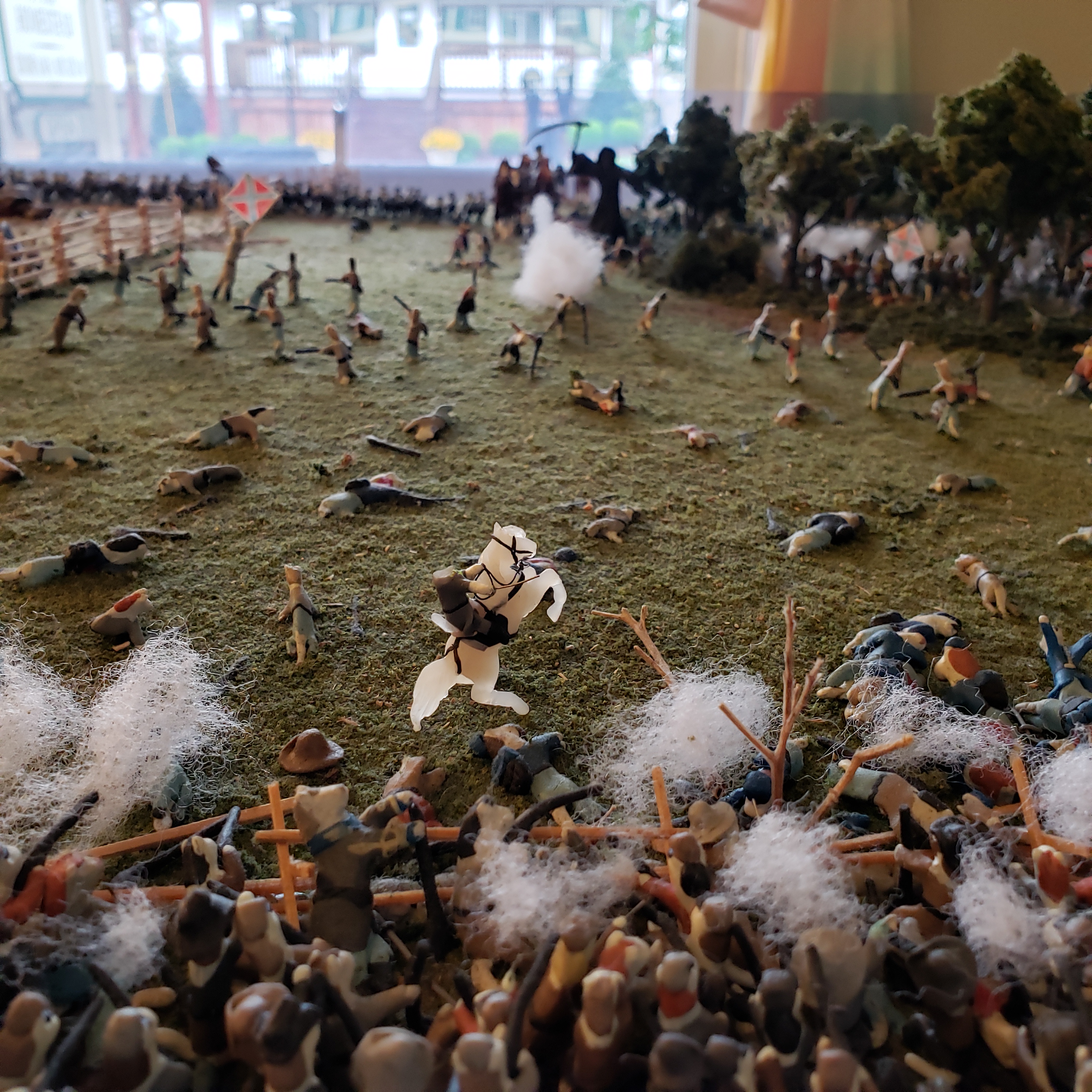 Can you find COVID?


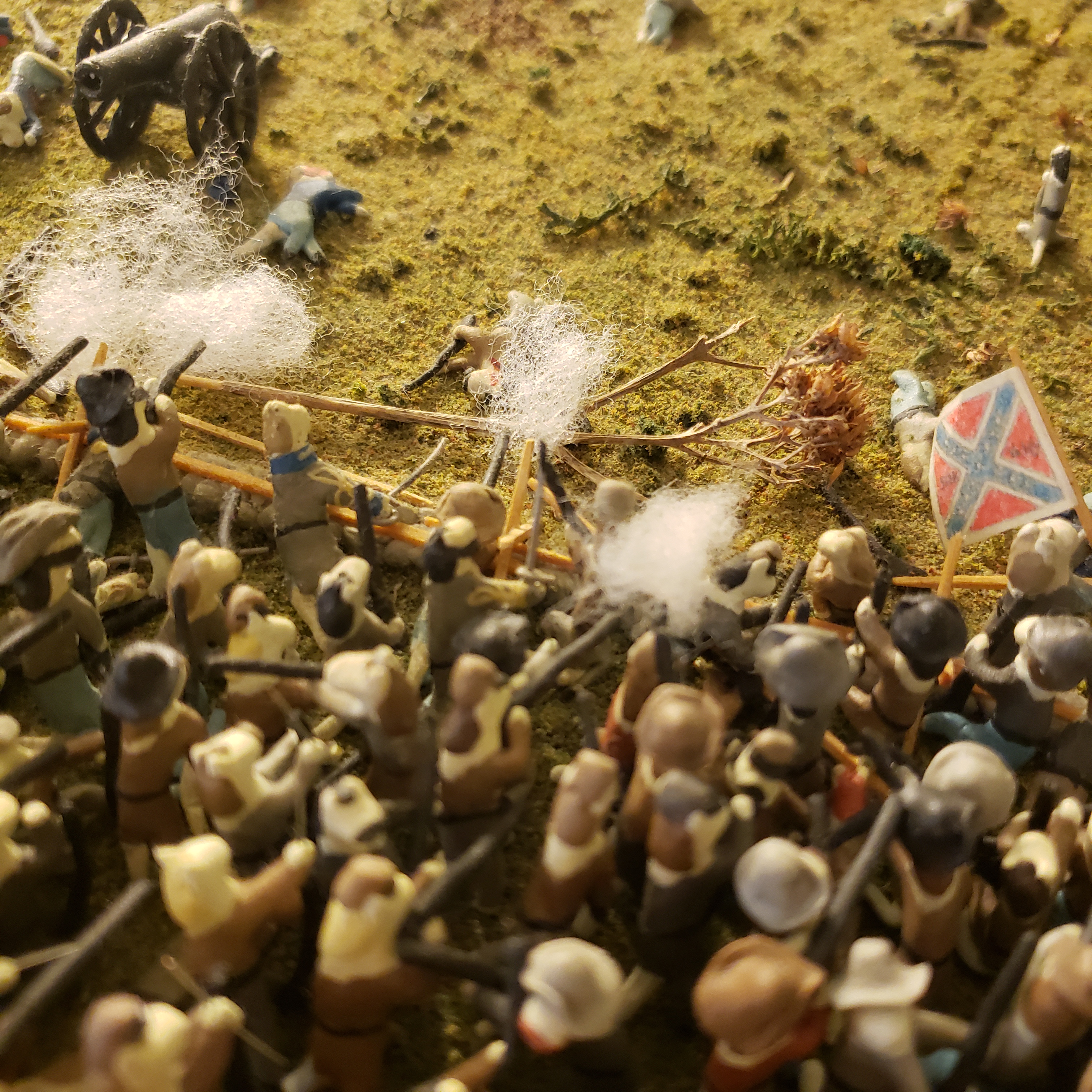 Keep your eyes open. Look for things you can use on your diorama. Do you have a yard? Find twigs or sticks for trees or logs. Is there gravel on your driveway? Pick up some stones for rocks on your scene. We have even used dried snippets of mums for saplings on Devil’s Den and the Angle.



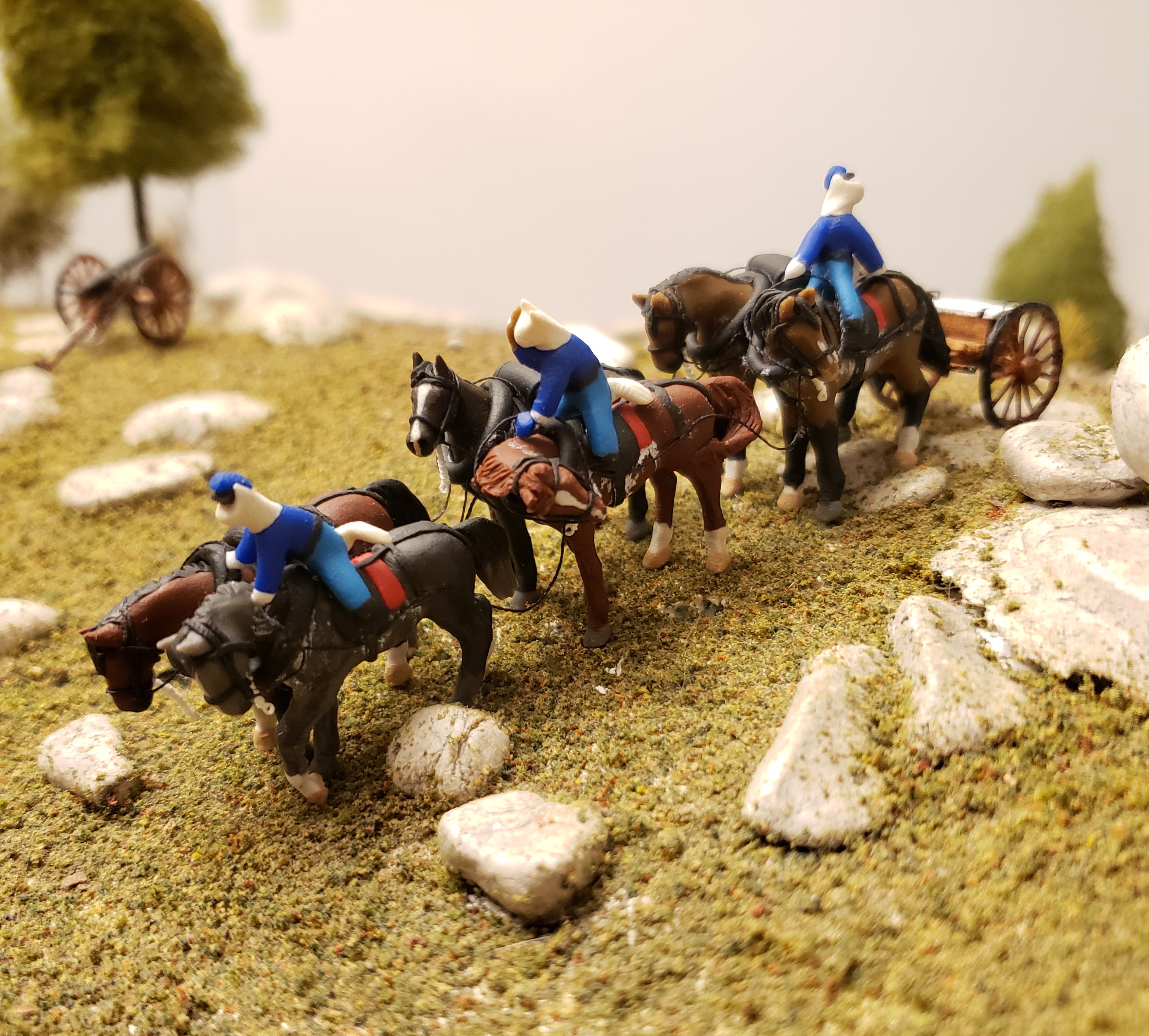
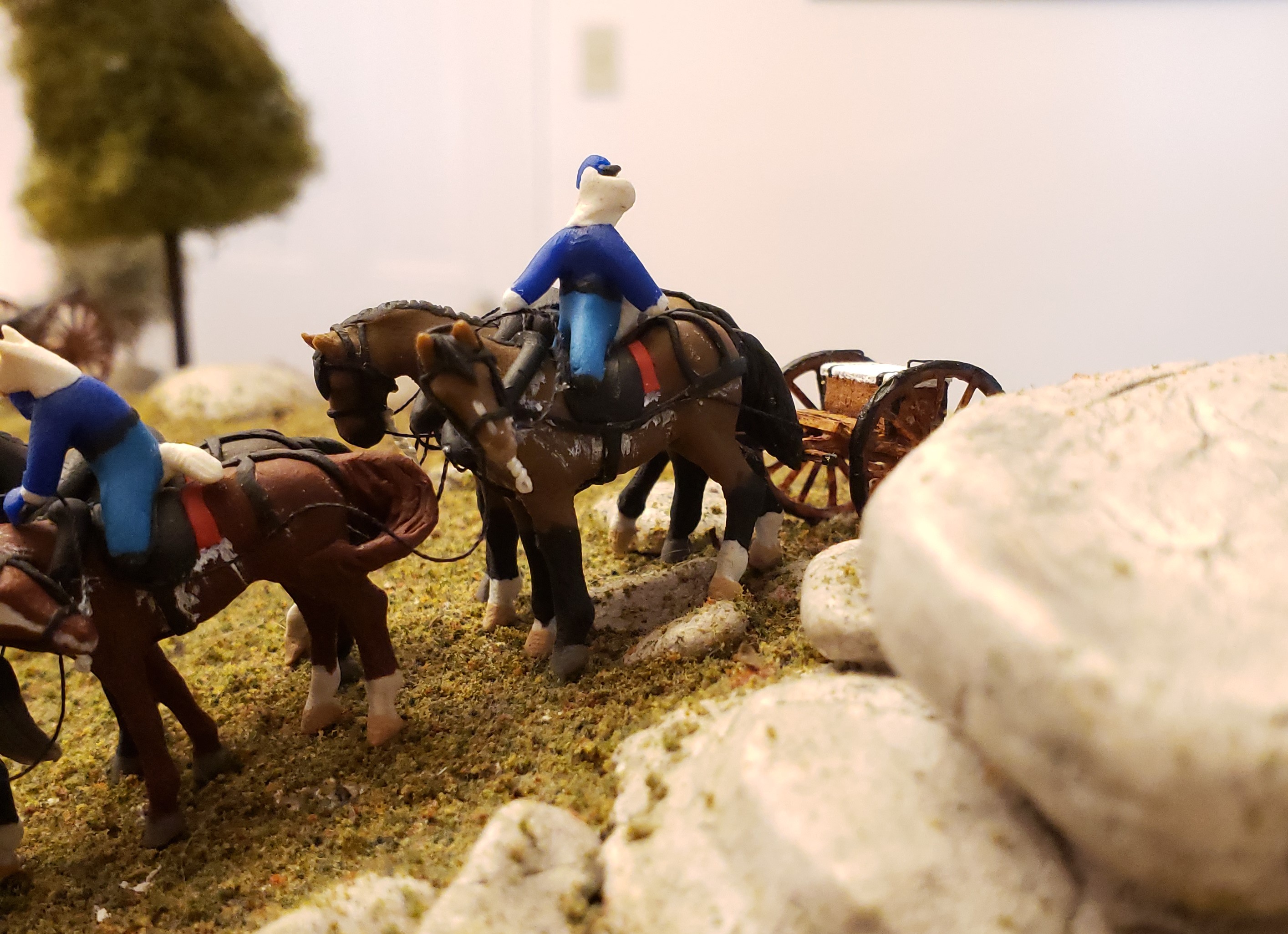
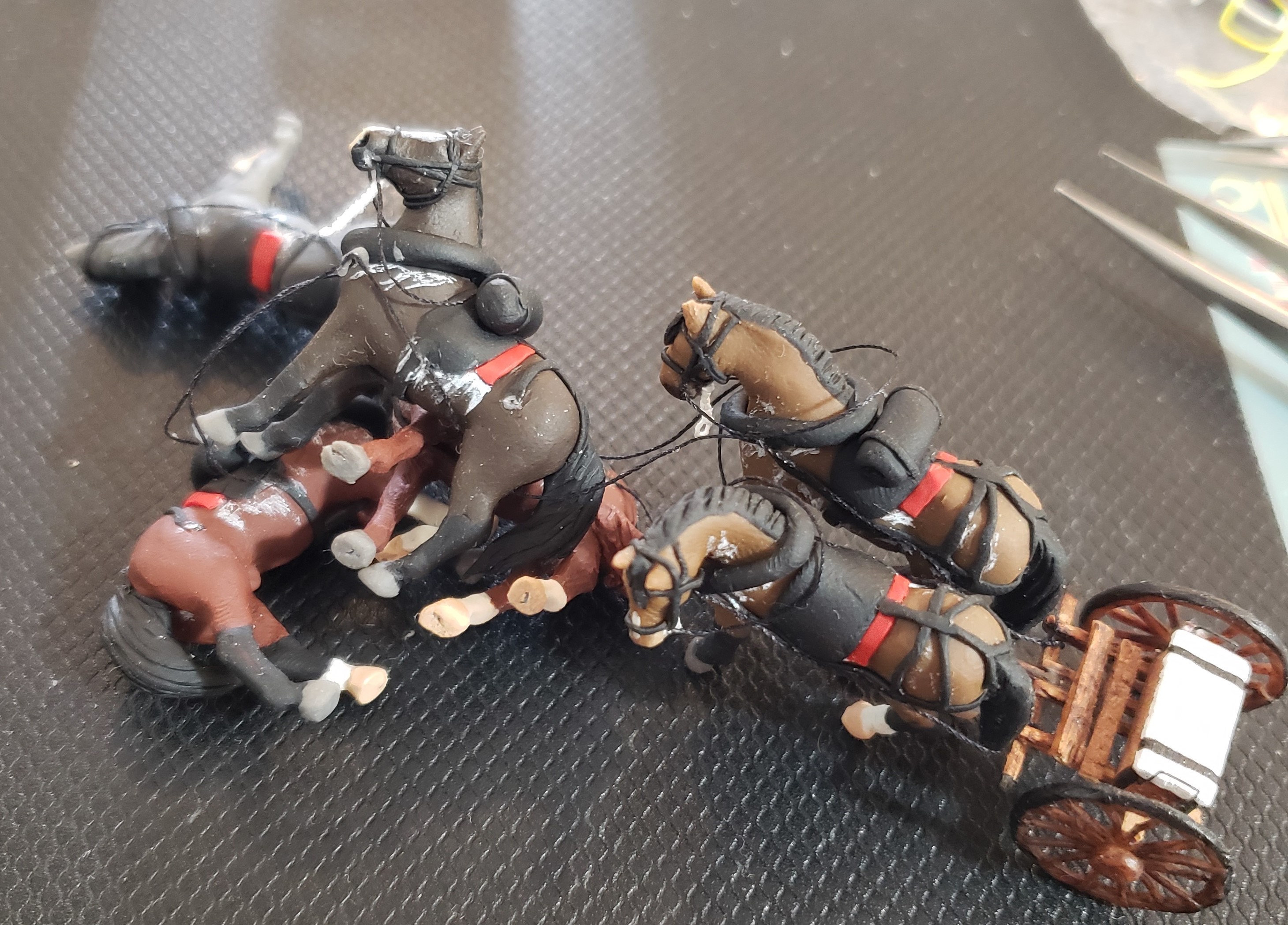
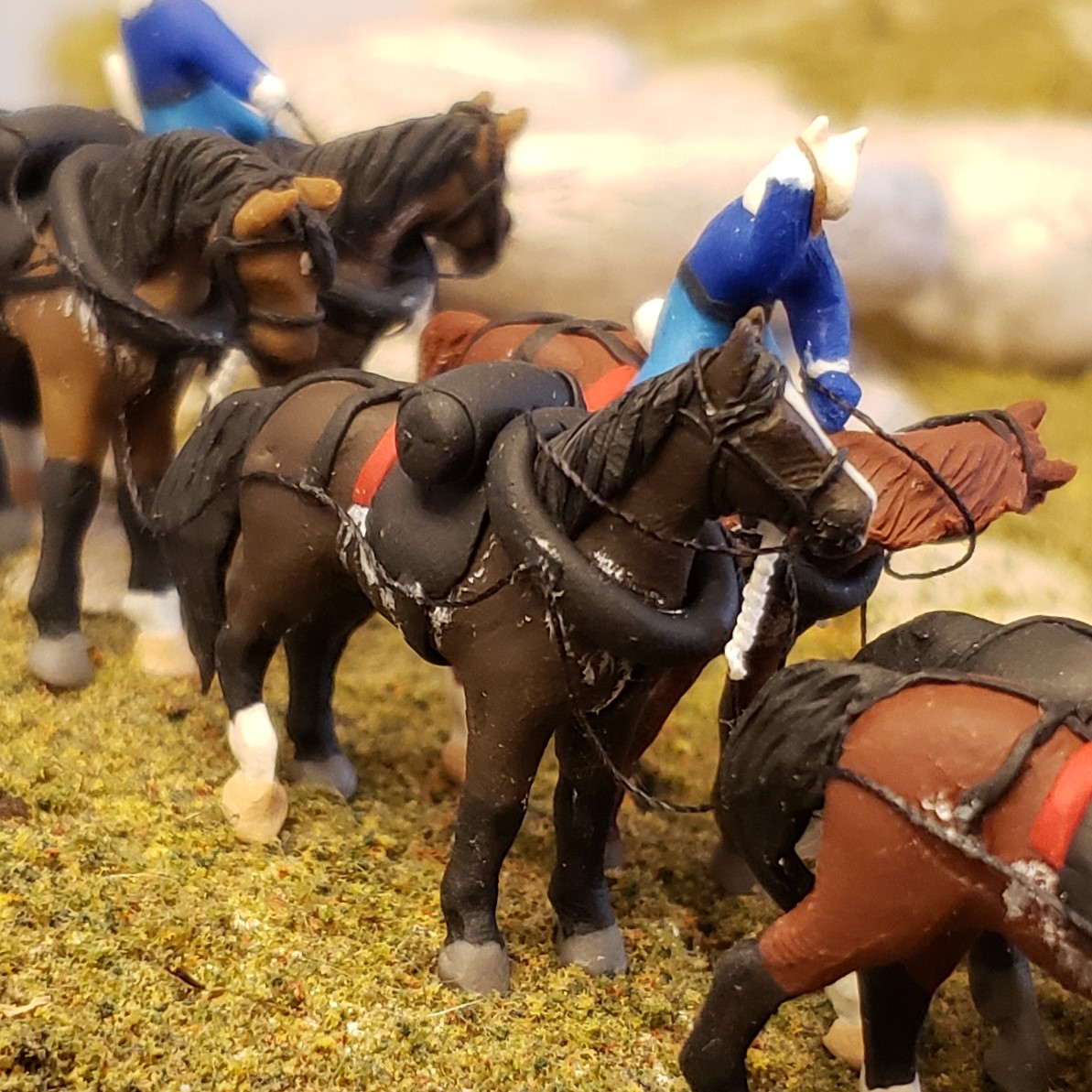
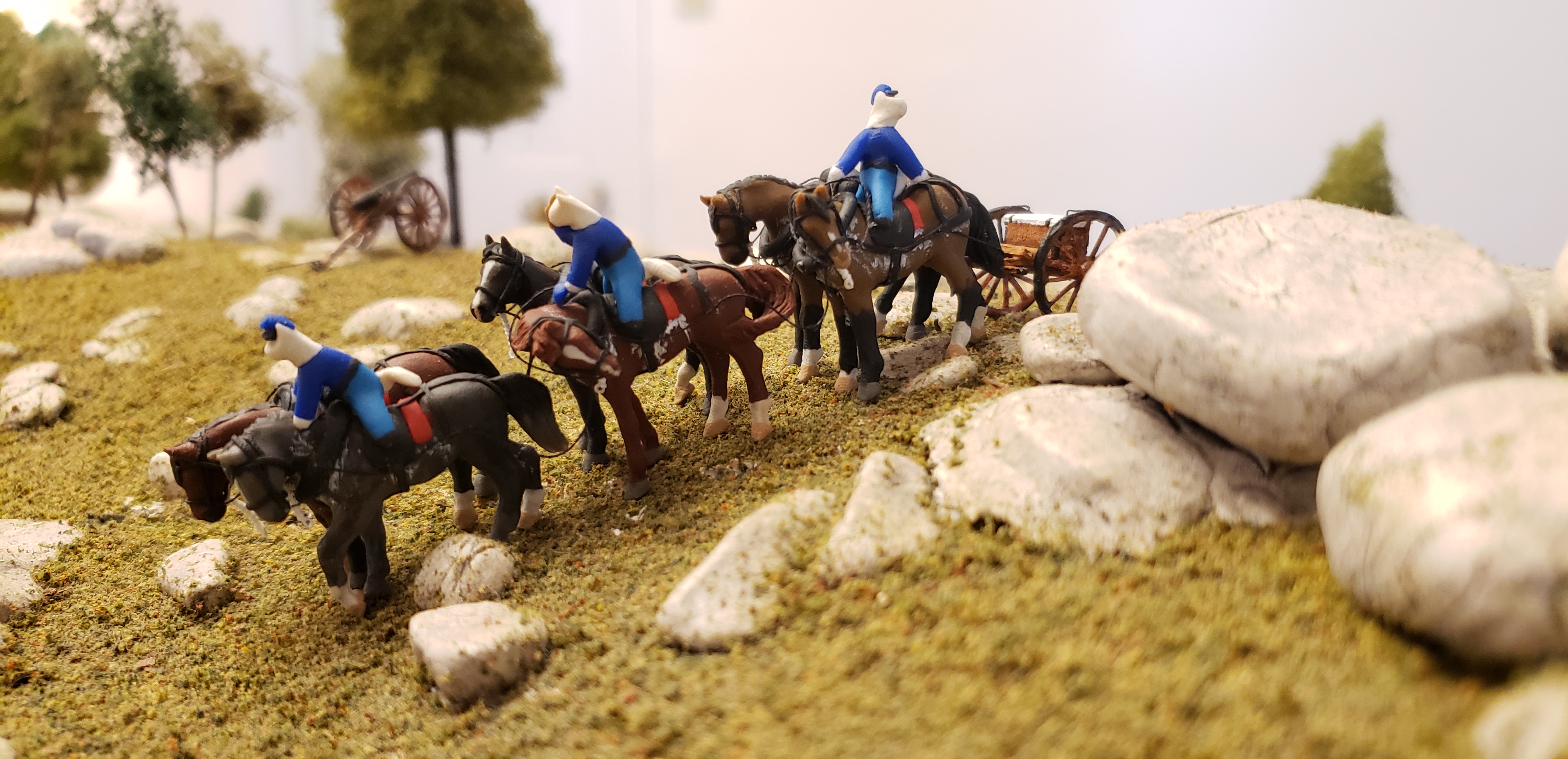
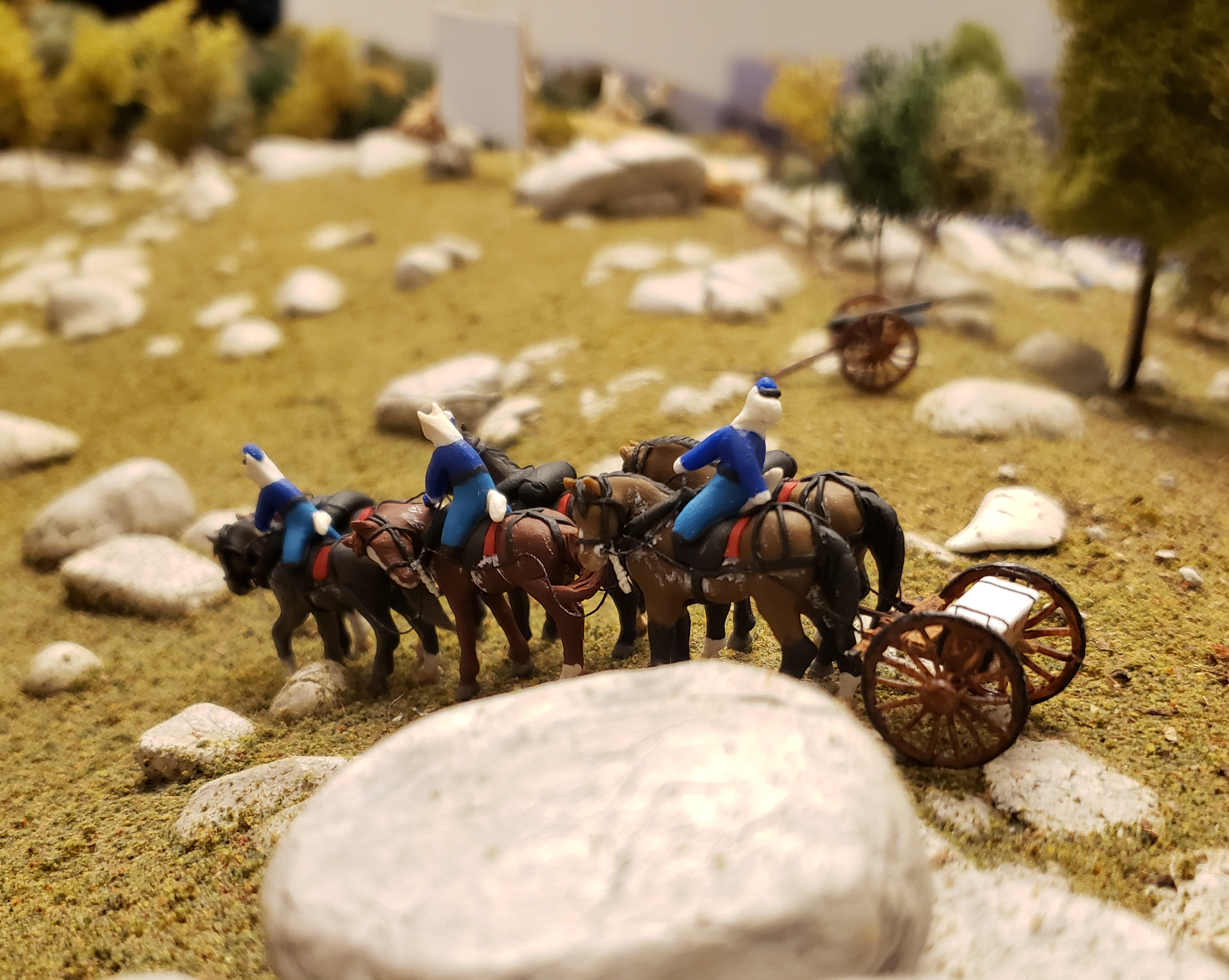 Before installing the limber on the diorama, Rebecca had to measure out the location. A photo from the early 20th Century shows a memorial gun tube near a particular boulder along the path to the castle-like New York monument, indicating the placement of one of Hazlett’s guns. The cannon in the background of this photo is located at that rock. Artillery pieces were typically placed 14 yards apart, so Rebecca measured the distance for a 1:96 scale (3/4” tall cat) from that cannon and boulder. Then, it was just a matter of placing the limber and gun #3 (the latter is not installed yet) where the rocks would allow for wheels and horses.



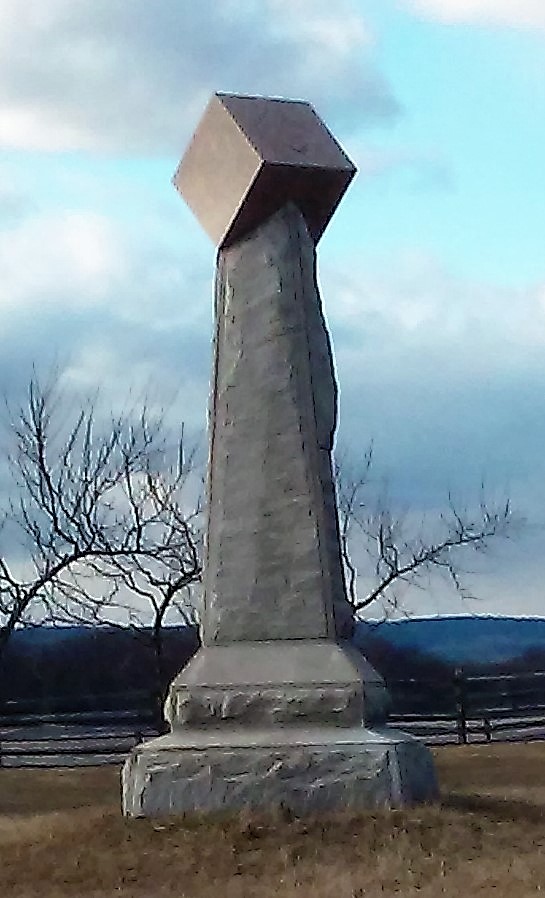
 The hunt stems from one that Rebecca made the other day for a young visitor to the museum. We began talking about corps badges, which you can see on our Little Round Top diorama’s Union cats. But did you know they are on the monuments around the battlefield? Ever wonder why one monument has a star, another a crescent moon, another a diamond? Those are all corps badges, which were a source of great pride for each unit of the Union Army of the Potomac. See how many corps you can identify! You do not need to know about the battle to do it. But if you are a buff, you can still have fun with it! We also invite you to find each of the most common types of artillery on the battlefield. Think all cannons look alike? Think again!
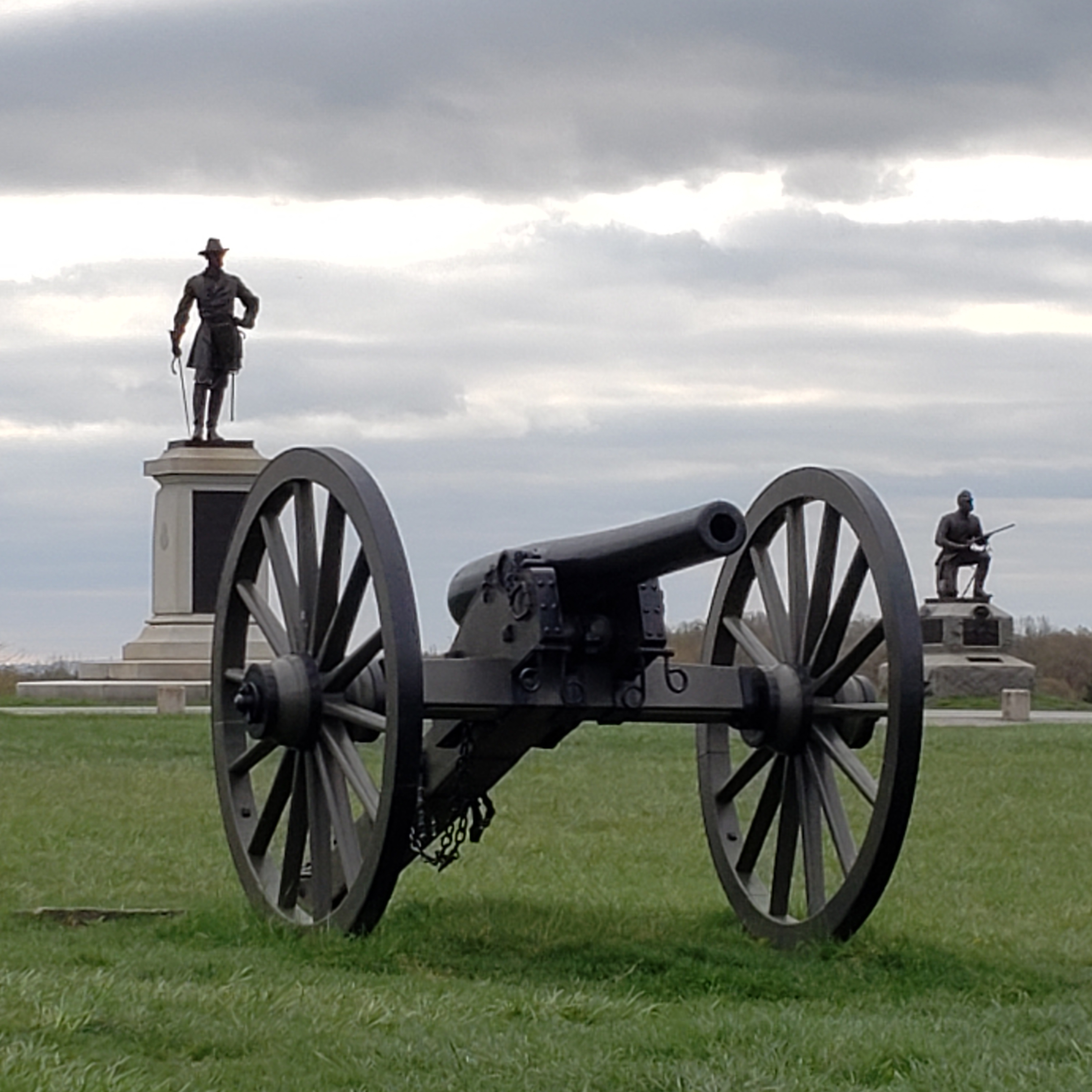 Once you have completed the scavenger hunt, you will be able to go home and tell your friends or school teacher, “I learned the difference between a Napoleon smoothbore cannon and a Parrott rifled gun” or “Hey, that star makes me think of the XII Corps’ badge.” Maybe your friends won’t be impressed, but your teacher will be!