Today is the anniversary of the final day of the battle of Gettysburg. In this Mewsing, we take the opportunity to spotlight a few of our cat-soldiers who portray specific officers and men on our Gettysburg dioramas.
If you have been to Civil War Tails Diorama Museum or browsed our website, you know that we have nearly 9,000 cats and some of them portray actual historical figures. We call the latter “identified” cats. What you might not realize, however, is that we have hundreds of identified figures. Even Rebecca, our Cat Census guru, doesn’t know how many (although writing this Mewsing has made her want to count them up and see!). On “The Fate of Gettysburg” alone, we have 57 specific officers and men. Some are familiar names, such as Generals Richard B. Garnett and Lewis A. Armistead, two of Gen. Pickett’s brigade commanders. Others are probably unknown to any but those who enjoy reading a lot about Pickett’s Charge, such as Pvt. Erasmus Williams and Cpl. Jordan Webb. Our Little Round Top diorama, “The Boys Are Still There,” will have over 50 identified officers and men as well, when it is finished.
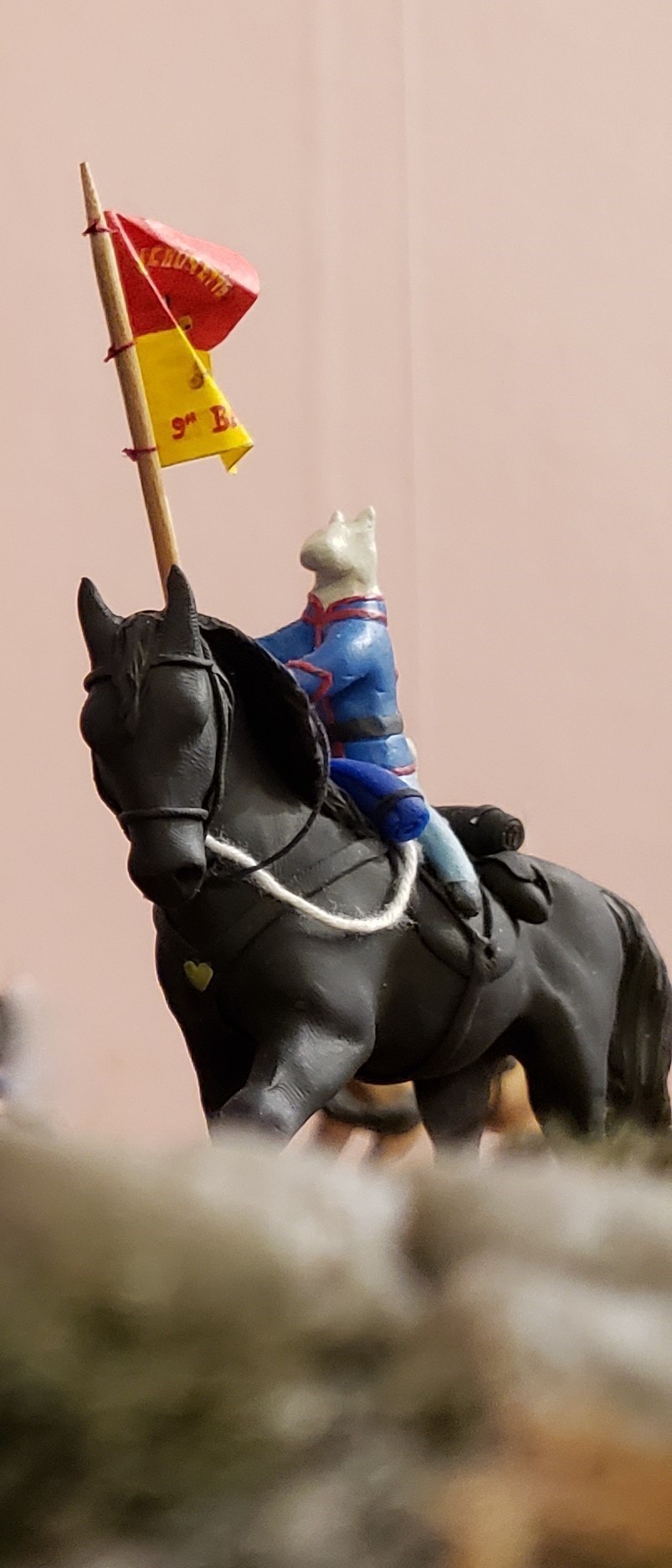
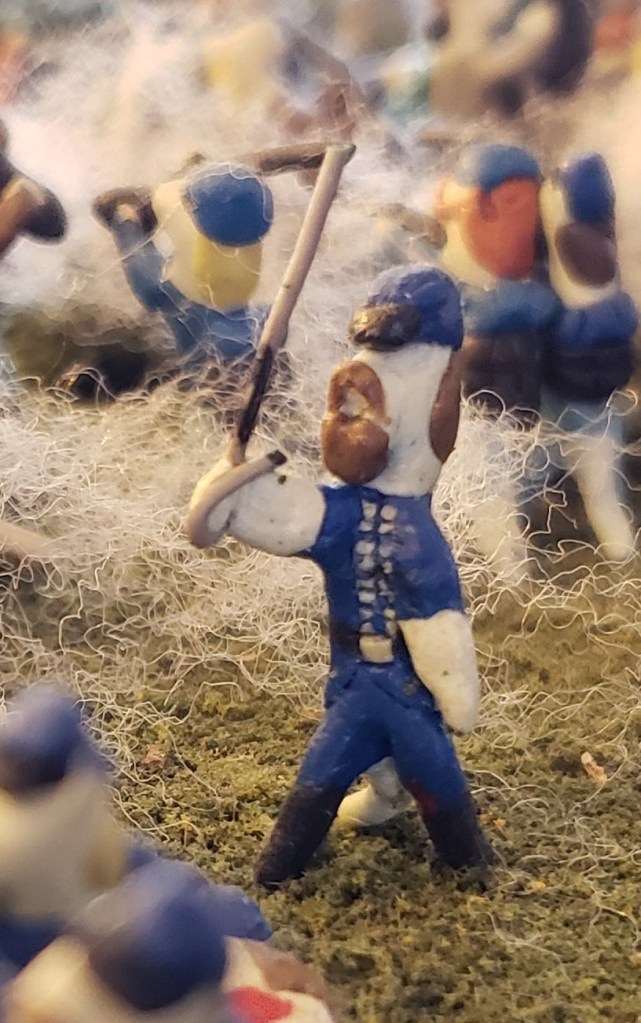
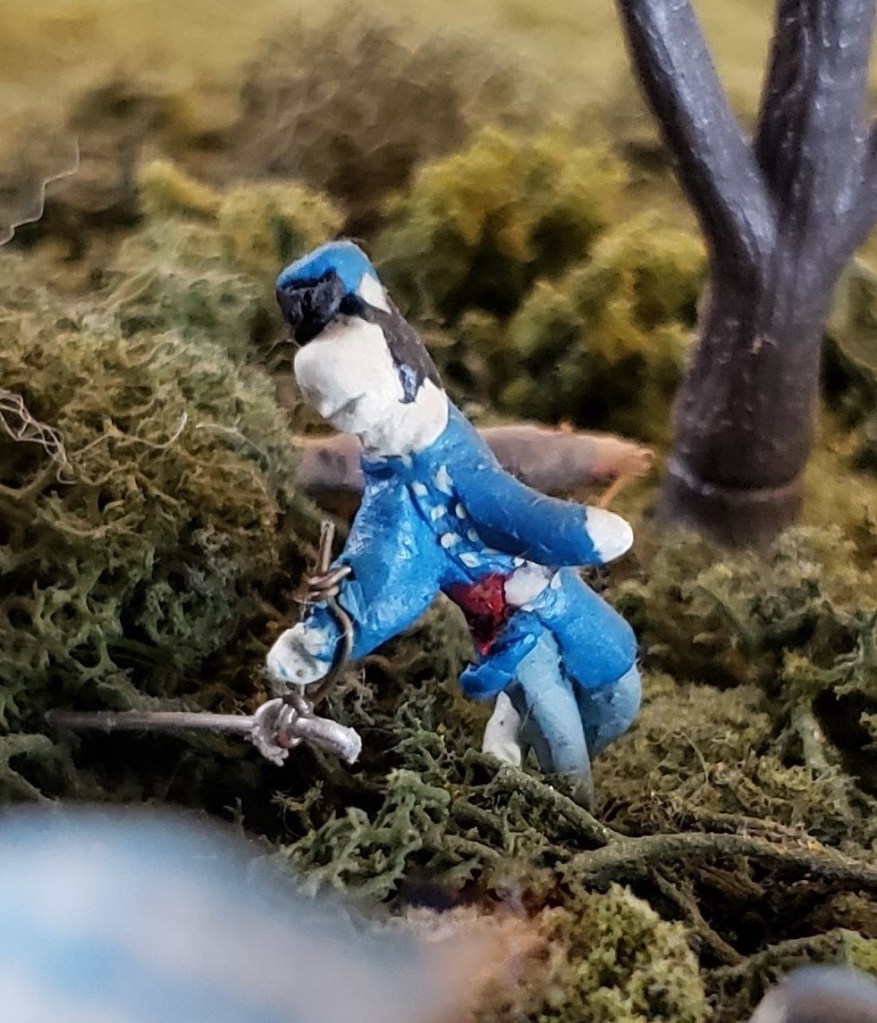
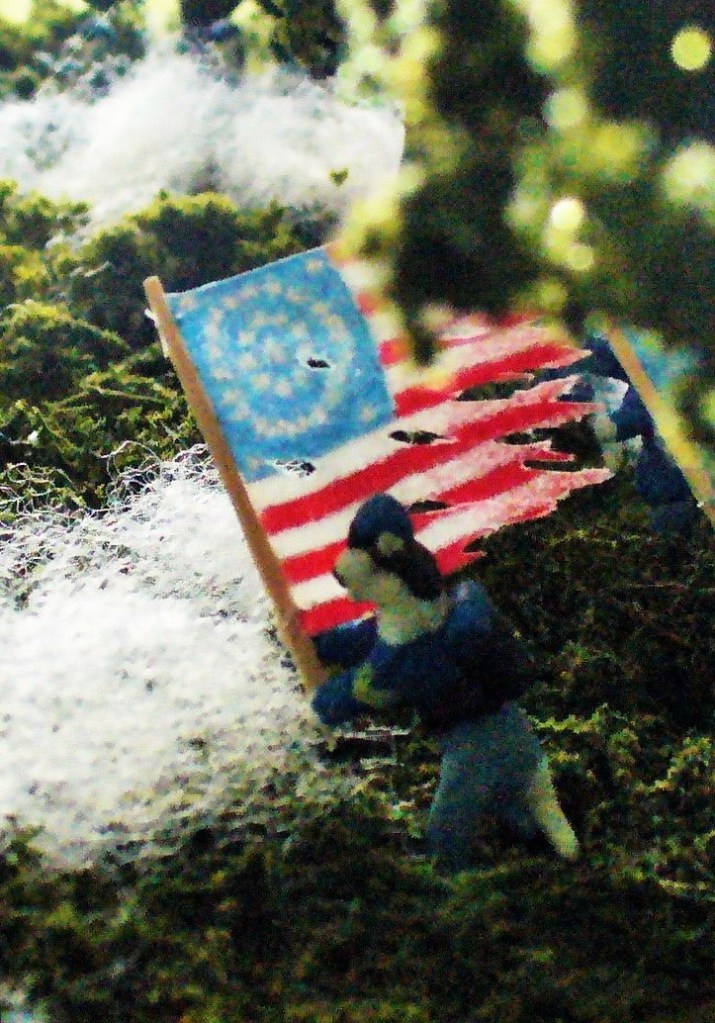
Today we focus on four pairs. In each case, the regimental colors passed from one man to the other. Since color-bearers were prime targets, regiments tended to go through several in a fight—sometimes as many as a dozen color-bearers fell. But on our dioramas, it is not always the case that we have several of those men specifically portrayed.
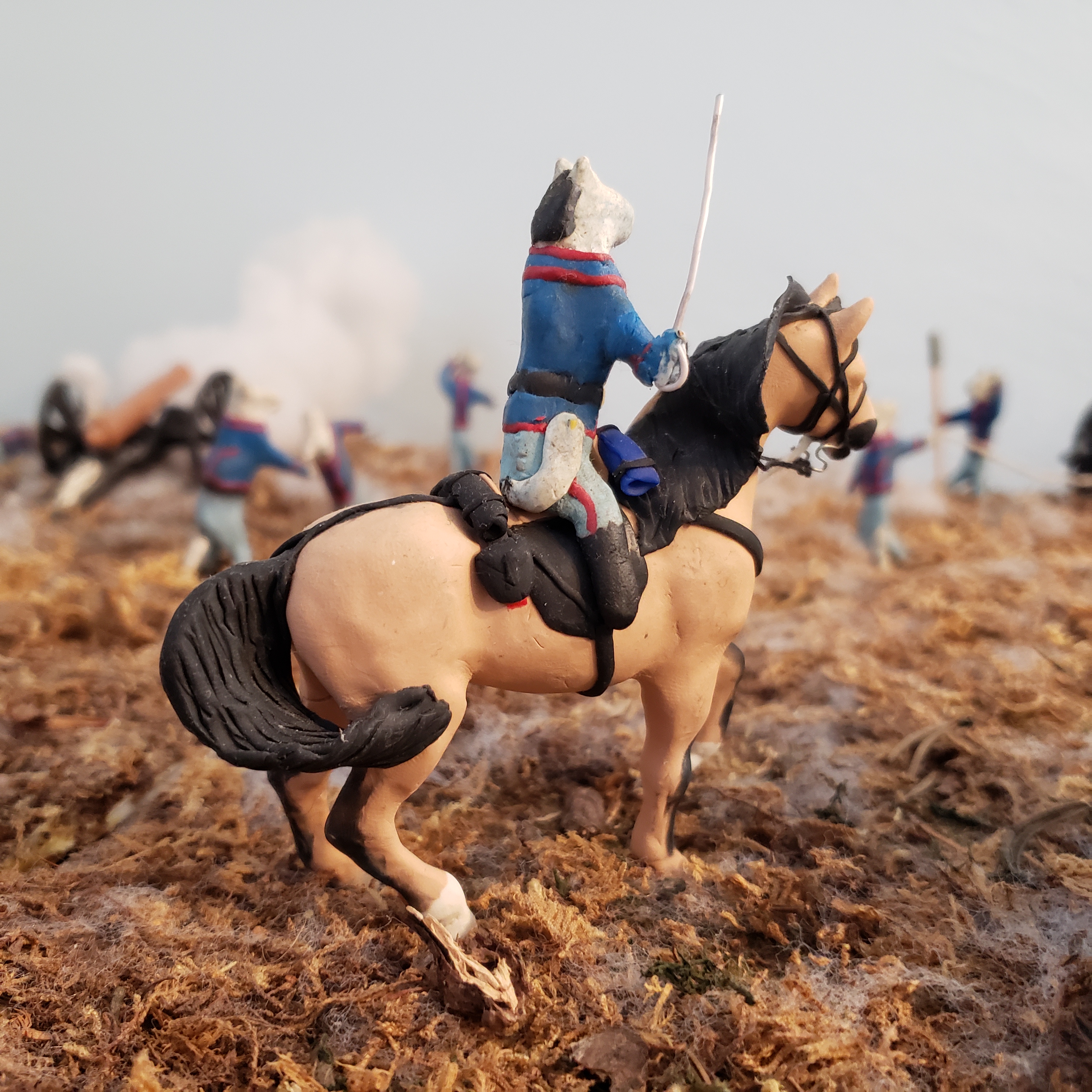
One such pair is on “The Boys Are Still There.” As the 20th Maine Infantry fought to hold the left flank of Col. Vincent’s brigade secure on Little Round Top, Sgt. Andrew Tozier stolidly held the regiment’s national colors at the apex of the line. Amazingly, he was not hit, but the color guard around him—sergeants, corporals, and one private tasked with guarding the flag—was decimated. One of them, Cpl. Charlie Reed, was wounded in the wrist. He could have headed immediately to the aid station, but he chose to stay and continue doing his duty. Unable to use his rifle, however, he traded Tozier for the flag. Eventually, as he lost blood, he finally had to return the flag to Tozier and make his way to the rear to have his wound tended. Tozier settled the flagstaff in the crook of his elbow and continued firing Reed’s rifle. Col. Chamberlain and Maj. Spear both witnessed this. Chamberlain recommended Tozier for the Medal of Honor for his defense of the flag, and Spear noted that Tozier was calmly chewing on a piece of cartridge paper. When the regiment launched their famous bayonet charge, Sgt. Tozier advanced with them, still carrying the colors, unscathed.


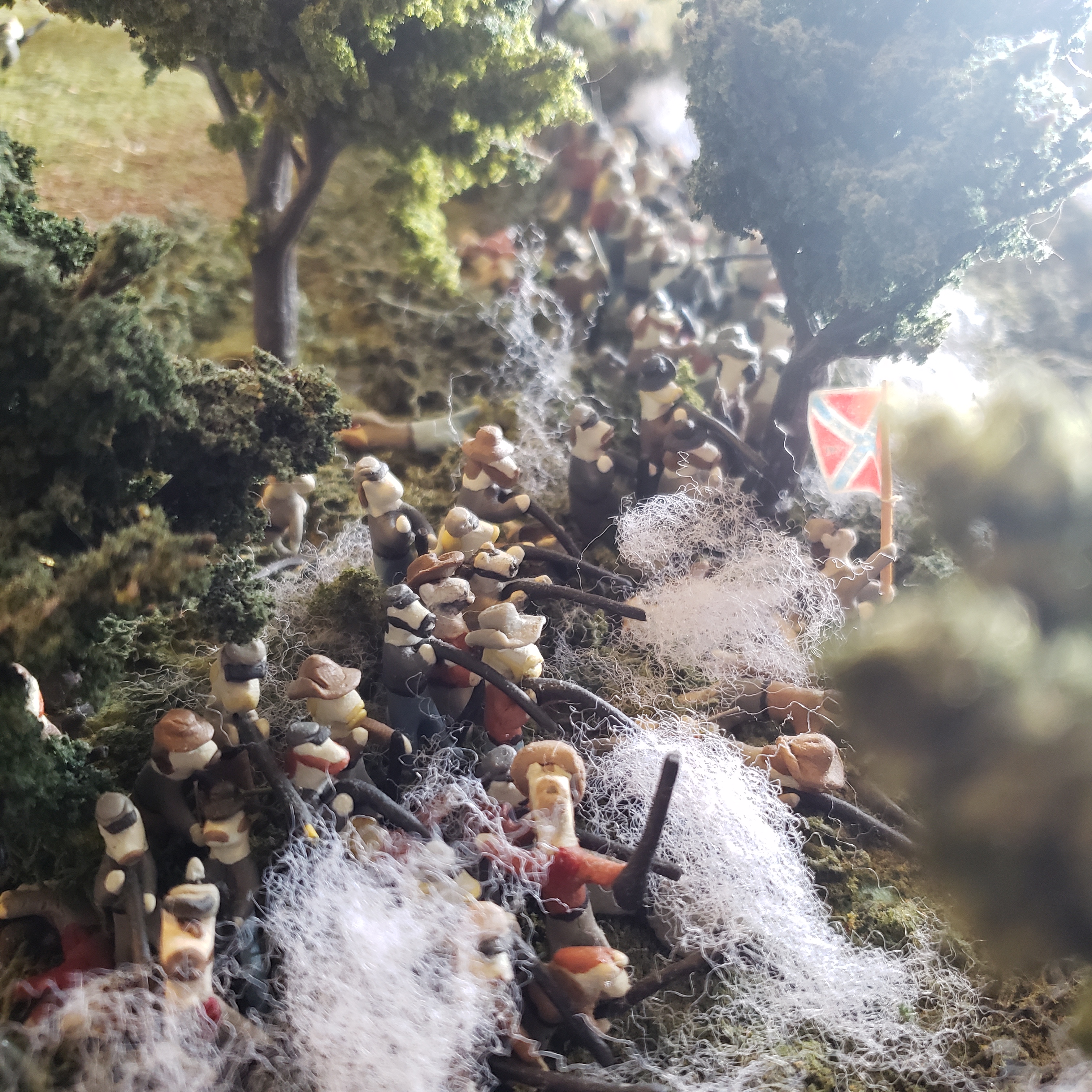
Our other pairs are found on “The Fate of Gettysburg.” As Gen. Garnett’s brigade neared the stone wall during Pickett’s Charge, the 28th Virginia Infantry lost several color-bearers in succession. Their colonel, Robert C. Allen, then took up the flag. Leading his regiment forward, he fell severely wounded near the stone wall. He passed the flag on to Lt. John A. J. Lee. The Union troops giving way, Allen’s Virginians took that section of wall. The wounded colonel asked a nearby man about the flag and then, probably having been told that it had successfully crossed the wall, he placed his hat on his head and died.
Meanwhile, Lt. Lee had indeed crossed the wall; he is said to have been the first of the division to do so. He jumped on the wall and waved the flag, and a bullet struck the staff. Later, as the Union counterattack surged forward, Lee fell wounded. A Union soldier demanded his surrender, but a fellow Confederate from his regiment bayoneted the soldier. Lee did end up being captured, and the flag was left resting against one of Lt. Cushing’s guns where it was captured by a soldier from the 1st Minnesota Infantry.


When Gen. Armistead’s brigade struck the Union line, Cpl. Robert Tyler Jones leaped onto the wall and waved the flag of the 53rd Virginia Infantry. He received a severe wound and fell forward over the wall. Lt. Hutchings Carter then took up the flag and continued on. Jones remained by the wall, holding a pistol and making sure none of his fellow Confederates were inclined to retreat.


On the Union side, as regiments poured into the Copse of Trees to plug the gap and stop the Confederates, one of the units was the 1st Minnesota, sadly depleted from their gallant, desperate charge the day before. Carrying the flag was Cpl. John Dehn, the last of the color guard. During the moments that the fight hung in the balance as both sides pounded at each other, a bullet struck the flagstaff, splintering it in half and wounding Cpl. Dehn in the hand. Cpl. Henry O’Brien took the flag and sprang forward. The regiment followed him, starting a counterattack in the Copse. In the short, fierce melee that followed, O’Brien was wounded twice. He would survive, and like Sgt. Tozier, he received the Medal of Honor for his actions.


 The next consideration is scale. For a small scene, such as “Desperation at Skull Camp Bridge,” we could use a larger scale because the scene would not involve a lot of figures. A scale of 2-inch-tall cats is okay if there are only sixty soldiers involved. But it would be impossible to use cats of that size for a to-scale diorama with 3,000 soldiers, such as “The Fate of Gettysburg,” unless you have a warehouse to fit it in!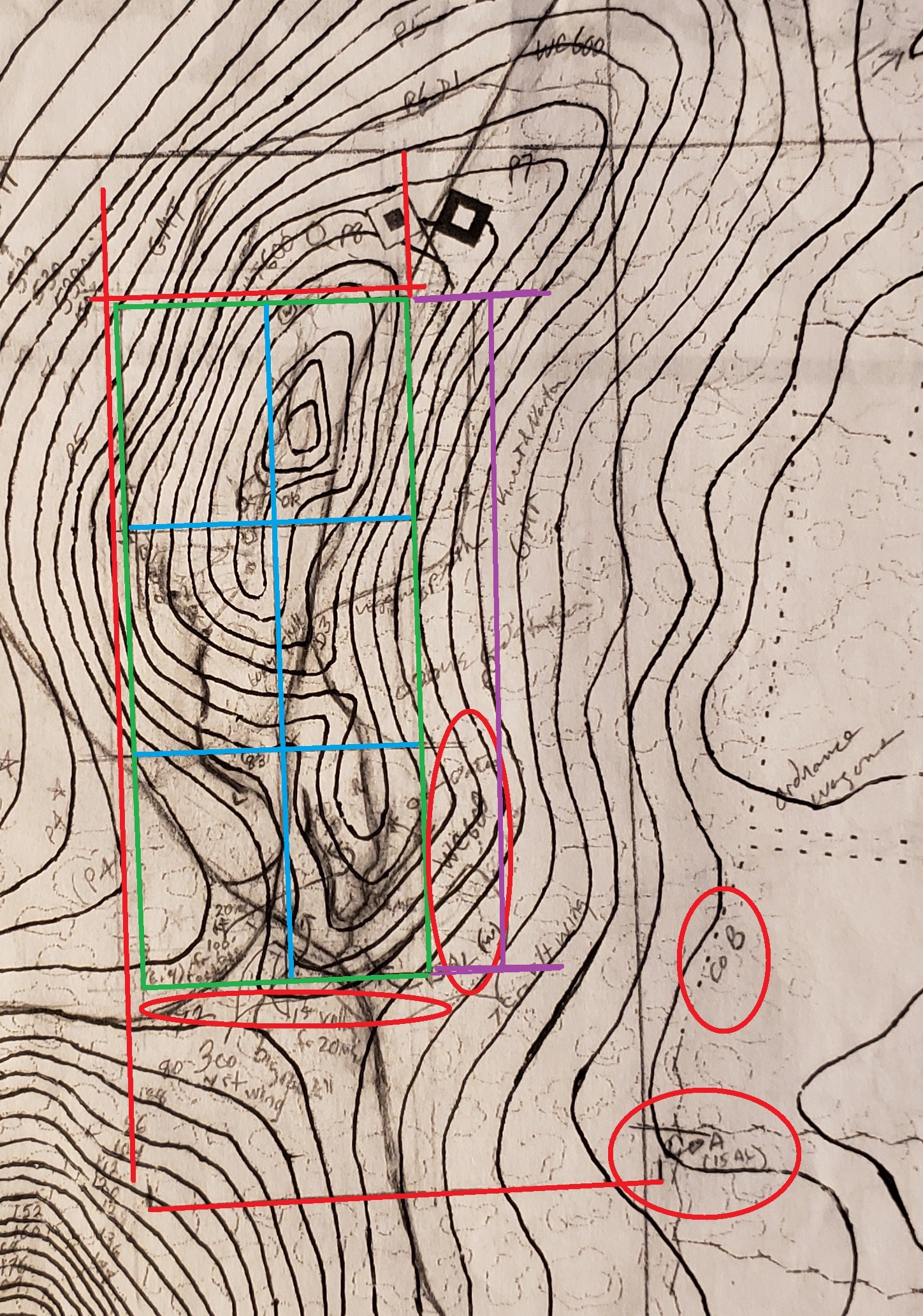






 On the evening of May 1, Lee met with Jackson. As they talked, Gen. Jeb Stuart rode up and told them the Union army’s right flank was in the air. Lee looked at Jackson. “What do you propose to do?”
 The gray lines swarmed over the surprised Union soldiers, some of whom were so scared they couldn’t even fire their guns before being swept away by the gray juggernaut. The Union flank crumbled. By the time darkness halted the attack, two miles of the Union line had been rolled up.
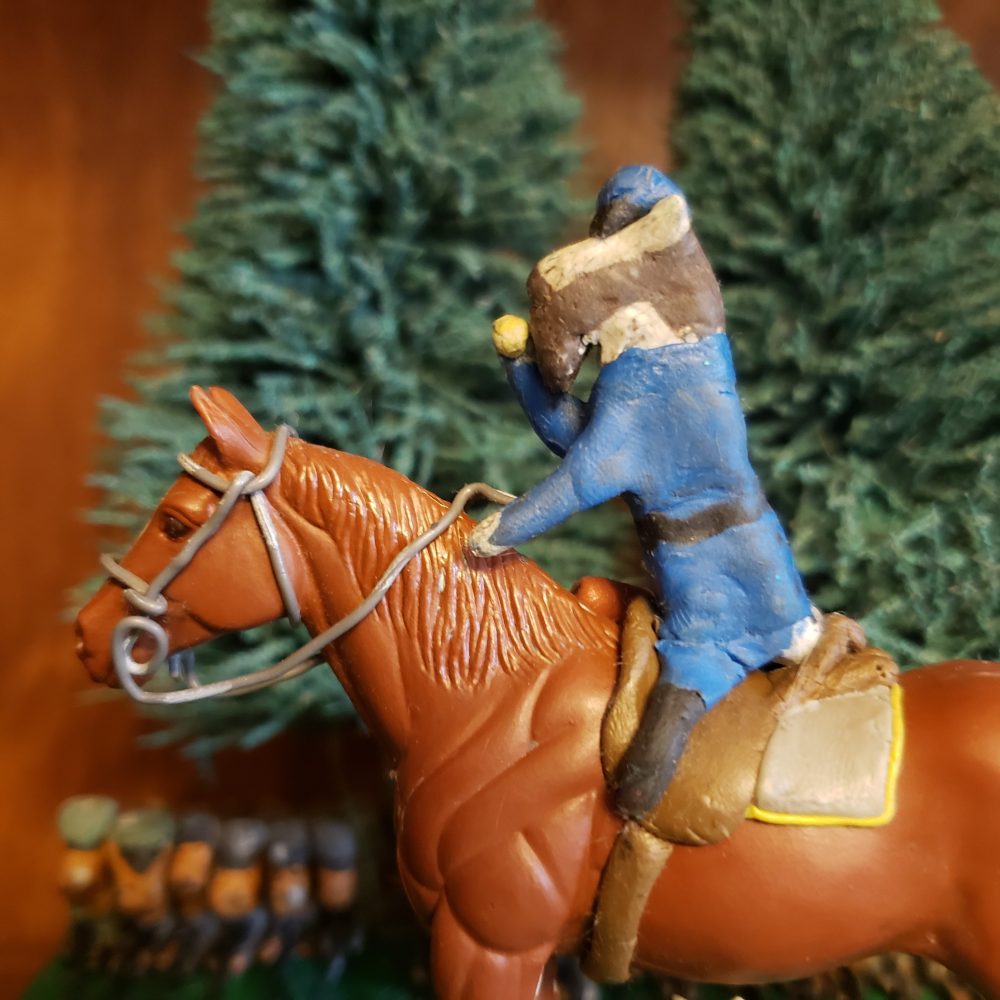
 On the evening of April 9, 1865, Gen. Joshua Chamberlain received word that he would command the Union troops receiving the surrender of the Confederate Army of Northern Virginia. Gen. Grant had been generous in his terms to Gen. Lee, but he did feel and insist that the Confederates should lay down their arms before Union troops representing the Union army. Chamberlain, feeling “this was to be a crowning incident of history,” asked his corps commander, Gen. Griffin, if he could use his old Third Brigade, who he had served with for two years and commanded after Gettysburg. “I thought these veterans deserved this recognition,” he recalled in his reminiscences. Griffin obliged, transferring Chamberlain to command of the Third instead of the First Brigade.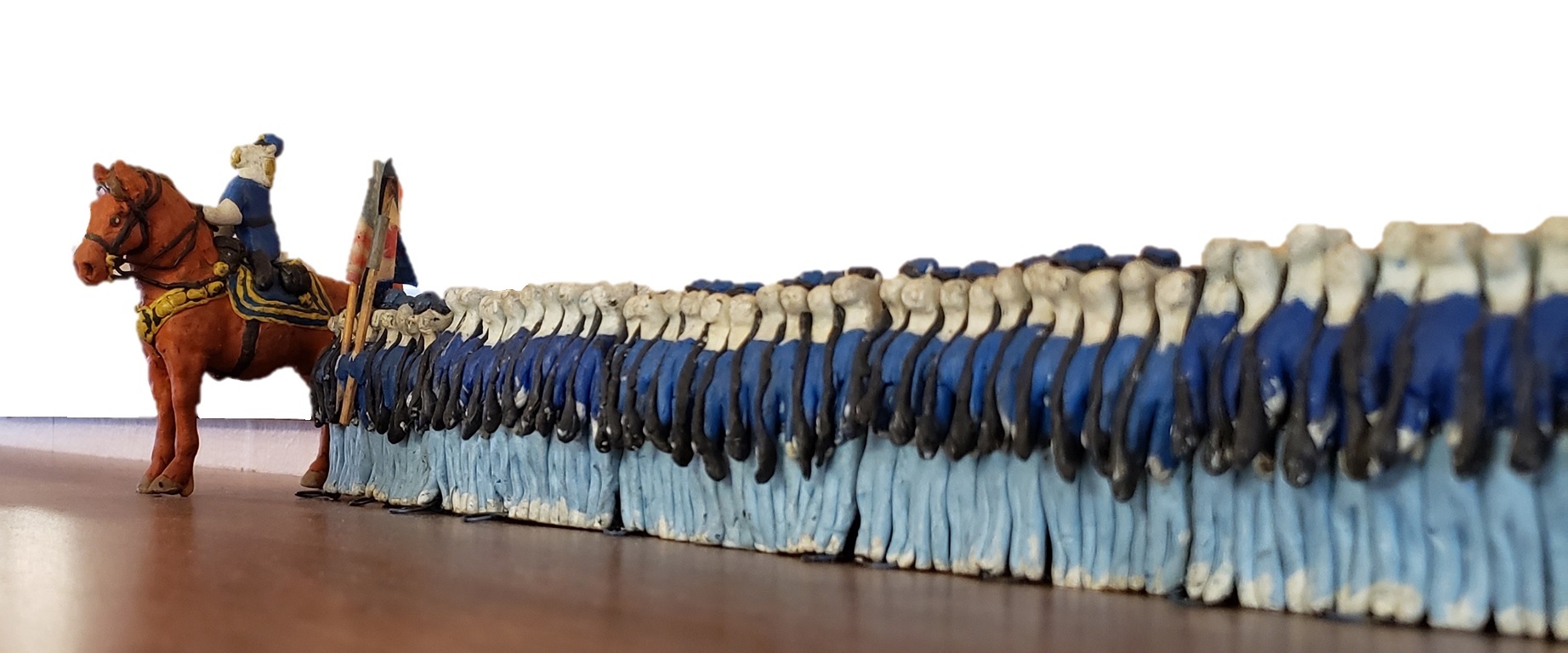
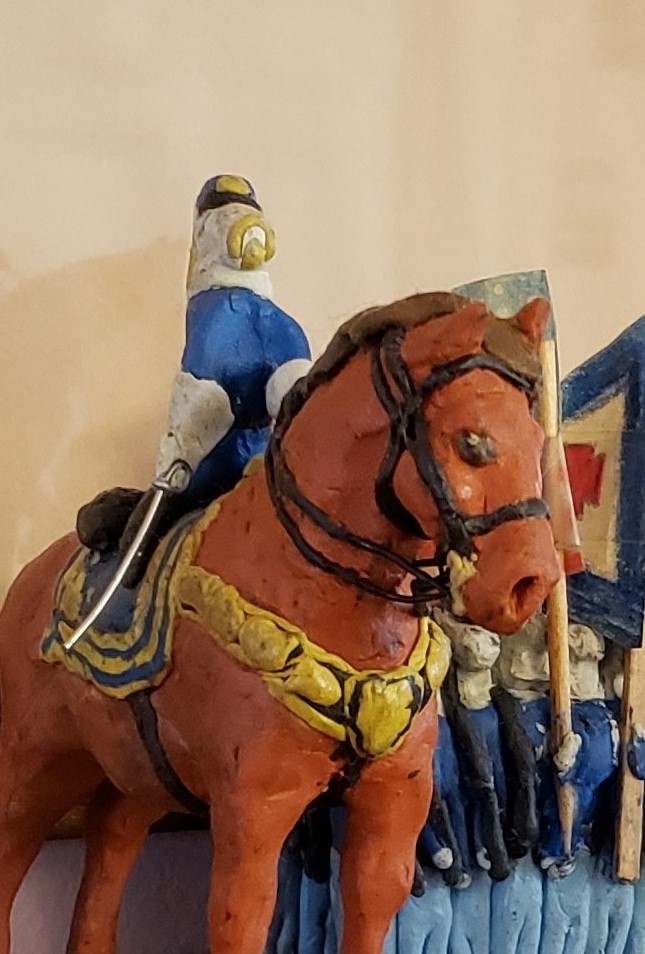
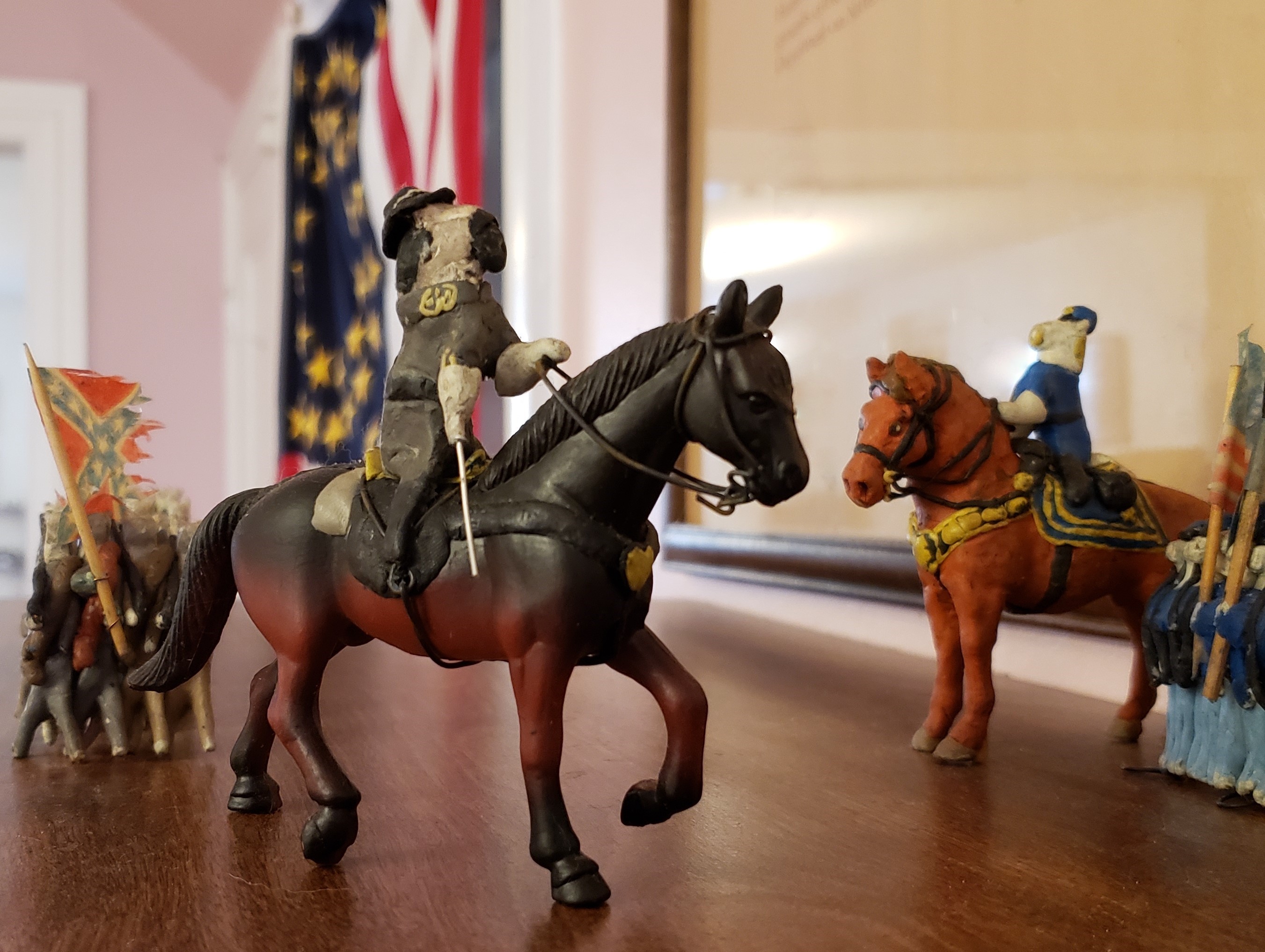 At the head of the first Confederate division, Gen. John B. Gordon rode, Chamberlain recalled, “with heavy spirit and downcast face.” Suddenly, a bugle rang out and the whole Union line “from right to left, regiment by regiment in succession,” shifted their rifles from “order arms” to “carry arms”—the soldier’s salute. Gordon “catches the sound of shifting arms, looks up, and, taking the meaning, wheels superbly, making with himself and his horse one uplifted figure, with profound salutation as he drops the point of his sword to the boot toe; then facing to his own command, gives word for his successive brigades to pass us with the same position of the manual,—honor answering honor.”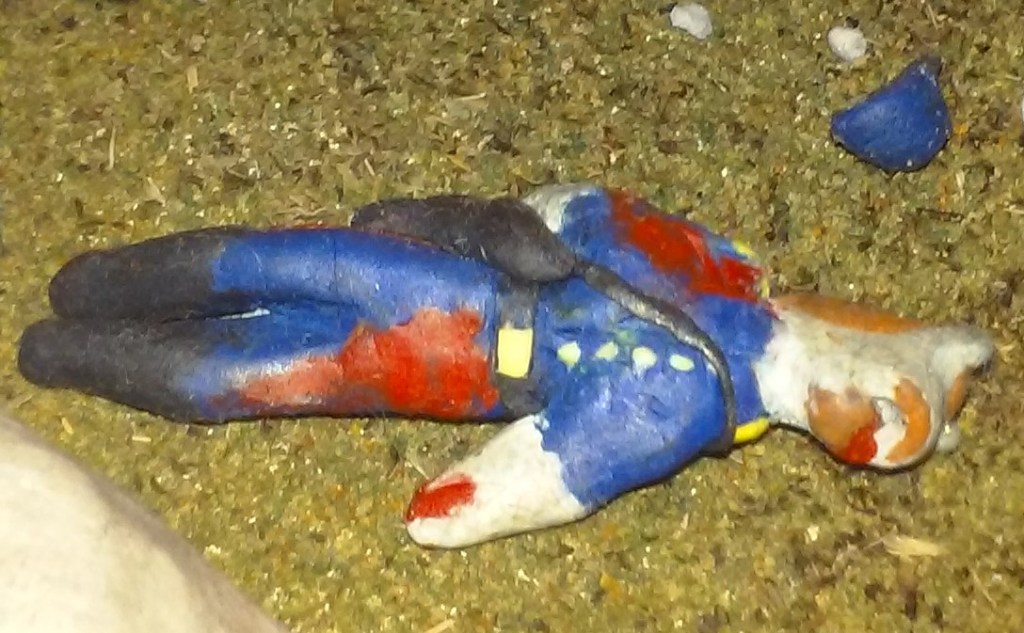
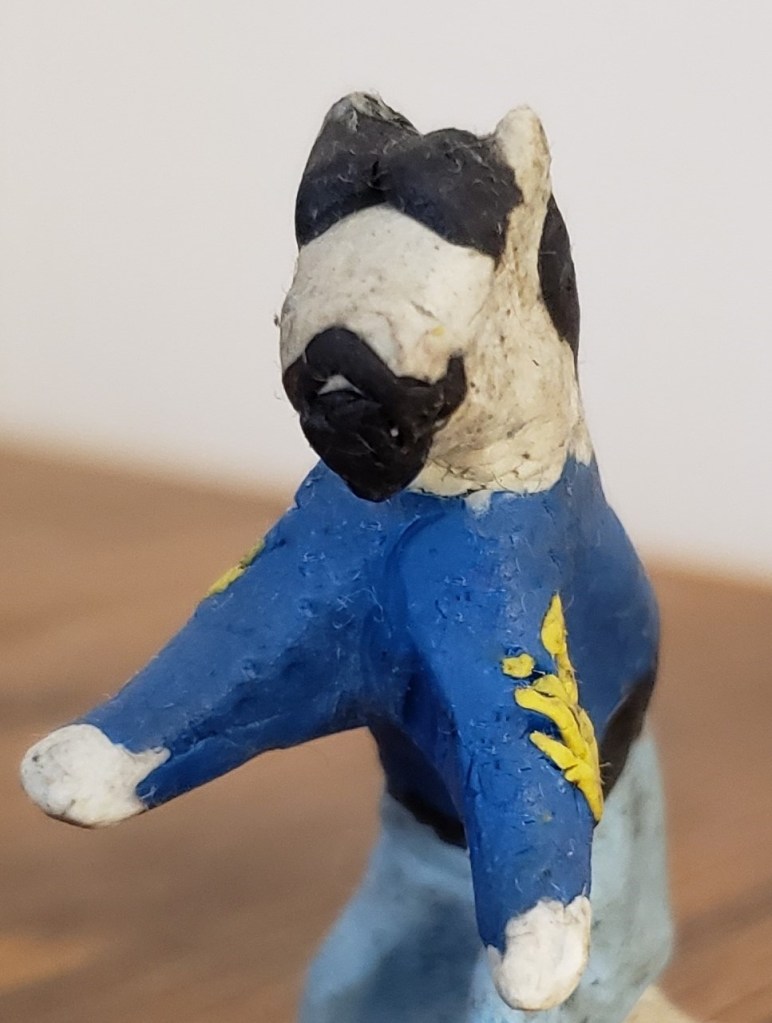
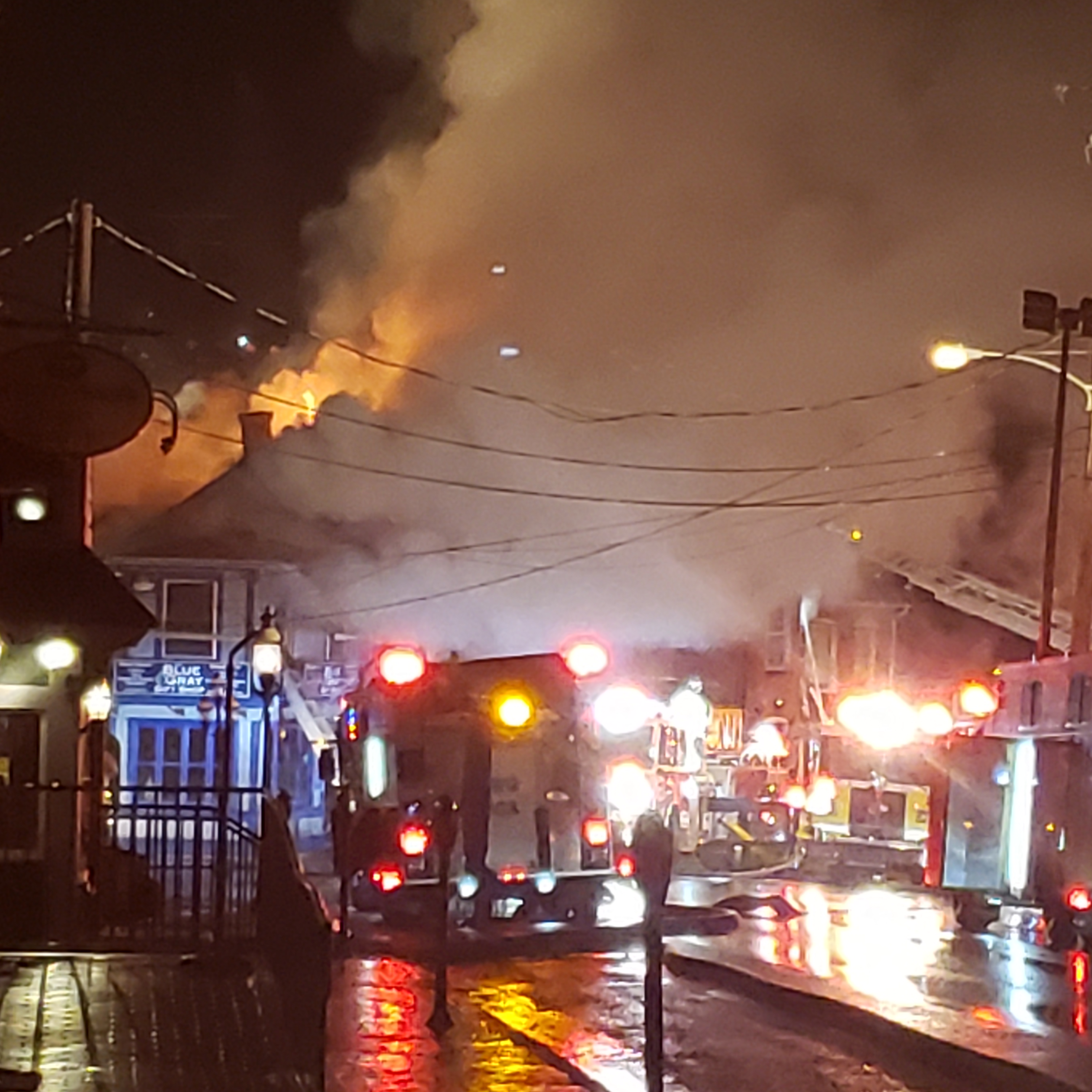 A week and a half ago, we here on Baltimore Street had some excitement—and not of the good kind. Shortly after 4:00 a.m. on March 1st, a car plowed into the buildings that housed the Blue & Gray Gift Shop and the Crystal Wand, and exploded. A 4-alarm fire engulfed both buildings and it took firefighters two hours to put out the flames. Later that day, the day that the Blue & Gray Gift Shop was supposed to open for the season, the building was razed completely. The future of the other building is still being determined. While the driver of the car lost his life, amazingly he was the only fatality, and all the tenants made it out safely.








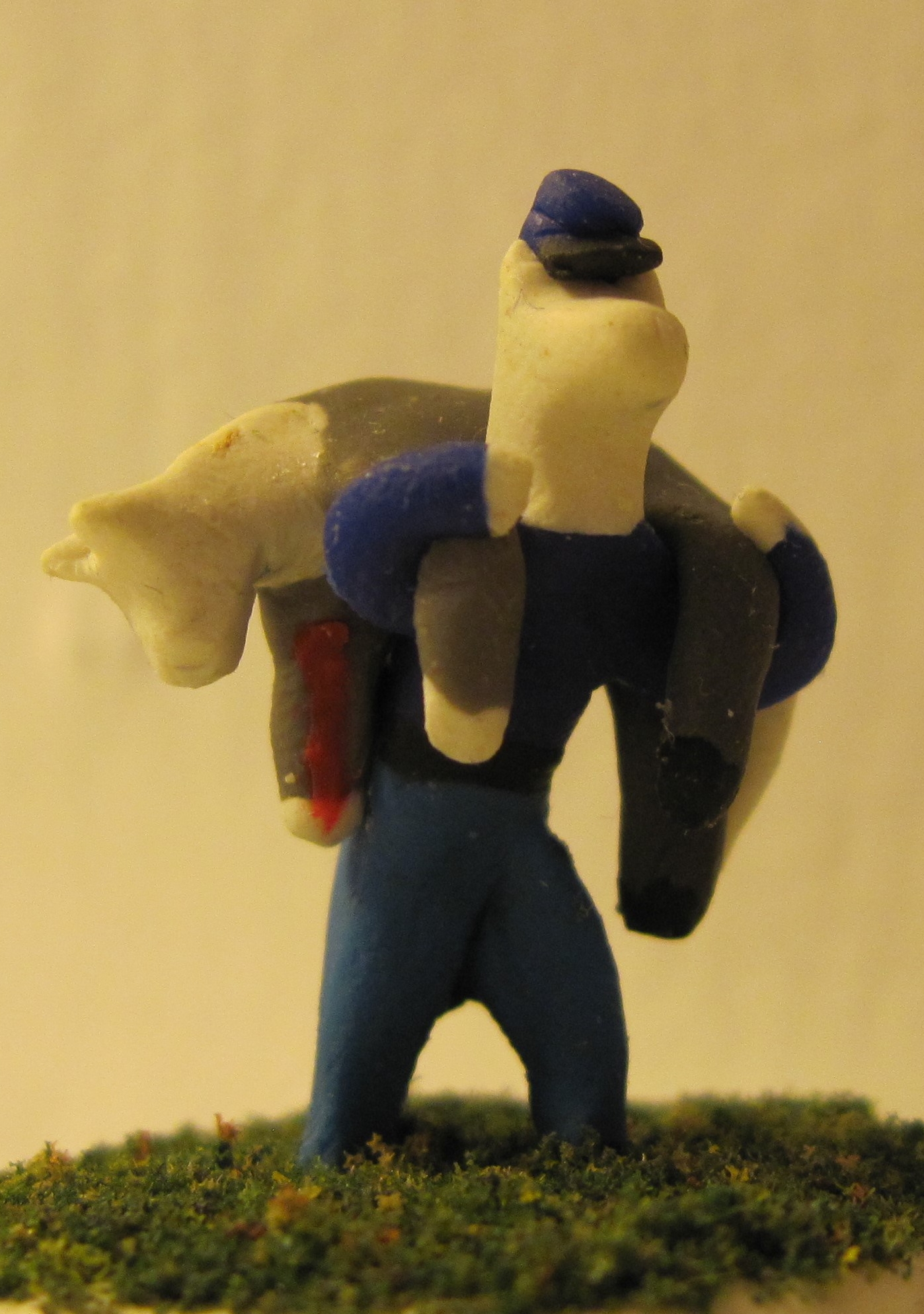 What does it look like if you view “the other side” as a human? It means you will respect them, whether you agree with them or not. It means, when face-to-face, you will see a human, not an enemy. During the fighting on Little Round Top at Gettysburg, Pvt. Philip Grine of the 83rd Pennsylvania Infantry ventured out between the fighting lines to retrieve a wounded Confederate. Later, he went out for a second enemy soldier. A third time he went out, and he was killed in the attempt to rescue yet another wounded Confederate. Why did he do it? To rescue fellow men who lay stranded and bleeding, and to see that they received medical attention at his regiment’s aid station. He didn’t care which uniform they wore, merely that they were suffering and he could do something about it, even at the risk of his own life.
 Often, as historians or armchair dabblers in history, we end up with a handful of favorite historical individuals. With some, we read everything we can find on them. With others, we recognize the name and enjoy tripping across snippets of them as we read books about broader campaigns or events. But sometimes, even our favorites can settle into a “mold.” We know the person’s appearance, character, and actions—and that’s who they are. We forget that we have never met them and never seen them in action.
