Often, as historians or armchair dabblers in history, we end up with a handful of favorite historical individuals. With some, we read everything we can find on them. With others, we recognize the name and enjoy tripping across snippets of them as we read books about broader campaigns or events. But sometimes, even our favorites can settle into a “mold.” We know the person’s appearance, character, and actions—and that’s who they are. We forget that we have never met them and never seen them in action.
In his reminiscences Riding With Custer, Maj. James Harvey Kidd of the 6th Michigan Cavalry recalls the first time he saw Gen. Phil Sheridan. Surprisingly, his description of Sheridan is not what you might expect. Sheridan is known for his Irish temper and his fiery spirit. We see that side of him as he comes riding down the pike from Winchester on his big black horse Rienzi, waving his hat to his retreating army and rallying them with the cry, “We will make coffee from Cedar Creek tonight!” Or perhaps we think of Five Forks, when he jumps Rienzi over the Confederate breastworks, carrying his battle flag. But this is not the picture that Kidd records.
The Michigan Brigade stood ready to pitch into the developing battle at Yellow Tavern on May 11, 1864. During a lull, Maj. Kidd saw a general quietly riding up from the rear with his staff and escort. As a regimental commander, he had never seen Sheridan up close, and this was his first good look at the commander of the Union cavalry. Instead of the fiery temper we might expect, Sheridan’s voice was “mild and agreeable.” His eye was “brilliant and searching and at the same time emitted flashes of kindly good nature.”
But besides the strong face and firm jaw, there was nothing about Sheridan to mark him as the brilliant cavalry commander that we know. In fact, only the fact that he rode in front of his escort and staff singled him out as the general, instead of just an ordinary staff officer. As Kidd delved deeper into his description of Sheridan in his reminiscences, he struggled to pinpoint what it was that made Sheridan Sheridan. As far as either physical or mental attributes, “There were perhaps no special, single, salient points…. In making an estimate of the man it was the ensemble of his qualities that had to be considered. He had to be taken ‘all in all.’ So taken, he was Sheridan. He was not another, or like another.”
This is not the Sheridan generated by 150 years of biographical sketches and books. This is the Sheridan of 1864, as the average soldier saw him. There is an element of complexity, with all of the pieces that made him a brilliant tactician who “had no equal, with the possible exception of ‘Stonewall’ Jackson… If he had not the spark of genius, he came very near to having it,” but there is also a simplicity about him. Kidd almost gives a literary helpless shrug as he writes, “he was Sheridan,” as if to say, and that’s all there was to it.
And that Sheridan-ness was what rallied his shattered army around him at Cedar Creek and led to victory that day, and at Five Forks destroyed five brigades and set the armies on the road to Appomattox. Of course, on May 11, that was still many months on the future. This day, the Union cavalry had had only three days fully under Sheridan. “What impressed us at this first sight of him,” Kidd recalls, “was his calm, unruffled demeanor, his freedom from excitement, his poise, his apparently absolute confidence in himself and his troops, his masterful command of the situation.… In his bearing was the assurance that he was going to accomplish what he had pledged himself to do.”
On May 8, Sheridan had gone head-to-head with Gen. Meade (two hot tempers fully clashing) over who really controlled the cavalry—the commander of the cavalry or the commander of the army. Finally, Sheridan swore, “I could whip Jeb Stuart if you would only let me!” Gen. Grant, upon hearing about the argument from Meade, said, “Did he really say that? Well, he usually knows what he’s talking about. Let him go ahead and do it.” And so now Sheridan had the cavalry firmly under his command and was about to act on his words. It seemed a tall order to whip the general who had ridden around the Union army twice. But, Kidd writes, “there was in his face and manner no hint of doubt or inquietude. The outcome was to him a foregone conclusion.” What Grant said held true. Sheridan did know what he was talking about. By nightfall, Jeb Stuart lay mortally wounded and his Confederate cavalry was shattered and retreating.
It is easy to get wrapped up in reading the most recently published books, but it is also worthwhile to fall back on the first-hand accounts, whether written immediately after events like a diary or written years later like memoirs. These are the memories—images and first impressions seared into the mind’s eye of the men and women who were there, seeing historical figures face-to-face—and they offer fascinating glimpses into the people we know only as 200-year-old names and faces.
Source: Kidd, J. H. Riding With Custer: Recollections of a Cavalryman in the Civil War. Lincoln and London: U of Nebraska Press, 1997. (pg. 298-300.)


 And then, as the mantel clock struck midnight, there came the faint jingling of distant sleigh bells. The guard on his perch at Andersonville pricked up his ears. He could just make out the sleigh, dashing across the snow, the moonlight glinting off the bells and buckles of the reindeer’s harnesses. Santa Claus was right on schedule! Jimmy’s mouth began to water and his whiskers twitched as he thought of the mounds of “eggs and bakey [bacon]” that he, his fellow guards, and all their prisoners would enjoy in the morning. For one day—well, two days because Santa always gave them enough for leftovers—no one would be hungry.


 “Fire!” Lt. Greene on USS Monitor ordered. “Over the sleigh, boys! Lay down cover! Fire!”
 Col. Mosby dashed past first—his raiders were always in the saddle and ready. Sometimes Jimmy wondered if their equivalent of sleep-walking was sleep-raiding Union wagons. They were fully awake now as they galloped past, fur bristling and ears flat. They’d give COVID a run for its money before they let it catch Santa.


 This Thanksgiving, we at Civil War Tails would like to express our gratitude to and for all who have supported our museum and our town through this year. Gettysburg relies on its tourists, and this year was a reminder of just how important all of you are.
 This Labor Day marked 5 years of Civil War Tails, and this year marked 25 years of Civil War cats. We look forward to many to come! It has been a joy to share our dioramas with all of you, and we are happy that our cats can bring a smile to you also.


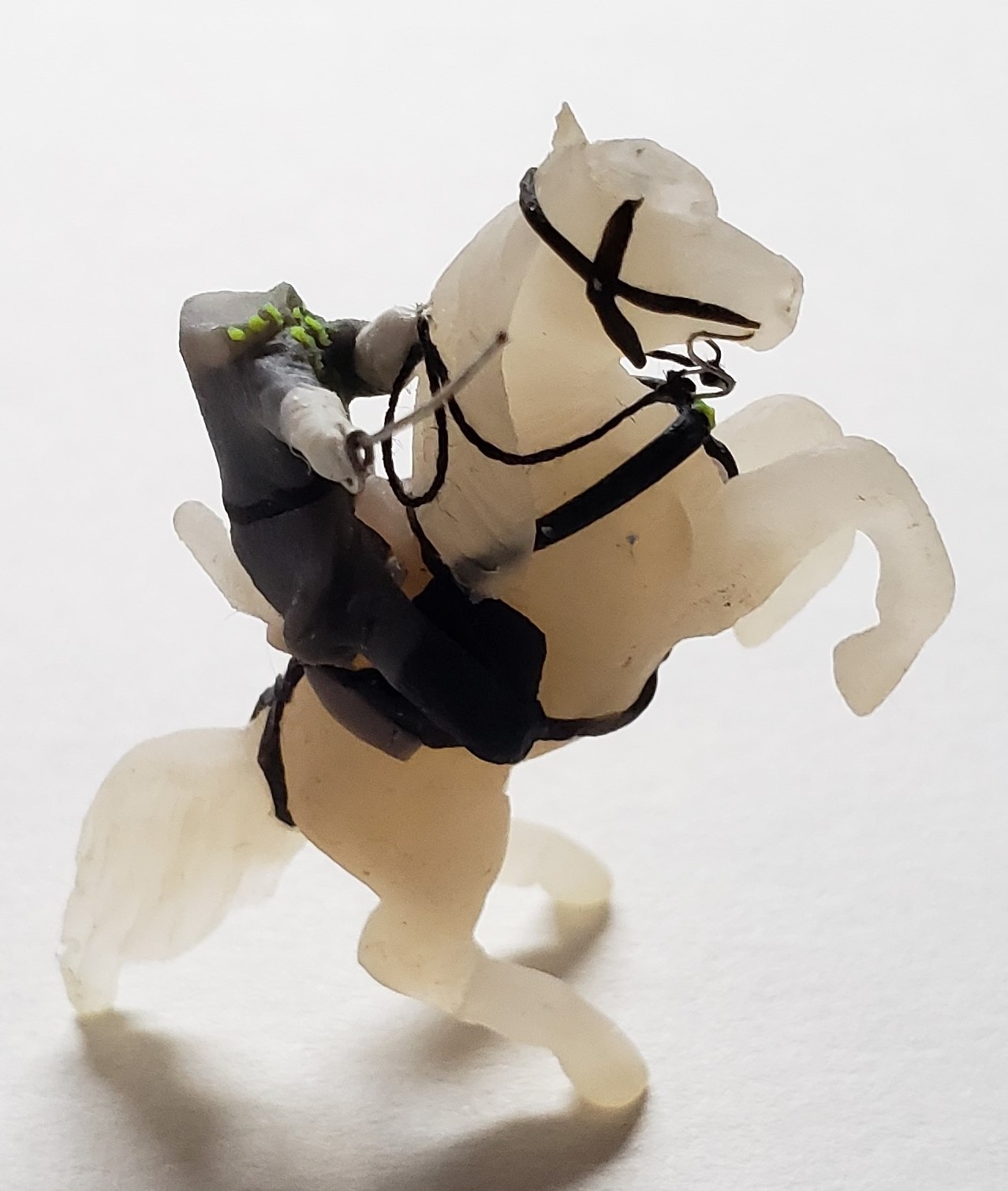
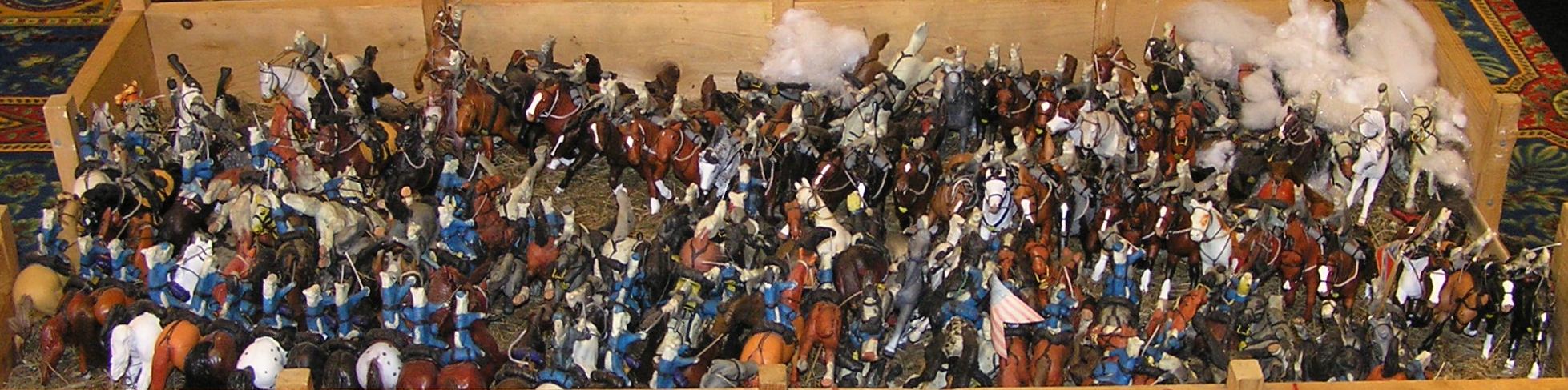
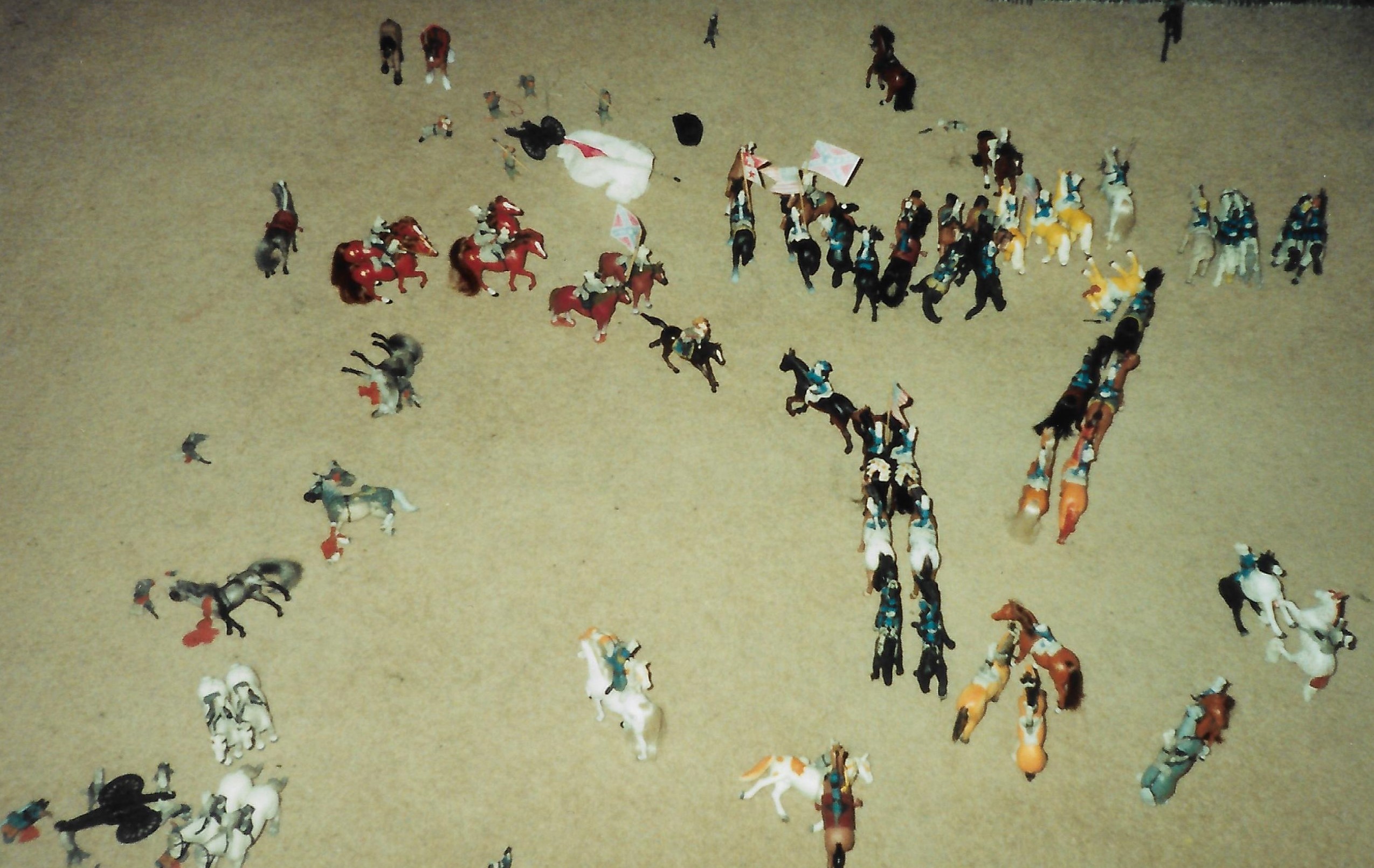 Civil War cat cavalry was present long before we thought to make dioramas. In fact, if memory serves right, it was our becoming tired of having to “fix up” bridles and saddles after every battle that prompted us to set up stationary displays, instead of continuing to use our cat-soldiers as toys. Some of our early pre-diorama photos show the modest cavalries of our earliest cats—and yes, some of the horses in this photo are on “Come On, You Wolverines”!


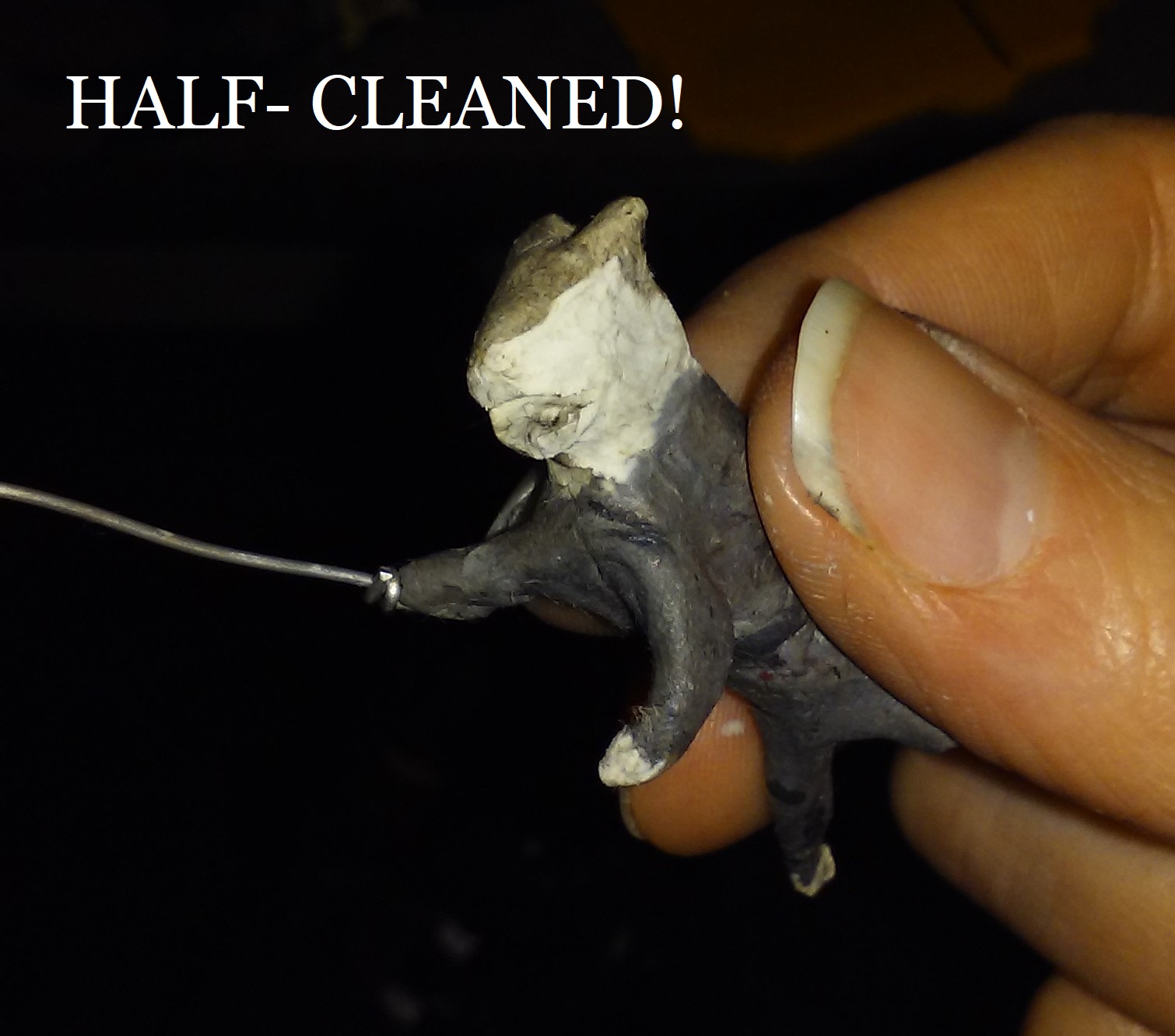 The revamp meant evaluating each horse and cat. Sleepy, lazy (standing) store-bought horses were retired to green pastures and removed from the census of Civil War Cat horses. Some old clay cats and horses had lost so many limbs (and/or head) that they were “put down.” If the horse’s clay was still soft enough, we made a new horse. Unfortunately for the cats, there’s just no way to resurrect old dried-out blue and gray clay! Clay cats and horses who remained more-or-less intact were cleaned up by scraping a couple decades-worth of dust off their faces, uniforms, and white markings. In the meantime, the two cavalries enlisted young whippersnapper Sculpey cats. Some supplied their own fresh mounts, while others inherited veteran cavalry horses.
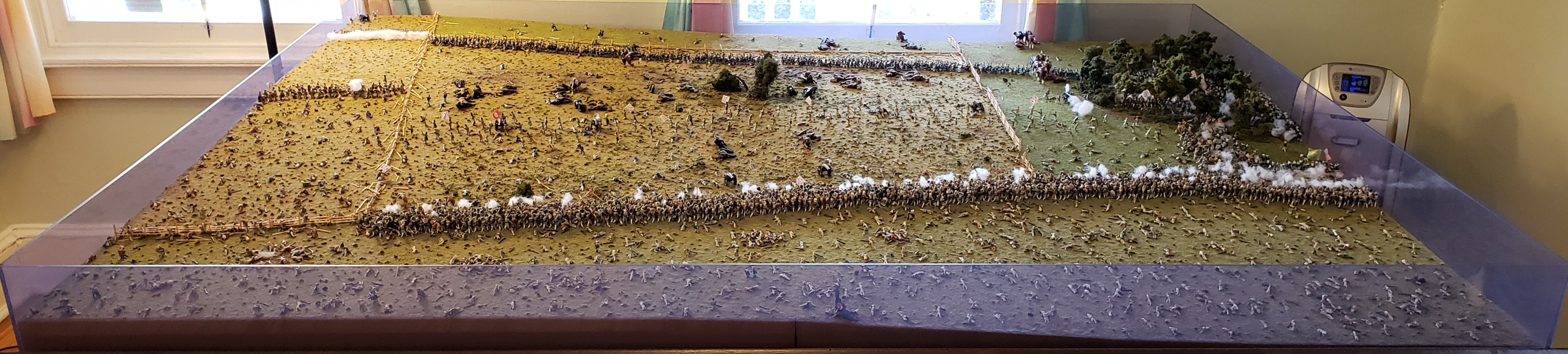
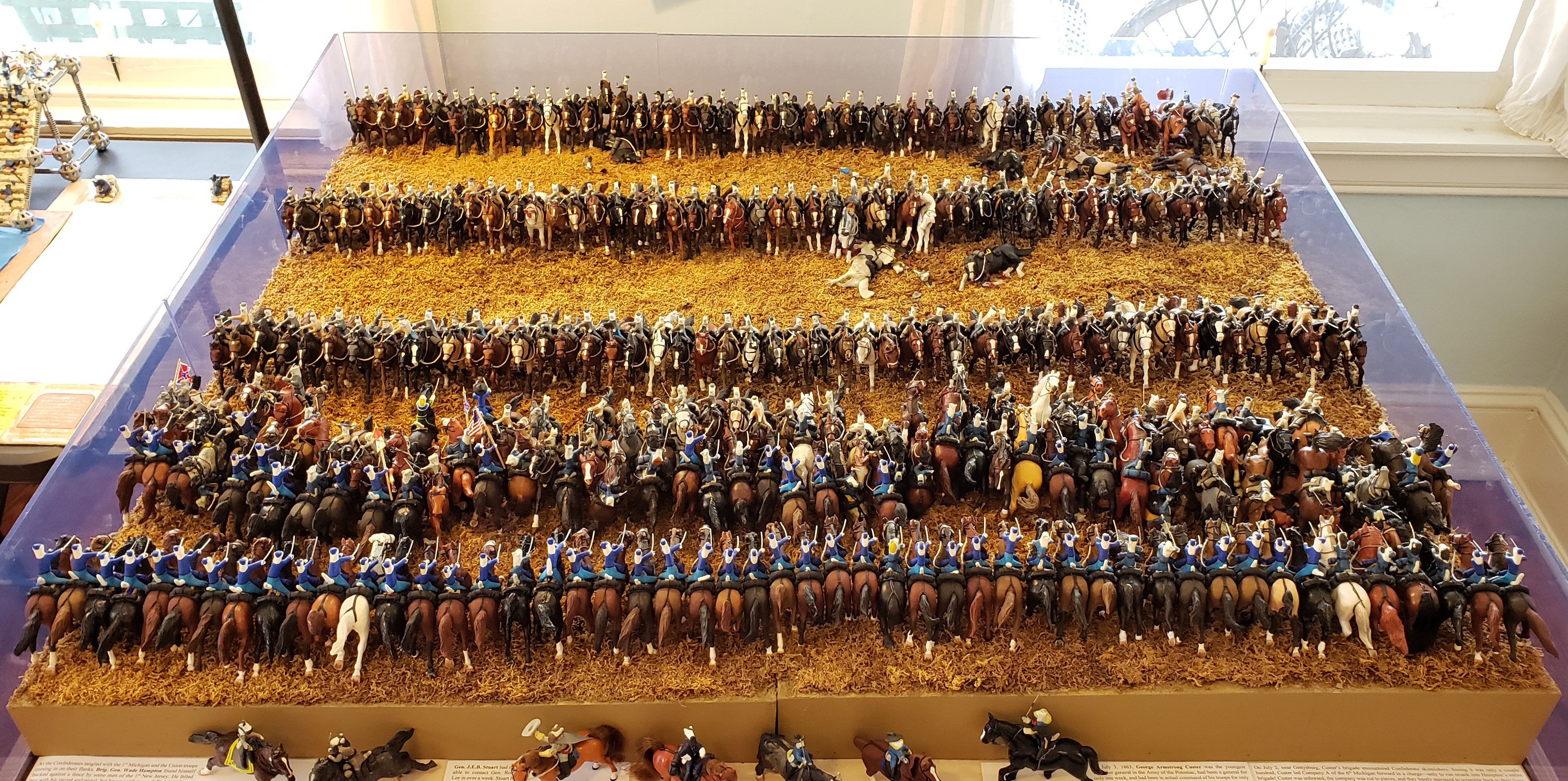
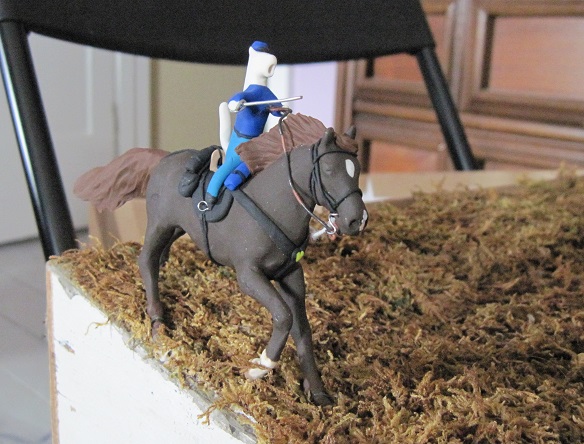 Finally, it was time to install the horses. On May 5, 2018, the first horse, a Union liver chestnut, was wired onto the base! Over three hundred horses would follow before the diorama was finally placed on display at Civil War Tails almost a year later, on Friday, May 3, 2019.




 “The Fate of Gettysburg” kept us busy through college. While other students were doing whatever college students do, we sat in the dorm room and made cats for the Angle! (Well, okay, we also made at least USS Housatonic and “Desperation at Skull Camp Bridge,” if not others.)


 We also added injured and killed horses for Cushing’s battery. Since his guns were abandoned by the point in time portrayed on the diorama, we had initially overlooked the obvious fact that the debris of Cushing’s shattered battery would remain on the field after his men and limbers had withdrawn. This adjustment meant re-reading about July 2nd and earlier on July 3rd, to count up how many limbers and caissons had exploded. This was a reminder to us to keep in mind events or episodes that happened earlier at the location portrayed on a diorama. (See