
Here at Civil War Tails, we are sewing new Civil War dresses to replace the ones we made in high school. I say “we,” but in reality our mother is doing the sewing! Dealing with yards and yards of fabric, dozens of hooks and eyes, plus boning, ruching, piping, and lining makes us suddenly grateful for modern fashions and Walmart. And since we’re engulfed in yards of fabric and pondering the trouble that went into making clothes back then, in today’s Mewsing we are taking a look at the women who traveled with the armies as laundresses. After all, sewing the clothes is only the start of the battle—what went into caring for a family’s (or army’s) garments?
Each company of 100 men would typically have four laundresses. These women were usually wives or mothers of men in the company. The laundresses lived in a separate part of the camp from the men, and their section was known as “Suds Row” because of the soap suds they generated. Laundresses needed a lot of equipment to do their job, and usually they also brought their children with them, so some officers did not like having to take them along on the march. One officer wrote, “Transportation of all the laundresses’ paraphernalia, children, dogs, beds, cribs, tables, tubs, buckets, boards, and Lord knows what not, amounts to a tremendous item of care and expense.” But laundresses were important, so even when other women and visitors were not allowed to go with the army, the laundresses went.
Washing clothes was quite an operation. A laundress needed two tubs that could hold 25 gallons of water each and weighed 35 pounds without the water. She also needed buckets, boilers, laundry sticks, scrub boards, soap crates, starch, bluing, and much more. Washing the clothes took three days. The first day was spent mending the clothes, since any holes would get bigger when the clothes were washed. Then the clothes were soaked in warm, soapy water, and the laundress tried to get out any stains. The clothes were left to soak for a day or two, then they were put in tubs of warm water. The laundress would shave pieces of soap into the water and put extra soap on hard stains. Then she would start scrubbing it on the scrub board, rubbing each piece of clothing against the board’s ridges until it was clean. Then she rinsed the clothes and wrung them out. But the washing process wasn’t done yet.
Once the clothes were rung out, they were put in boiling water to kill any lice that still remained. After they were boiled, the clothes were taken out with a laundry stick and rinsed three times. The first rinse was in hot water, then cool water, then cold water. Then came the bluing process. A laundress dyed some water light blue, the swished the clothes in it. This was to make the clothes white again, since the soap turned them yellow.
After bluing them, the laundress hung the clothes on clotheslines or spread them out on the bushes or grass. But they couldn’t be ignored, because they had to be rolled up for ironing while they were still damp. A soldier paid 50 cents to have his clothes washed, and an extra three cents if he wanted his shirt ironed. Most soldiers saved their money for something else, but officers liked to have their shirts ironed. For example, Union General Winfield Scott Hancock always wore a clean white, ironed shirt, even in battle.
Ironing was not easy in the 1860’s. Nowadays, you just plug in the iron and turn the dial to the correct temperature. Back then, irons had to be heated on a stove. In camp, the laundresses did not have stoves, so they had to heat the iron on a frying pan over a fire. There was no way to tell how hot the iron was, and if it was too hot, it would scorch the clothes. If a soldier wanted his shirt starched, that added to the problems with the iron. Starch was made up of different things, like potatoes and flour. A laundress had to know what starch to use, how much to use, and how hot the iron could be. Getting everything just right was rather tricky.
After washing the clothes, the laundress couldn’t stop for a break, because she still had to make sure her tubs were kept damp so they would not dry out and leak. But the tubs could not be too wet or they would rot. Also, the irons had to be waxed to prevent rusting. All this makes you grateful for our washing machines and dryers, doesn’t it?
But the soldiers were glad to have the laundresses along, not just because they washed the clothes, but also because they reminded the soldiers of their own homes and families. One general noticed that his men were “more cheerful, honest and comfortable” when they had their laundress around.
So often, our daily chores are just that—chores. Take some time today to thank the mom in your life who does all the thankless chores, and recognize that without her, your life would be a good deal less cheerful and comfortable!


 1. the “big flat Larry’s II” toothpick:
 2. the long toothpick:
 3. the square toothpick:
 Want to do a sailor on a ship’s deck? The square toothpick is just for you! Since their width and shape are uniform, they’re perfect for ships’ planks.
  If you’re making the whole ship, using a thin corrugated cardboard (which has enough of a ribbed look to pass as planking) would be better, but toothpicks are the way to go for individual sailors, such as those we sell in display domes, or small areas like the inside of USS Monitor’s turret.
 The leftover tips that get chopped off are good for the spikes that the Confederates put in Battery Wagner’s moat, which the 54th Massachusetts Regiment had to navigate through.
 4. the round toothpick:

 5. the flat toothpick:
 Saving the best for last! This toothpick is our workhorse. Fence rails, railroad ties, small-scale flagstaffs, picket fences, gun carriages, traverses and machicoulis galleries, even a ladder up a flagpole… The list goes on and on. Save the skinny ones for ¾” flagstaffs, the curved ones for rocking chairs, the blunt ended ones for fence rails… I’m pretty sure there’s nothing a flat toothpick can’t make—hence my buying a box of 2,500 of them (and then sorting them!).


 In our
  The second incident came while talking about Pvt. Philip Grine of the 83rd Pennsylvania. During the fighting on Little Round Top, he ventured out between the fighting lines twice to retrieve wounded Confederates. He was killed while trying to get a third. A child asked me why he did what he did. “To get their stuff?” No, to get them to the aid station for medical treatment. “Why? They’ll just start fighting him again. I would have killed them.”
 A worldview of respecting your fellow man is not a view that ignores the realities of the world we live in; it is a view that works to make the real world better. Let us foster a respect for life in our children—even for the “enemy.”
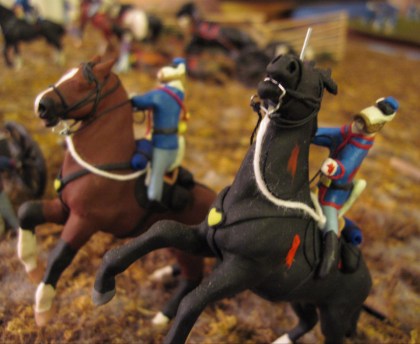
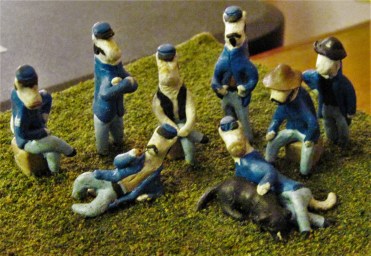 Civil War Tails is a museum of cats—almost 9,000 of them! But we do have one dog. He’s not a soldier; as Rebecca says, he’s a “dog-dog.” A little black mutt with maybe a bit of bull terrier in him, he’s the regimental mascot of a group of cat-soldiers who are having their photo taken. Many regiments had dogs as mascots, some of which were bull terriers (now known as pit bulls), including Jack, perhaps the most famous dog mascot, and Sallie, who can be seen on the 11th Pennsylvania Infantry monument here at Gettysburg.
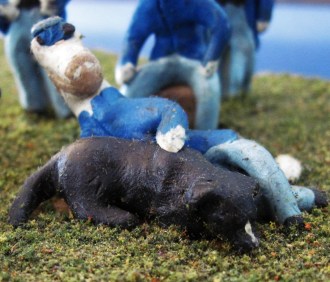 Yesterday, we welcomed “Loyalty of Dogs” to our museum, and in honor of the visit, we’ve named our only dog “Patrick” after a beloved pet who looked a bit like our little guy. It was great meeting the wonderful lady behind “
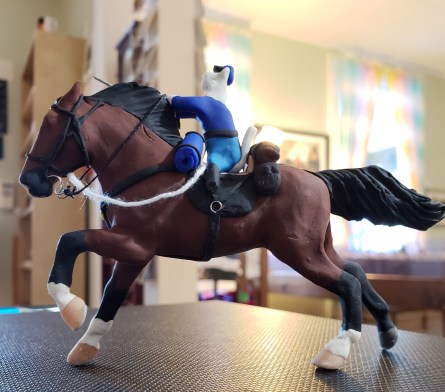
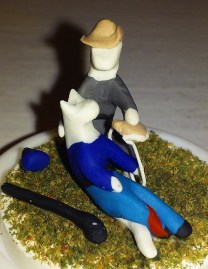
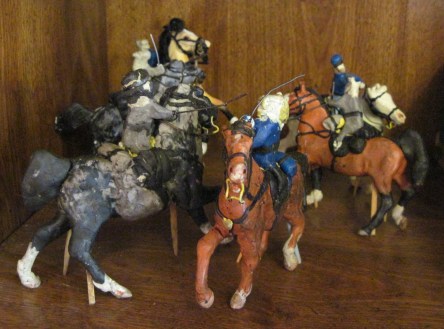 This mini-diorama focuses on an individual encounter during the fighting at Aldie. Gen. Hugh Kilpatrick’s brigade attacked the Confederate line piecemeal and was unable to dislodge them from their position on a ridge. Kilpatrick sent the 1st Massachusetts around the Confederate flank, but the regiment was ambushed and lost nearly half its men. During the fighting, Col. Thomas Rosser of the 5th Virginia slashed Maj. Henry Lee Higginson of the 1st Massachusetts on the right side of his face. Despite also being shot and left for dead, the major survived. He and Tom Rosser would meet again, but not on the battlefield—this time they met in peace after the war.
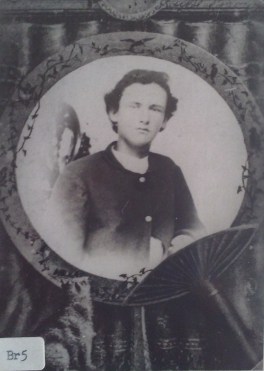 On Memorial Day, we take the time to remember the men and women who have paid the ultimate price to keep our great nation safe and free. And so, this weekend, Ruth and I are remembering Pvt. Luke W. Brown, 8th Pennsylvania Cavalry, who died 154 years ago while serving to preserve the Union.
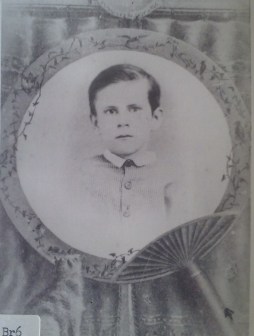 Only nine years old when his brother died, Elmer never forgot the last time he watched Luke ride away. When he grew up, he named his son after the brother who never came home. Our family has had a Luke Brown ever since, through five generations.
